Why Material Selection Makes or Breaks Your Prototype
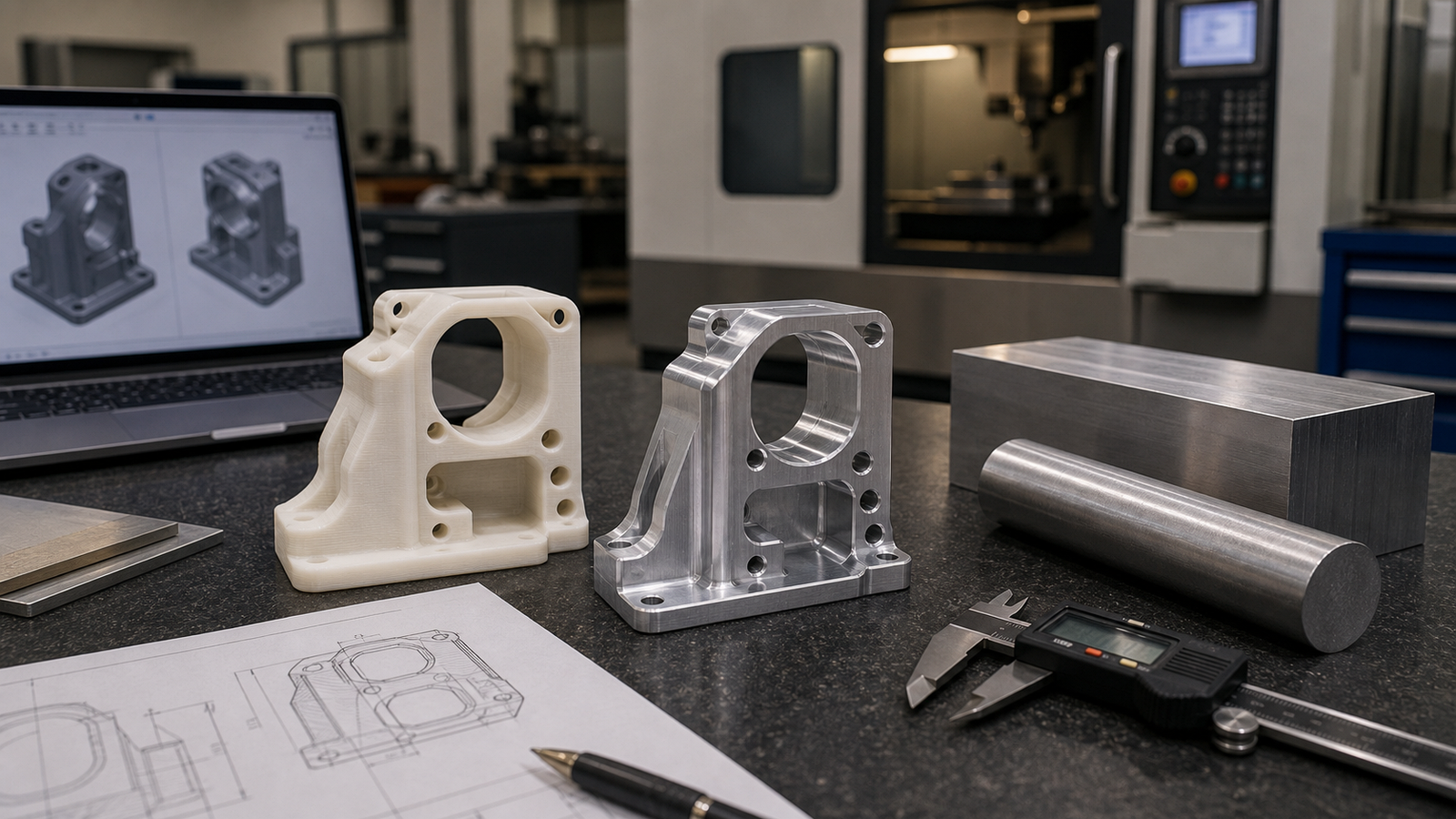
A prototype made from the wrong material gives you wrong answers. An aluminum bracket prototype that passes a static load test might fail in production if the actual part is supposed to be stainless steel and you are testing corrosion resistance. A 3D printed nylon gear that works in a lab environment might crack in the field because printed nylon has 60-80% of the strength of machined nylon.
Material selection for prototyping comes down to one question: what do you need to learn from this prototype? If the answer is "does it fit in the assembly," almost any material works. If the answer is "will it survive 10,000 thermal cycles," you need the exact production material.
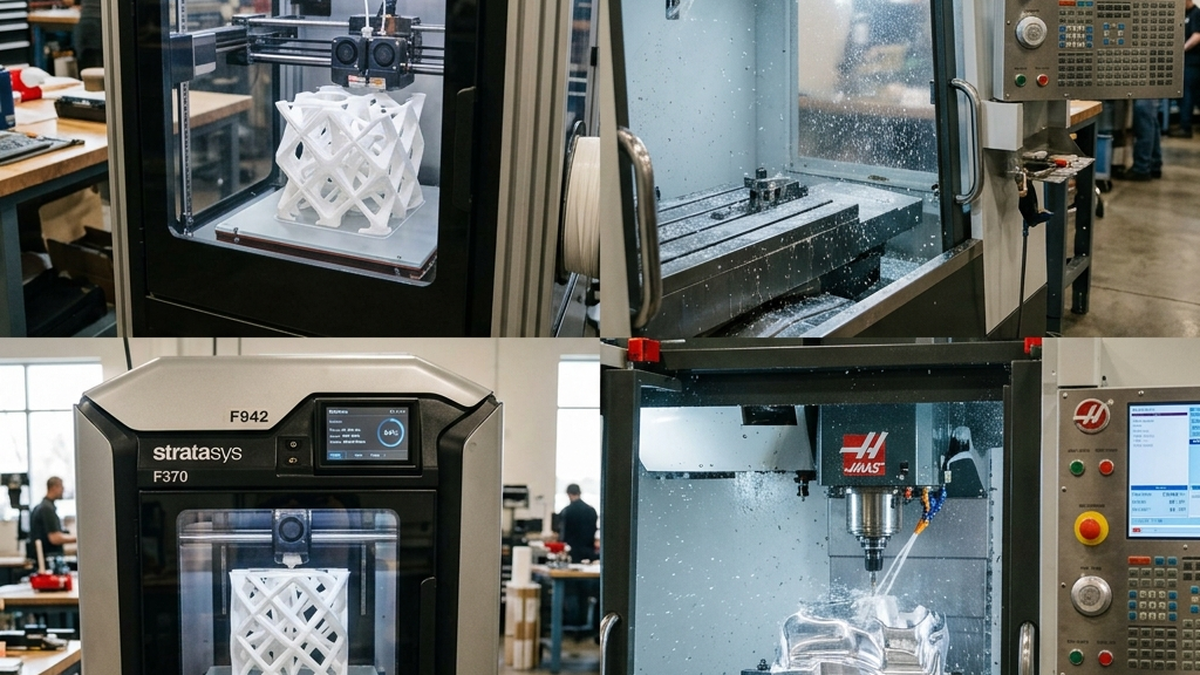
This guide covers every common prototyping material for both CNC machining and 3D printing, with properties, costs and practical recommendations. For help deciding between the two manufacturing methods, see our rapid prototyping services page or our 3D printing vs CNC prototyping comparison.
Aluminum Alloys
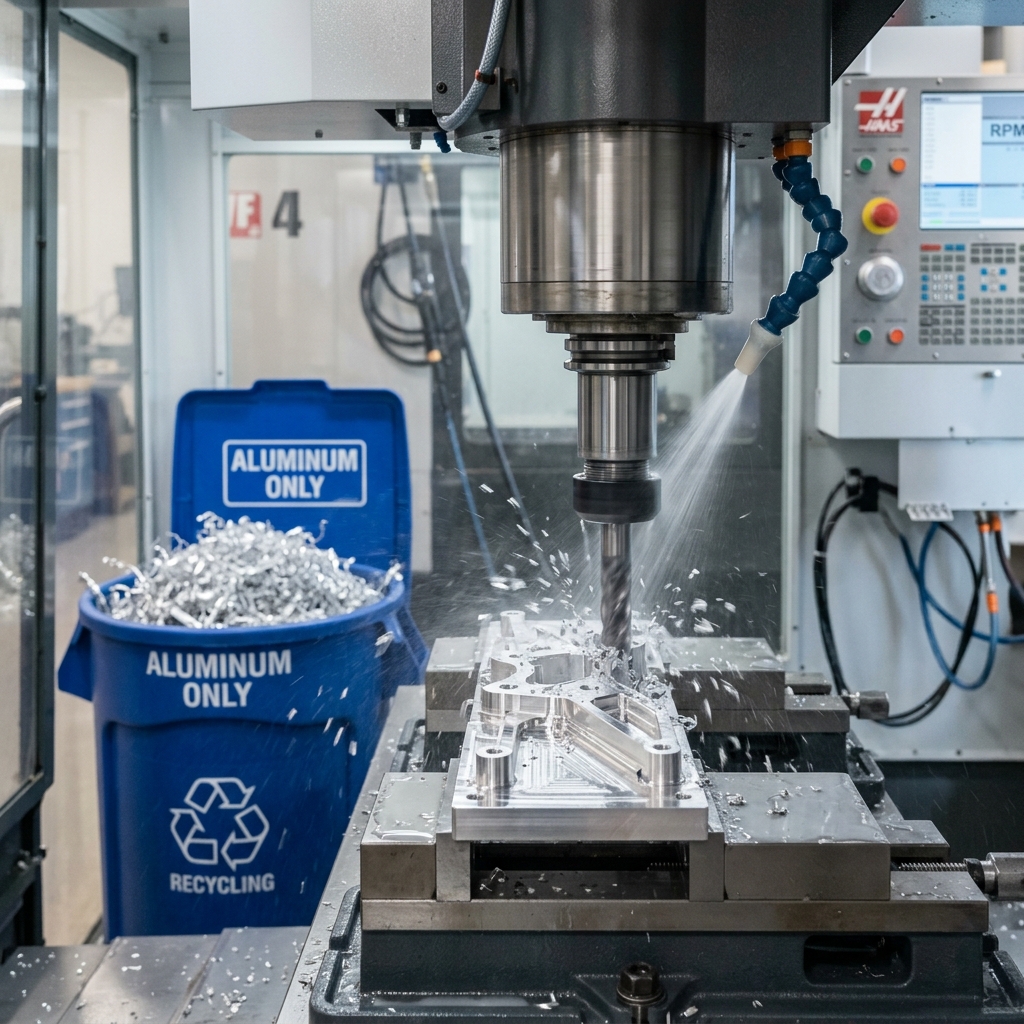
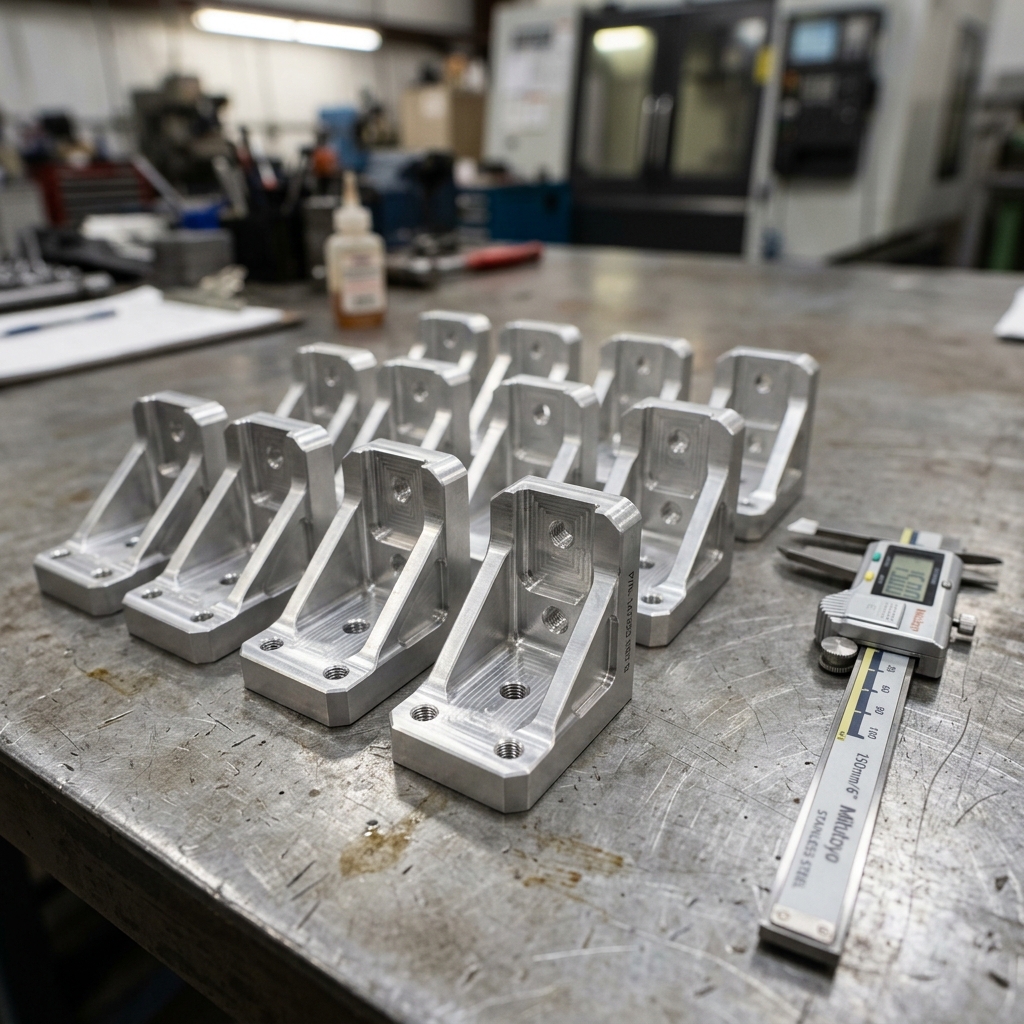
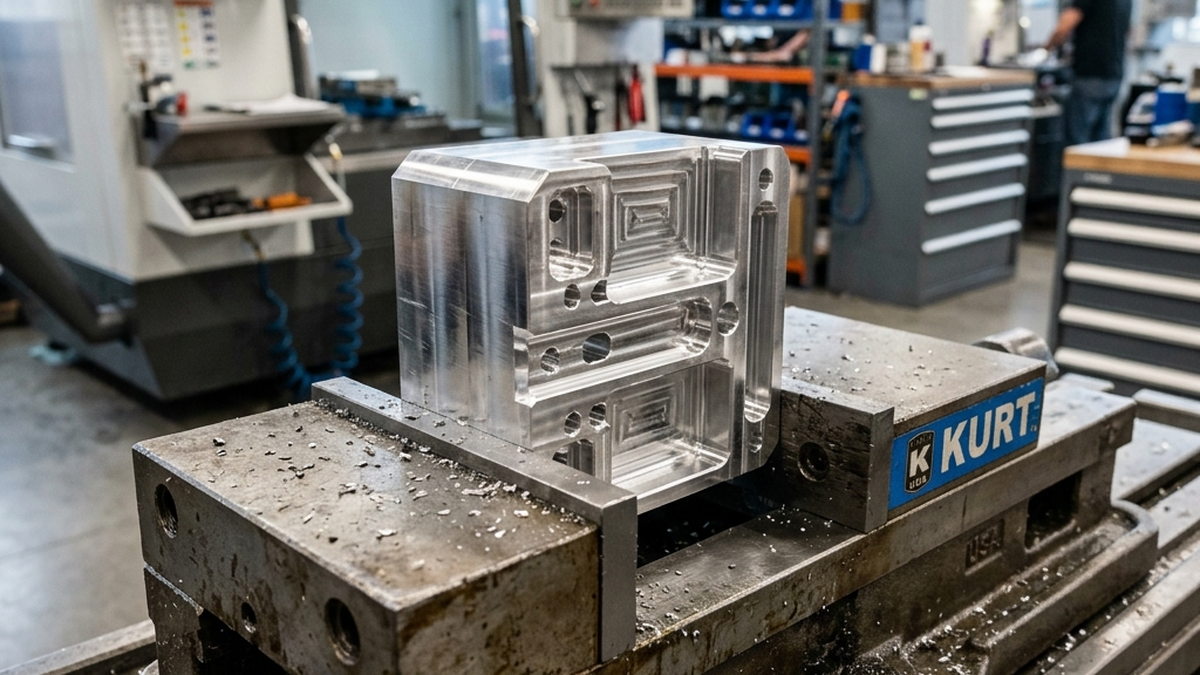
Aluminum is the most popular prototyping metal. It machines fast, costs less than steel or titanium, has excellent strength-to-weight ratio and accepts a wide range of finishes. About 70% of our prototype orders are aluminum.
| Alloy | Tensile Strength (ksi) | Machinability | Cost Factor | Best For |
|---|---|---|---|---|
| 6061-T6 | 45 | Excellent | 1x (baseline) | General purpose brackets, housings, frames. The default choice for prototyping. |
| 7075-T6 | 83 | Good | 1.3x | Aerospace structural parts, high-stress brackets, fixtures. Nearly twice the strength of 6061. |
| 7075-T651 | 83 | Good | 1.4x | Same as 7075-T6 but stress-relieved plate. Stays flatter after machining. Better for large parts. |
| 2024-T3 | 70 | Good | 1.3x | Aerospace skins and structural members. Excellent fatigue resistance. Cannot be anodized well. |
| 6063-T6 | 35 | Excellent | 1x | Extrusions, decorative parts, heat sinks. Anodizes beautifully. Weaker than 6061. |
| 5052-H32 | 33 | Fair | 1x | Sheet metal parts, marine components. Excellent corrosion resistance. Not heat treatable. |
When to Use 6061 vs 7075
Start with 6061-T6. It is the cheapest, most available and easiest to machine aluminum alloy. Switch to 7075-T6 only when you need higher strength -- structural brackets under heavy loads, aerospace components, or parts where weight savings are critical and you need to use thinner sections.
The cost difference between 6061 and 7075 is about 30% on material alone. Machining cost is similar because both cut well. The real cost driver is that 7075 has more internal stress and can warp more during machining, sometimes requiring extra operations to hold flatness.
Both 6061 and 7075 anodize well (Type II and Type III). 2024 does not anodize consistently -- if you need an anodized finish, use 6061 or 7075. For chromate conversion (Alodine), all aluminum alloys work fine.
Need help choosing the right material?
Upload your CAD file and tell us your application. Our engineering team will recommend the best material for your prototype -- free of charge.
Upload CAD for Free DFM ReviewStainless Steel
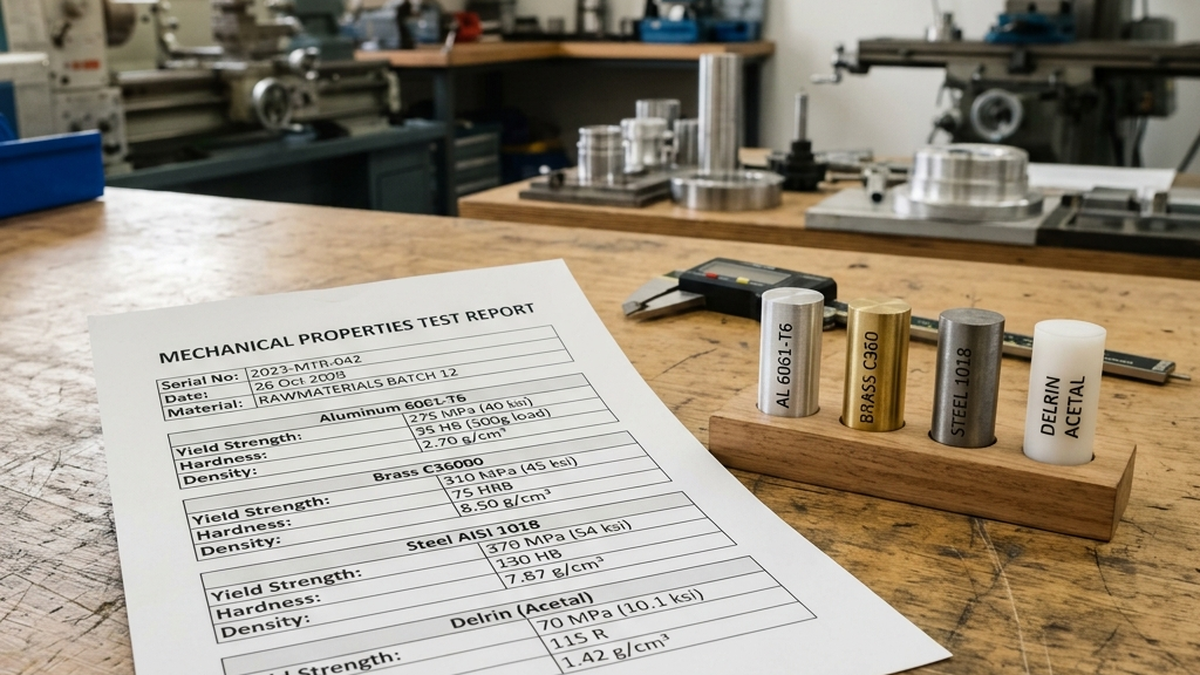
Stainless steel is the go-to when your prototype needs corrosion resistance, higher strength than aluminum, or food/medical contact compatibility. It costs more than aluminum and machines slower, but the material properties justify it for many applications.
| Alloy | Tensile Strength (ksi) | Machinability | Cost Factor | Best For |
|---|---|---|---|---|
| 303 | 90 | Excellent (best SS) | 1.5x | Fittings, shafts, pins. Free-machining grade. Not weldable. Slightly less corrosion-resistant than 304. |
| 304 | 85 | Fair | 1.5x | General-purpose corrosion-resistant parts. Food processing, chemical handling. Weldable. |
| 316L | 80 | Fair | 1.8x | Marine, medical, chemical processing. Superior corrosion resistance. The L means low carbon for better weldability. |
| 17-4 PH | 190 (H900) | Good | 2x | High-strength aerospace and defense parts. Heat treatable to various hardness levels. Condition H1025 is most machinable. |
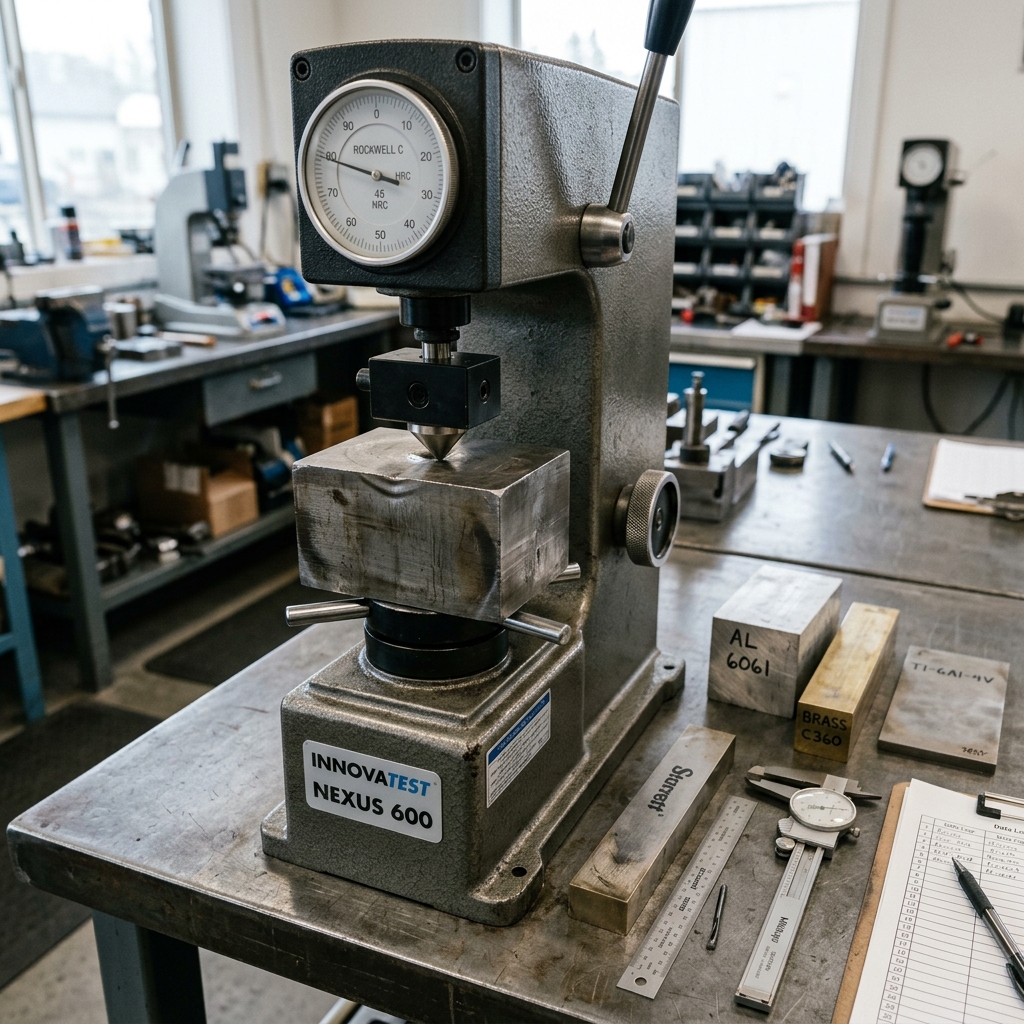
| 440C | 280 (hardened) | Poor (when hard) | 2.5x | Bearings, valves, knives. Hardened to HRC 58-60. Machine in annealed condition, then heat treat. |
Choosing Between 303 and 304
If the part does not need to be welded and does not contact food or medical fluids, use 303. It machines 2-3 times faster than 304, which translates directly to lower cost. Use 304 when you need welding, food contact compliance, or slightly better corrosion resistance. Use 316L when the part will be exposed to chlorides, salt water, or aggressive chemicals.
Titanium
Titanium offers the best strength-to-weight ratio of any common engineering metal. It is essential for aerospace, medical implants and high-performance applications where weight matters as much as strength.
| Alloy | Tensile Strength (ksi) | Density (lb/in³) | Cost Factor | Best For |
|---|---|---|---|---|
| Grade 2 (CP) | 50 | 0.163 | 3x | Medical implants, chemical processing. Commercially pure. Excellent corrosion resistance. Easier to machine than Ti-6Al-4V. |
| Ti-6Al-4V (Grade 5) | 130 | 0.160 | 4x | Aerospace structural parts, performance automotive, medical devices. The workhorse aerospace titanium alloy. |
| Ti-6Al-4V ELI (Grade 23) | 120 | 0.160 | 5x | Medical implants for bone contact. Extra-low interstitial for better biocompatibility and fracture toughness. |
Titanium is expensive to prototype -- both the raw material and the machining time. Raw Ti-6Al-4V stock costs 3-4 times more than aluminum per pound and it machines at roughly one-third the speed because it is harder, generates more heat and causes faster tool wear. Expect a titanium prototype to cost 4-8 times what the same part would cost in aluminum.
Titanium chips can ignite if machining parameters are wrong. Always work with a shop experienced in titanium machining. They will use the right coolant strategy, chip management and cutting parameters to machine it safely.
Other Metals
| Material | Key Properties | Cost Factor | Common Prototype Applications |
|---|---|---|---|
| 4140 Steel | High strength, heat treatable to HRC 28-55 | 1.2x | Gears, shafts, fixtures, high-strength structural parts |
| 4340 Steel | Very high strength, better toughness than 4140 | 1.5x | Aerospace landing gear, high-impact components |
| A2 Tool Steel | Air-hardening, good wear resistance | 2x | Tooling, fixtures, dies, punches |
| Inconel 718 | Extreme heat resistance (to 1300°F), high strength | 6-8x | Turbine components, exhaust systems, nuclear applications |
| Brass 360 | Excellent machinability, corrosion-resistant, conductive | 1.5x | Electrical connectors, fittings, decorative parts, valves |
| Copper C110 | Highest thermal and electrical conductivity | 2x | Heat sinks, bus bars, electrical contacts, RF waveguides |
Prototypes in any metal, any quantity
Aluminum, stainless, titanium, Inconel, brass, copper. Ships in as few as 3 days.
Upload CAD for Instant QuoteEngineering Plastics (CNC Machined)
CNC machined plastics give you prototypes with the exact material properties of the production part -- something 3D printing cannot match. These are cut from solid stock, so the properties are isotropic (equal in all directions) with no layer adhesion weaknesses.
| Material | Tensile Strength (ksi) | Max Temp (°F) | Cost Factor | Best For |
|---|---|---|---|---|
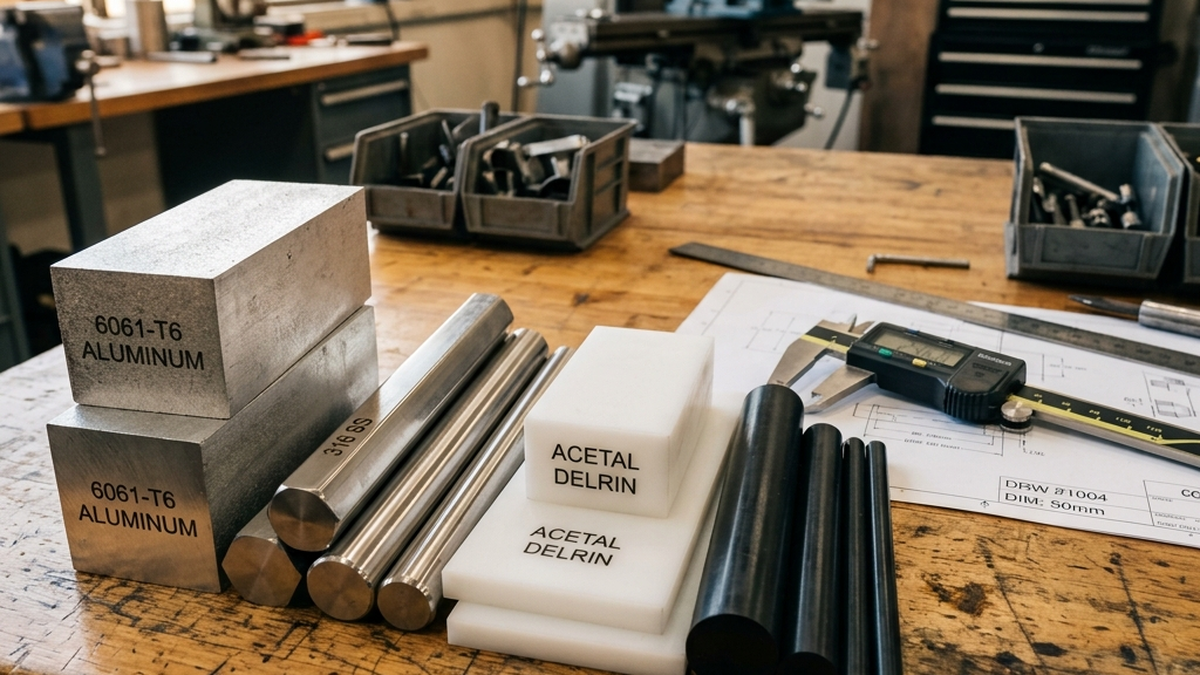
| Delrin (Acetal/POM) | 10 | 180 | 0.5x | Gears, bearings, bushings, sliders. Low friction. Excellent dimensional stability. The most common CNC plastic. |
| Nylon 6/6 | 12 | 220 | 0.5x | Wear-resistant parts, gears, rollers. Absorbs moisture (swells 1-2%). Good impact resistance. |
| UHMW Polyethylene | 6 | 180 | 0.4x | Wear strips, guides, food processing components. FDA compliant. Very low friction. Soft and flexible. |
| Polycarbonate | 9.5 | 250 | 0.6x | Clear parts, safety shields, light guides. Impact resistant. Optically clear grades available. |
| ABS | 6 | 175 | 0.4x | Enclosures, housings, consumer product prototypes. Matches injection-molded ABS properties. |
| PEEK | 16 | 480 | 8-10x | High-temperature, high-strength, chemical-resistant parts. Aerospace, medical, semiconductor. Extremely expensive raw stock. |
| Ultem (PEI) | 15 | 400 | 6x | Aerospace interior components (FAR 25.853 compliant). High temperature, flame retardant. |
| Teflon (PTFE) | 3.5 | 500 | 1x | Seals, gaskets, chemical handling. Lowest friction of any solid material. Soft, difficult to hold tolerances. |
CNC machined plastics are generally cheaper than metals because the material costs less and machines faster (higher feed rates, less tool wear). A Delrin prototype might cost half of what the same part would cost in aluminum. PEEK is the exception -- raw PEEK stock can cost $50-200 per pound compared to $3-5 per pound for Delrin.
3D Printing Plastics
3D printing plastics are the cheapest and fastest prototyping materials. They are ideal for form checks, fitment verification and early-stage design iteration. They are not suitable for functional testing when the production part will be a different material.
| Material | Process | Tensile Strength (ksi) | Key Properties | Best For |
|---|---|---|---|---|
| PLA | FDM | 7-8 | Rigid, brittle. Easy to print. Biodegradable. Low heat resistance (140°F). | Visual models, concept verification, non-functional prototypes |
| ABS | FDM | 5-6 | Tougher than PLA. Higher heat resistance. Prone to warping during printing. | Functional prototypes, enclosures, brackets (light duty) |
| PETG | FDM | 7 | Good chemical resistance. Flexible. Easy to print. | Containers, protective covers, chemical-contact parts |
| Nylon PA12 | SLS | 7 | Strong, flexible, durable. No support structures needed. Good for functional parts. | Living hinges, snap fits, functional assemblies, end-use parts |
| PA12-GF (glass-filled) | SLS | 8 | Stiffer than standard PA12. Better heat resistance. Slightly brittle. | Structural parts needing stiffness, housings, brackets |
| TPU (flexible) | FDM/SLS | 4-8 | Rubber-like flexibility. Various shore hardnesses available. | Gaskets, bumpers, grips, flexible connectors |
| Standard Resin | SLA | 8 | Smooth surface. Fine detail. Brittle. UV sensitive. | Visual prototypes, presentation models, small detailed parts |
| Tough Resin | SLA | 8 | ABS-like toughness. Better impact resistance than standard resin. | Functional prototypes, snap fits, parts that need some durability |
Remember: all 3D printed plastics have anisotropic properties. They are weaker between layers than within a layer. A bracket printed with layers perpendicular to the load direction might fail at 60% of the strength printed with layers parallel to the load. Print orientation matters as much as material selection for functional 3D printed parts.
3D Printing Metals
Metal 3D printing (DMLS/SLM) creates real metal parts from powder. It is the only way to additively manufacture in metals, but the materials behave differently from wrought or cast equivalents.
| Material | Tensile Strength (ksi) | Comparable Wrought Alloy | Cost per Part | Notes |
|---|---|---|---|---|
| AlSi10Mg | 45 (as-built) | A360 casting alloy (not 6061) | $300-1,500 | Not equivalent to 6061 or 7075. Different alloy entirely. Good for lightweight structural parts. |
| 316L Stainless | 80 | 316L wrought (comparable) | $400-2,000 | Closest match to wrought equivalent. Good corrosion resistance. Requires stress relief. |
| Ti-6Al-4V | 130 (HIP treated) | Ti-6Al-4V wrought (close after HIP) | $500-3,000 | Requires HIP (hot isostatic pressing) for full density. Aerospace applications. |
| Inconel 718 | 180 (heat treated) | Inconel 718 wrought (close) | $600-4,000 | Excellent for complex turbine geometries. Requires extensive heat treatment. |
| Maraging Steel | 290 (aged) | 18Ni-300 | $400-2,000 | Tooling, molds, high-strength applications. Age hardens to very high strength. |
The key limitation of metal 3D printing is cost and post-processing. Every DMLS part needs support removal (manual, often CNC machined), stress relief heat treatment and usually CNC finish-machining of critical surfaces. The total cost is almost always higher than CNC machining the same part from solid stock -- unless the geometry is truly impossible to machine.
Composites
Composite materials are increasingly important in aerospace, automotive and consumer electronics prototyping. They offer exceptional strength-to-weight ratio but require specialized manufacturing processes.
Carbon Fiber Reinforced Plastics (CFRP)
For prototyping, carbon fiber composites are typically handled in two ways:
- CNC machined carbon fiber plate: Pre-cured carbon fiber sheets are CNC milled to shape. Good for flat or gently curved parts. The machining process creates carbon dust that requires specialized dust collection.
- Chopped carbon fiber 3D printing: FDM printers using carbon-fiber-filled nylon filament. About 30% stiffer than regular nylon, but not as strong as continuous carbon fiber. Good for stiff, lightweight prototypes.
Glass-Filled Materials
- Glass-filled nylon (GF30): Available for both CNC machining (solid stock) and 3D printing (SLS PA12-GF). 30% glass fill adds stiffness and heat resistance. More brittle than unfilled nylon.
- Glass-filled polycarbonate: CNC machined from solid stock. Higher stiffness and heat resistance than standard PC. Used in automotive and electronics applications.
For most prototyping projects, start with a standard metal or plastic and only move to composites if weight is a primary design driver and the production part will actually be composite. Machining composite materials requires specialized tooling (diamond-coated or PCD) and dust collection systems.
How to Choose the Right Material
Follow this decision process to narrow down your material choice quickly:
Step 1: Match the Production Material
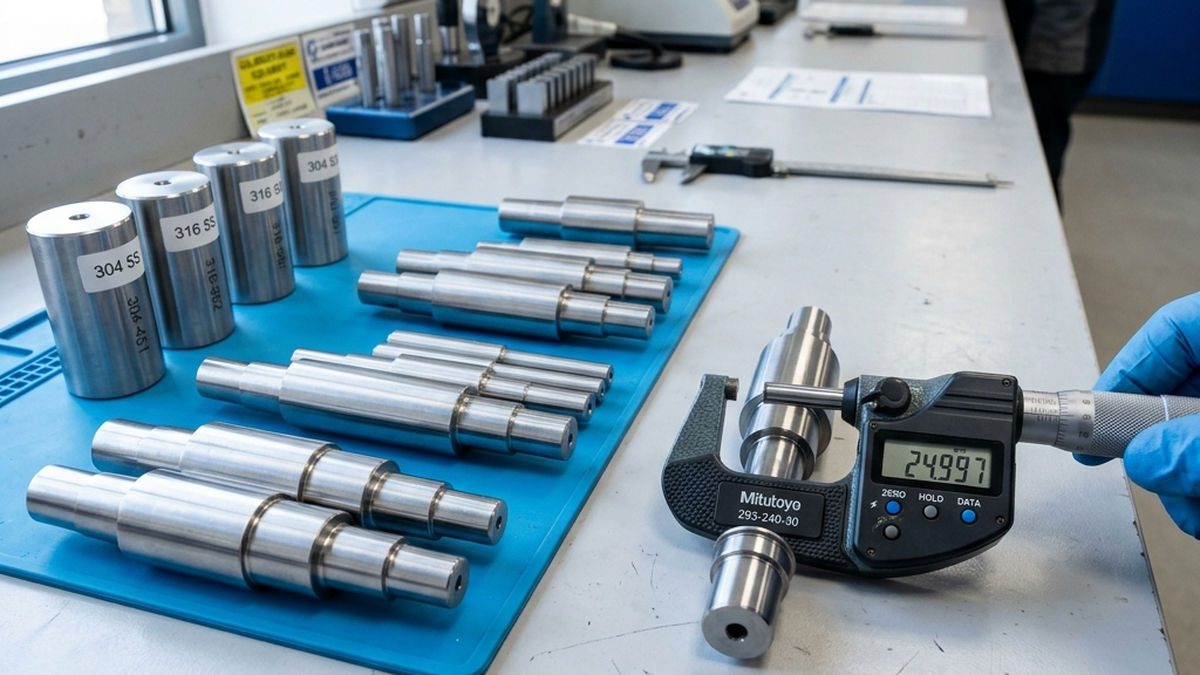
If you know what the production part will be made from, prototype in the same material. This is especially important for functional prototypes, certifiable prototypes and customer samples. There is no substitute for testing the real material.
Step 2: Consider Substitution Only for Form Checks
If you are only checking form, fit and aesthetics, you can substitute a cheaper material:
- Instead of 7075 aluminum, use 6061 (saves 30%)
- Instead of titanium, use aluminum (saves 75%) -- if weight and strength are not being tested
- Instead of CNC stainless, 3D print in SLS nylon -- if the part just needs to exist physically
Step 3: Factor in Post-Processing
Some materials require specific post-processing that affects cost and lead time:
| Material | Common Post-Processing | Additional Cost | Additional Time |
|---|---|---|---|
| 6061/7075 Aluminum | Anodize Type II, bead blast, Alodine | $10-50 per part | 1-3 days |
| Stainless Steel | Passivation, electropolish | $20-80 per part | 1-3 days |
| 4140/4340 Steel | Heat treatment, black oxide | $30-100 per part | 3-5 days |
| Titanium | Passivation, anodize | $20-60 per part | 1-3 days |
| DMLS Metals | Stress relief, support removal, CNC finishing | $100-500 per part | 3-7 days |
Material Cost Comparison
This table compares the total prototype cost for a simple bracket (3" x 2" x 0.5") across materials and processes. These are typical prices, not exact quotes -- your part will vary based on complexity.
| Material & Process | Estimated Cost (1 pc) | Lead Time | Best Use Case |
|---|---|---|---|
| PLA (FDM print) | $15-25 | 1-2 days | Form check only |
| Nylon PA12 (SLS print) | $30-60 | 2-4 days | Functional plastic prototype |
| Delrin (CNC machined) | $50-120 | 3-5 days | Production-grade plastic prototype |
| 6061-T6 Aluminum (CNC) | $75-175 | 3-5 days | Standard metal prototype |
| 7075-T6 Aluminum (CNC) | $90-220 | 3-5 days | High-strength aerospace prototype |
| 303 Stainless (CNC) | $120-280 | 5-7 days | Corrosion-resistant prototype |
| Ti-6Al-4V (CNC) | $300-700 | 5-7 days | Aerospace/medical titanium prototype |
| AlSi10Mg (DMLS print) | $300-1,000 | 5-10 days | Complex metal geometry only |
| PEEK (CNC machined) | $200-500 | 5-7 days | High-temp, chemical-resistant prototype |
| Inconel 718 (CNC) | $500-1,500 | 7-10 days | Extreme heat/strength applications |
The pattern is clear: 3D printed plastics are cheapest for visual models. CNC machined aluminum is the sweet spot for functional metal prototypes. Exotic materials (titanium, Inconel, PEEK) cost significantly more but are necessary for specific applications. For help choosing, see our decision guide for 3D printing vs CNC or explore our rapid prototyping services.
Frequently Asked Questions
What is the best material for CNC prototyping?
Aluminum 6061-T6. It is affordable, machines excellently, has good strength-to-weight ratio, accepts many surface finishes (anodize, Alodine, bead blast) and is available everywhere. It covers about 70% of prototype applications. Use 7075-T6 when you need higher strength, or stainless steel when you need corrosion resistance.
Can I prototype in one material and produce in another?
For form checks and basic fitment, yes. For functional prototypes where test results drive design decisions, no. If the production part is 7075 aluminum and you prototype in 6061, the stiffness and strength will not match. Always test in the production material when the results matter.
What 3D printing materials are closest to production plastics?
SLS nylon PA12 is closest to injection-molded nylon, at roughly 80% of tensile strength. FDM ABS approximates injection-molded ABS. SLA tough resin mimics ABS impact resistance. None are exact matches because layer adhesion creates weak points that do not exist in molded or machined parts.
How much does material choice affect prototype cost?
By a factor of 2-10x. The same bracket in 6061 aluminum ($100) would cost roughly $150 in stainless, $400 in titanium and $800 in Inconel. Material cost, machining speed and tool wear all contribute. Choose the cheapest material that meets your functional requirements.
What materials can be both 3D printed and CNC machined?
Nylon, polycarbonate, ABS, titanium Ti-6Al-4V, 316L stainless steel and aluminum (AlSi10Mg printed vs 6061/7075 machined). However, the printed and machined versions have different mechanical properties due to different microstructures. Do not assume they are interchangeable for functional testing.