How CNC Machining Costs Are Calculated
CNC machining cost depends on five main factors: material, machine time, setup, finishing, and inspection. Each one contributes to the final price per part. Understanding these drivers helps you design parts that are both functional and cost-effective.
Material Cost
Raw material cost varies widely. Aluminum 6061 is about $3-5 per pound, while titanium can run $15-40 per pound. The billet must be larger than the finished part to allow for clamping and facing. Material removal rate also matters — harder materials wear tools faster, adding indirect cost.
Machine Time
CNC machines typically run at $75-150 per hour depending on the machine type. A 3-axis mill is less expensive than a 5-axis. Cycle time depends on material removal volume, number of features, and feed rates. Harder materials require slower feeds and more passes.
Setup Cost
Each setup (loading, indicating, zeroing) takes 15-45 minutes. Simple parts need one setup. Complex parts with features on multiple sides need 3-5 setups. Setup cost is fixed per batch, so it drops per part as quantity increases.
Pro tip: Design parts to minimize setups. Keep critical features on the same side. A part that needs 2 setups instead of 4 can cost 30-40% less.
Finishing and Inspection
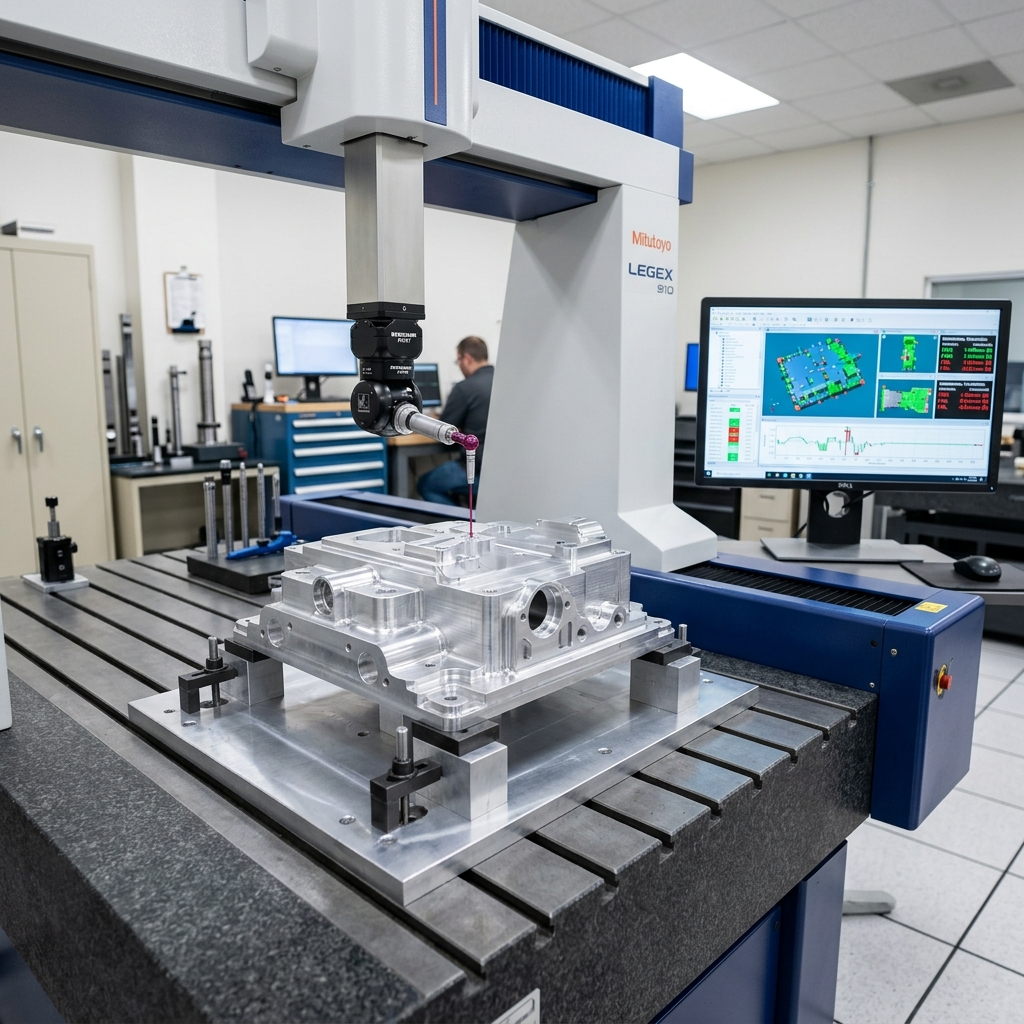
Surface finish requirements add cost. As-machined is included in cycle time. Anodizing, plating, and powder coating are secondary operations with their own pricing. Tighter tolerances require more inspection time — precision parts often need CMM verification on every piece.
Quantity Effect
Setup costs are amortized across the batch. A single prototype bears the full setup cost. At 100 pieces, setup cost per part drops by 99%. At production volumes, dedicated fixturing and optimized toolpaths further reduce cycle time.