Overview
Titanium and aluminum are two of the most popular metals in CNC machining. Both are lightweight. Both resist corrosion. But they are very different in strength, cost and how easy they are to cut.
Engineers pick between them every day. The right choice depends on what your part needs to do, where it will live and how much you can spend. This guide puts real numbers side by side so you can decide fast.
We will compare Ti-6Al-4V (the most common titanium alloy) against Al 6061-T6 (the workhorse aluminum) and Al 7075-T6 (the high-strength aluminum). These three grades cover about 80% of all CNC metal projects.
Properties Comparison Table
Here are the key numbers engineers care about most. All values are typical for wrought, heat-treated bar stock.
| Property | Ti-6Al-4V | Al 6061-T6 | Al 7075-T6 |
|---|---|---|---|
| Tensile Strength | 130 ksi | 45 ksi | 83 ksi |
| Yield Strength | 120 ksi | 40 ksi | 73 ksi |
| Density | 0.160 lb/in³ | 0.098 lb/in³ | 0.102 lb/in³ |
| Strength-to-Weight Ratio | 813 ksi/lb/in³ | 459 ksi/lb/in³ | 814 ksi/lb/in³ |
| Melting Point | 3,000 °F | 1,200 °F | 1,175 °F |
| Thermal Conductivity | 4.2 BTU/hr-ft-°F | 104 BTU/hr-ft-°F | 75 BTU/hr-ft-°F |
| Corrosion Resistance | Excellent | Good | Moderate |
| Relative Material Cost | 3–5x baseline | 1x (baseline) | 1.3x baseline |
| Machinability Rating | Difficult | Easy | Easy |
Ti-6Al-4V and Al 7075-T6 have nearly the same strength-to-weight ratio. The difference comes down to temperature, corrosion and cost. If your part stays below 250 °F and does not sit in saltwater, Al 7075-T6 often wins on value.
When to Use Titanium
Titanium is the right pick when your part faces one or more of these conditions:
- High temperatures: Ti-6Al-4V keeps its strength above 600 °F. Aluminum starts to weaken around 300 °F. Jet engine parts, exhaust components and high-heat fixtures need titanium.
- Harsh chemicals: Titanium handles saltwater, chlorine and most acids without any coating. It is the standard in marine hardware, chemical processing and offshore oil rigs.
- Biocompatibility: The human body does not reject Ti-6Al-4V. That makes it the top choice for surgical implants, bone screws and dental abutments.
- Extreme strength in tight spaces: When you cannot make the part bigger but it must carry heavy loads, titanium's 130 ksi tensile strength lets you use thinner walls.
- Long service life: Titanium does not fatigue as fast as aluminum. Parts that see millions of load cycles, like landing gear pins, last longer in titanium.
When to Use Aluminum
Aluminum is the better choice in most everyday CNC projects. Here is why:
- Cost control: Al 6061-T6 bar stock costs a fraction of what Ti-6Al-4V costs. For budget-sensitive prototypes and high-volume production, aluminum saves thousands of dollars.
- Fast machining: Aluminum cuts 5 to 10 times faster than titanium. That means shorter lead times and lower per-part machining costs. A part that takes 2 hours in titanium might take 20 minutes in Al 6061-T6.
- Lightweight structures: At 0.098 lb/in³, Al 6061-T6 is 39% lighter than Ti-6Al-4V. For drones, robotics and consumer electronics, every gram counts.
- Easy finishing: Aluminum anodizes beautifully. You can add color, hardness and corrosion protection in one step. Powder coating, chromate conversion and bead blasting all work well too.
- Weldability: Al 6061-T6 welds easily with TIG or MIG. Ti-6Al-4V requires an argon-purged chamber and specialized welders, which adds cost.
For a deeper look at high-strength aluminum, read our guide on 7075 aluminum CNC machining.
Cost Comparison
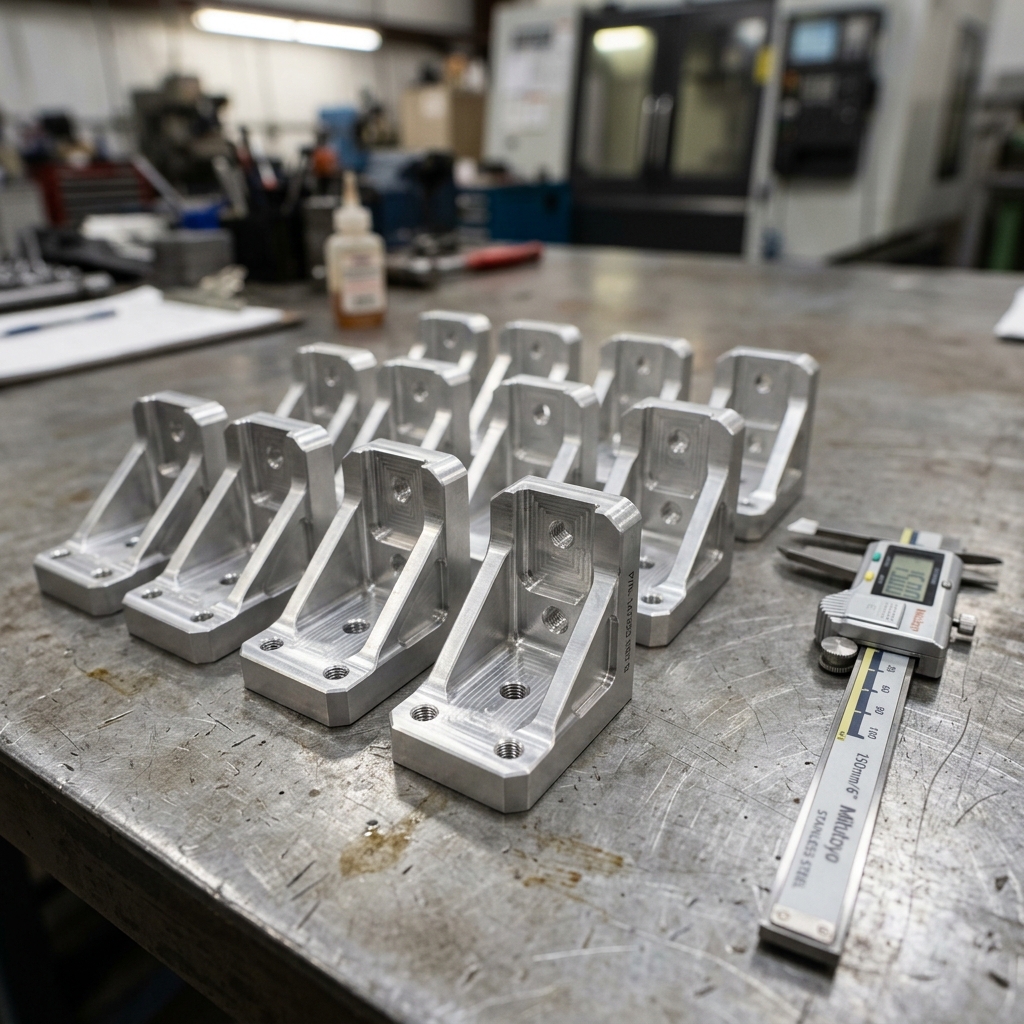
Cost is where these two metals diverge the most. Here is a realistic breakdown for a medium-complexity bracket (roughly 4 x 3 x 1 inches) at a quantity of 10 parts:
| Cost Category | Ti-6Al-4V | Al 6061-T6 | Al 7075-T6 |
|---|---|---|---|
| Raw Material | $85–$120/part | $8–$15/part | $12–$20/part |
| Machining Time | 90–120 min | 15–25 min | 18–30 min |
| Tooling Wear | High (new inserts every 20–40 parts) | Low (inserts last 200+ parts) | Low (inserts last 150+ parts) |
| Estimated Part Cost | $250–$450/part | $35–$65/part | $45–$80/part |
Titanium parts often cost 5 to 10 times more than the same part in aluminum. The gap grows wider at lower quantities because setup and programming costs are the same for both metals. At higher volumes (500+ parts), the per-part gap shrinks a bit but never closes.
Want to understand every line item on your quote? Read our guide on how to read CNC shop quotes.
Machinability
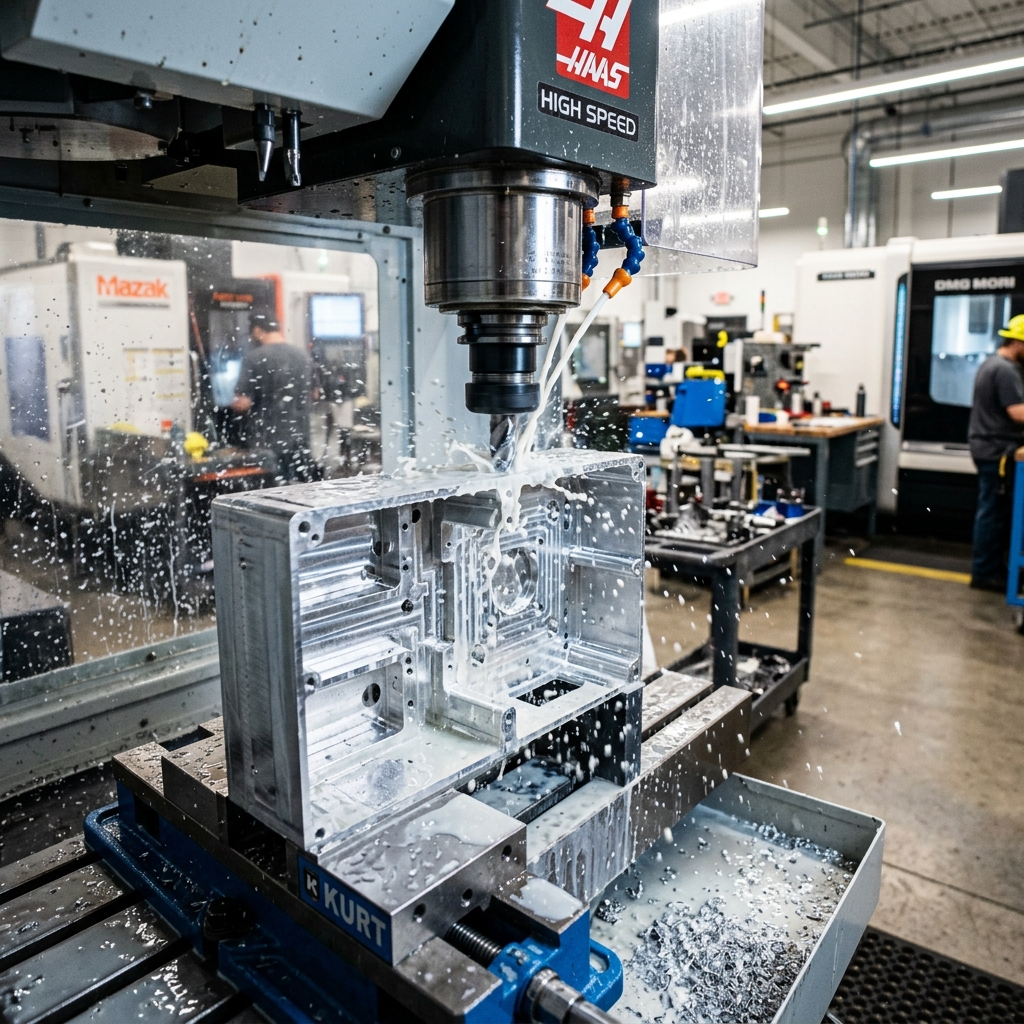
Machinability is how easy a metal is to cut. Aluminum is one of the easiest metals to machine. Titanium is one of the hardest. Here is why:
Why Aluminum Machines So Well
- High thermal conductivity carries heat away from the cut. The tool stays cool.
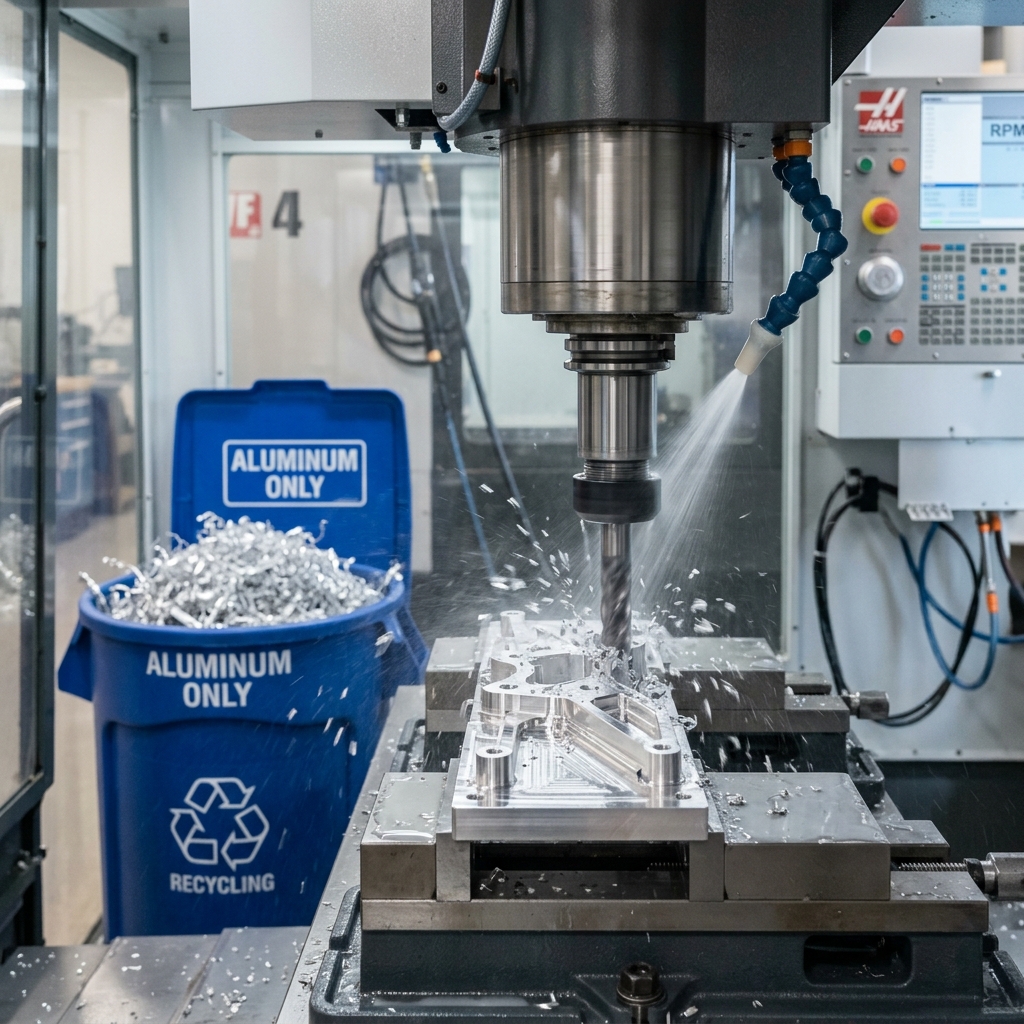
- Soft enough to cut at high speeds (10,000+ RPM) with aggressive feed rates.
- Chips break cleanly and clear the cut zone.
- Standard carbide end mills last a very long time.
Why Titanium Is Difficult
- Very low thermal conductivity traps heat at the cutting edge. Tools overheat fast.
- Strong and springy material bounces back against the tool, causing chatter.
- Chips are thin and stringy. They wrap around the tool if you do not manage them.
- Requires slow spindle speeds (800–2,000 RPM), heavy flood coolant and rigid setups.
- Tool wear is 5 to 10 times faster than when cutting aluminum.
When quoting titanium parts, expect machining time to be 4 to 6 times longer than the same geometry in aluminum. Factor that into your project timeline and budget from the start.
Industries That Use Each Metal
Titanium Industries
- Aerospace: Engine mounts, compressor blades, fasteners and landing gear components.
- Medical: Bone screws, spinal cages, hip implants and surgical instruments.
- Marine: Propeller shafts, seawater valves and hull fittings for naval vessels.
- Chemical processing: Heat exchangers, reactor vessels and piping exposed to acids.
- Defense: Armor plating, missile components and submarine parts.
Aluminum Industries
- Aerospace: Fuselage frames, wing ribs, seat tracks and avionics enclosures (mostly Al 7075-T6).
- Robotics: Arm links, gripper plates, sensor mounts and chassis frames.
- Consumer electronics: Laptop housings, phone frames, heat sinks and speaker enclosures.
- Automotive: Intake manifolds, suspension knuckles and aftermarket brackets.
- Hardware startups: Functional prototypes that look and work like production parts.
How to Choose: A Simple Decision Guide
Ask yourself these five questions. The answers will point you to the right metal.
- Will the part see temperatures above 300 °F? If yes, pick Ti-6Al-4V. Aluminum softens in that range.
- Will the part sit in saltwater or strong chemicals? If yes, pick Ti-6Al-4V. It handles those environments without coatings.
- Does the part go inside the human body? If yes, pick Ti-6Al-4V. It is the gold standard for biocompatibility.
- Is cost the main concern? If yes, pick Al 6061-T6 or Al 7075-T6. The savings are dramatic.
- Do you need more than 100 parts fast? If yes, aluminum machines much faster. Your lead time could be weeks shorter.
If your part needs high strength but stays in a mild environment, Al 7075-T6 is a great middle ground. It matches titanium's strength-to-weight ratio at a fraction of the cost.
Not sure which material fits your project? Upload your CAD file and our engineers will recommend the best grade for your application.
Frequently Asked Questions
Is titanium stronger than aluminum?
Yes. Ti-6Al-4V has a tensile strength of about 130 ksi. Al 6061-T6 sits at 45 ksi and Al 7075-T6 at 83 ksi. Titanium is roughly 1.6 to 3 times stronger depending on the aluminum grade.
Is titanium lighter than aluminum?
No. Aluminum is lighter. Al 6061-T6 weighs 0.098 lb/in³ while Ti-6Al-4V weighs 0.160 lb/in³. Aluminum is about 40% lighter than titanium by volume.
How much more does titanium cost than aluminum?
Titanium raw material costs 3 to 5 times more than aluminum. Machining costs are also higher because titanium wears tools faster and requires slower speeds. A finished Ti-6Al-4V part often costs 5 to 10 times more than the same part in Al 6061-T6.
Can you machine titanium on a standard CNC mill?
Yes, but the machine must be rigid and the setup must be correct. Titanium needs slower spindle speeds, lower feed rates and flood coolant. A rigid 3-axis CNC mill with the right carbide tooling can handle Ti-6Al-4V.
Which is better for aerospace, titanium or aluminum?
Both are used heavily. Al 7075-T6 is used for airframe structures where weight savings matter. Titanium is used for engine components, landing gear and fasteners where strength at high temperatures is critical.
Does titanium rust?
No. Titanium forms a stable oxide layer that protects it from corrosion in saltwater, acids and most chemicals. It outperforms aluminum in harsh environments without any coating.
What is the best aluminum grade for CNC machining?
Al 6061-T6 is the most popular all-around grade. It machines easily, anodizes well and costs less than other grades. Al 7075-T6 is better when you need higher strength, such as in aerospace brackets and fixtures.
What surface finishes work on titanium?
Titanium can be bead blasted, passivated, PVD coated, or anodized (Type II or Type III). It does not accept standard sulfuric acid anodizing like aluminum, so you need a shop familiar with titanium finishing.
When should I choose aluminum over titanium?
Choose aluminum when cost matters, weight savings are the priority, or parts do not face extreme heat or corrosive chemicals. Aluminum is also the better choice for high-volume production because it machines much faster.