How to Think About Finish Selection
Every finish decision comes down to three questions. What does the part need to do? What does it need to look like? And how much can you spend?
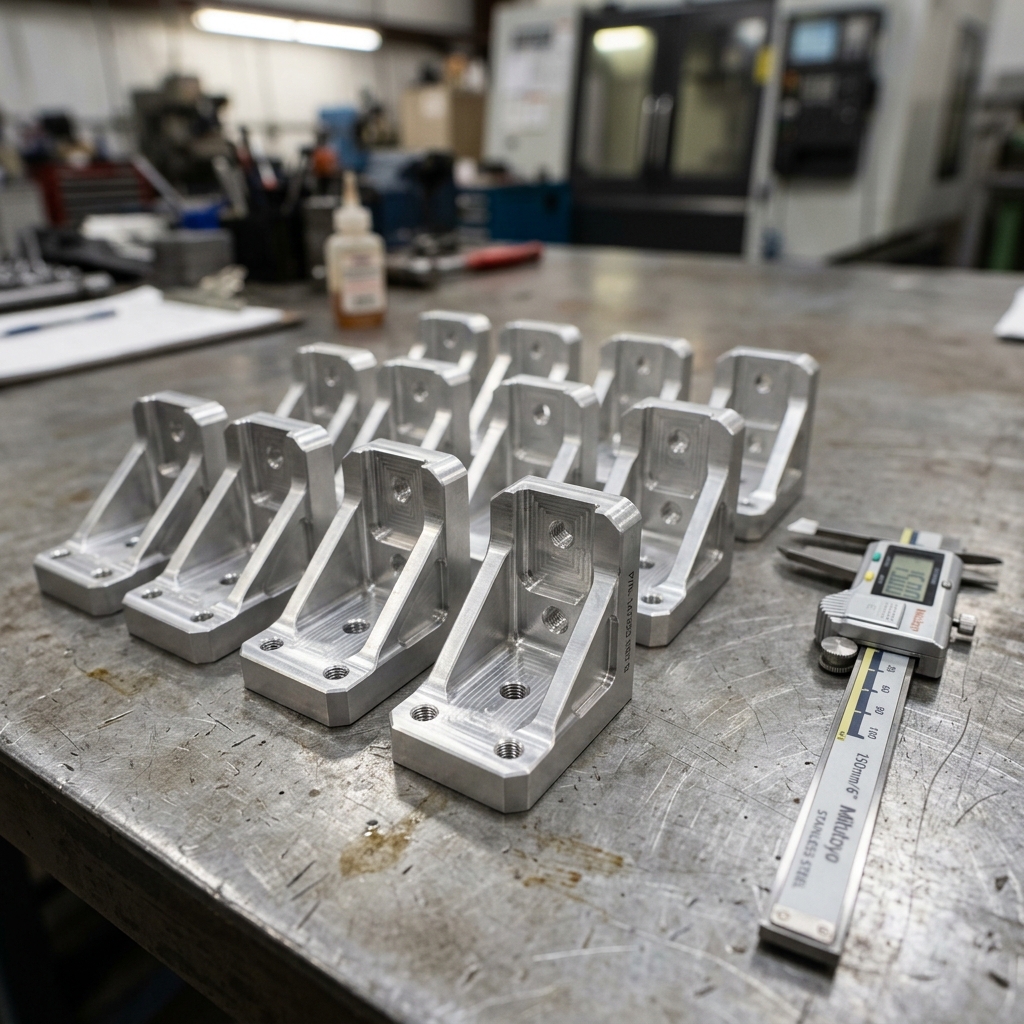
Most engineers over-specify finishes. They pick anodize when as-machined would work fine. Or they choose mirror polish on a part nobody sees. That wastes money and adds lead time.
Start with the simplest finish that meets your needs. Only add cost when the application demands it.
If nobody sees the part and it won't corrode, leave it as-machined. You'll save money and get parts faster.
Cosmetic Finishes
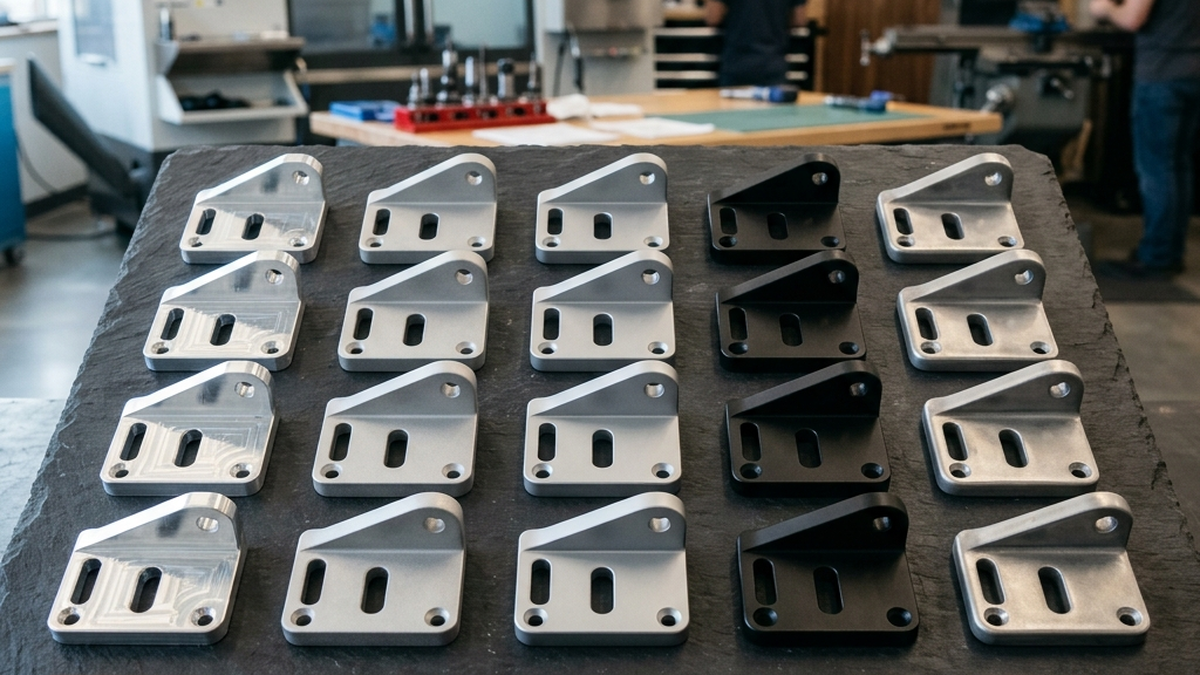
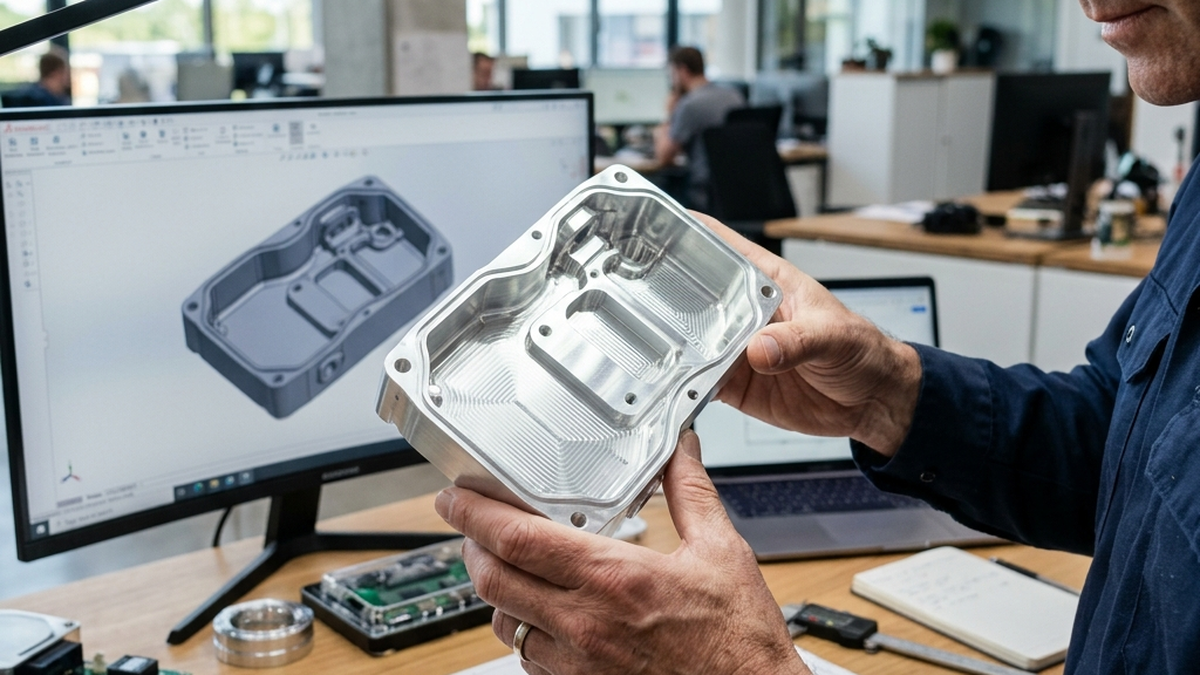
Cosmetic finishes make parts look good. They hide tool marks and give a clean, professional feel. Pick these when customers or end users see the part.
Bead Blast
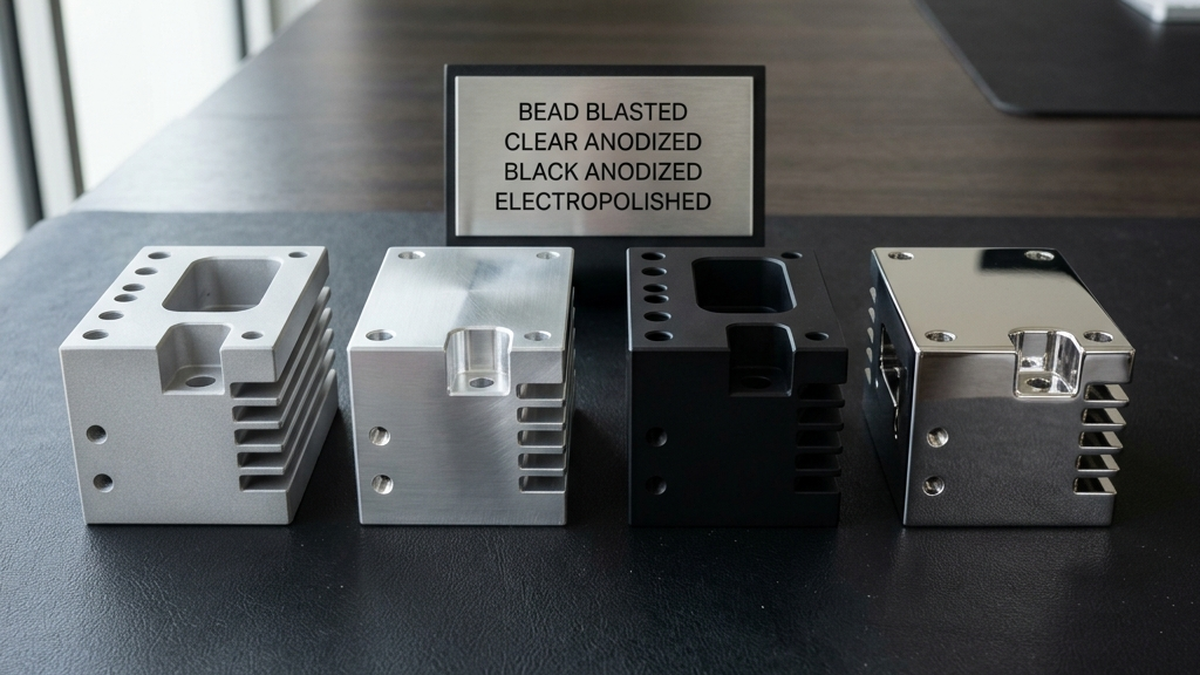
Bead blasting creates a uniform matte texture. It hides tool marks without adding much cost. Most consumer product enclosures start with bead blast.
Cost: $2-8 per part. Lead time: less than 1 day.
Brushed
Brushing creates fine parallel lines on the surface. It gives an industrial, modern look. You see this on stainless steel appliances and electronics.
Cost: $3-10 per part. Lead time: less than 1 day.
Mirror Polish
Mirror polishing removes all visible marks. The surface reflects light like a mirror. It's used for optical parts, medical devices and luxury products.
Cost: $20-100+ per part. Lead time: 2-5 days. Only specify this when you truly need it.
Anodize with Color
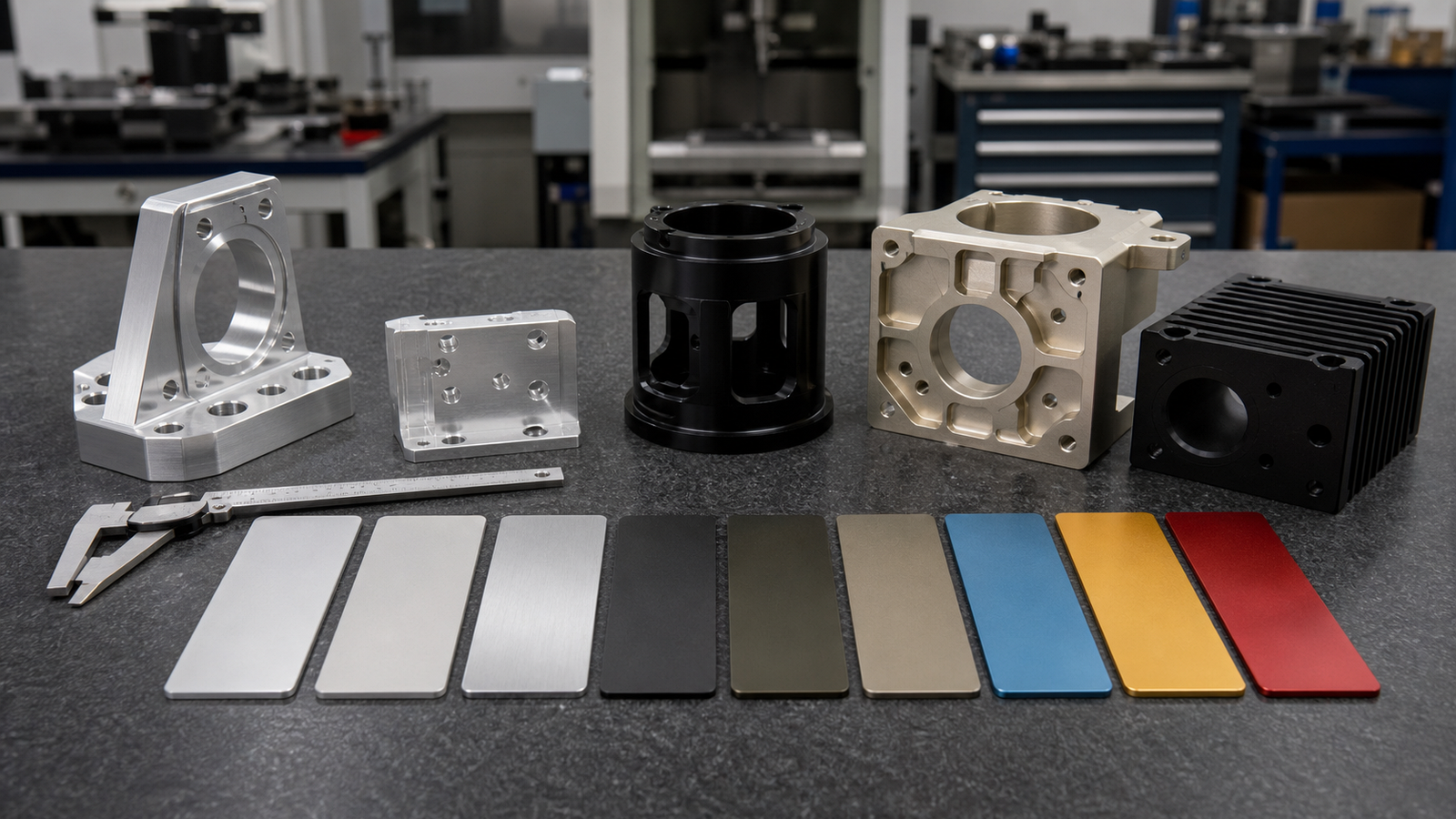
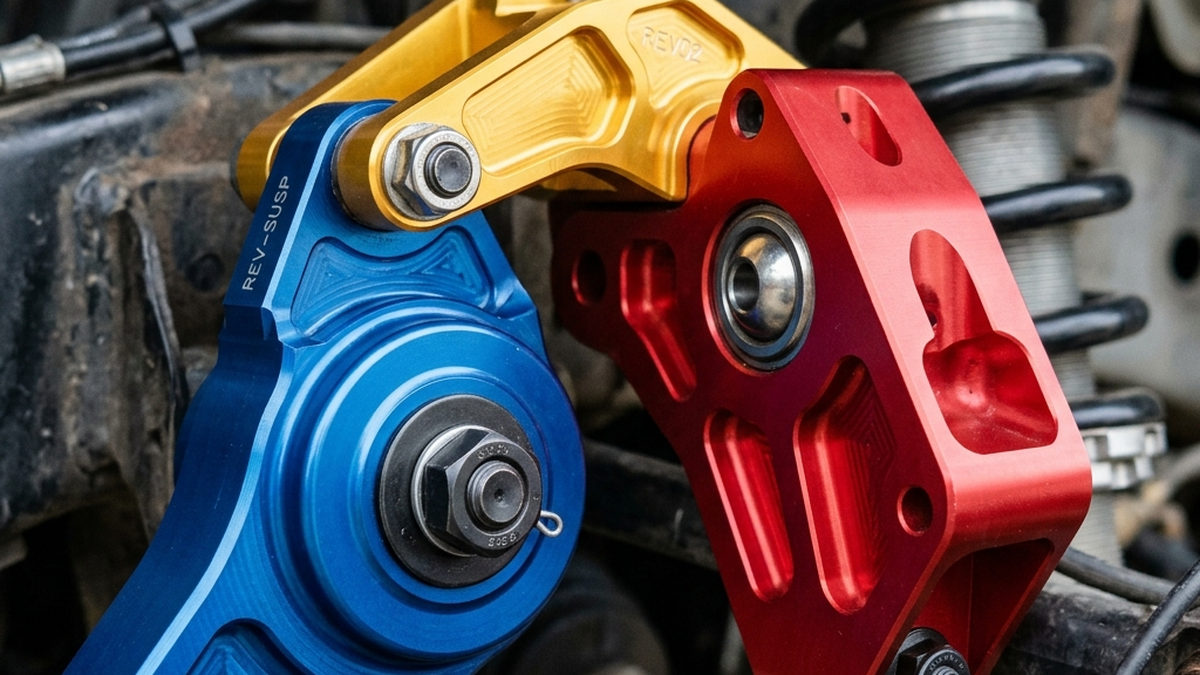
Type II anodizing adds color to aluminum parts. Black, blue, red, gold and clear are standard. It looks great and protects the part at the same time. See our anodizing types comparison for details.
Functional Finishes
Functional finishes change how the part performs. They add hardness, reduce friction, or improve wear life.
Type III Hard Anodize
Hard anodize builds a thick, hard oxide layer on aluminum. It adds real wear resistance. Parts last 5-10x longer in sliding contact. Colors are limited to black or dark gray.
Electroless Nickel
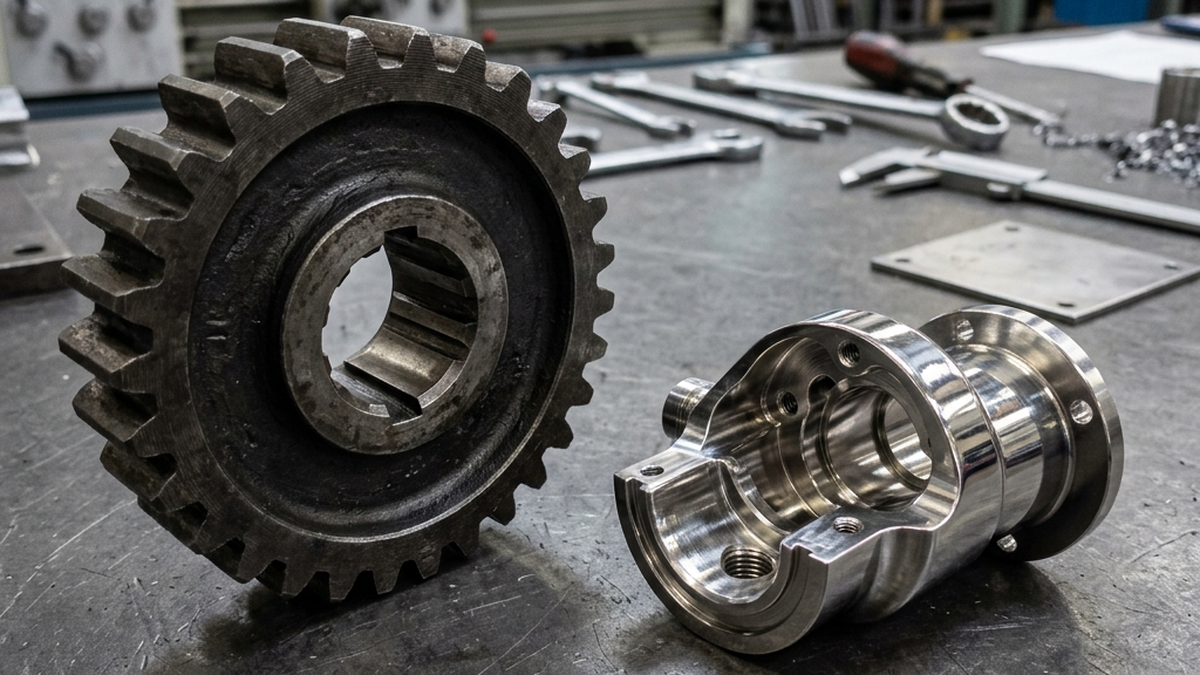
Electroless nickel plating adds a uniform layer of nickel to any metal. It's hard (48-52 HRC after heat treat), corrosion resistant and dimensionally accurate. Great for wear surfaces and mating parts. Learn more in our plating guide.
Hard Chrome
Hard chrome adds extreme hardness (65-70 HRC) and very low friction. It's used on shafts, pistons and sliding surfaces. Thickness is typically 0.001-0.010 inches.
Corrosion Protection
If your part lives outdoors, in salt air, or in a wet environment, you need corrosion protection. Here's how common finishes stack up in salt spray testing.
| Finish | Salt Spray Hours | Best For |
|---|---|---|
| Type II Anodize | 336-500 hrs | Aluminum, indoor/mild outdoor |
| Type III Hard Anodize | 1,000+ hrs | Aluminum, harsh environments |
| Electroless Nickel | 500-1,000+ hrs | Any metal, precision parts |
| Zinc Plating | 96-500 hrs | Steel, hardware, fasteners |
| Powder Coating | 500-1,000 hrs | Any metal, thick durable layer |
| Passivation | 24-200 hrs | Stainless steel only |
Salt spray hours are a lab test, not real-world time. 500 hours of salt spray does not mean 500 hours outdoors. Use these numbers to compare finishes, not to predict field life.
Cost Comparison
Here's what each finish typically costs per part. Prices vary by part size, quantity and shop rates.
| Finish | Cost per Part | Rating |
|---|---|---|
| As-Machined | $0 (included) | Free |
| Bead Blast | $2-8 | $ |
| Brushed | $3-10 | $ |
| Passivation | $3-8 | $ |
| Type II Anodize | $5-25 | $$ |
| Powder Coat | $8-30 | $$ |
| Electroless Nickel | $10-40 | $$-$$$ |
| Type III Hard Anodize | $15-50 | $$$ |
| Hard Chrome | $20-60 | $$$ |
| Mirror Polish | $20-100+ | $$$$ |
Lead Time Impact
Every finish adds time to your order. Here's what to expect.
- Same day: As-machined, bead blast, brushing
- 1-2 days: Powder coating, passivation
- 2-3 days: Anodizing (Type II or III), zinc plating
- 3-5 days: Electroless nickel, hard chrome, mirror polish
If lead time matters, pick a finish that won't hold up your project. A bead blasted part ships the same day. A hard chrome part might add a week.
Quick Decision Guide
Use this table to match your need to the right finish.
| Your Need | Best Finish | Why |
|---|---|---|
| Cheapest option | As-machined | No extra cost or lead time |
| Clean matte look | Bead blast | Hides tool marks, low cost |
| Color on aluminum | Type II anodize | Many colors, adds protection |
| Wear resistance | Type III hard anodize | Hard oxide layer, long life |
| Corrosion on steel | Electroless nickel | Uniform, precise, corrosion proof |
| Thick color on any metal | Powder coat | Durable, any color, any metal |
| Low friction shaft | Hard chrome | Hardest, lowest friction |
| Mirror reflective | Mirror polish | Optical-grade smoothness |
Need help choosing? Upload your CAD file and tell us how the part will be used. We'll recommend the best finish for your budget.
Frequently Asked Questions
What is the best all-around CNC surface finish?
For aluminum, bead blast plus Type II anodize. It looks great, protects the part and costs a moderate amount. For steel, powder coating gives the best mix of durability and appearance.
How do I choose between anodizing and powder coating?
Anodizing is thinner and more precise. It works only on aluminum. Powder coating is thicker and works on any metal. If you have tight tolerances on aluminum, anodize. If you need a thick, durable color on steel, powder coat.
What finish is cheapest?
As-machined costs nothing extra. Bead blasting and brushing are the cheapest add-ons at $2-10 per part. Read our full finishing options guide for all the details.
What finish gives the best corrosion protection?
Electroless nickel plating delivers 500-1,000+ hours of salt spray resistance. Hard anodize on aluminum also performs well at 1,000+ hours. Powder coating offers 500-1,000 hours on any metal.
Does surface finish affect part dimensions?
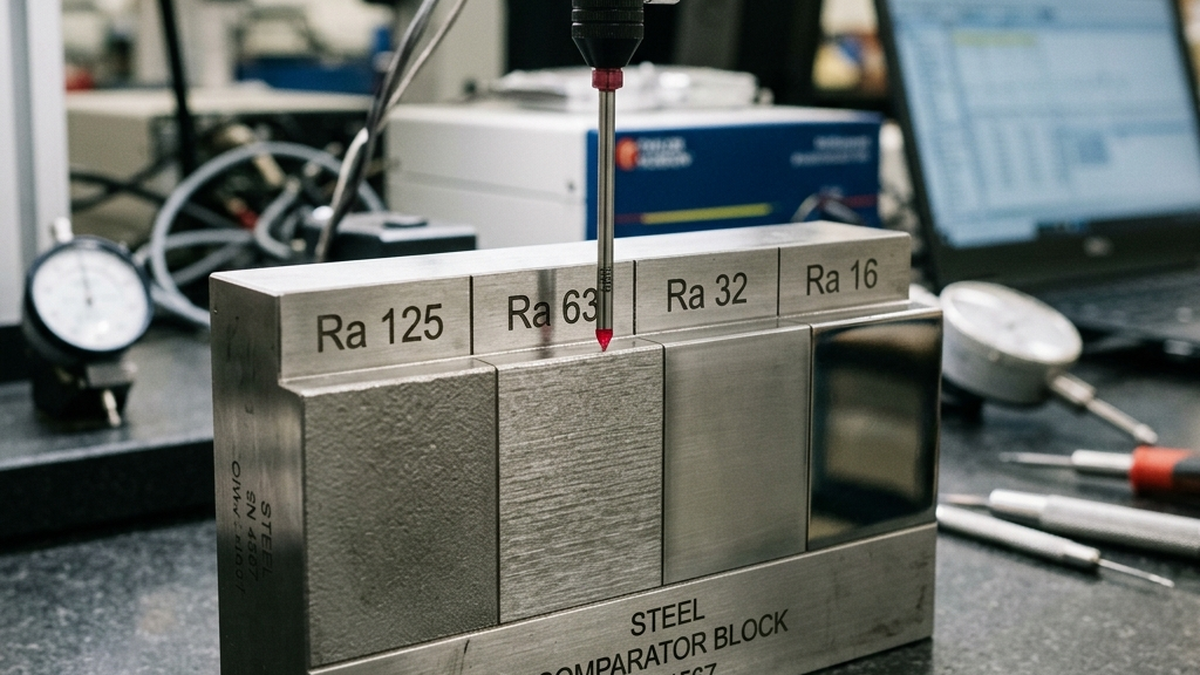
Yes. Every coating adds thickness. Anodize adds 0.0002-0.003 inches. Powder coat adds 0.002-0.006 inches. Plating adds 0.0001-0.002 inches. Account for this in your design, or mask critical surfaces. Check our surface finish numbers guide for measurement details.