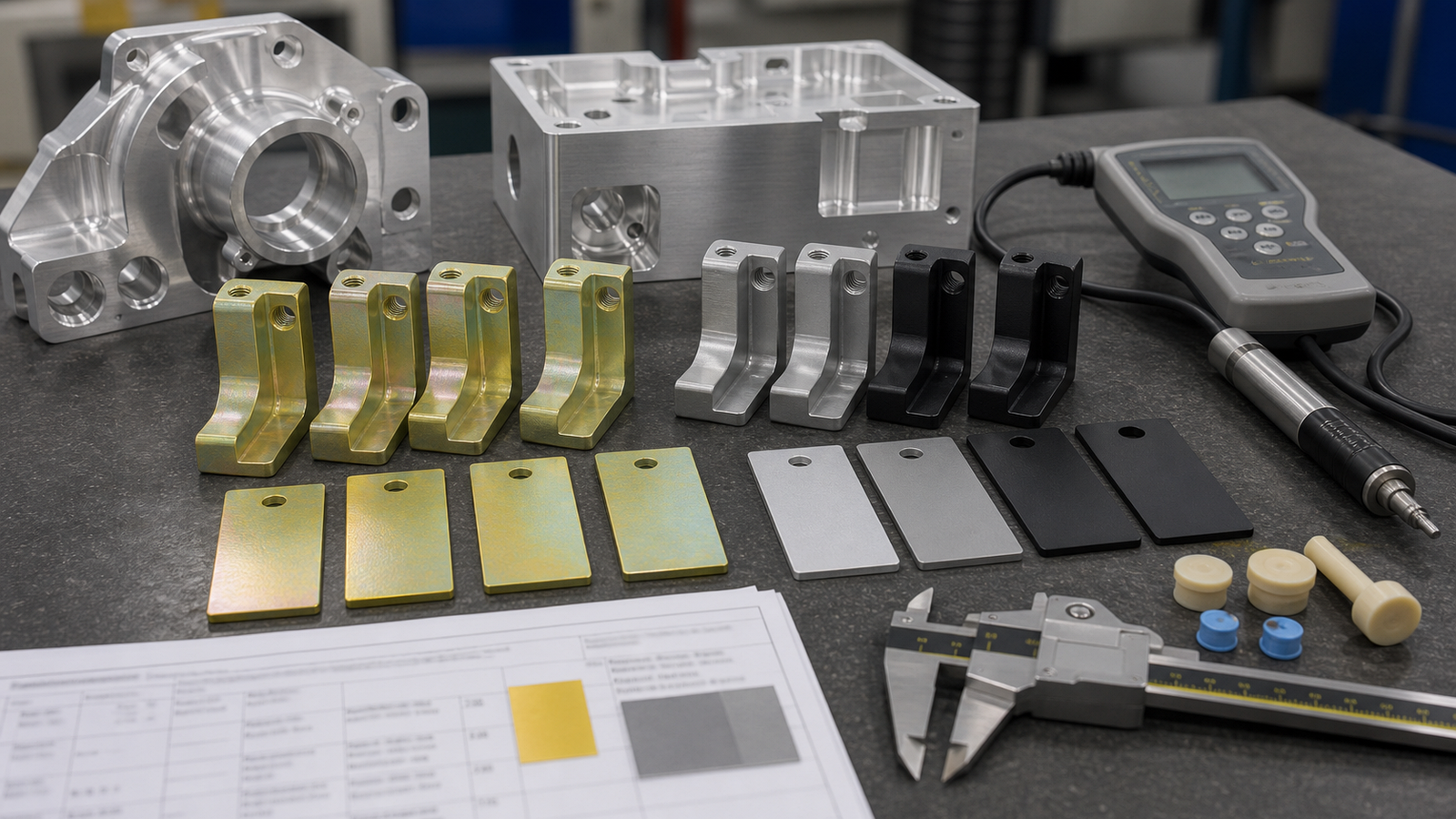
Overview: Two Ways to Protect Aluminum
Aluminum is one of the most popular CNC machining materials. Grades like 7075, 6061 and 2024 are everywhere in aerospace, defense and consumer products. But raw aluminum corrodes over time. It needs a protective finish.
The two most common finishes for aluminum CNC parts are Alodine (chromate conversion coating) and anodizing. They both protect the surface, but they work in very different ways. Picking the wrong one can cause electrical failures, corrosion problems, or wasted money.
This guide breaks down each process, compares them side by side and tells you exactly when to use each one.
How Each Process Works
Alodine (Chromate Conversion Coating)
Alodine is a simple chemical dip. The part goes into an acid bath that contains chromate compounds. The bath reacts with the aluminum surface and creates a very thin film. The whole process takes just 1 to 5 minutes.
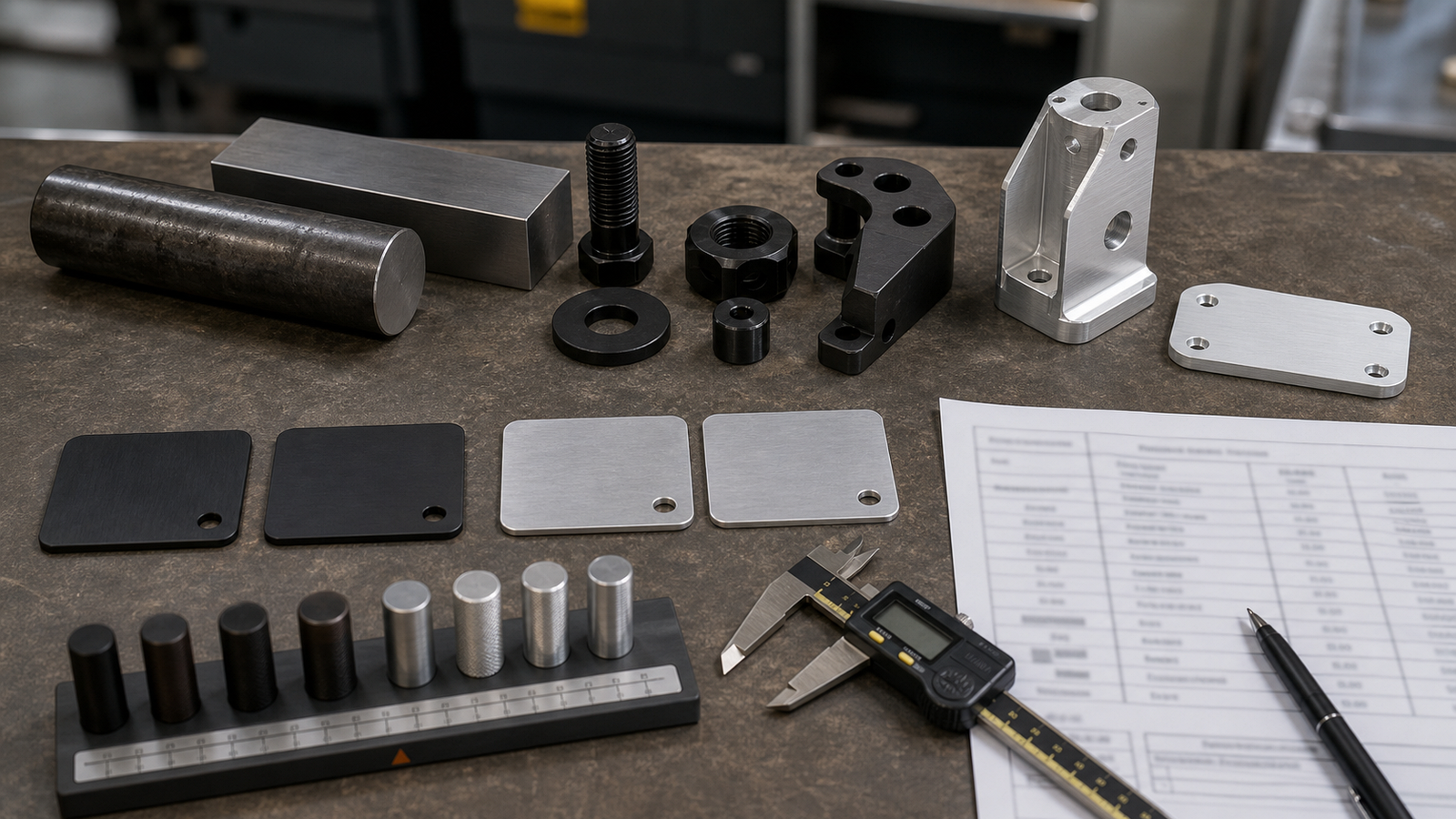
The film is only 0.00001 to 0.0001 inches thick. You can barely see it. On most parts it has a gold or iridescent color. Clear versions also exist for cosmetic parts. The process meets MIL-DTL-5541, the military spec for chromate conversion on aluminum.
Alodine is a brand name owned by Henkel. Other brand names for the same process include Iridite and Chemfilm. They all meet MIL-DTL-5541.
Anodizing (Type II and Type III)
Anodizing is an electrochemical process. The part is dipped in a sulfuric acid bath and connected to a power supply. Electricity forces the aluminum to grow a hard oxide layer on its surface. This layer is much thicker and harder than what Alodine creates.
Type II anodize grows a layer 0.0002 to 0.001 inches thick. It meets MIL-A-8625 Type II. This is the most common anodize for general parts. It can be dyed many colors, including black, blue, red and gold.
Type III anodize (hardcoat) grows a layer 0.001 to 0.003 inches thick. It meets MIL-A-8625 Type III. This coating is extremely hard and wear resistant. It is used on parts that see heavy sliding, abrasion, or harsh environments. For a deeper dive into the differences, see our anodizing type comparison.
Side-by-Side Comparison Table
| Property | Alodine (MIL-DTL-5541) | Type II Anodize (MIL-A-8625) | Type III Hardcoat (MIL-A-8625) |
|---|---|---|---|
| Process Type | Chemical dip | Electrochemical bath | Electrochemical bath (higher current) |
| Thickness | 0.00001 - 0.0001" | 0.0002 - 0.001" | 0.001 - 0.003" |
| Electrical Conductivity | Conductive (preserved) | Insulating | Insulating |
| Corrosion Resistance | Good (168 hrs salt spray) | Very good (336+ hrs salt spray) | Excellent (1000+ hrs salt spray) |
| Wear Resistance | Minimal | Moderate (~300 HV) | Excellent (~65-70 HRC equivalent) |
| Color Options | Gold or clear | Many (black, blue, red, gold, etc.) | Dark gray to black (limited) |
| Cost (per part, small batch) | $5 - $15 | $10 - $30 | $20 - $50 |
| Dimensional Change | None | Slight growth (~0.001" per side) | Significant (~0.002" per side) |
| Paint Adhesion Primer | Excellent | Good | Good |
| Processing Time | 1 - 5 minutes | 30 - 60 minutes | 60 - 120 minutes |
Electrical Conductivity
This is the biggest difference between the two finishes. Alodine keeps the aluminum fully conductive. Anodize creates an insulating oxide layer that blocks current.
If your part needs to carry electrical current or serve as a grounding path, use Alodine. This is why most electronic enclosures, RF shields and EMI housings use Alodine instead of anodize. MIL-DTL-5541 Class 3 is specifically designed for electrical contact areas where conductivity must stay high.
If your part should NOT conduct electricity, anodize is the better pick. The oxide layer acts as a natural insulator. Many engineers use anodize on heat sinks and mounting brackets to prevent short circuits.
Corrosion Resistance
Both finishes protect aluminum from rust and pitting. But anodize wins by a wide margin.
Alodine passes about 168 hours of salt spray testing per ASTM B117. That is enough for indoor parts and mild environments. For aerospace parts that need paint over the top, Alodine works great as a primer layer.
Type II anodize passes 336 or more hours of salt spray. Type III hardcoat can exceed 1,000 hours. For parts that face rain, salt air, chemicals, or outdoor weather, anodize is the clear winner.
Cost Comparison
Alodine is the cheapest aluminum finish. A small batch of parts typically costs $5 to $15 per part. The process is fast and uses simple equipment. Many shops can turn around Alodine work in 1 to 2 days.
Type II anodize runs $10 to $30 per part. Type III hardcoat costs $20 to $50 per part. Anodize takes longer and needs more expensive equipment. Lead times are usually 3 to 5 days.
For large production runs, the per-part cost drops for both. But Alodine stays the cheaper option at every volume level.
If your part needs paint, use Alodine as the primer. It costs less than anodize and gives paint a stronger bond. Skip anodize unless you need the wear or corrosion resistance on its own.
Dimensional Impact
Alodine does not change the size of your part at all. The film is so thin it has zero impact on fit or tolerance. This makes it perfect for tight-tolerance parts where every thousandth matters.
Type II anodize grows into the surface and out from the surface. Roughly half the thickness goes each way. On a 0.001" coating, expect about 0.0005" growth per side. For a bore or shaft with a tight fit, you must account for this in your DFM design.
Type III hardcoat causes even more growth. A 0.002" coating adds about 0.001" per side. On precision parts, the machine shop may need to cut the part slightly undersize before sending it to the anodizer. This adds cost and lead time. Always call out the post-anodize dimension on your drawing.
When to Use Each Finish
Choose Alodine When:
- The part must stay electrically conductive (grounding paths, RF shields, EMI enclosures)
- You plan to paint the part and need a primer coat
- Tight tolerances leave no room for dimensional growth
- Budget is limited and mild corrosion protection is enough
- The part lives indoors or in a controlled environment
- Fast turnaround is critical, Alodine takes hours, not days
Choose Type II Anodize When:
- You need better corrosion protection without paint
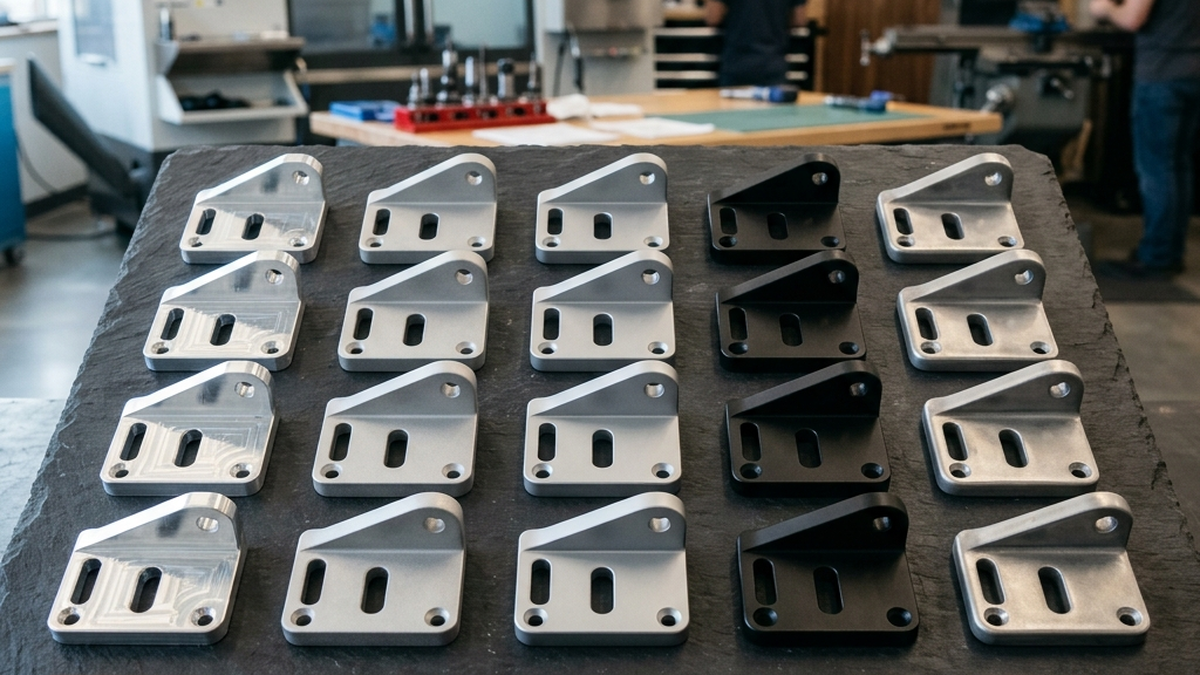
- The part needs a specific color (black, blue, red, etc.)
- Moderate wear resistance is needed
- The part faces outdoor weather or mild chemicals
- Consumer-facing cosmetic appearance matters
Choose Type III Hardcoat When:
- Extreme wear resistance is the top priority (sliding surfaces, valve bodies)
- The part sees abrasive contact, grit, or sand
- Maximum corrosion protection is needed without paint
- Operating temperature is high, hardcoat withstands up to 2,000 degrees F
- Defense or aerospace specs require MIL-A-8625 Type III
At RivCut, we machine aluminum parts from 6061, 7075, 2024 and other grades every day. We work with trusted finishing partners to deliver Alodine, Type II and Type III anodize. Upload your CAD file and we will quote the machining and finishing together.
Frequently Asked Questions
What is the difference between Alodine and anodize?
Alodine is a chemical dip that puts a very thin film on aluminum. It keeps the part conductive and costs less. Anodize is an electrochemical bath that grows a thicker, harder oxide layer. It blocks electricity and resists wear much better.
Does Alodine change part dimensions?
No. Alodine adds a film only 0.00001 to 0.0001 inches thick. This is so thin it does not change any dimension on the part.
Can you anodize 7075 aluminum?
Yes. 7075 aluminum anodizes well with Type II and Type III processes. The high zinc content may cause a slightly yellowish tint on clear anodize, but performance is excellent.
Is Alodine the same as chromate conversion?
Yes. Alodine is a brand name for chromate conversion coating. The process meets MIL-DTL-5541. Other brand names include Iridite and Chemfilm.
Which finish is better for electrical grounding?
Alodine is better for grounding. It keeps the aluminum conductive. Anodize creates an insulating oxide layer that blocks electrical current.
How much does anodizing cost per part?
Type II anodize typically costs $10 to $30 per part for small batches. Type III hardcoat runs $20 to $50 per part. Exact price depends on part size and quantity.
Does anodizing make aluminum harder?
Yes. Type II anodize reaches about 300 HV on the Vickers scale. Type III hardcoat can reach 65 to 70 HRC equivalent, making the surface nearly as hard as tool steel.
Can you paint over Alodine?
Yes. Alodine is one of the best paint primers for aluminum. The coating gives paint a strong chemical bond. Many aerospace shops apply Alodine before primer and topcoat.
What MIL-SPEC covers Alodine?
MIL-DTL-5541 covers chromate conversion coating (Alodine). Class 1A provides maximum corrosion protection. Class 3 is for electrical contact areas where low resistance matters.