What Is Black Oxide?
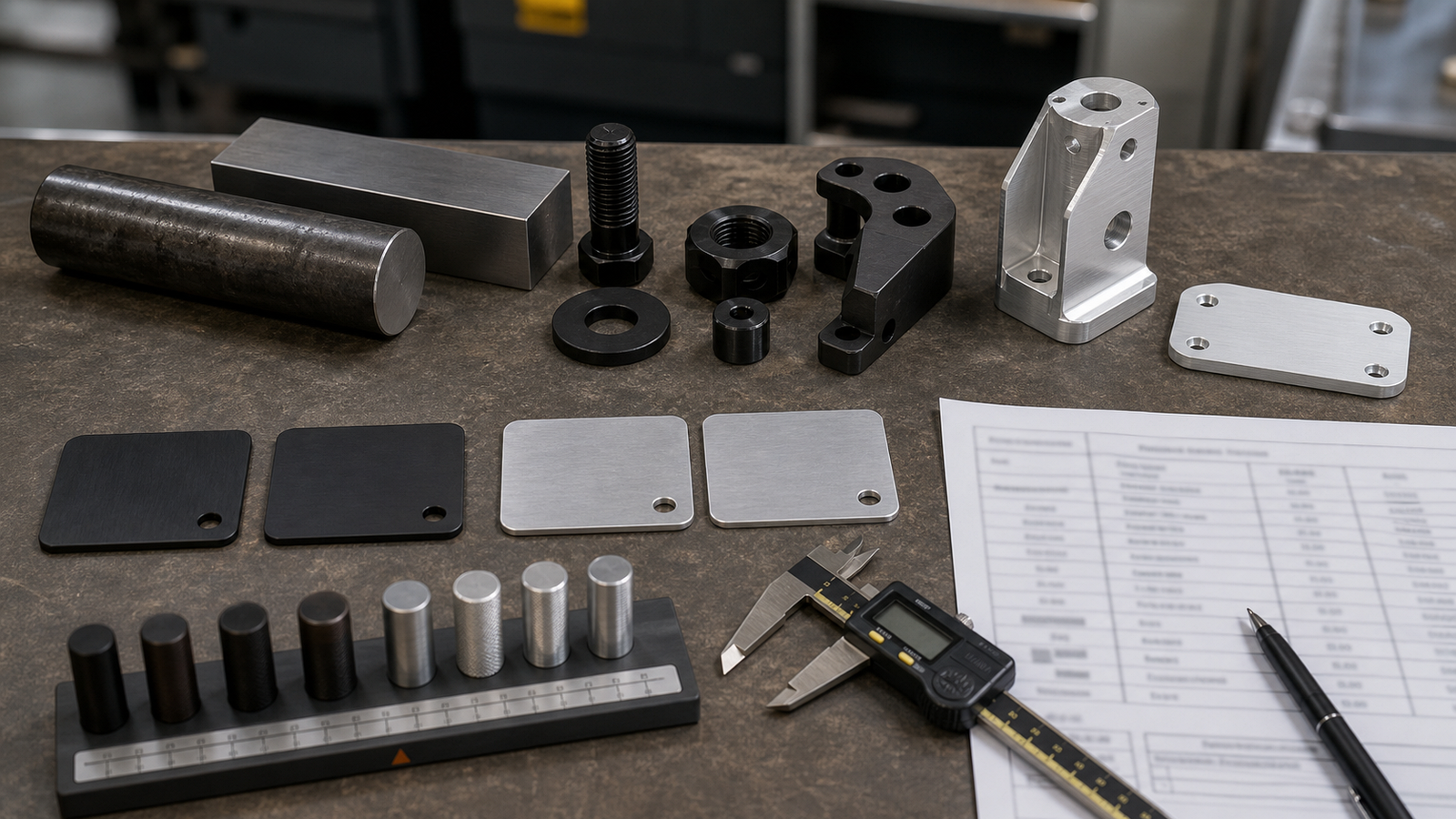
Black oxide is a chemical conversion coating for steel and iron. The parts are dipped in a hot alkaline salt bath (around 285 degrees F). The bath reacts with the iron on the surface and creates a thin layer of magnetite (Fe3O4). This layer is only about 0.00001 inches thick.
The result is a dark black or blue-black surface. It looks clean and professional. But the coating by itself does not offer much corrosion protection. That is why most shops seal it with oil or wax right after the bath. The oil fills the tiny pores in the oxide layer and blocks moisture.
Black oxide meets MIL-DTL-13924. Class 1 covers hot process black oxide on carbon steel and alloy steel (1018, 4140, 4340, 8620). Class 4 covers alkaline process for stainless steel (303, 304, 316).
Do NOT specify black oxide on aluminum parts. Black oxide is for steel and iron only. If you need a black finish on aluminum, use Type II anodize with black dye instead.
What Is Anodizing?
Anodizing is an electrochemical process for aluminum. The part is submerged in a sulfuric acid bath and connected to a power supply. Electricity forces the aluminum surface to grow a hard oxide layer (aluminum oxide, Al2O3). This layer is much thicker and harder than what you get from black oxide.
Type II anodize creates a layer 0.0002 to 0.001 inches thick. It can be dyed many colors: black, blue, red, gold, green and more. It meets MIL-A-8625 Type II. This is the most common anodize for consumer products and general CNC parts.
Type III hardcoat anodize creates a layer 0.001 to 0.003 inches thick. It is extremely hard and wear resistant. It is used for parts that see heavy abrasion or harsh environments. It meets MIL-A-8625 Type III. Read our full anodizing type comparison for a detailed breakdown of Type I vs Type II vs Type III, or see how anodizing compares to Alodine.
Side-by-Side Comparison Table
| Property | Black Oxide (MIL-DTL-13924) | Type II Anodize (MIL-A-8625) | Type III Hardcoat (MIL-A-8625) |
|---|---|---|---|
| Material | Steel & iron ONLY | Aluminum ONLY | Aluminum ONLY |
| Process | Hot chemical dip | Electrochemical bath | Electrochemical bath (higher current) |
| Thickness | ~0.00001" | 0.0002 - 0.001" | 0.001 - 0.003" |
| Dimensional Change | None | Slight (~0.0005" per side) | Significant (~0.001" per side) |
| Corrosion Resistance | Mild (24-48 hrs with oil) | Very good (336+ hrs salt spray) | Excellent (1000+ hrs salt spray) |
| Surface Hardness | No increase (same as base metal) | ~300 HV | ~65-70 HRC equivalent |
| Color Options | Black only | Many (black, blue, red, gold, etc.) | Dark gray to black |
| Cost (per part, small batch) | $3 - $10 | $10 - $30 | $20 - $50 |
| Requires Topcoat? | Yes (oil or wax) | No (self-sealing) | No (self-sealing) |
Material Compatibility: The Number One Mistake
The single most important thing to know about these two finishes is that they work on different metals:
- Black oxide works on steel and iron. Common grades: 1018, 1045, 4140, 4340, 8620, stainless 303/304/316.
- Anodizing works on aluminum. Common grades: 6061, 7075, 2024, 5052, MIC-6.
You cannot anodize a steel part. You cannot black oxide an aluminum part. This sounds obvious, but it is the most common spec mistake we see on incoming drawings. About 5% of new orders that come through RivCut have the wrong finish specified for the material. Our free DFM review catches these errors before they reach the shop floor.
Corrosion Protection
There is no contest here. Anodizing provides far better corrosion protection than black oxide.
Black oxide with an oil topcoat passes about 24 to 48 hours of ASTM B117 salt spray testing. Without oil, it may start rusting in just a few hours in a humid room. Black oxide is not a heavy-duty corrosion barrier. It is mainly for mild indoor protection and appearance.
Type II anodize passes 336 or more hours of salt spray. Type III hardcoat can exceed 1,000 hours. If corrosion is a concern, anodize wins by a huge margin. But remember, you can only anodize aluminum and you can only black oxide steel. So the comparison is not about picking one over the other. It is about understanding what each finish can do for its respective material.
If you need serious corrosion protection on steel, consider zinc plating, nickel plating, or powder coating instead of black oxide.
Cost Comparison
Black oxide is one of the cheapest surface finishes available:
- Black oxide: $3 to $10 per part for small batches. Fast turnaround, usually 1 to 2 days.
- Type II anodize: $10 to $30 per part for small batches. Lead time 3 to 5 days.
- Type III hardcoat: $20 to $50 per part for small batches. Lead time 5 to 7 days.
Black oxide is cheap because the process is simple, a hot chemical dip that takes 15 to 30 minutes. No electricity, no complex chemistry. Anodizing needs an electrolytic cell, power supply and more time per batch.
Dimensional Impact
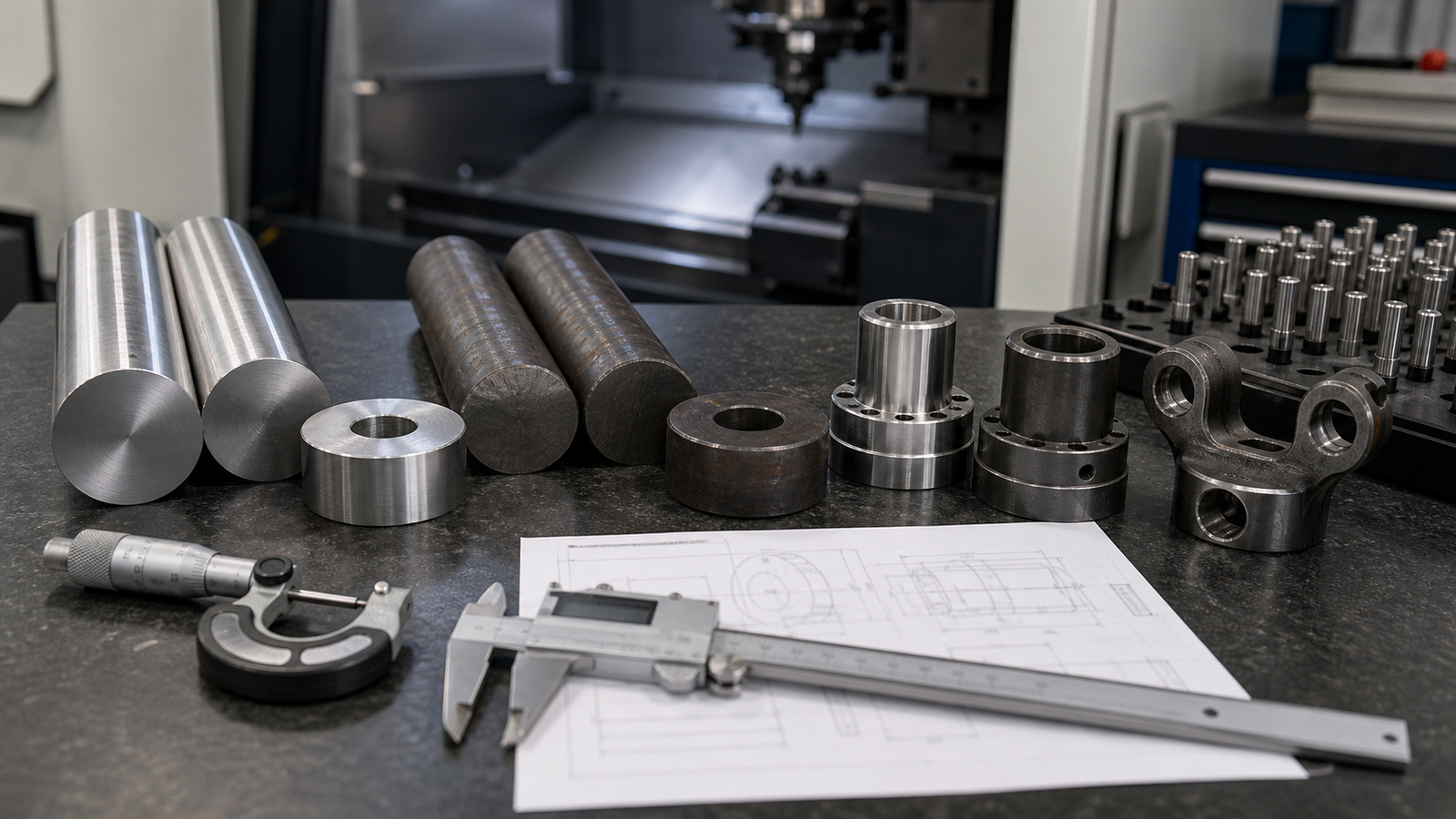
Black oxide adds virtually zero thickness. The 0.00001-inch film is too thin to measure on most parts. This makes it perfect for precision steel components where every tenth of a thousandth matters. Gauges, pins, bushings and calibration tools often use black oxide for exactly this reason.
Anodize adds noticeable thickness. Type II grows about 0.0005 inches per side. Type III grows about 0.001 inches per side. On tight-tolerance parts, the machinist must account for this growth. Read our Alodine vs anodize guide for detailed dimensional impact data.
Appearance and Aesthetics
Black oxide gives steel a clean, dark black look. It reduces glare and light reflection. Many tooling companies and firearms manufacturers use it for this reason. The finish looks professional but is not flashy.
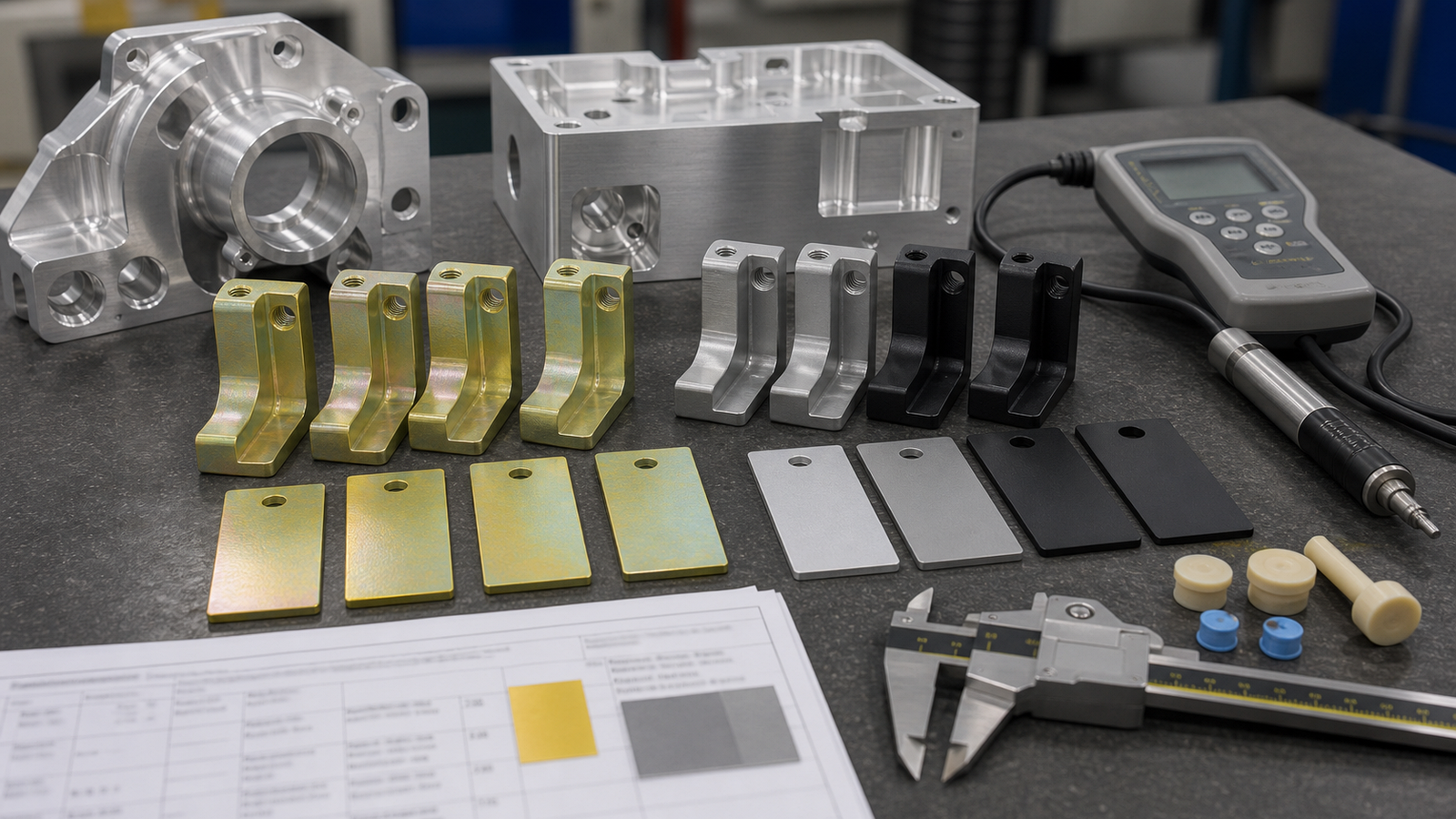
Anodizing gives aluminum a wide range of color options. Black anodize is the most popular, but you can also get blue, red, gold, green and other colors. The finish is smooth and even. Consumer electronics companies like Apple use anodized aluminum for product housings because of its premium look.
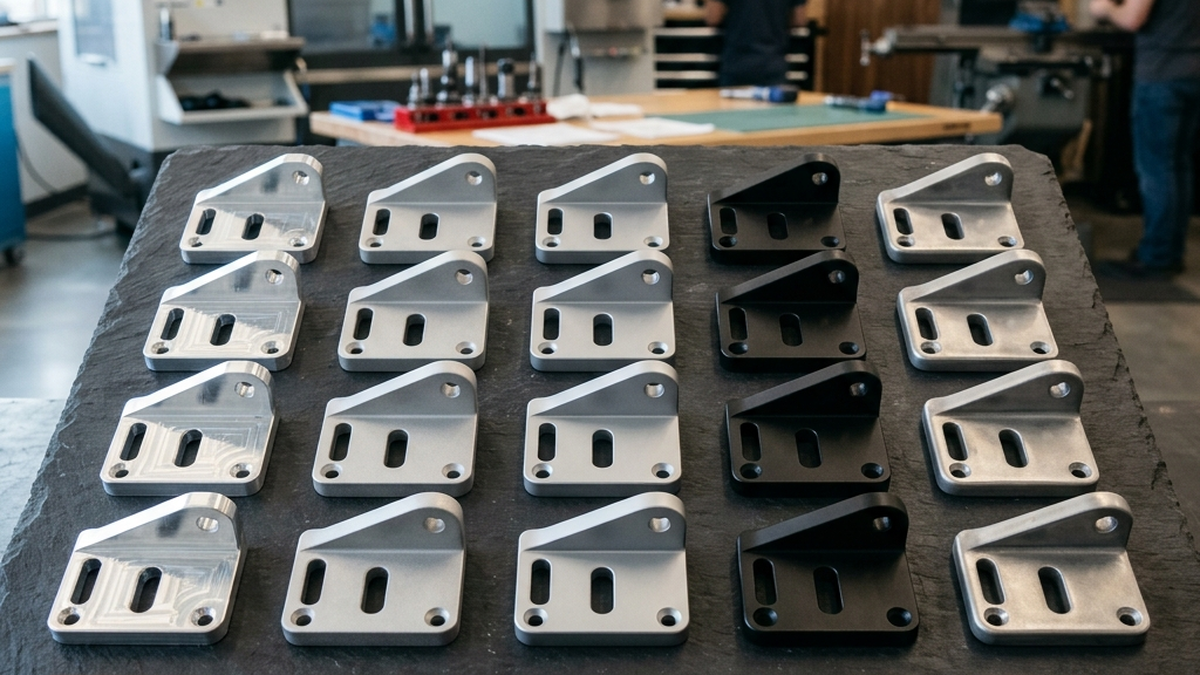
If you want a black finish and your part could be either steel or aluminum, here is the decision: aluminum part = black anodize, steel part = black oxide.
When to Use Each Finish
Choose Black Oxide When:
- Your part is made from steel or iron (1018, 4140, 4340, stainless 303/304/316)
- You need a low-cost black finish for appearance
- The part lives indoors or in a dry environment
- Zero dimensional change is critical (gauge pins, bushings, precision tools)
- You want to reduce light glare on the part surface
- Budget is tight, black oxide is the cheapest steel finish
Choose Anodizing When:
- Your part is made from aluminum (6061, 7075, 2024, 5052)
- You need real corrosion protection (outdoor, marine, or harsh environments)
- Wear resistance matters (Type III hardcoat for sliding or abrasive contact)
- You want a specific color on the part
- The part is consumer-facing and needs a premium look
- Aerospace or defense specs require MIL-A-8625
At RivCut, we machine both steel and aluminum parts every day. We work with trusted finishing vendors for black oxide, anodize and dozens of other finishes. Upload your CAD file and select your material and finish. Our engineers will review everything in our free DFM check.
Frequently Asked Questions
What is the difference between black oxide and anodizing?
Black oxide is a chemical conversion coating for steel and iron. Anodizing is an electrochemical process for aluminum. They cannot be used on each other's materials. Black oxide is thinner, cheaper and offers mild corrosion protection. Anodizing is thicker, harder and gives much better corrosion and wear resistance.
Can you anodize steel?
No. Anodizing only works on aluminum and a few other metals like titanium and magnesium. It does not work on steel. This is the most common material-finish mismatch mistake engineers make.
Can you black oxide aluminum?
No. Standard black oxide is designed for steel and iron only. There are some specialty cold black oxide processes marketed for aluminum, but they do not give the same performance. Use anodizing instead for aluminum parts.
Does black oxide prevent rust?
Black oxide alone provides only mild rust protection. It must be sealed with oil or wax to be effective. With an oil topcoat, black oxide can pass about 24 to 48 hours of salt spray testing. Without oil, it may start rusting within hours.
How much does black oxide cost per part?
Black oxide is very cheap. Small batches typically cost $3 to $10 per part. It is one of the least expensive surface finishes available for steel CNC parts.
Does black oxide change part dimensions?
No. Black oxide adds a film only about 0.00001 inches thick. This is so thin it has zero effect on part dimensions or tolerances. It is ideal for tight-tolerance steel parts.
What MIL-SPEC covers black oxide?
MIL-DTL-13924 covers black oxide on steel and iron. Class 1 is for hot process (most common). Class 4 is for alkaline process used on stainless steel.
Is anodizing better than black oxide?
They cannot be directly compared because they work on different materials. For aluminum parts, anodizing is the standard. For steel parts, black oxide is one of many options. If your part is aluminum and you need good corrosion and wear resistance, anodizing is the better choice.
What colors can black oxide produce?
Black oxide produces a single color: black (technically a very dark blue-black). Unlike anodizing, it cannot be dyed other colors. If you need colored steel parts, consider powder coating or paint instead.