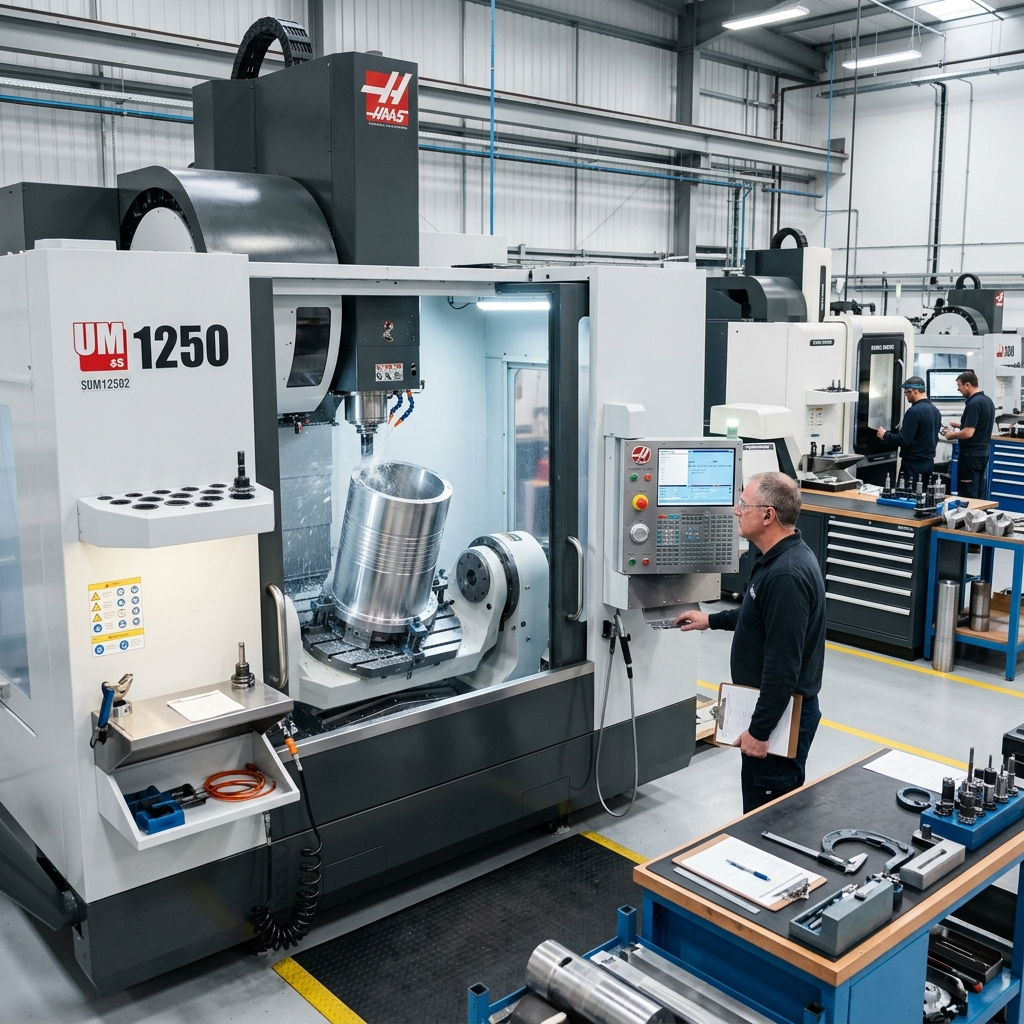
Quick Answer: What Is DFM in CNC Machining?
DFM (Design for Manufacturability) means shaping a part so it is cheap to machine without changing how it works. Good DFM follows a few rules: add inside corner radii of at least 1/3 the pocket depth, keep walls above 0.040″ for aluminum and 0.060″ for steel, limit pocket and hole depth to about 4× the width and loosen tolerances you do not need. These changes cut CNC cost by 20–50%.
This guide gives the top 10 DFM tips our machinists wish every designer knew, with the estimated savings, common mistakes to avoid and a quick summary table. Use it while reviewing your CAD model, or upload a file for a free DFM review from our engineers.
DFM quick rules: Inside corner radius ≥ 1/3 pocket depth | min wall 0.040″ aluminum, 0.060″ steel | pocket depth ≤ 4× width | hole depth ≤ 4× diameter | use standard drill sizes | typical savings 20–50%.
What Is DFM?
DFM stands for Design for Manufacturability. It means designing parts so they are easy to make. Good DFM keeps the part working the same way. But it makes machining faster and cheaper.
Most engineers learn DFM from experience. This guide gives you the top 10 tips our machinists wish every designer knew.
Top 10 DFM Tips
1. Add Inside Corner Radii
End mills are round. They cannot cut sharp inside corners. Every inside corner needs a radius. Use a radius of at least 1/3 the pocket depth.
A 1" deep pocket needs at least a 0.333" corner radius. This lets the shop use a bigger, stiffer tool. Bigger tools cut faster.
Adding corner radii lets the shop use larger tools. Larger tools remove metal faster. This cuts cycle time by 15–25%.
2. Keep Wall Thickness Above Minimums
Thin walls vibrate during cutting. This causes chatter marks and poor finish. Minimum wall thickness for aluminum is 0.040". For steel, use 0.060".
Thicker walls are faster to machine. They also hold tighter tolerances. If you can, use 0.080" or more.
3. Limit Pocket Depth
Deep pockets need long tools. Long tools flex and chatter. Keep pocket depth under 4 times the width. A 1" wide pocket should be under 4" deep.
If you need deeper pockets, add relief cuts or through-holes to help the tool reach.
4. Use Standard Hole Sizes
Standard drill sizes cut faster than custom sizes. Use fractional drills (1/4", 3/8", 1/2") or letter/number drills. Non-standard holes need end milling, which takes longer.
5. Keep Hole Depth Under 4x Diameter
A 0.250" drill should go no deeper than 1". Deeper holes need peck drilling. This takes 2–3 times longer. If you need a deep hole, consider drilling from both sides.
Standard holes and shallow depths avoid special tools and slow peck cycles. This saves 10–20% on hole machining.
6. Loosen Tolerances Where You Can
Tight tolerances are the top cost driver. Use ±0.005" for most features. Only apply ±0.001" to the features that truly need it. See our Tolerance Guide for details.
7. Avoid Thin, Tall Features
Tall, thin features bend during machining. They are hard to hold in a vise. If you need a tall fin, add a rib for support. Or widen the base.
8. Design for Standard Tooling
Avoid features that need custom tools. Dovetails, T-slots, and non-standard threads add cost. Every custom tool adds setup time and lead time.
9. Reduce the Number of Setups
Each time the operator flips the part, it adds time. Design your part so most features can be cut from one side. Keep critical features on the same side to avoid alignment errors.
10. Add Fillets to Outside Edges
Sharp outside edges are free to machine. But a small fillet (0.010"–0.030") is better for the part. It reduces stress risers and prevents cuts during handling. Fillets do not add cost.
Cost Savings Breakdown
| DFM Change | Cost Savings | Why It Helps |
|---|---|---|
| Add corner radii | 15–25% | Allows larger, faster tools |
| Loosen tolerances | 20–50% | Fewer passes, less inspection |
| Thicker walls | 10–15% | Less vibration, faster feeds |
| Shallow pockets | 10–20% | Shorter tools, stiffer cuts |
| Standard holes | 10–20% | Fast drilling, no end milling |
| Fewer setups | 15–30% | Less handling, fewer fixtures |
Common DFM Mistakes
- Sharp inside corners. Every inside corner needs a radius. No exceptions.
- Tolerances on every dimension. Use a general tolerance block. Only call out tight tolerances where needed.
- Walls thinner than 0.040". They vibrate, chatter, and may break.
- Deep, narrow pockets. These need long, thin tools that flex and chatter.
- Features on all six sides. This needs multiple setups. Try to keep features on 2–3 sides.
The most common DFM mistake is over-tolerancing. Putting ±0.001" on every dimension can triple your part cost. Only tight-tolerance the features that truly need it.
Get a Free DFM Review
Not sure if your design is optimized? Upload your CAD file to RivCut. Our engineers review your part for free. We flag any DFM issues and suggest changes that save money.
Most DFM reviews take less than 24 hours. You get a marked-up report with clear suggestions.
Every part we quote gets a free DFM review. We want your parts to be easy to make and affordable.
Quick Summary Table
| Feature | Guideline |
|---|---|
| Inside corner radius | ≥ 1/3 of pocket depth |
| Minimum wall (aluminum) | 0.040" (1 mm) |
| Minimum wall (steel) | 0.060" (1.5 mm) |
| Max pocket depth | 4x pocket width |
| Max hole depth | 4x hole diameter |
| Default tolerance | ±0.005" |
| Target setups | 2–3 or fewer |
Need a free DFM review?
Upload your CAD file for an instant quote. Free DFM review included with every order.
Upload CAD for Instant QuoteFrequently Asked Questions
What does DFM mean in CNC machining?
DFM stands for Design for Manufacturability. It means designing your part so it is easy to machine. Good DFM reduces cost, speeds up production, and improves part quality.
What is the minimum wall thickness for CNC parts?
For aluminum, use at least 0.040" (1 mm). For steel, use at least 0.060" (1.5 mm). Thinner walls vibrate during cutting. This causes chatter marks and poor finish.
Why do inside corners need a radius?
End mills are round. They cannot cut sharp inside corners. Design corners with a radius of at least 1/3 the pocket depth. This lets the shop use a stiffer tool that cuts faster.
How deep can CNC drill a hole?
Standard drills reach 4 to 6 times the diameter. A 0.250" drill can go about 1.5" deep. Deeper holes need special tools and cost more. Keep holes as shallow as your design allows.
How much can DFM save on CNC costs?
Good DFM can cut costs by 20 to 50 percent. The biggest savings come from loosening tolerances, adding corner radii, reducing pocket depths, and avoiding thin walls.