What is 7075 Aluminum?
If you walk onto the floor of an advanced manufacturing shop, you will notice hundreds of shiny silver blocks stacked high on wooden pallets. The vast majority of this metal is aluminum. However, pure aluminum fresh from the earth is remarkably soft and bendable,much like a soda can or kitchen foil. To transform this soft metal into something capable of bearing heavy physical loads, metallurgists mix it with other harder elements, creating an "alloy."
The 7075 aluminum alloy is a highly specific, legendary mixture where zinc is the primary added ingredient, alongside smaller dashes of magnesium and copper. Developed in total secrecy during the 1940s to help construct ultra-lightweight fighter planes during World War II, it quickly earned a reputation as one of the strongest standard aluminum types commercially available.
Key Material Strengths
The absolute defining characteristic of 7075 aluminum is its raw, unyielding strength. Its "tensile strength",the amount of raw pulling force it takes to rip it apart,is incredibly high. In fact, 7075 is mathematically as strong as many heavy structural steel bars. However, because its base element is still aluminum, it weighs significantly less than steel.
This magical combination of being tremendously strong but incredibly light is referred to as a "high strength-to-weight ratio." Furthermore, 7075 holds up exceptionally well under cyclical stress. If a part vibrates fiercely or twists repeatedly over thousands of hours, a lesser metal might easily crack due to fatigue. 7075 aluminum resists this fatigue phenomenally, allowing it to perform excellently in the harshest environments on Earth.
Why the Aerospace Industry Relies On It
Imagine the brutal engineering challenge of building a commercial airplane or a deep-space rocket. A heavy aircraft uses entirely too much fuel, limiting its range and making flights too expensive. On the other hand, the aircraft framework needs to be unimaginably strong to survive turbulent hurricane winds, massive pressure changes and the shock of hard runway landings. Due to this punishing engineering paradox, aerospace engineers are thoroughly obsessed with 7075 aluminum.
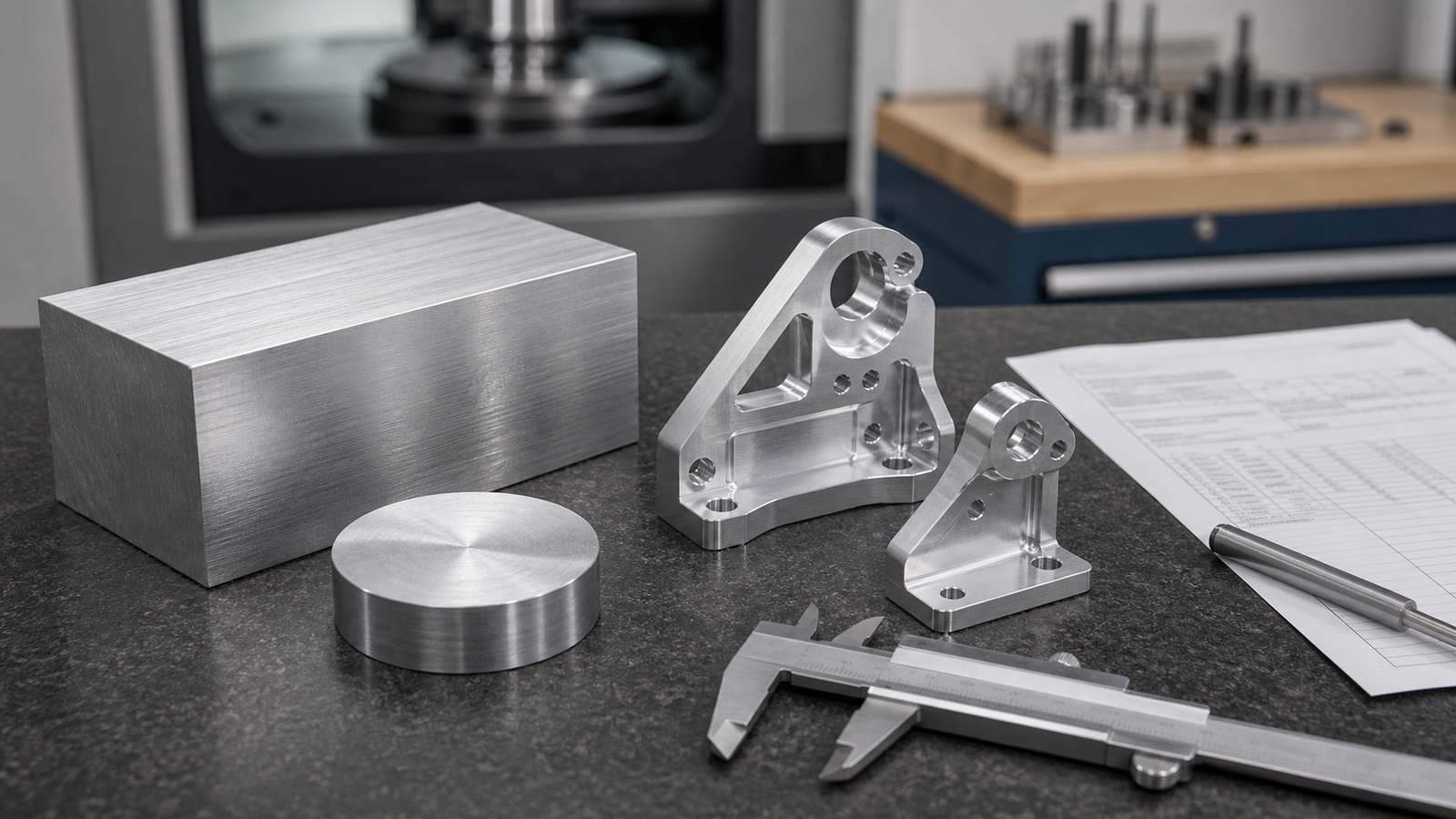
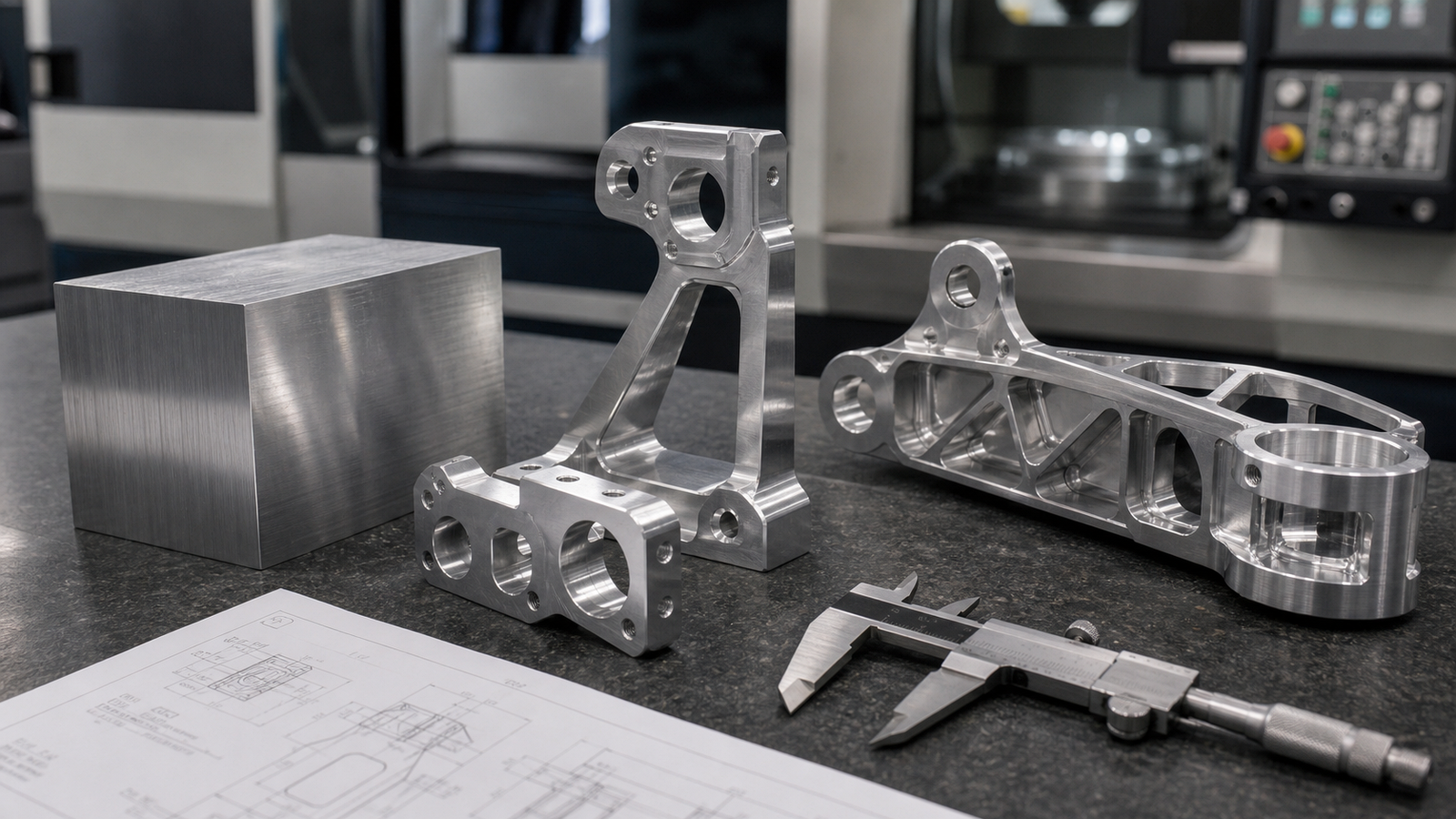
Almost every major structural component of an airplane's wing frame, the heavy landing gear braces and the critical fuselage bulkheads are carved out of solid blocks of 7075. In any engineering scenario where the physical weight must be kept drastically low but the danger of catastrophic breaking is deadly high, 7075 is the undisputed champion.
The Ultimate Showdown: 7075 vs. 6061
When selecting a metal for a new CNC project, mechanical engineers almost constantly debate between two main choices: 6061 aluminum or 7075 aluminum. Understanding the difference is critical for cost and performance. If you are new to CNC materials, our guide on what CNC machining is covers all the common materials in plain language.
The 6061 aluminum alloy is considered the "everyday hero." It is relatively cheap to buy, incredibly easy to cut on a CNC machine, handles water and weather very well and importantly, it can be welded together using intense heat arcs. It is the go-to metal for basic electronic boxes, bicycle frames and standard brackets.
The 7075 option is vastly stronger,boasting almost double the raw tensile strength of standard 6061. However, this massive jump in strength comes with significant drawbacks. 7075 is famously difficult or downright impossible to weld properly because the heat forces the metal to crack and weaken. Furthermore, raw blocks of 7075 are much more expensive to purchase. Therefore, 6061 is picked for normal, everyday tasks, while 7075 is exclusively reserved for high-stakes pieces facing severe internal pressure or crushing weight.
Is it Easy to Machine?
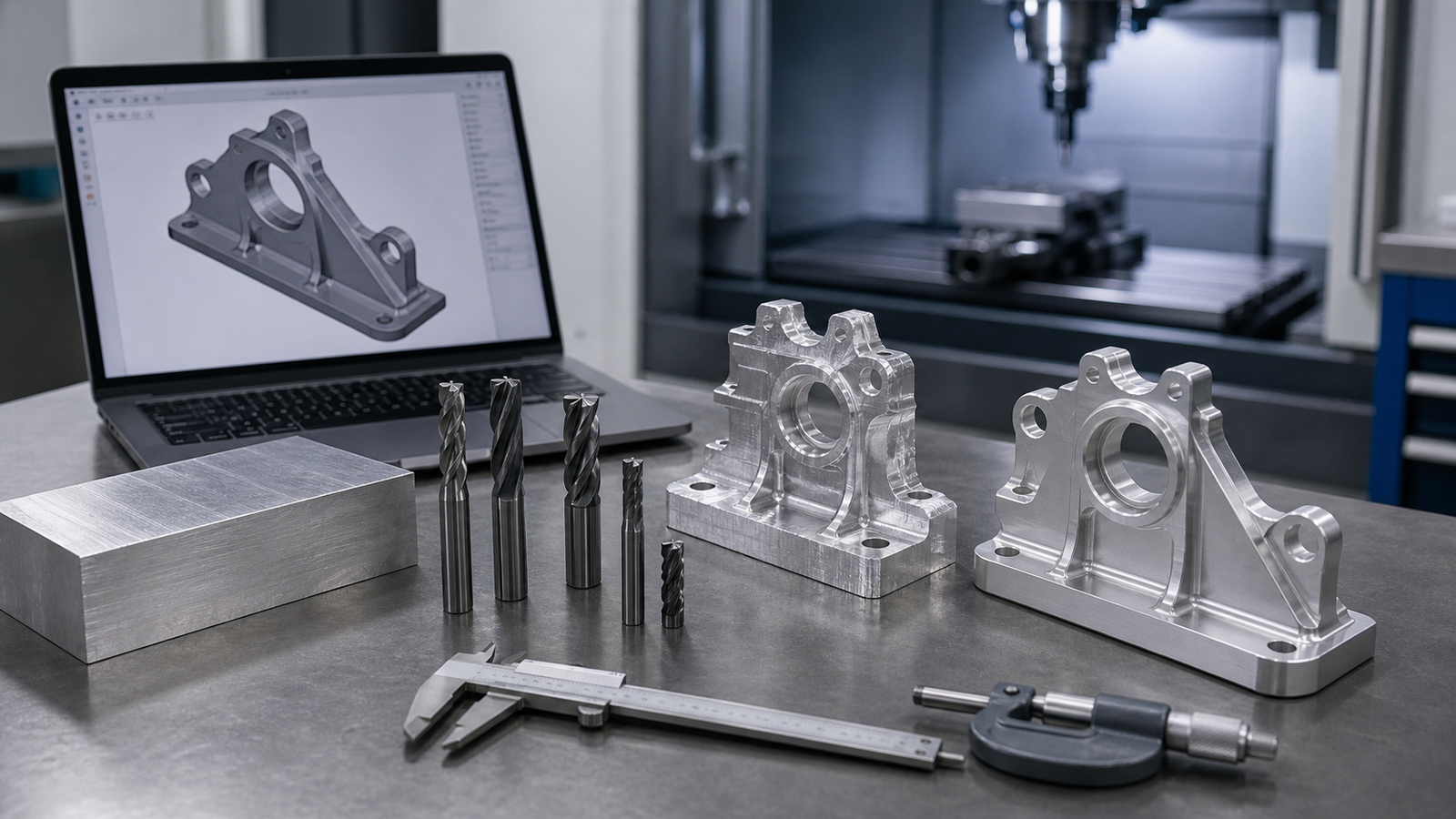
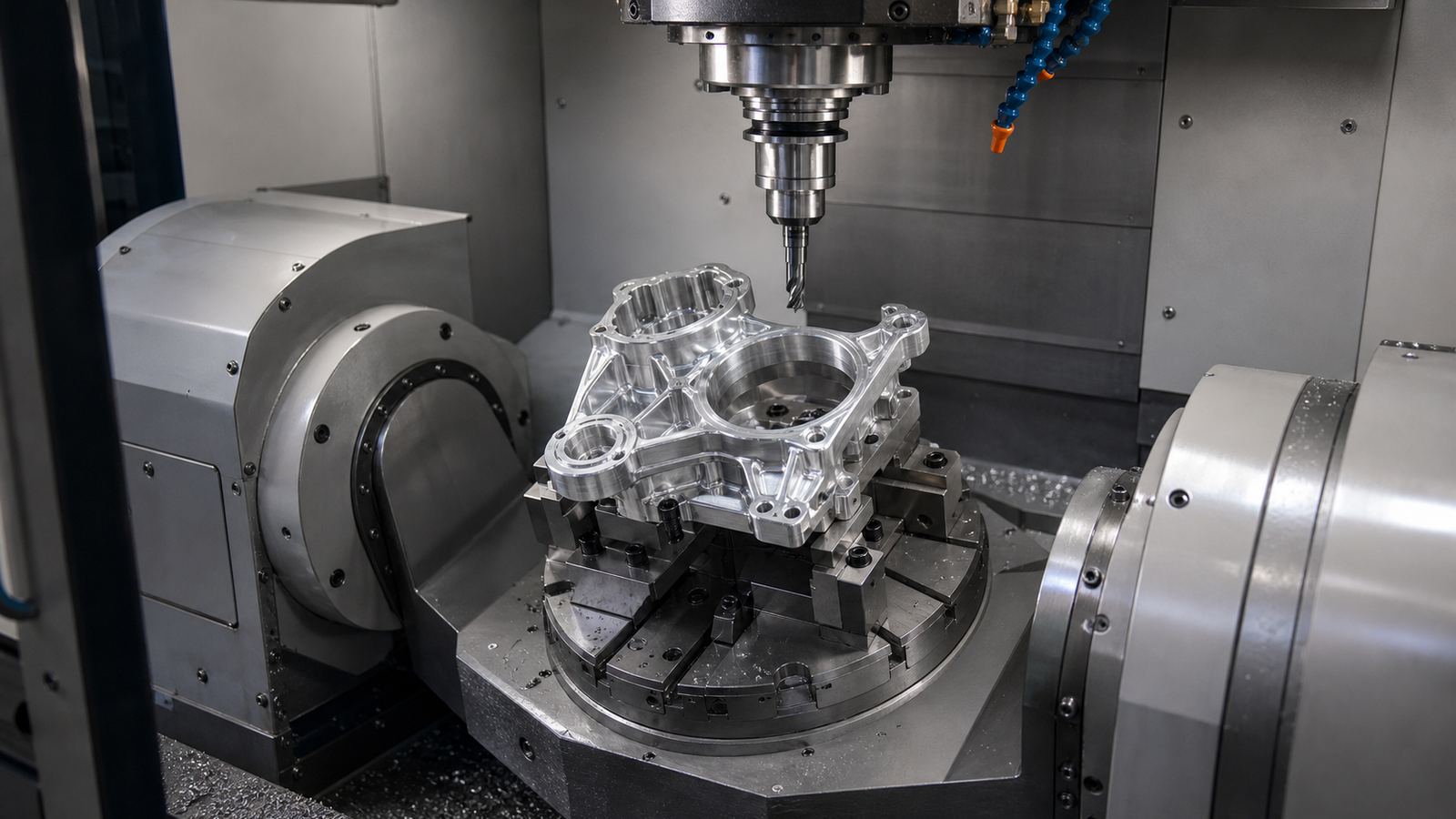
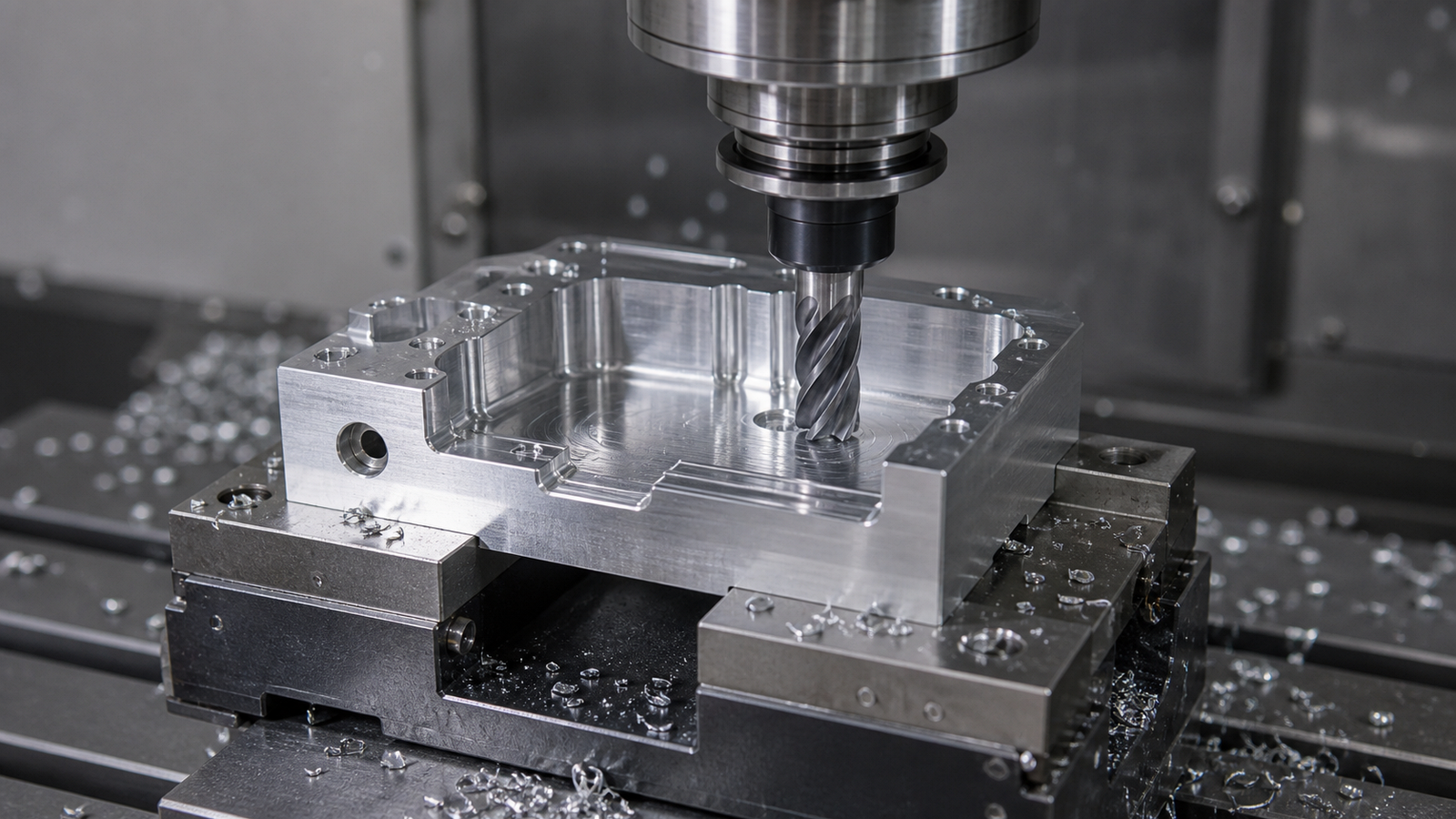
If you ask a veteran machinist how it physically feels to cut 7075 aluminum, they will likely smile. Despite being incredibly strong, it machines beautifully on a high-speed CNC mill. The metal breaks off into tiny, clean, manageable chips instead of melting into a gummy, sticky mess that clogs the cutting tools.
Because it cuts so crisply, the final part usually looks stunning, offering a smooth, shiny, glassy surface straight off the machine. Still, because the metal is significantly tougher than standard aluminum, the rapid cutting tools will wear out faster than normal. Factory workers offset this tool wear by ensuring they use plenty of cool, high-pressure cutting fluid to constantly wash away the damaging heat while the machine works.
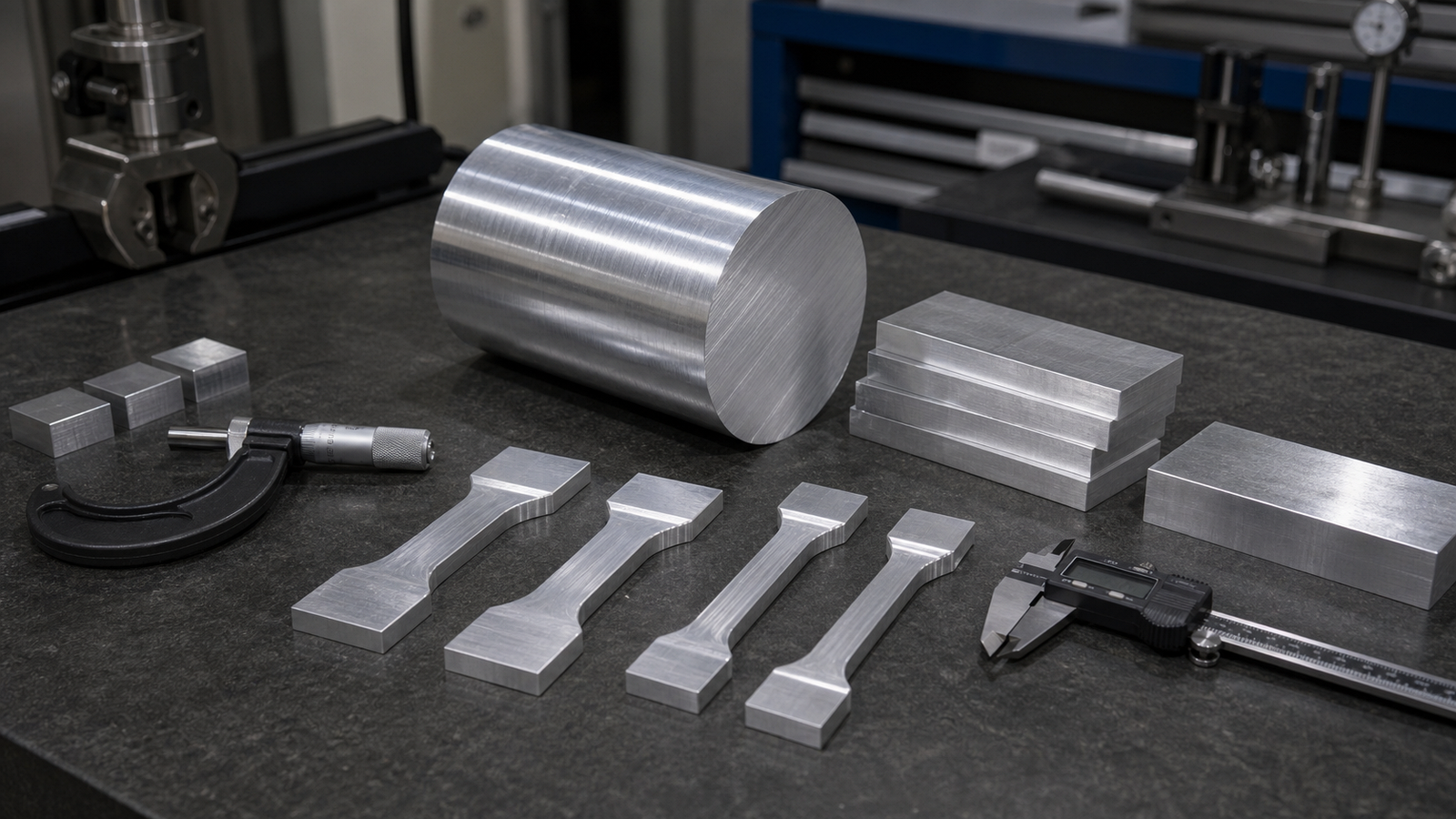
The special copper and zinc elements mixed into 7075 make it profoundly strong, but severely lower its natural defense against water, salt and environmental rust. It can corrode much faster than regular aluminum if left totally unprotected.
Dealing with Corrosion
As noted, the biggest weakness of this super-metal is its vulnerability to the elements. If a bare piece of 7075 aluminum is exposed to saltwater or harsh weather, it will begin to pit and corrode relatively quickly. To solve this, aerospace and automotive engineers apply protective secondary finishes.
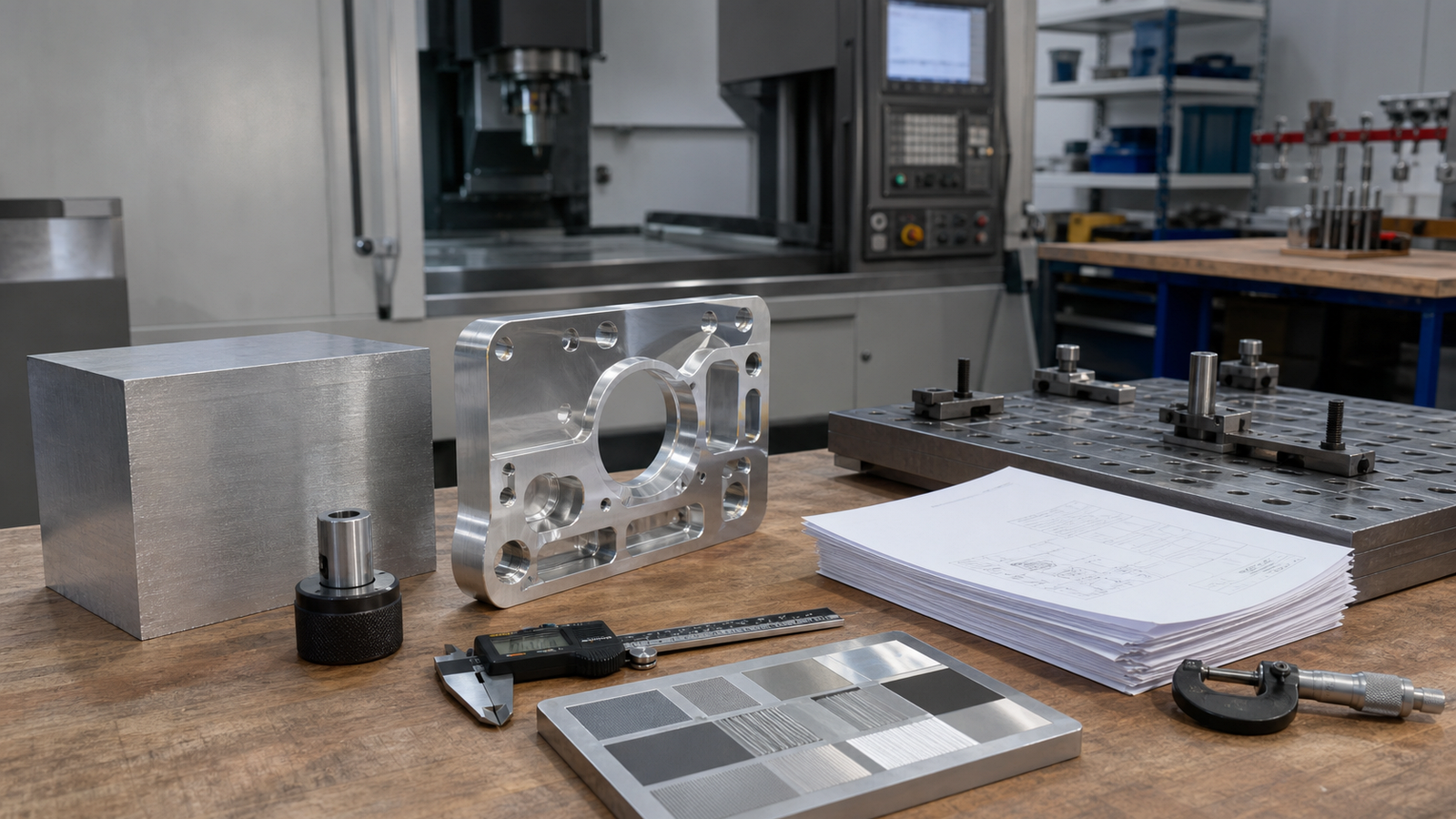
The most common defense mechanism is "anodizing." Anodizing is a complex chemical bath that forces the outer surface of the aluminum to grow a hard, microscopically thick layer of armor. This chemical armor entirely seals the metal away from water and oxygen, neutralizing its weakness to rust. It also allows the part to be dyed in vibrant colors like black, red, or blue.
Heat Treatment: T6 vs. T73
Raw 7075 aluminum straight from the smelter is actually quite soft. To unlock its legendary strength, it must go through a heat treatment process. The most common treatment is called T6. In the T6 process, the metal is first heated to a high temperature in an oven, then quenched, plunged into cold water very quickly. This fast cooling traps the zinc and magnesium atoms in a tightly packed arrangement, making the metal incredibly hard.
Another popular treatment is T73. This process trades a small amount of raw strength for a massive improvement in corrosion resistance. Parts that will live outdoors or near the ocean often use the T73 temper. When you order 7075 from a shop, you will often see it listed as "7075-T6" or "7075-T73." Make sure you specify the right temper for your environment, because changing it later means buying new material and starting over.
Real-World Parts Made from 7075
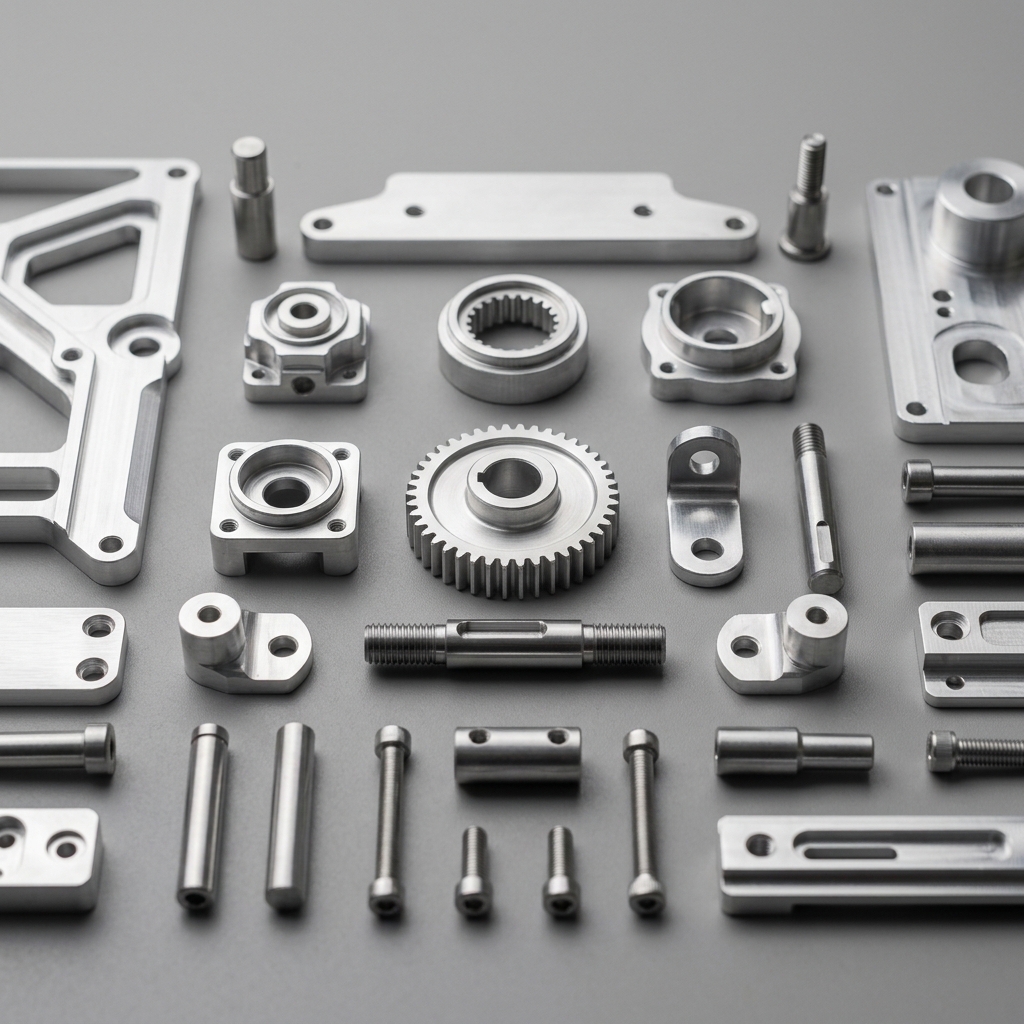
It helps to see real examples of where 7075 aluminum shows up in the world around you. Here are some common parts you may never have noticed:
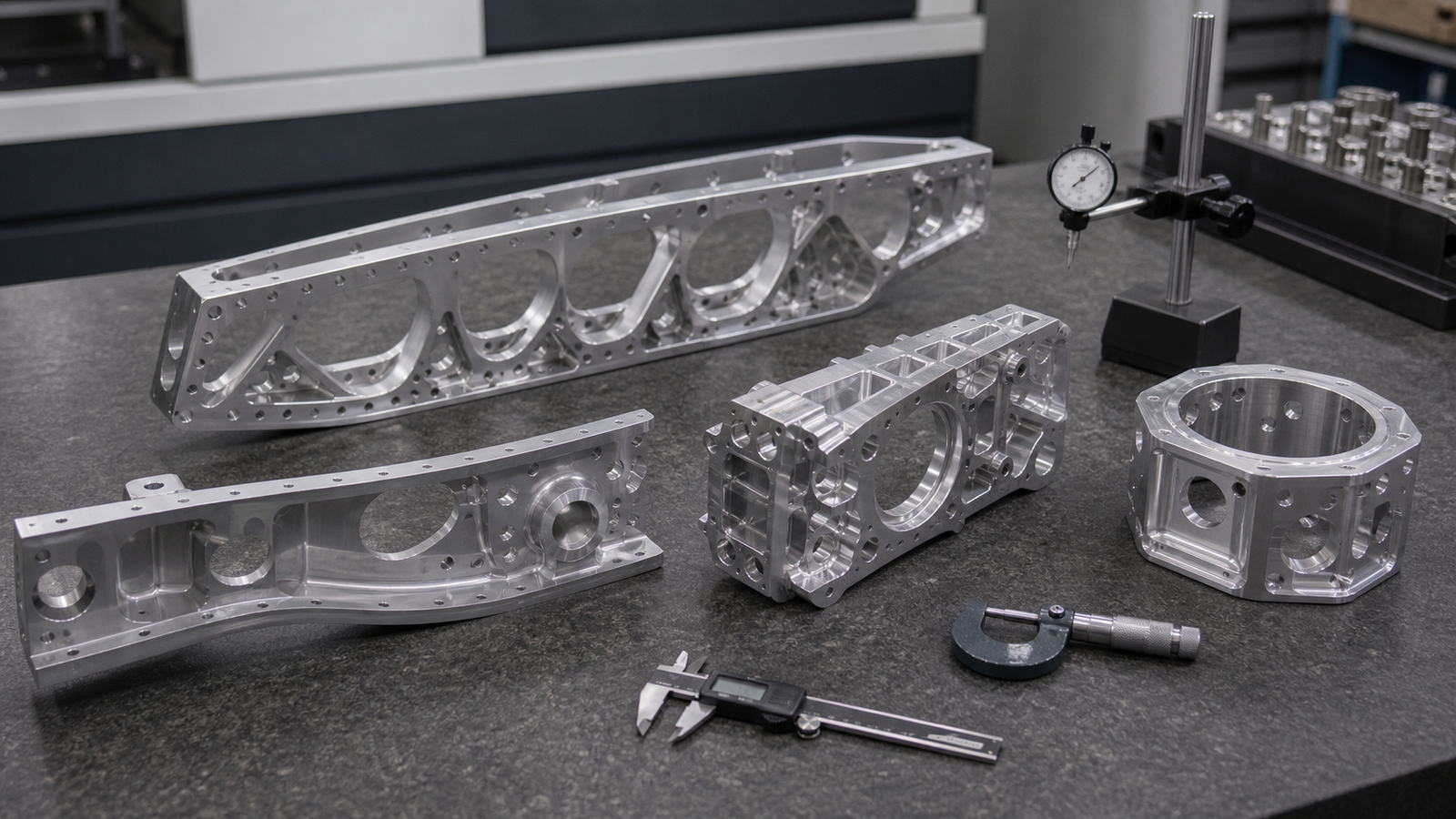
- Bicycle frames and stems: High-end road and mountain bike components use 7075 to shave grams without sacrificing stiffness under hard pedaling forces.
- Rock climbing gear: Carabiners and belay devices that must hold a falling climber are often forged from 7075 because the stakes are life and death.
- Camera tripod legs: Professional tripods use 7075 to stay rigid under the weight of a heavy lens while keeping the whole unit light enough to carry up a mountain.
- Drone frames: Racing drones take brutal crashes repeatedly. 7075 absorbs impact and flexes back without cracking, far better than standard 6061.
- Military rifle components: Upper and lower receivers on tactical weapons are commonly machined from 7075 billet because they must survive thousands of rounds and extreme field conditions.
- Aerospace structural ribs: The wing spars and fuselage frames inside commercial jets carry the entire weight of the aircraft during flight. 7075 is the first choice.
DFM Tips for Designing with 7075
DFM stands for Design for Manufacturability. It means designing your part so it is easy and cheap to machine. Here are specific tips for working with 7075 aluminum:
Keep wall thickness above 0.060 inches wherever possible. Very thin walls vibrate while being cut, causing chatter marks and dimensional errors. Thicker walls are more stable under the cutting forces.
Avoid very deep, narrow pockets. A pocket that is more than four times deeper than it is wide is hard to clean out and requires expensive extended-length tooling. If you need a deep pocket, add a slight taper to the walls to give the tool room to move.
Plan for anodizing from the start. If you want a Type III hard-anodized coating, note that the coating adds about 0.001 inches per surface. For tight-tolerance holes and bores, the shop will need to machine them slightly undersized so the final anodized dimension hits your target. Tell the shop upfront so they can plan accordingly.
Final Material Recommendations
Designing custom parts requires a delicate balance of cost, strength and manufacturability. If your object simply sits on a desk holding a computer monitor, paying exclusively for 7075 is a massive waste of your budget. However, if you are designing a high-performance part,such as a suspension arm for a racing truck, a lightweight rock-climbing carabiner, or a structural rib for a camera drone,it is entirely worth paying the slightly higher material price. When failure is not an option and weight is your worst enemy, 7075 aluminum stands unmatched.
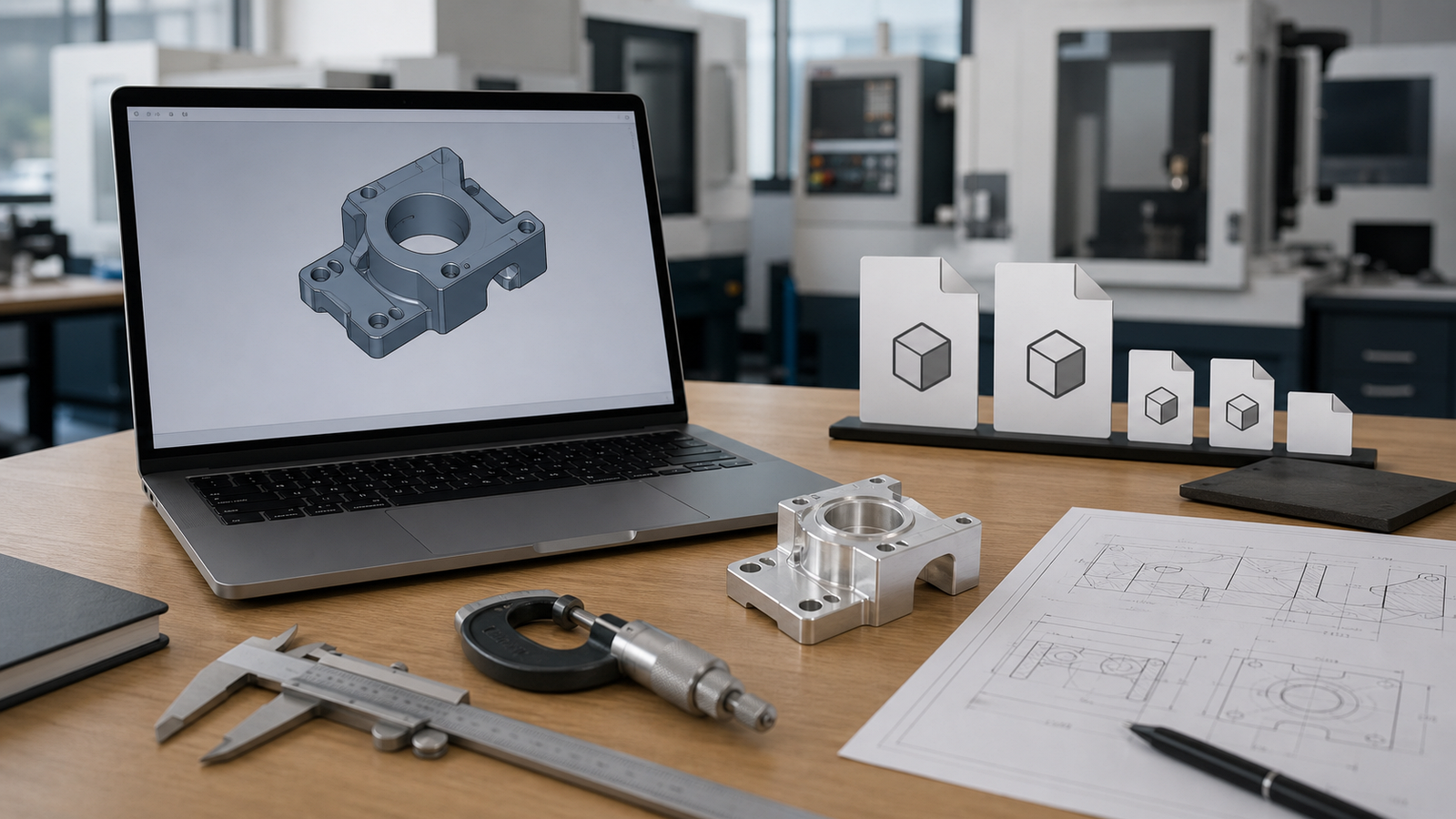
Talk to your machine shop early. Share your loading conditions, your environment and your budget. A good shop will tell you honestly whether 7075 is the right call or whether a cheaper alloy will do the job just as well. When you are ready to get pricing, see our guide on what to include in your CAD file for a CNC quote to make the process fast and accurate.
Frequently Asked Questions
Why exactly is 7075 aluminum used in airplanes?
It provides a massive, reliable strength level that resembles heavy structural steel, but it remains as lightweight as typical aluminum. This distinct balance helps modern planes fly efficiently without the terror of parts snapping under extreme wind pressure.
Can you weld two pieces of 7075 aluminum together?
Usually, you absolutely cannot. The unique zinc and copper metal mix inside 7075 reacts poorly to intense heat, causing it to break apart and shatter under welding torches. Parts must be bolted, screwed, or riveted together instead.
Does 7075 aluminum rust or corrode?
While it does not rust the exact brownish way raw iron does, it suffers from a powdery form of degradation called galvanic corrosion. Because of its specific metal content, it degrades faster than other aluminum variants if exposed to moisture, requiring a sealed protective coating.