AI in CNC Machining Today
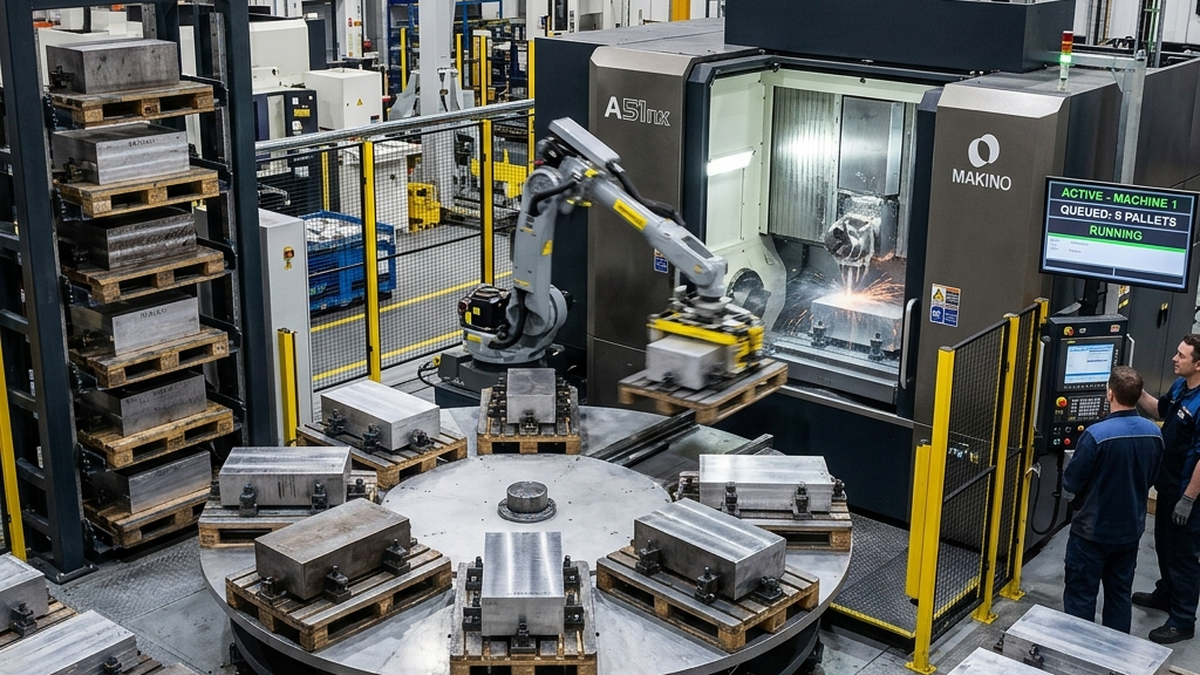
AI is already inside many CNC shops. It is not a future concept. It is here now, quietly making things better in four key areas.
| AI Application | What It Does | Impact |
|---|---|---|
| AI-powered CAM | Auto-generates tool paths from 3D models | 50-80% faster programming |
| Predictive maintenance | Detects tool wear and machine issues early | 30-50% less downtime |
| Adaptive machining | Adjusts feeds and speeds in real time | 15-25% faster cycle times |
| Quality inspection | Automated visual and dimensional checking | 90%+ defect detection rate |
None of these replace the machinist. They all make the machinist better. AI handles the repetitive work. Humans handle the judgment calls.
AI-Powered CAM Programming
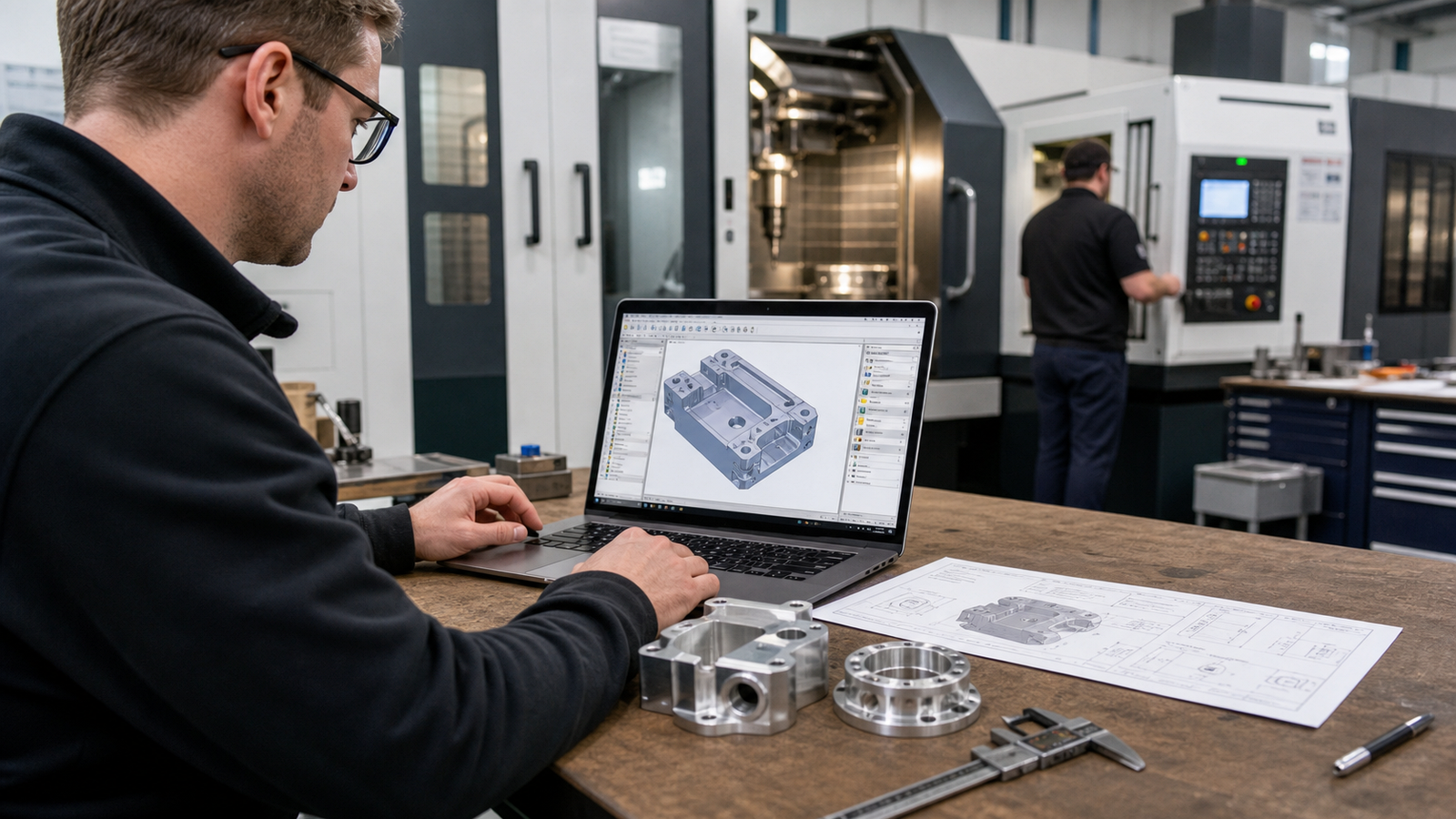
CAM programming turns your 3D model into machine instructions. It has always taken time. A skilled programmer spends hours picking tools, setting feeds and defining paths.
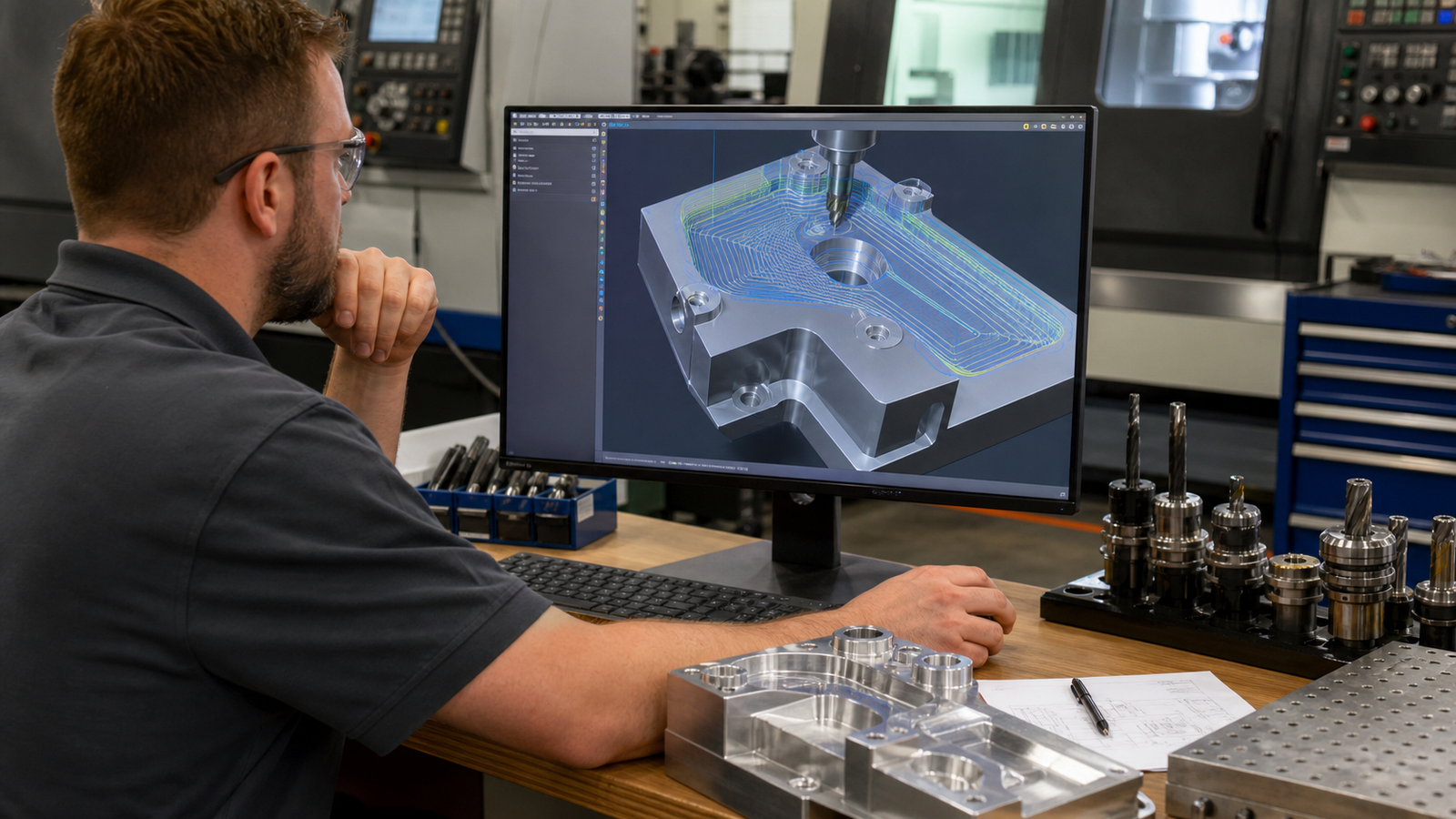
AI CAM software changes this. It looks at your part geometry and generates tool paths automatically. The programmer reviews and tweaks instead of building from scratch.
Shops using AI CAM report 50-80% faster programming time. A part that took 4 hours to program now takes 1 hour. That speed goes straight to shorter lead times for you.
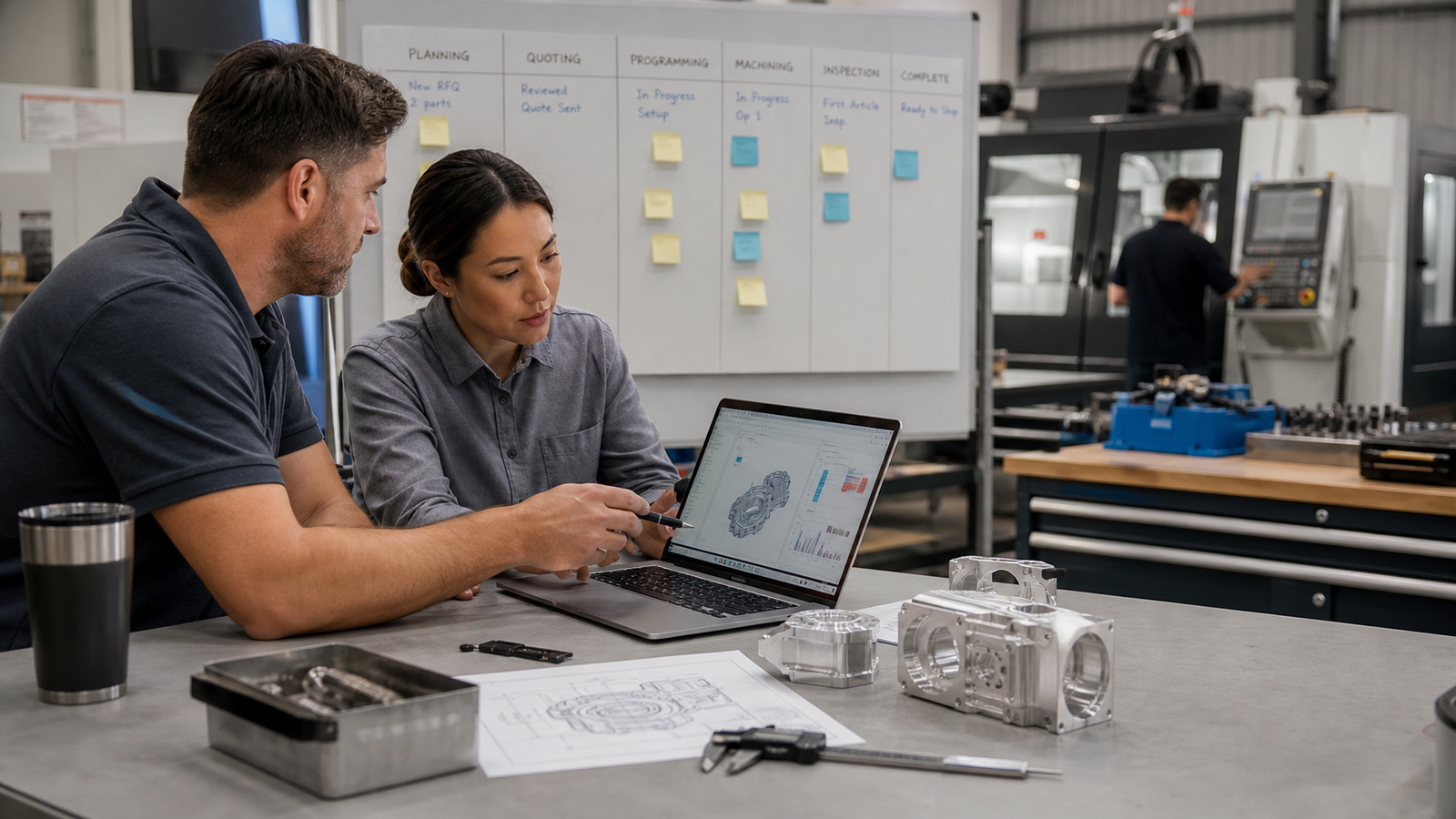
How AI CAM Works
- Feature recognition, AI identifies holes, pockets, slots and surfaces automatically
- Tool selection, Picks the best tool for each feature based on material and geometry
- Path optimization, Generates efficient tool paths that reduce air cutting
- Collision avoidance, Checks for crashes before code reaches the machine
- Learning from history, Improves recommendations based on past jobs
Predictive Maintenance
CNC machines break. Spindle bearings wear out. Tools dull. Coolant loses concentration. Every breakdown costs money and delays your parts.
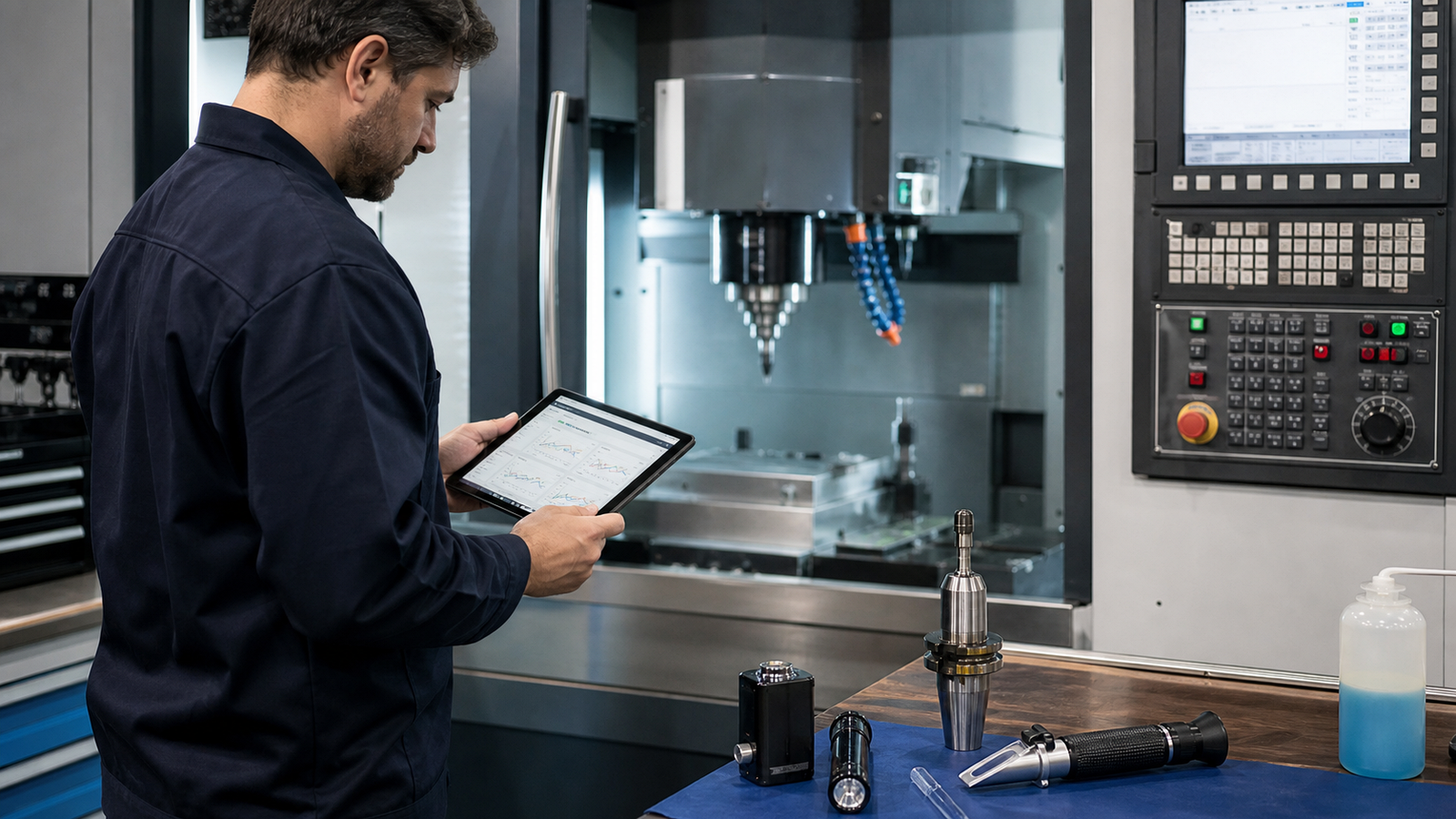
Predictive maintenance uses sensors and AI to catch problems early. Instead of waiting for a crash, the system warns you days or weeks ahead.
- Vibration monitoring, Detects bearing wear before it causes failure
- Spindle load tracking, Spots dull tools by rising cutting forces
- Temperature sensing, Catches thermal drift that causes dimension shifts
- Coolant analysis, Monitors concentration and contamination levels
Unplanned CNC downtime costs $100-500 per hour in a typical shop. A spindle failure can take a machine offline for a week. Predictive maintenance catches these issues when a $50 bearing swap fixes the problem.
Adaptive Machining
Traditional CNC runs the same program every time. Same feeds, same speeds, no matter what. But real conditions change. Material hardness varies. Tools wear. Temperature shifts.
Adaptive machining uses real-time sensor data to adjust. The machine listens to what is happening and responds.
- Feed rate optimization, Speeds up in easy cuts, slows down in hard ones
- Tool wear compensation, Adjusts offsets as the tool wears down
- Chatter detection, Changes speed to eliminate vibration when it starts
- Material removal rate, Keeps consistent chip load through varying geometry
The result: faster cycle times, better surface finish and longer tool life. Parts come out more consistent because the machine adapts to reality.
AI Quality Inspection
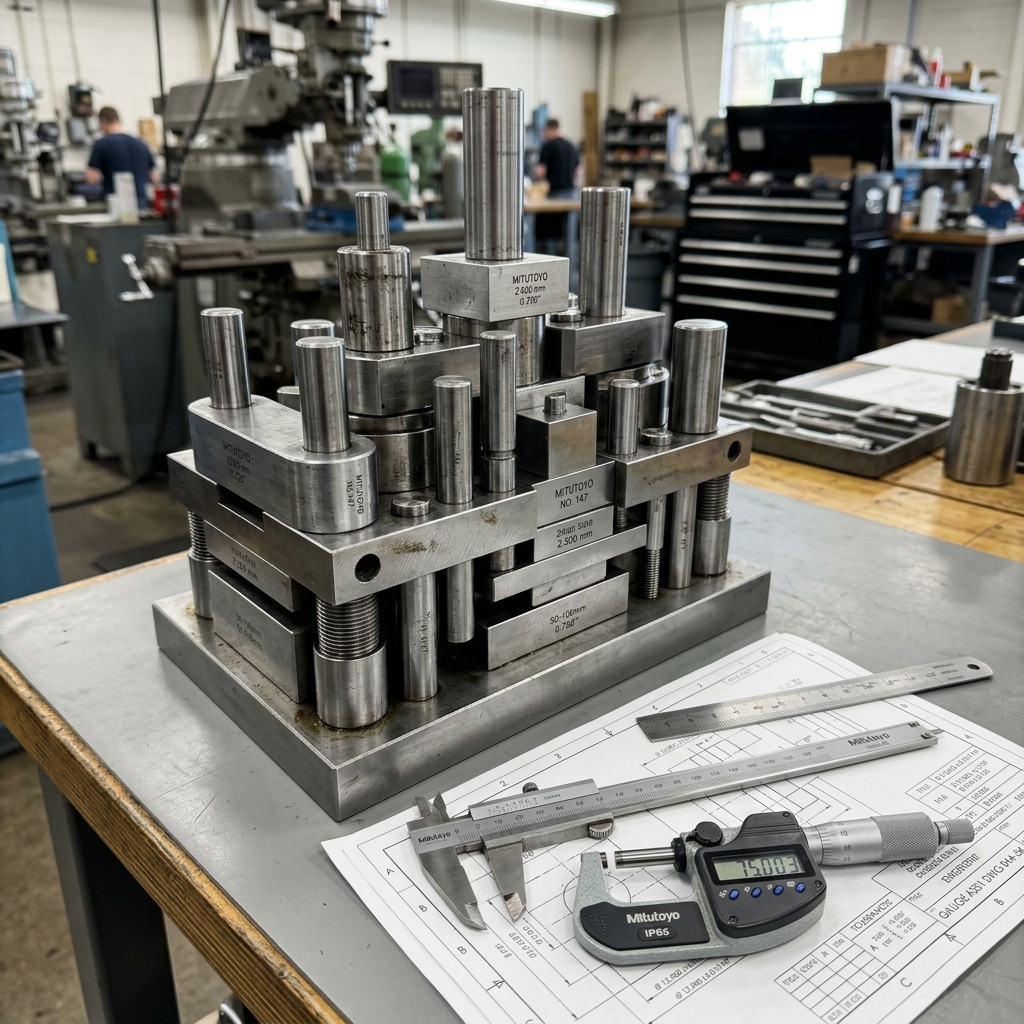
Checking parts is slow. A machinist measures dimensions with calipers, checks surfaces visually and compares to the drawing. AI makes this faster and more consistent.
Vision Systems
AI-powered cameras inspect parts in seconds. They check for surface defects, burrs and cosmetic issues that human eyes might miss after a long shift.
In-Process Measurement
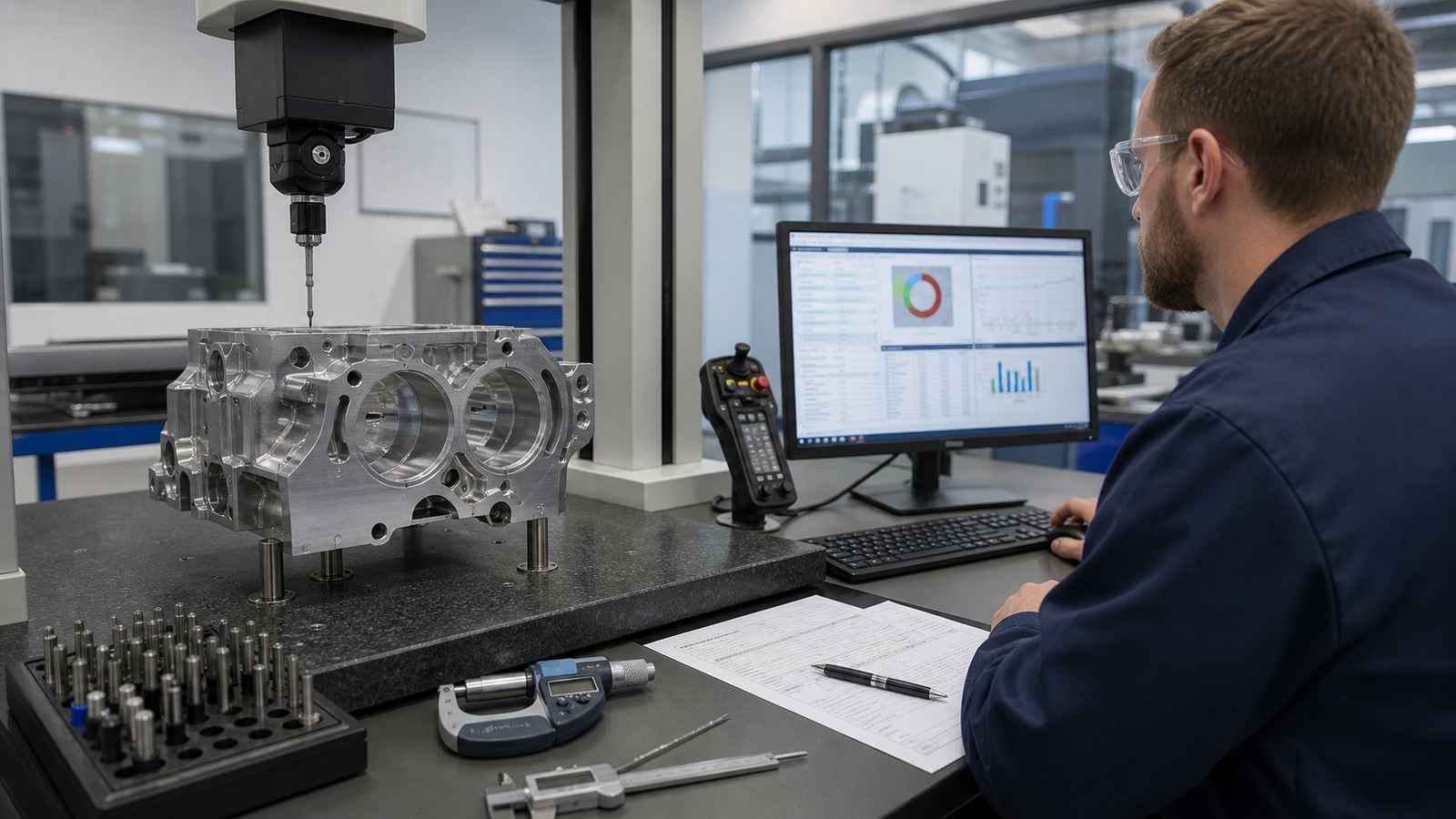
Probes on the CNC machine check dimensions while the part is still in the fixture. If something drifts, the machine corrects before finishing the part.
Statistical Process Control
AI tracks measurements across batches. It spots trends before they become defects. A dimension slowly drifting toward the limit gets flagged before any part goes out of spec.
AI does not replace quality control. It gives quality control superpowers. Human inspectors make the final call. AI makes sure nothing slips through the cracks.
What Comes Next
AI in CNC is still early. Here is what we expect in the next few years:
- Instant quoting, Upload a file, get an accurate price in seconds
- Autonomous programming, Simple parts programmed with zero human input
- Digital twins, Virtual copies of machines that predict behavior perfectly
- Supply chain AI, Automatic material ordering based on upcoming jobs
- Cross-machine learning, One machine learns from thousands of other machines
The shops that adopt AI early will deliver faster, cheaper and better. The technology is a competitive advantage today. In five years, it will be table stakes.
Frequently Asked Questions
How is AI used in CNC machining?
AI is used in CAM programming, predictive maintenance, adaptive machining and quality inspection. It makes each step faster and more consistent.
Can AI replace CNC programmers?
Not yet. AI handles routine programming. Complex parts still need skilled humans. AI makes programmers more productive, not obsolete.
What is predictive maintenance?
It uses sensors and AI to detect machine problems before they cause failure. It catches tool wear, bearing issues and thermal drift early.
How does AI improve quality control?
AI vision systems inspect parts faster. In-process probing catches drift during machining. Statistical analysis spots trends before they become defects.
Is AI machining more expensive?
The software costs more. But shops save through faster programming, less scrap and fewer crashes. The net result is often lower cost and faster delivery.