Start With the Part Shape
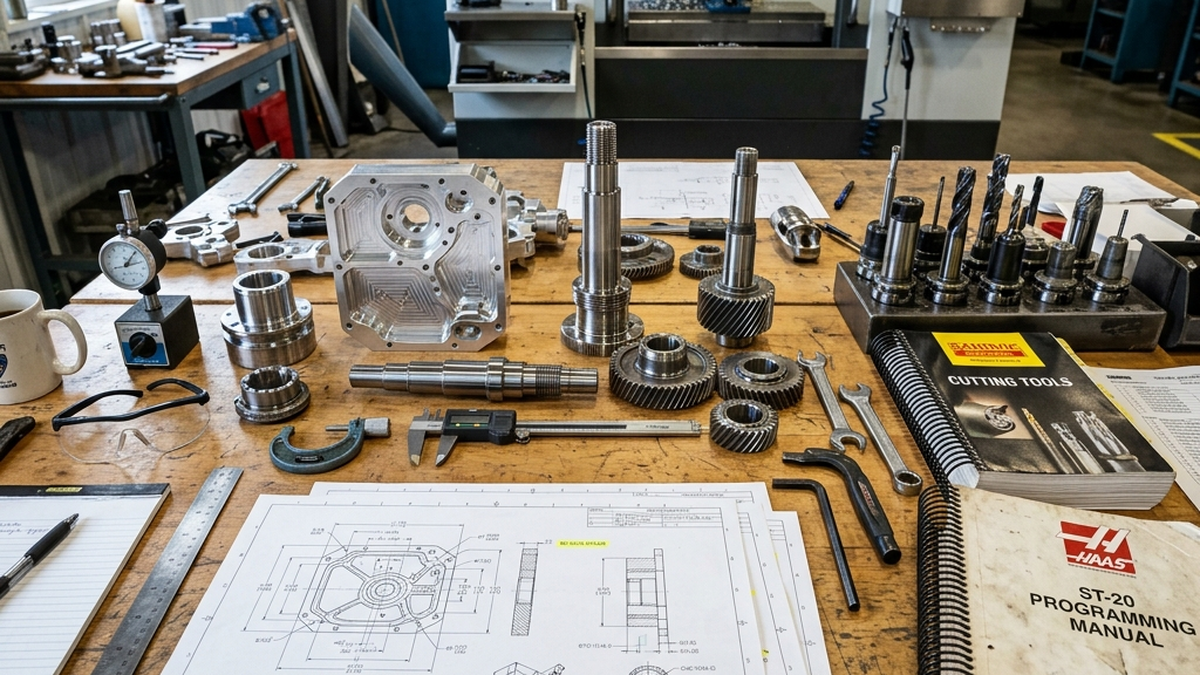
The shape of your part tells you which process to start with. Every CNC process has a geometry it handles best. Match the shape first, then refine based on tolerances, material and volume.
- Flat, boxy, or prismatic? Start with milling
- Round, cylindrical, or axially symmetric? Start with turning
- Flat profiles from sheet or plate? Consider waterjet or laser cutting
- Ultra-tight tolerances or mirror finish? Add grinding as a finishing step
- Very hard materials or tiny features? Consider EDM
When to Use CNC Milling
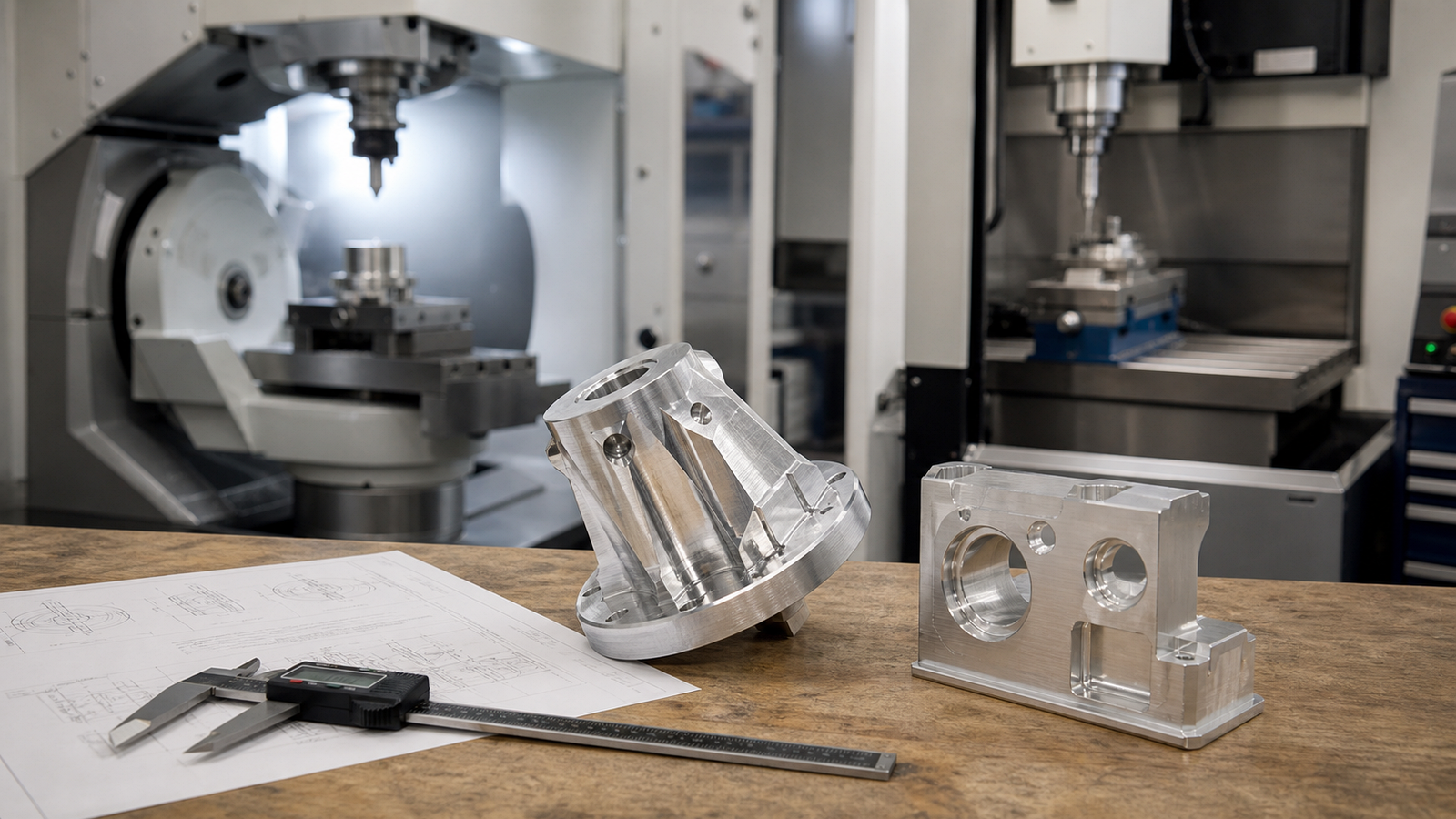
Milling is the most common CNC process. A spinning tool moves across a stationary workpiece to create flat surfaces, pockets, slots and complex 3D shapes.
Use milling when your part has:
- Flat surfaces or pockets
- Square or rectangular features
- Features on multiple sides (use 5-axis for 3+ sides)
- Complex 3D contours or sculpted surfaces
| Milling Specs | Typical Values |
|---|---|
| Tolerance | +/-0.001" to +/-0.005" |
| Surface Finish | 16 - 63 Ra |
| Materials | All metals, most plastics |
| Best For | Brackets, housings, plates, complex 3D parts |
When to Use CNC Turning
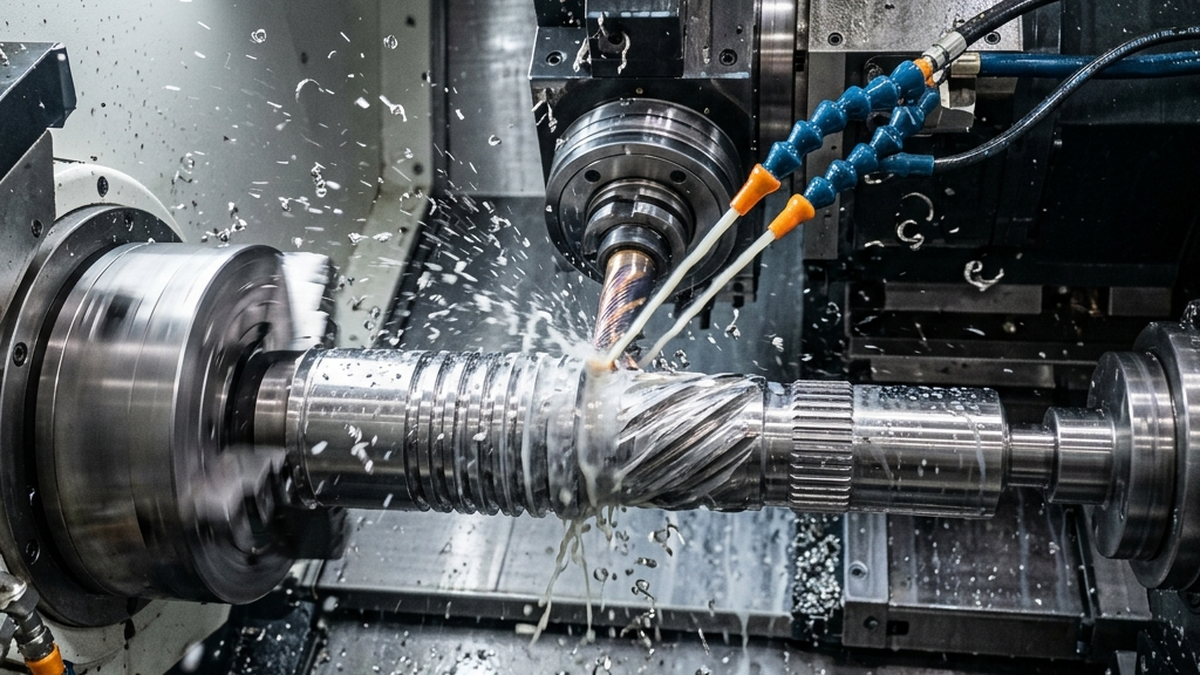
Turning spins the workpiece against a stationary tool. It creates round shapes naturally and is the fastest way to make cylindrical parts.
Use turning when your part has:
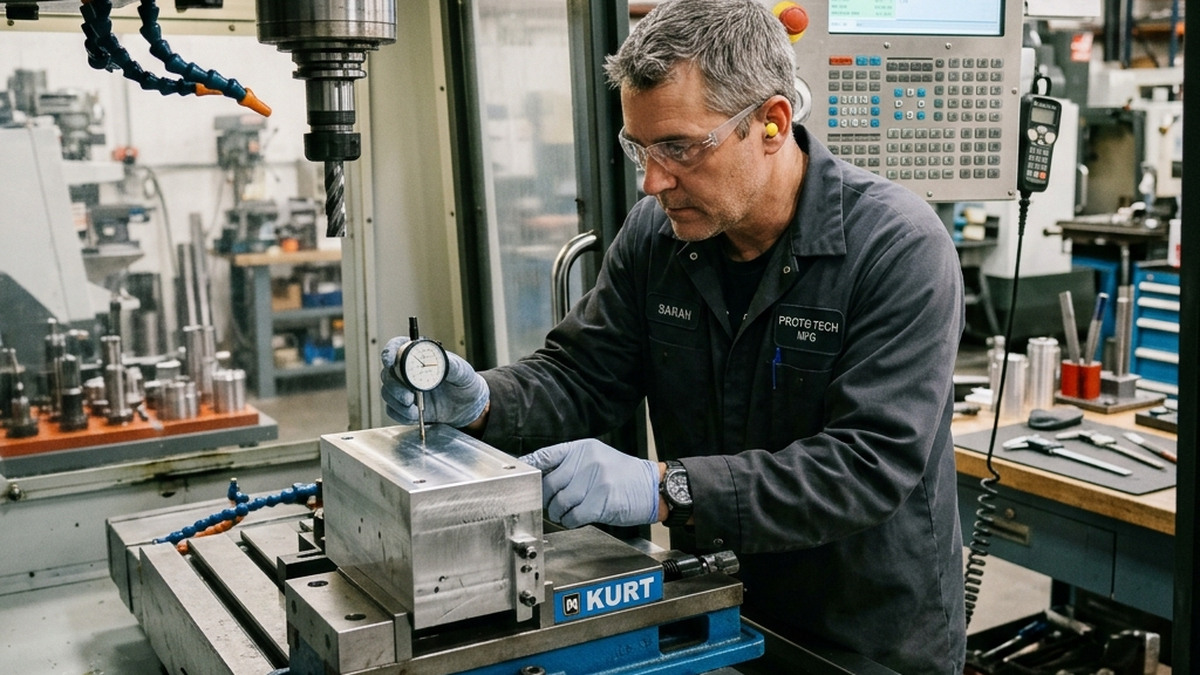
- A round cross-section (shafts, pins, spacers)
- External or internal threads
- Bores, grooves, or chamfers on a cylindrical body
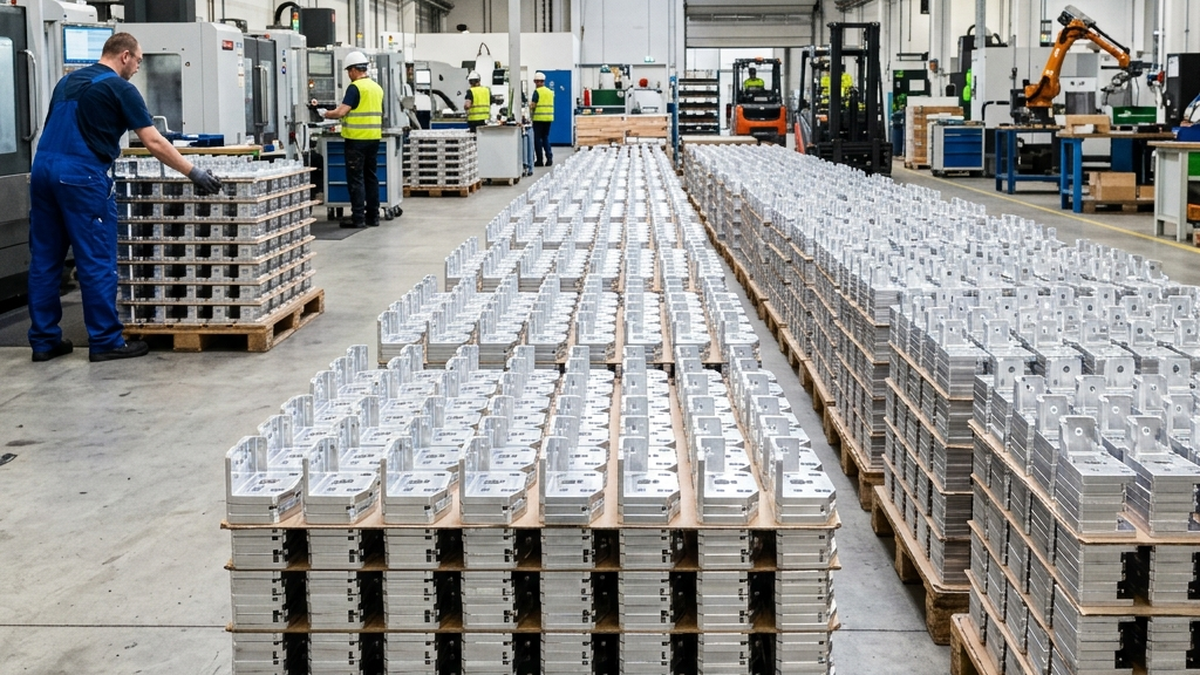
- High-volume round parts (bar feeder automation)
| Turning Specs | Typical Values |
|---|---|
| Tolerance | +/-0.0005" to +/-0.003" |
| Surface Finish | 8 - 32 Ra |
| Materials | All metals, most plastics |
| Best For | Shafts, pins, fittings, bushings, threaded parts |
When to Use Grinding
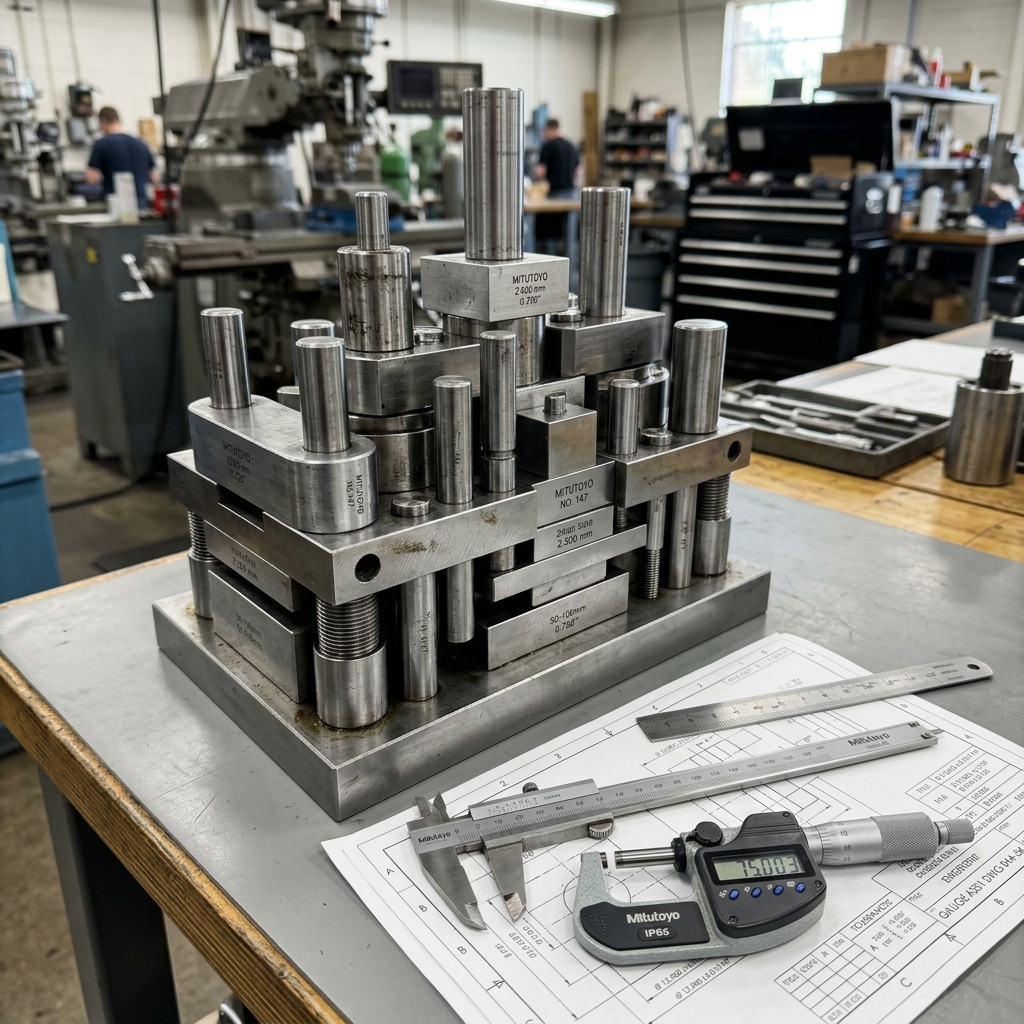
Grinding uses an abrasive wheel to remove tiny amounts of material. It delivers the tightest tolerances and smoothest finishes of any CNC process.
Grinding is almost always a finishing operation. You rough the part by milling or turning, then grind the critical features to final size.
- Surface grinding: Flat surfaces to +/-0.0001"
- Cylindrical grinding: Round ODs and IDs to +/-0.0001"
- Centerless grinding: High-volume round parts
If your drawing calls for tolerances tighter than +/-0.0005" or surface finishes below 16 Ra, you probably need grinding. Plan for it in your quote so there are no surprises.
When to Use EDM
EDM (Electrical Discharge Machining) uses sparks to erode material. It works on any conductive material, regardless of hardness.
There are two main types:
- Wire EDM: Uses a thin wire to cut 2D profiles in hard materials. Great for tool steel, tungsten and hardened parts.
- Sinker EDM: Uses a shaped electrode to create complex cavities. Used for mold making and intricate internal features.
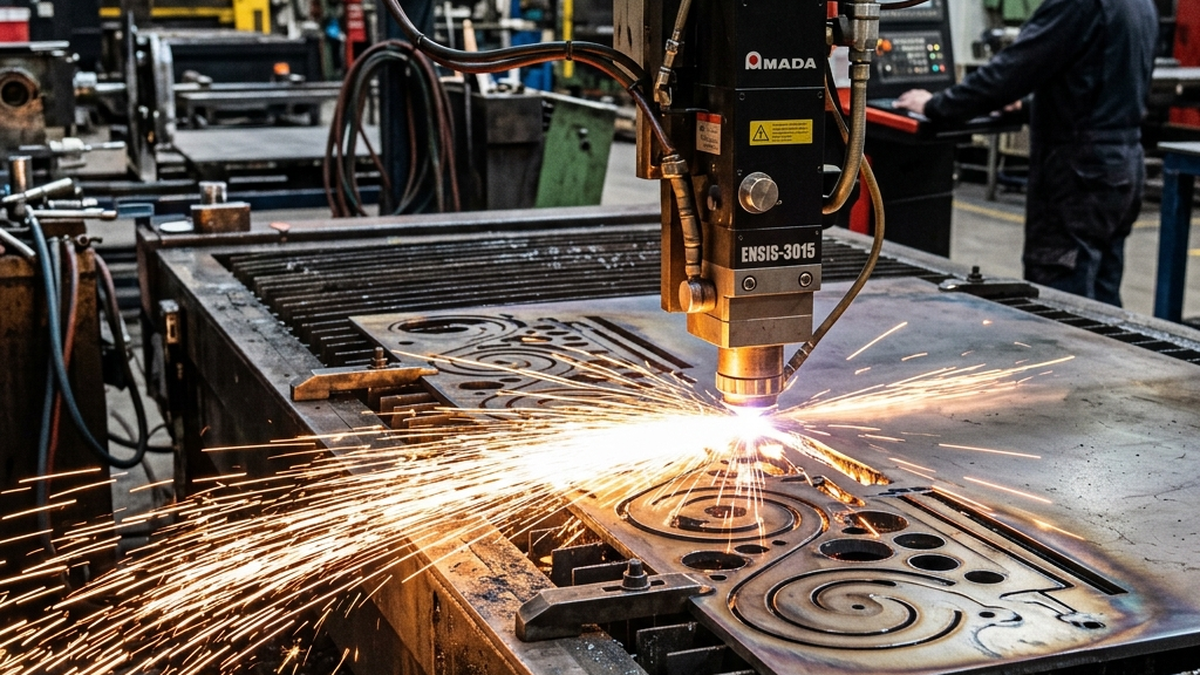
Use EDM when:
- Material is too hard to mill (above 60 HRC)
- You need sharp internal corners (wire EDM cuts with no radius)
- Features are too small or deep for conventional cutting tools
- The part is a mold or die with complex cavity shapes
Master Comparison Table
| Process | Tolerance | Surface Finish | Speed | Cost | Best For |
|---|---|---|---|---|---|
| Milling | +/-0.001" | 16-63 Ra | Fast | $$ | Prismatic, 3D shapes |
| Turning | +/-0.0005" | 8-32 Ra | Very fast | $ | Round parts |
| Grinding | +/-0.0001" | 4-16 Ra | Slow | $$$ | Finishing critical features |
| Wire EDM | +/-0.0002" | 8-32 Ra | Slow | $$$ | Hard materials, sharp corners |
| Sinker EDM | +/-0.0005" | 16-63 Ra | Very slow | $$$$ | Complex mold cavities |
| Waterjet | +/-0.005" | 63-125 Ra | Moderate | $$ | Thick plate, no HAZ |
| Laser | +/-0.003" | 32-63 Ra | Very fast | $ | Thin sheet metal |
Decision Tree: Pick Your Process
Follow these steps to narrow down the right process:
- What shape is your part? Round = turning. Flat/boxy = milling. 2D profile from plate = cutting.
- What material? Hardened steel above 60 HRC = EDM. Everything else = milling or turning.
- What tolerance? Tighter than +/-0.0005" = add grinding. Standard (+/-0.001" to +/-0.005") = milling or turning is fine.
- Multiple feature types? Round body + flat features = mill-turn. Flat body + bores = milling with boring.
- What volume? High-volume round parts = turning with bar feeder. High-volume sheet parts = laser cutting.
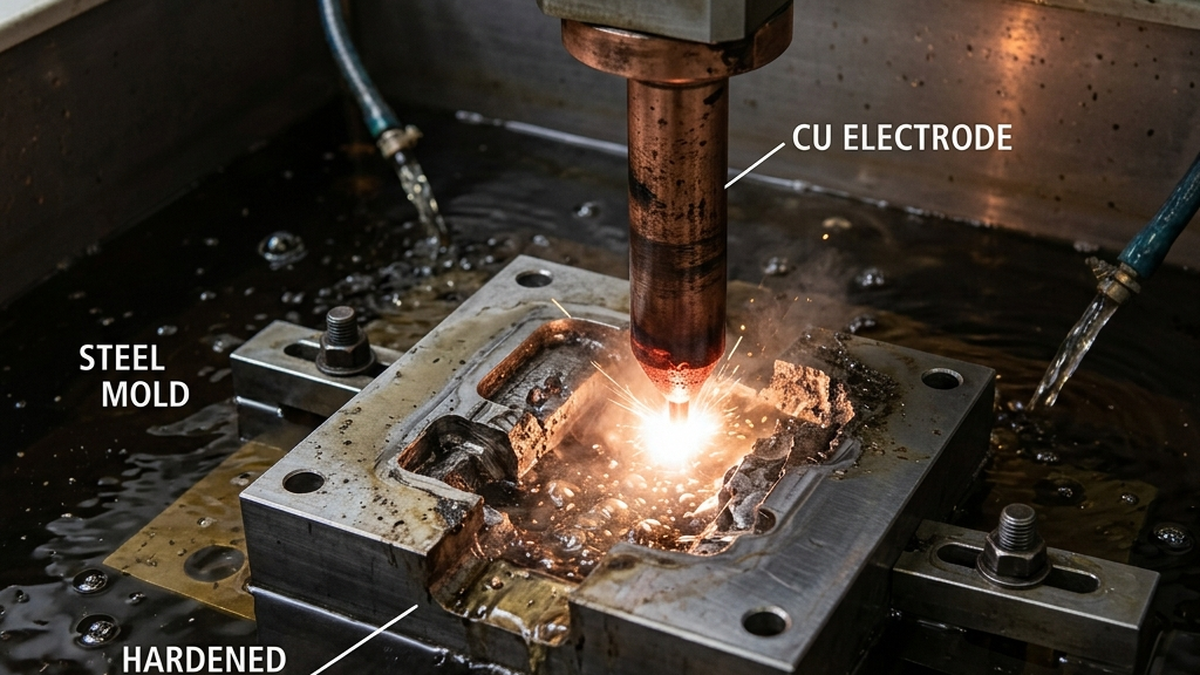
Tighter tolerances and finer finishes cost more. Only specify what the function requires. A +/-0.001" tolerance costs 2-3x more than +/-0.005". Use tight specs only on mating and critical surfaces.
Still not sure? Upload your CAD file to RivCut and our engineers will recommend the best process combination. We offer free DFM reviews on every quote.
Frequently Asked Questions
What is the most common CNC process?
CNC milling. It handles the widest range of part geometries and is available at almost every machine shop.
When do I need grinding?
When tolerances are tighter than +/-0.0005" or surface finish needs to be below 16 Ra. Grinding is a finishing step, not a primary shaping process.
Can one machine do everything?
Mill-turn machines come close for parts that need both milling and turning. But grinding, EDM and cutting are separate processes that require dedicated equipment.
How do I reduce CNC machining costs?
Loosen tolerances where possible. Use standard tool sizes for radii and holes. Reduce the number of setups. And design with DFM principles in mind.
What process gives the best surface finish?
Grinding delivers the best surface finish (4-8 Ra). Turning comes next (8-32 Ra). Milling is typically 16-63 Ra. All can be improved with post-processing.