By the RivCut Engineering Team. Learn more about RivCut.
Plastics are a great choice for custom CNC parts. They are light. They resist rust. They also cost less to cut than metal. But there is a big difference between standard plastics and high-end plastics.
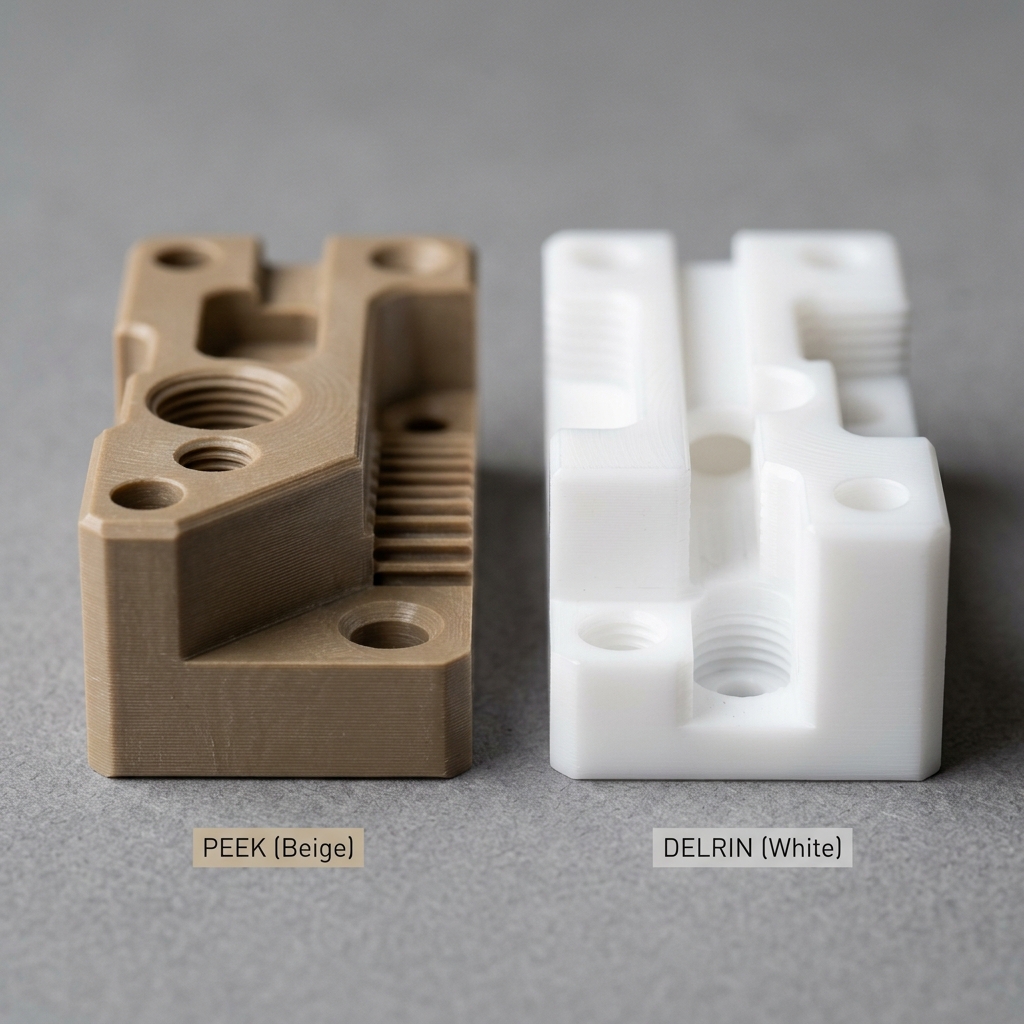
Here is the quick answer: Delrin is the best choice for general plastic parts. It is cheap, strong, and very easy to cut. Choose PEEK for high heat, strong chemicals, or heavy loads. PEEK is stronger and handles heat better. But PEEK costs 10 to 20 times more than Delrin.
Technical Comparison of PEEK and Delrin
This table compares properties of these two popular CNC plastics:
| Property | Delrin (POM) | PEEK |
|---|---|---|
| Material Class | Standard Plastic | Premium Plastic |
| Machinability | Excellent (very fast) | Good (needs sharp tools) |
| Top Heat Limit | 185°F (85°C) | 480°F (250°C) |
| Tensile Strength | 70 MPa (10,000 psi) | 100 MPa (14,500 psi) |
| Water Soak | Low (0.2%) | Very Low (0.1%) |
| Chemical Resistance | Good (resists solvents) | Excellent (resists acids) |
| Relative Material Cost | Low ($) | Very High ($$$$$) |
What is Delrin (POM)?
Delrin is the brand name for acetal homopolymer. It is made by DuPont. It is a tough engineering plastic. It has a high crystalline structure.
Delrin is very stable. It does not take on much moisture. This makes it perfect for parts that must keep their size in wet environments.
It is also very hard and slippery. It resists friction.
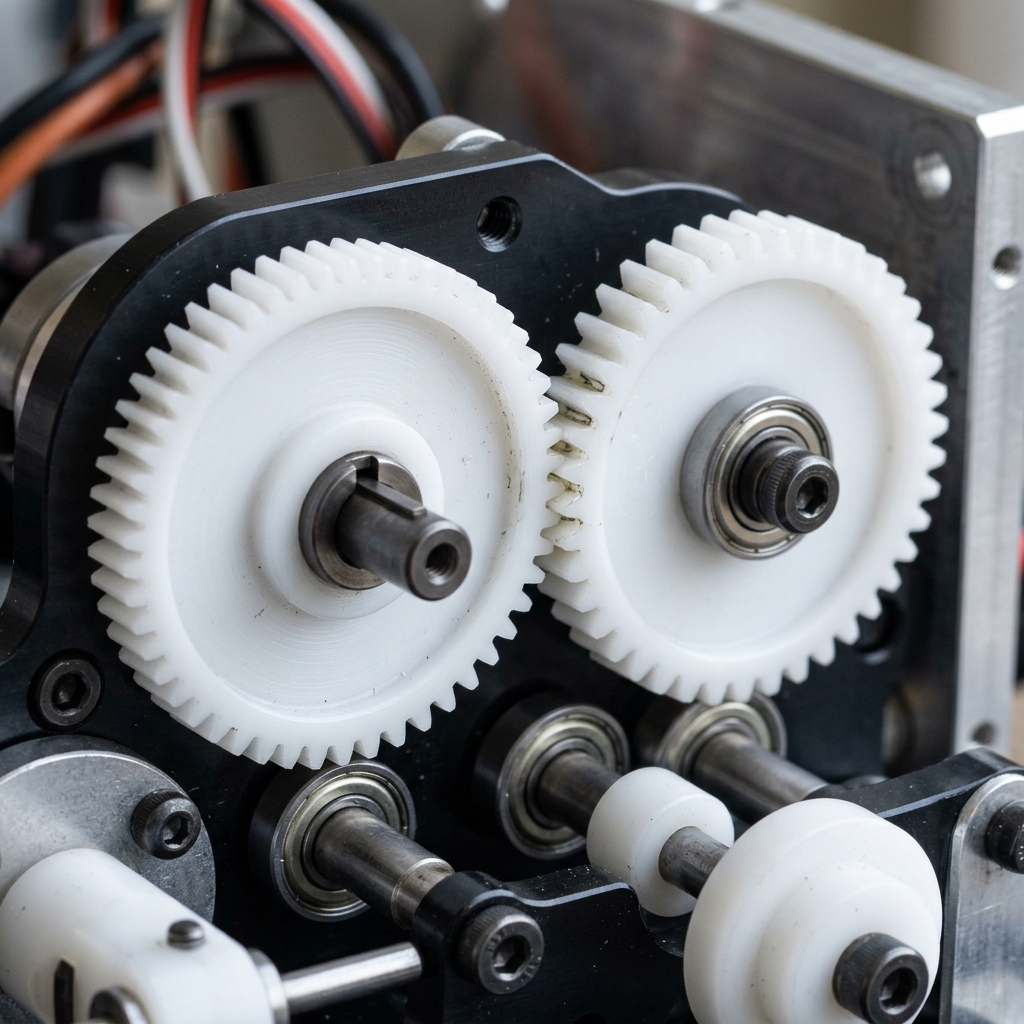
Because it is cheap and easy to cut, shops love it. It leaves a clean, burr-free finish.
Use Delrin for gears, rollers, and wear strips. It is also good for electrical housings.
What is PEEK?
PEEK stands for polyetheretherketone. It is a semi-crystalline thermoplastic. It belongs to the polyaryletherketone (PAEK) family.
PEEK is a premium plastic. It keeps its strength at extreme temperatures. It handles heat up to 480°F.
It is also very strong. It has a high tensile strength of 100 MPa.
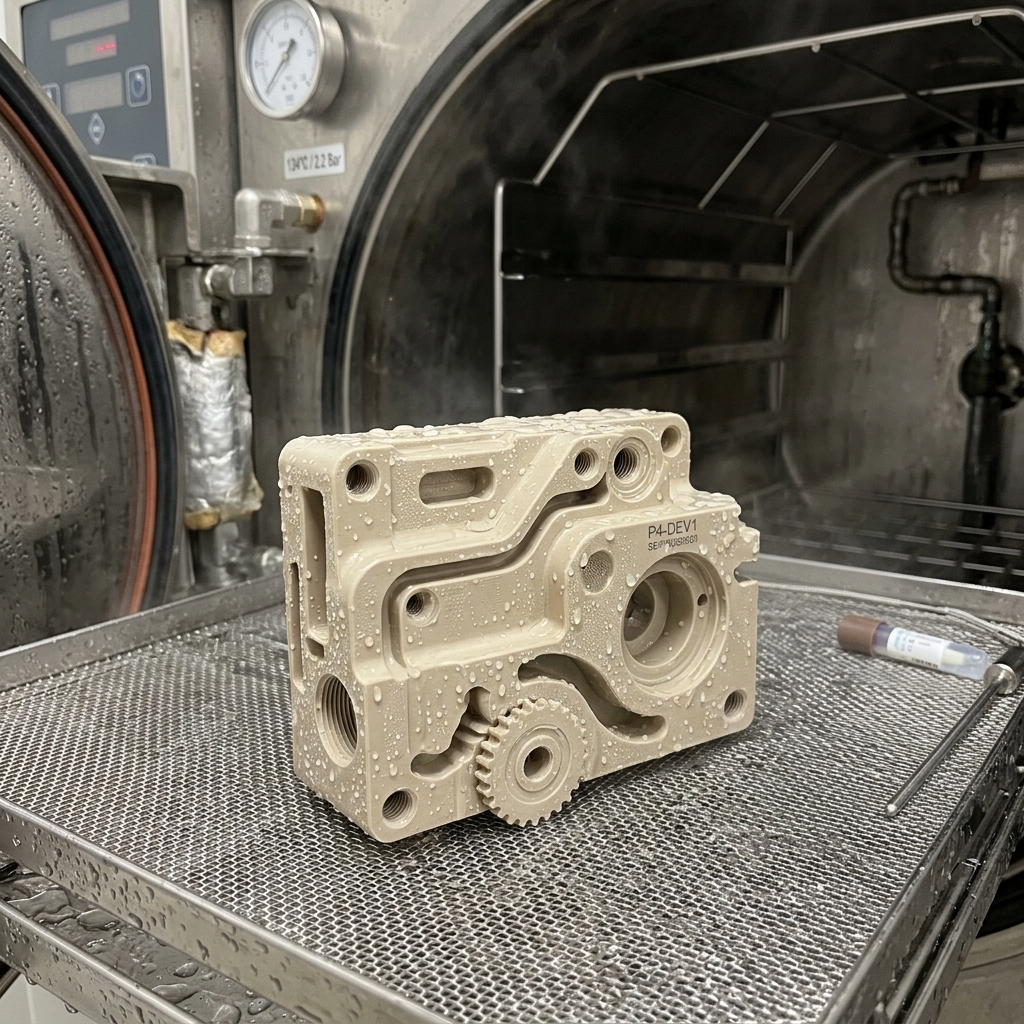
PEEK does not dissolve in solvents or acids. It resists high-pressure steam.
This makes it the standard choice for medical implants and aerospace parts.
But raw PEEK material is expensive. It costs much more than Delrin. The machining process is also slower.
PEEK in High-Tech Cleanrooms
PEEK is also popular in semiconductor cleanrooms. It does not release gas in a vacuum. It keeps its shape under high temperatures.
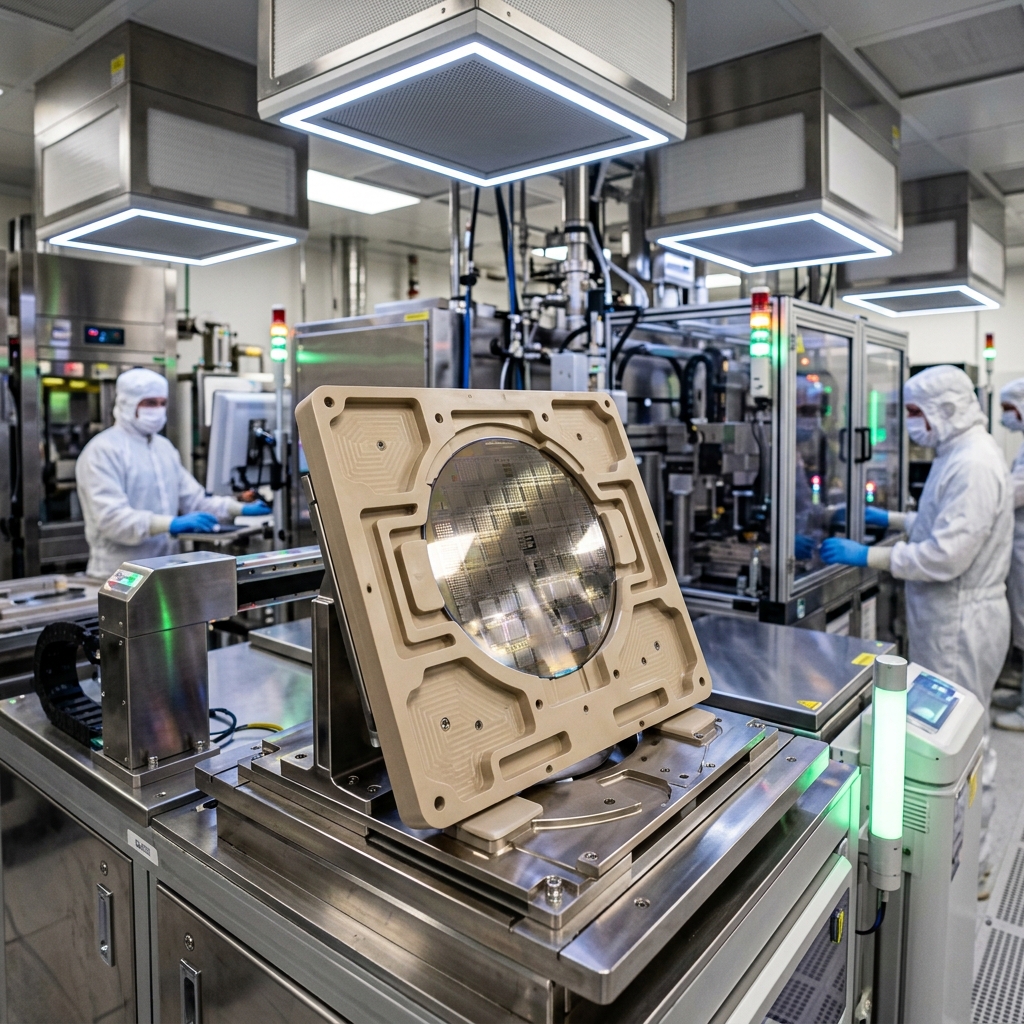
Silicon wafers are very sensitive. They go through hot chemical baths. They must stay perfectly flat.
PEEK handling nests hold the wafers safely. The plastic does not contaminate the silicon.
Delrin cannot handle these chemical cleanrooms. It would melt under the heat. It would also degrade from the strong acids.
CNC Machining Differences: Speeds, Feeds, and Tooling
Both plastics cut well. However, they react differently to cutting heat.
Machining Delrin
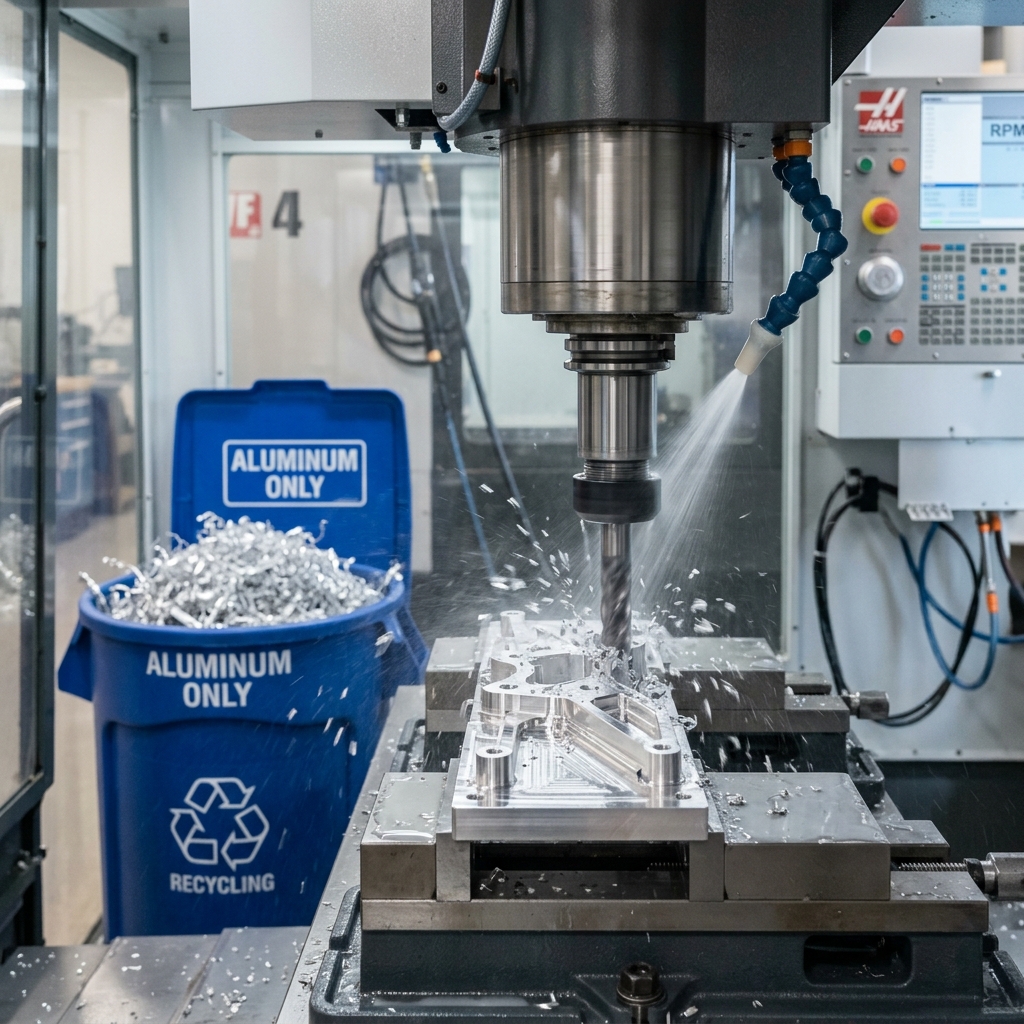
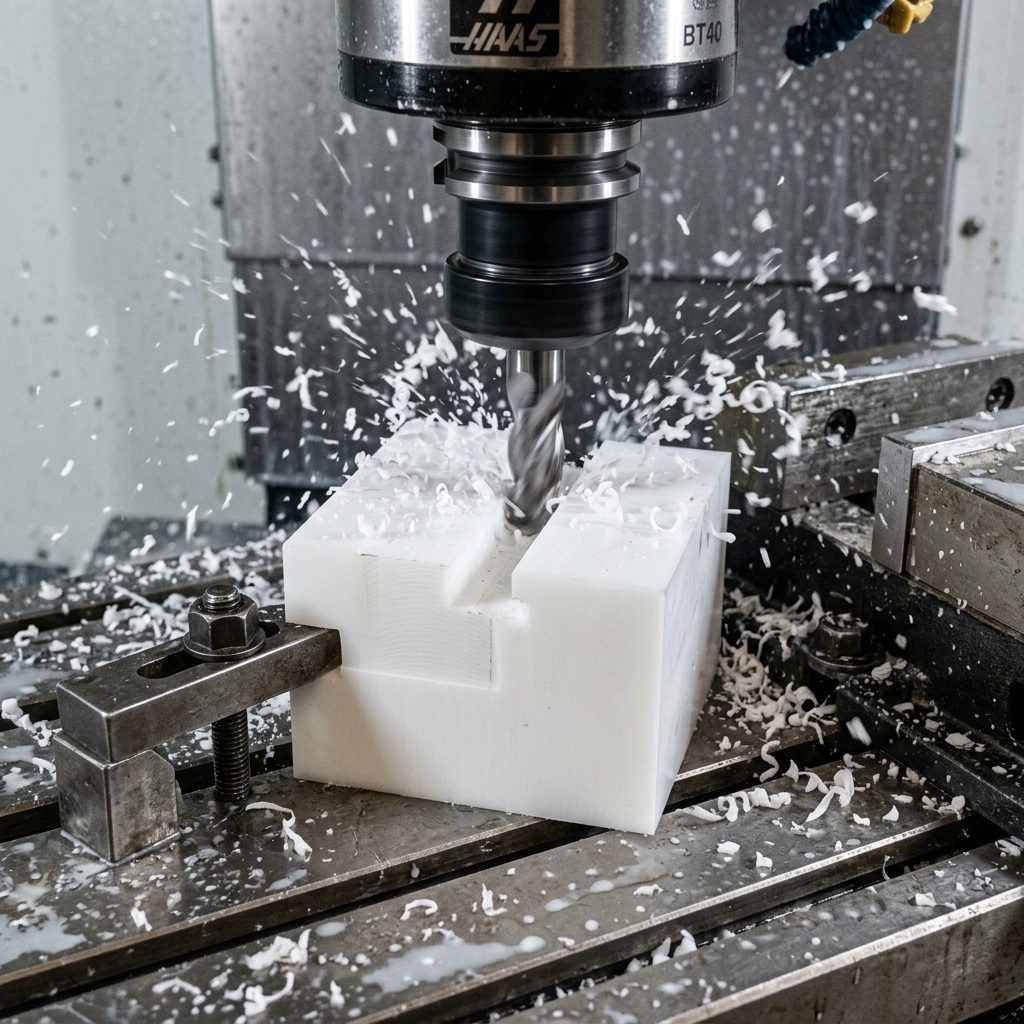
Delrin cuts very fast. You can run high spindle speeds. The main risk is melting. If the tool stays in one spot too long, the plastic melts.
Tips for cutting Delrin:
- Spindle Speed: High speeds. Up to 10,000 RPM for small tools.
- Feed Rate: Fast feed rates. Keep the tool moving to prevent melting.
- Tooling: Use sharp, two-flute carbide end mills. This leaves extra room for plastic chips.
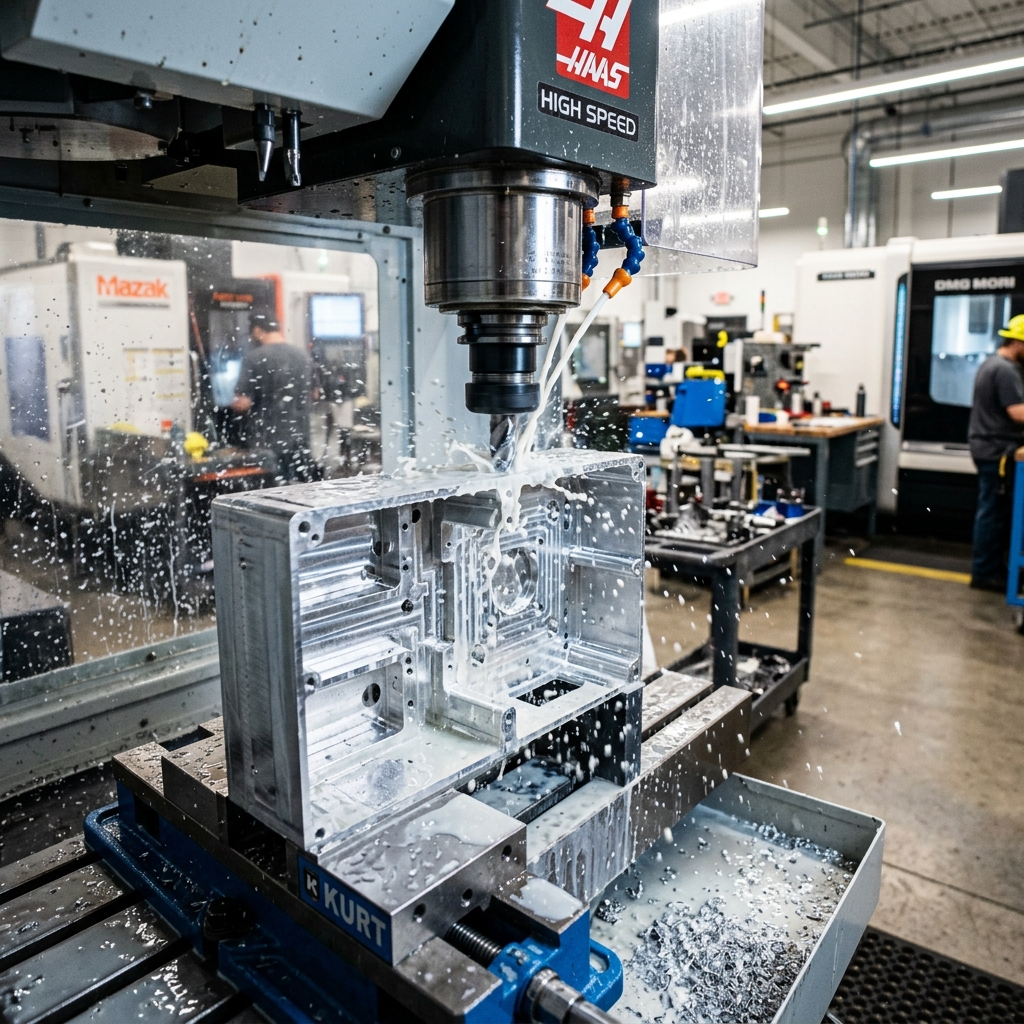
- Coolant: Flood coolant is best. It washes chips away and keeps the part cool.
Machining PEEK
PEEK is much stiffer. It creates more friction when cut. If you run it too fast, it will stress and crack.
Tips for cutting PEEK:
- Spindle Speed: Slower speeds. Run about half the speed of Delrin.
- Feed Rate: Moderate feed rates. Do not pause. pausing causes rubbing and heat.
- Tooling: Use sharp, diamond-coated or carbide tools. PEEK wears out tools fast.
- Coolant: Run dry or use water-based coolant. Coolant helps maintain tight tolerances.
Common Grades of Delrin and PEEK
You will find different grades of both materials in the market. Each grade has special properties.
Delrin Grades
- Delrin 150: This is the standard homopolymer acetal. It offers the highest mechanical strength and stiffness.
- Delrin 100: This grade has high toughness. It resists impact and cracking better than Delrin 150.
- Delrin AF: This grade contains PTFE (Teflon) fibers. It is extremely slippery. It is used for dry bearings and sliding parts.
PEEK Grades
- Unfilled PEEK (PEEK 450G): This is the standard unfilled grade. It offers high chemical resistance and toughness.
- Glass-Filled PEEK (PEEK GF30): This grade contains 30% glass fibers. It is much stiffer and stronger than unfilled PEEK. It is ideal for structural parts.
- Carbon-Filled PEEK (PEEK CF30): This grade contains 30% carbon fibers. It offers the highest stiffness and thermal conductivity. It also reduces wear in sliding applications.
DFM Tips: Designing for Plastic CNC Parts
Plastic parts bend under tool pressure. They deflect more than metal. Use these design tips to make good parts:
1. Avoid Thin Walls
Keep walls at least 0.040 inches (1 mm) thick. Thin walls bend when cut. This causes size errors. If a wall is too thin, the tool will tear the plastic.
2. Limit Deep, Narrow Slots
Deep slots trap hot chips. If chips melt, they ruin the part finish. Keep slot depth under 3 times the slot width. This lets the chips escape easily.
3. Use Metal Inserts for Threads
Plastic threads strip easily. If you turn a screw often, do not tap the plastic. Use metal inserts. Brass or steel inserts work better than plastic threads. They press or screw into the plastic block.
4. Choose the Right Tolerance
Plastics grow and shrink with temperature changes. Do not use tolerances tighter than ±0.002 inches. Tighter tolerances add huge costs. They are hard to measure.
Frequently Asked Questions
Is PEEK worth the extra cost over Delrin?
Only when the application demands it. If your part sees high heat (above Delrin's ~185°F limit), aggressive chemicals, or high continuous loads, PEEK earns its price. For general gears, bushings, and wear parts at room temperature, Delrin gives you most of the performance at a fraction of the cost.
Can Delrin be used for food-contact parts?
Yes. FDA-compliant grades of Delrin (acetal) are available and widely used in food processing for gears, rollers, and conveyor parts. Always confirm the specific grade is certified for food contact before ordering.
Why does PEEK crack or chip during machining?
PEEK is stiff and builds heat quickly. Cutting too fast or with dull tools creates thermal stress that leads to micro-cracks. Use sharp tools, slower speeds, and light, consistent passes. For tight-tolerance work, coolant helps keep the part dimensionally stable.
Does Delrin or PEEK absorb water?
Both absorb very little. Delrin takes on roughly 0.2% moisture and PEEK around 0.1%, so both stay dimensionally stable in humid or wet environments far better than nylon.
Sources & References
- Victrex PEEK polymer datasheets, mechanical, thermal, and chemical resistance properties. Victrex
- DuPont Delrin acetal homopolymer (POM) product data. DuPont
- Ensinger engineering plastics datasheets, TECAPEEK and TECAFORM (POM). Ensinger