Looking at Your First Quote
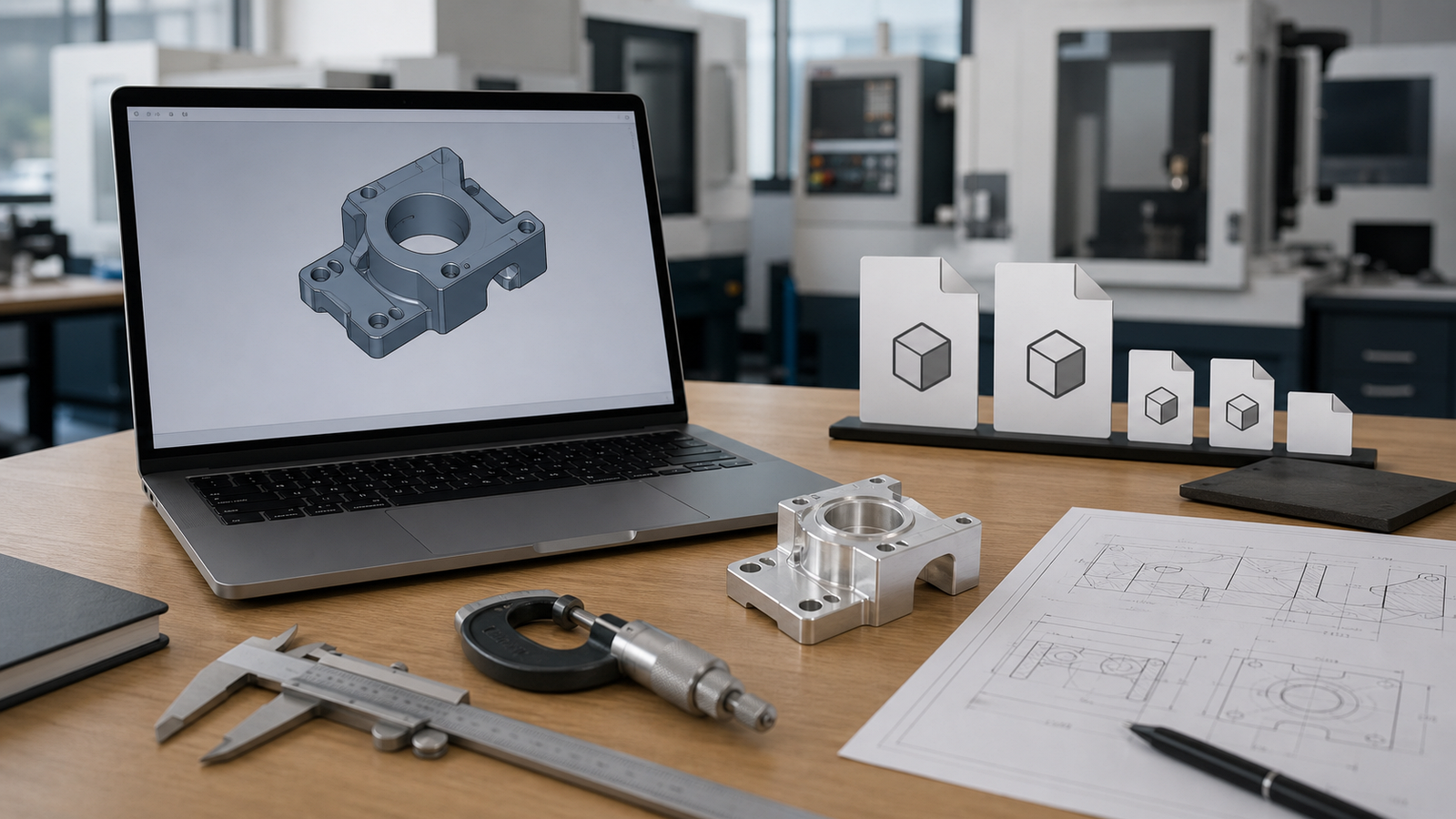
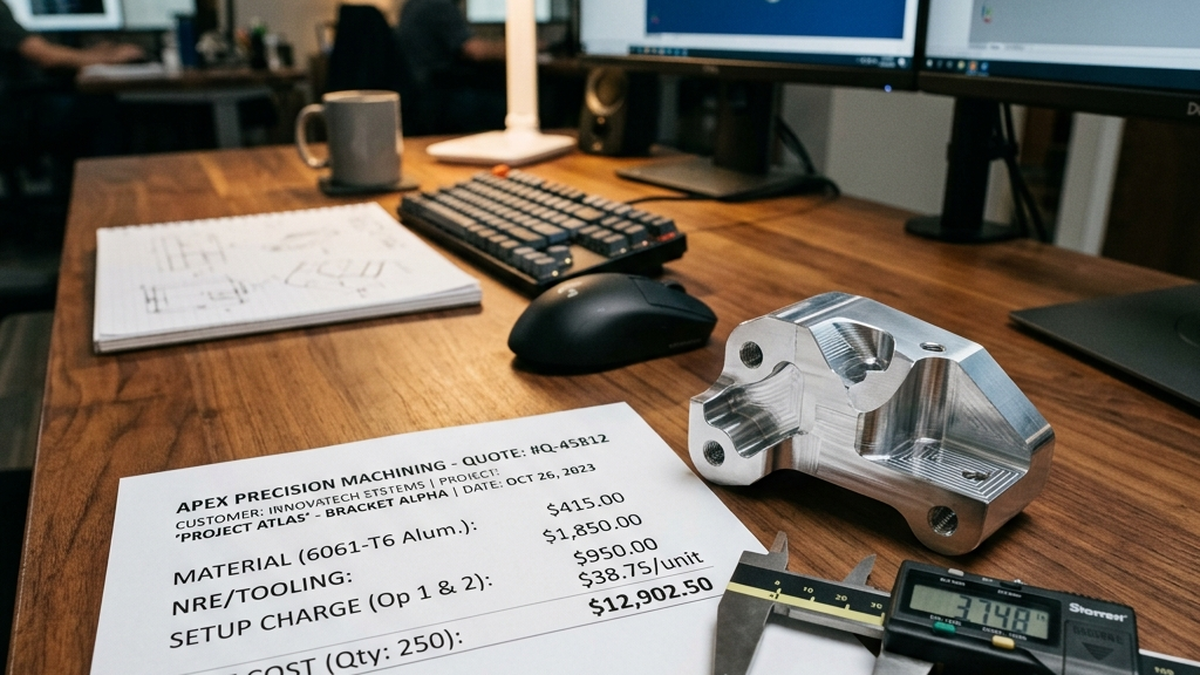
You have spent weeks perfecting a brilliant 3D design for a new project. You send the CAD file to a professional machine shop and a few hours later, an email arrives with the price quote. However, instead of a simple, single number, you are presented with a detailed spreadsheet full of strange acronyms, heavily itemized charges and pricing that changes dramatically based on how many units you order. For someone new to manufacturing, a CNC quote can be incredibly confusing to read. This article breaks down exactly what you are paying for when buying custom machined parts, line by line. If you want to understand the full production journey first, read our guide on how a part goes from CAD to finished piece.
Setup and NRE Costs Explained
The very first major line item on almost every CNC quote is something called a "Setup Fee" or "NRE." NRE stands for Non-Recurring Engineering. This fee covers all the intensive labor that must happen before the massive CNC machine ever cuts a single chip of metal. A custom CNC part does not magically make itself. A highly trained engineer must review your digital CAD file, develop a strategic cutting plan and use CAM (Computer-Aided Manufacturing) software to write the G-code program.
After the programming is finished, a machinist must walk over to the physical machine, clean it, insert all the necessary drill bits and cutting tools and lock your raw metal block tightly into a vise. The machine has to be carefully zeroed out. All of this human labor takes significant time and money. The Setup or NRE fee is a flat, one-time charge per order. It exists whether you buy a single prototype part or an entire pallet of parts. This fee essentially covers the heavy lifting of getting the factory ready to start your specific job.
How Material Costs Work
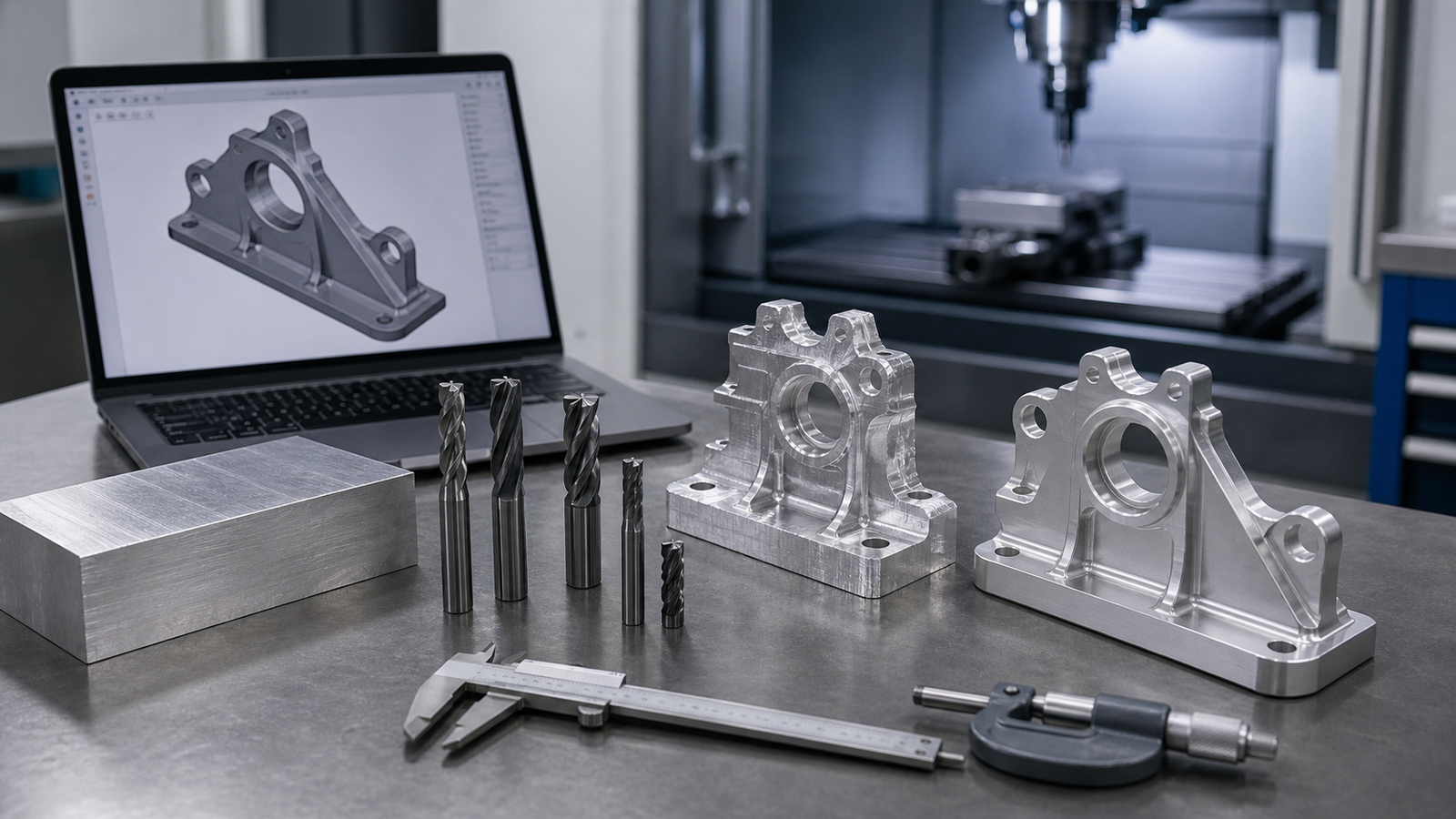
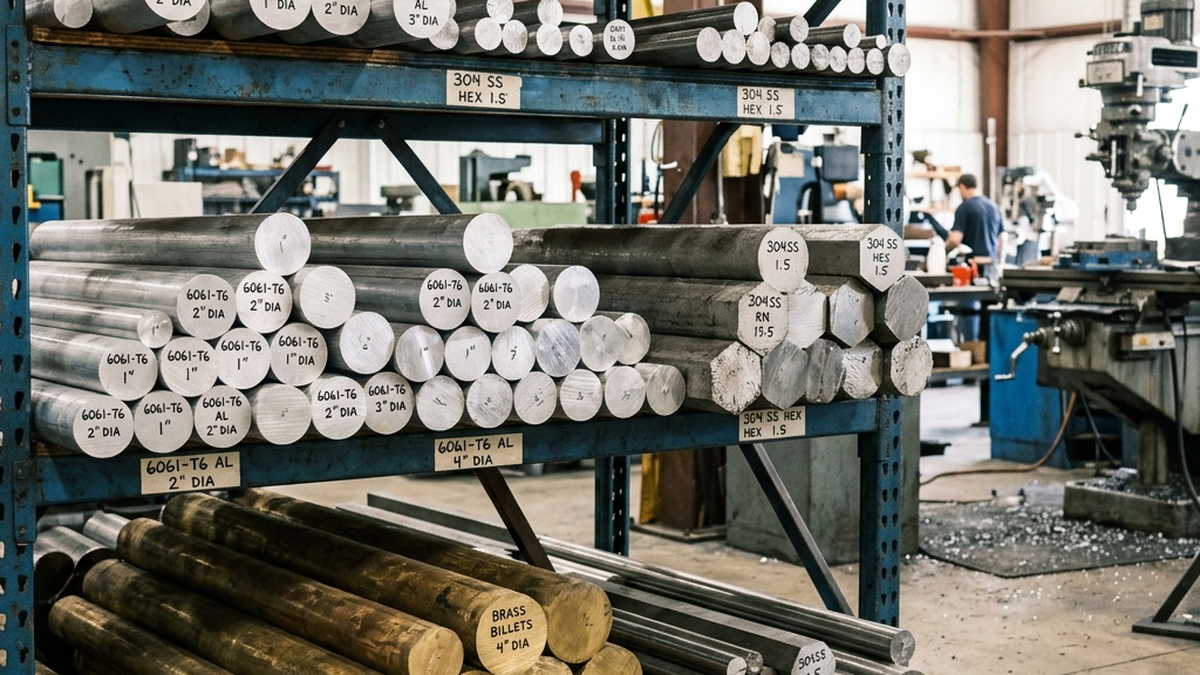
The next distinct section on your quote represents the cost of the raw physical elements: the Material Cost. It is vital to understand that in CNC machining, you are paying for the starting block of metal, not the final weight of your part. CNC machining works by removing waste from a solid lump of material. If your final piece is shaped like a delicate, airy wireframe spiderweb that weighs just three ounces, the shop still had to purchase a heavy ten-pound solid steel square to carve it out.
Choosing standard, easily available materials like 6061 Aluminum is much cheaper. Exotic alloys or extremely tough Titanium blocks are incredibly expensive to purchase and take far longer to safely slice without breaking the tools.
The shop will calculate the rectangular dimensions required to enclose your entire part, add a small buffer holding area (so they can grip it in a vise) and calculate the cost of that full raw metal block. Some materials are sold by the pound, while plastics might be sold by the foot.
Machining Time and Shop Rates
Behind the scenes, running a CNC machine is tremendously expensive. The machines themselves can easily cost hundreds of thousands of dollars to purchase, not to mention the monthly electric bills and the constant replacement of shattered carbide cutting tools. Therefore, every machine shop charges what is known as an "hourly rate" or a "spindle rate" for running the machine.
On your quote, the shop uses its software to estimate exactly how long the cutting process will take. If your part is immensely complex, has deep pockets, or requires very tiny tools to carve fine details, it might take 4 hours to finish. The shop will multiply those 4 hours by their hourly rate (which could be $75 to $150 an hour) to calculate the pure machining cost. Making your design simpler directly reduces the time it sits in the machine, which drastically lowers your quote.
Custom Tools and Fixtures
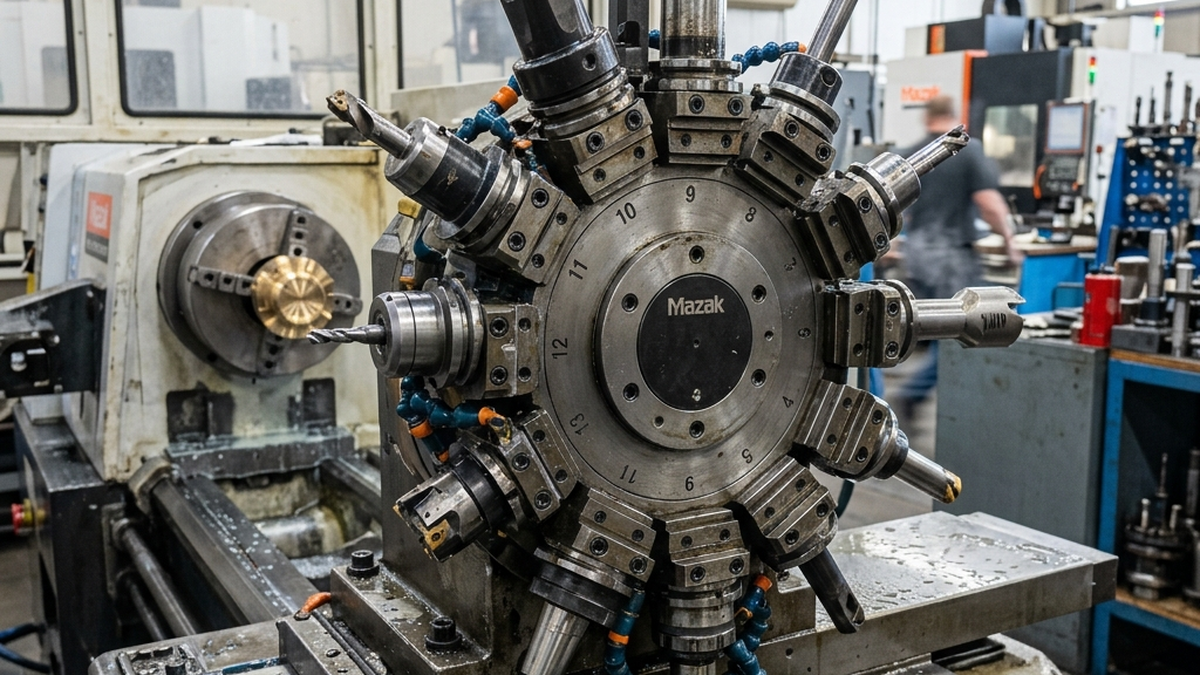
Occasionally, you will see a strange line item explicitly called "Custom Tooling" or "Fixturing." Why are you being charged for the shop's tools? Sometimes, an engineer draws a part that has incredibly deep, narrow holes, meaning a standard drill bit will not reach the bottom. Alternatively, a part might have a totally bizarre, curved outer shape that makes it impossible to hold in a standard flat vise. In these specific cases, the machine shop has to order custom, extra-long tooling or physically bolt together a custom holding clamp (a fixture) just for your project. Because these tools are highly specific to your wacky part, the cost is passed directly onto you in the quote.
Why Buying In Bulk is Cheaper
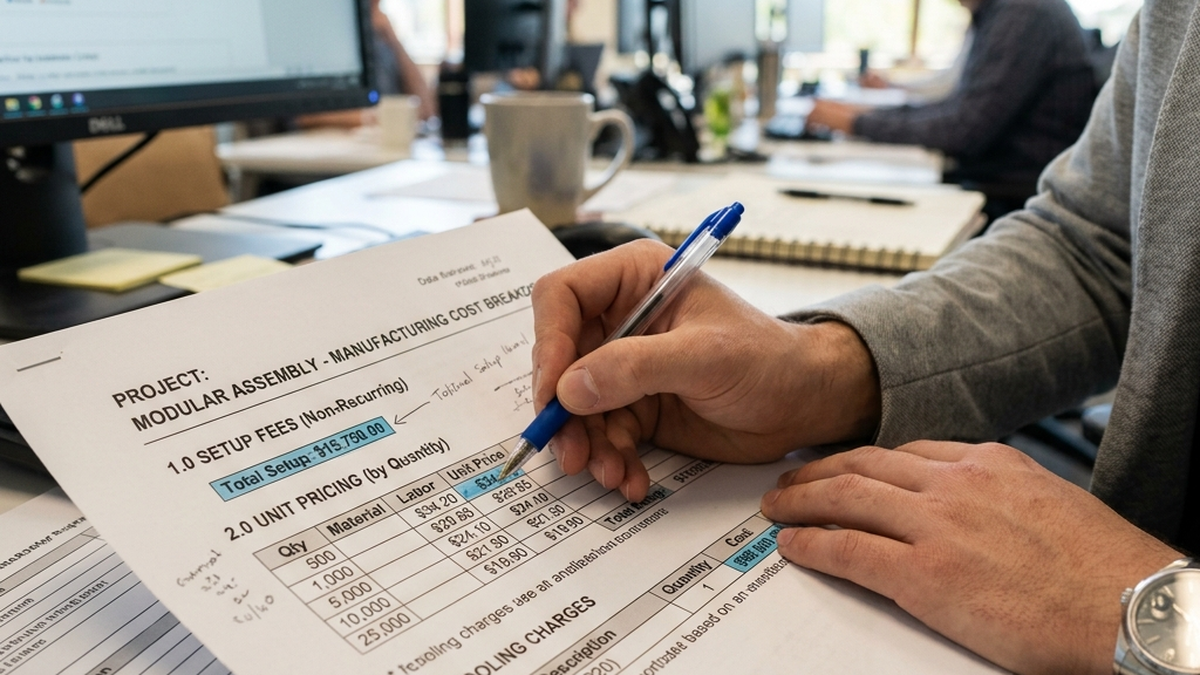
Perhaps the most shocking element of reading a CNC quote is the volume pricing grid. You might notice that ordering a single piece costs an eye-watering $500. But if you order 100 identical copies, the price plummets to just $45 per piece. Why does the price fall off a cliff so steeply? The answer brings us back to the Setup (NRE) costs.
Imagine that the engineering, programming and physical machine setup effort costs a flat $300. If you buy just one part, that single part absorbs the entire $300 setup fee plus its own material and cutting time. However, if you buy 100 parts, that flat $300 setup fee is evenly divided among 100 parts. Now, the setup is only adding $3 per piece to the total bill. Once a factory has the machine perfectly programmed and dialed in, letting it run continuously all day long to create multiple parts is the absolute cheapest way to manufacture.
How Tolerances Impact the Quote
While an explicit "Tolerance Fee" rarely shows up as a separate line item, strict tolerances hide inside the total Machining Time cost. A tolerance is an engineering rule defining exactly how much error is allowed on a dimension. If you state that a hole must be accurate to within the width of a human hair, the machinist is forced to act differently.
To hit that incredibly strict tolerance, the machine must spin much slower and take multiple, extremely light cutting passes instead of one fast, aggressive block-clearing sweep. Furthermore, the machine operator has to stop the entire process frequently, open the doors and use highly sensitive electronic gauges to verify the measurements manually. Because "time is money," asking for unnecessarily tight tolerances causes the machining time estimate to skyrocket, inflating your entire quote.
Watching for Hidden Add-ons
Before agreeing to your final price, always review the bottom terms and small textual areas of the quote to ensure everything you desire is explicitly included. Did you request that the parts be painted or protected with a black anodized coat? Look for a separate line referencing "Finishing" or "Outside Processing."
In aerospace or medical projects, customers often need an official, legally binding document proving all the sizes are perfect (called a First Article Inspection Report or a Certificate of Conformance). Generating these massive datasets requires an expert inspector to spend hours in a separate room measuring your part with lasers. That service is almost always listed as a separate, costly add-on. By reading the quote carefully and understanding the vocabulary, you stop nasty billing surprises and maintain an honest dialogue with your machining partner.
How to Get a Better Quote
A lower quote starts with a better design. Here are the most effective ways to reduce your total cost before you even contact a shop.
First, simplify your geometry. Every extra pocket, complex curve and undercut feature adds machining time. Go through your model and ask: does this feature actually do anything? If not, remove it. Fewer features means a shorter cutting time and a lower price.
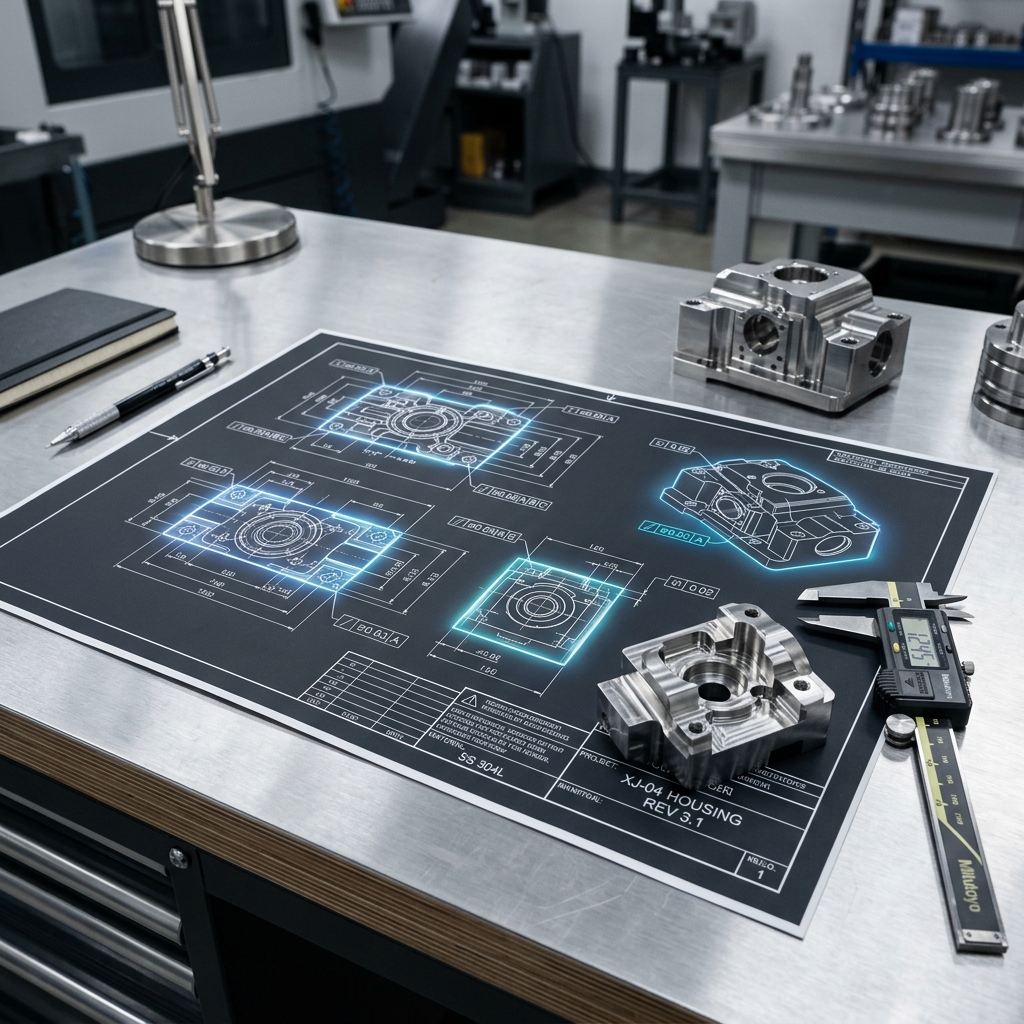
Second, check your tolerances. Open your 2D drawing and look at every tolerance callout. Ask whether each one truly matters for your design to work. Change every non-critical dimension to a standard tolerance like ±0.005 inches or ±0.010 inches. Only keep tight tolerances on holes, fits and surfaces that physically mate with another part.
Third, choose a common material. Exotic alloys like Inconel or titanium are several times more expensive per pound than aluminum or steel and they cut much slower. If your application can tolerate aluminum or a standard stainless steel, choose it. Save the exotic materials for parts that truly need them.
Finally, increase your order quantity if your budget allows. Even going from one piece to five pieces drops the per-unit price dramatically by spreading the setup cost across more parts.
Questions to Ask Your Shop
A good machine shop is a partner, not just a vendor. Here are smart questions to ask before you commit to an order.
Ask: "Have you machined this material before?" A shop that regularly cuts titanium will do it faster and cleaner than a shop trying it for the first time. Experience with your material directly affects quality and price.
Ask: "What file formats do you need?" Some shops prefer STEP files. Others want native SolidWorks or Fusion 360 files. Send what they ask for to avoid translation errors.
Ask: "Do you offer DFM feedback?" A shop that reviews your design before quoting can catch expensive problems early. If they spot an impossible internal corner or an unnecessarily deep pocket, they should tell you so you can fix it before cutting starts. This service alone can save hundreds of dollars on a complicated part.
Ask: "What is included in your quality inspection?" Know exactly what they will measure and document. For simple parts, a visual check and a few caliper measurements may be enough. For critical applications, ask for a full First Article Inspection Report with measured values on every dimension.
Frequently Asked Questions
What does NRE mean on a quote?
NRE stands for Non-Recurring Engineering. It is a flat, one-time fee capturing the labor hours needed to plan the strategy and write the machine software program before cutting safely begins.
Why is buying just a single prototype part so incredibly expensive?
When you buy a single item, you alone absorb the full financial weight of the extensive setup and engineering programming time. If you order more items, that massive setup cost gets split evenly across all of them.
Are special protective finishes included in the base part price?
No. Secondary operations like painting, high-gloss polishing, or applying an anodized protective coat take completely separate machines and different factory workers. They are almost always billed as distinctive separate line items.