Why Stainless Steel?
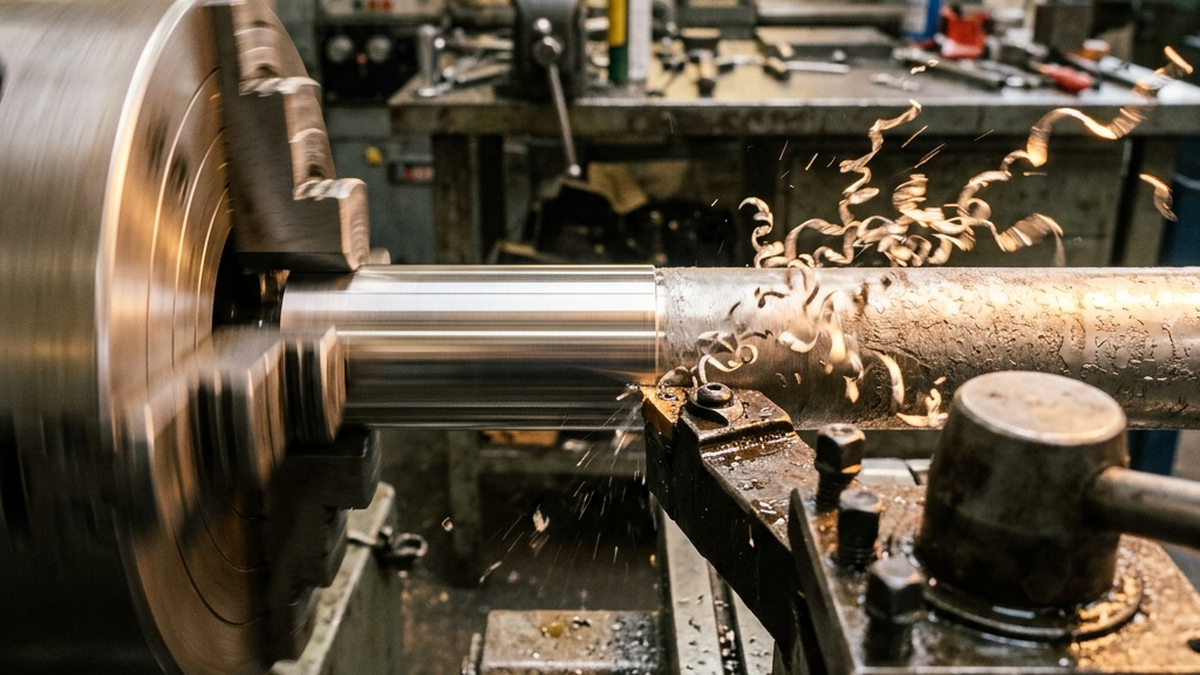
Stainless steel resists corrosion without coatings. It is strong, looks professional and meets FDA and medical standards. You find it in food equipment, medical devices, marine hardware and chemical processing.
The "stainless" part comes from chromium. At least 10.5% chromium creates a passive oxide layer that blocks rust. Add nickel and molybdenum and you get even better protection.
303 vs 304 vs 316: Which Grade Do You Need?
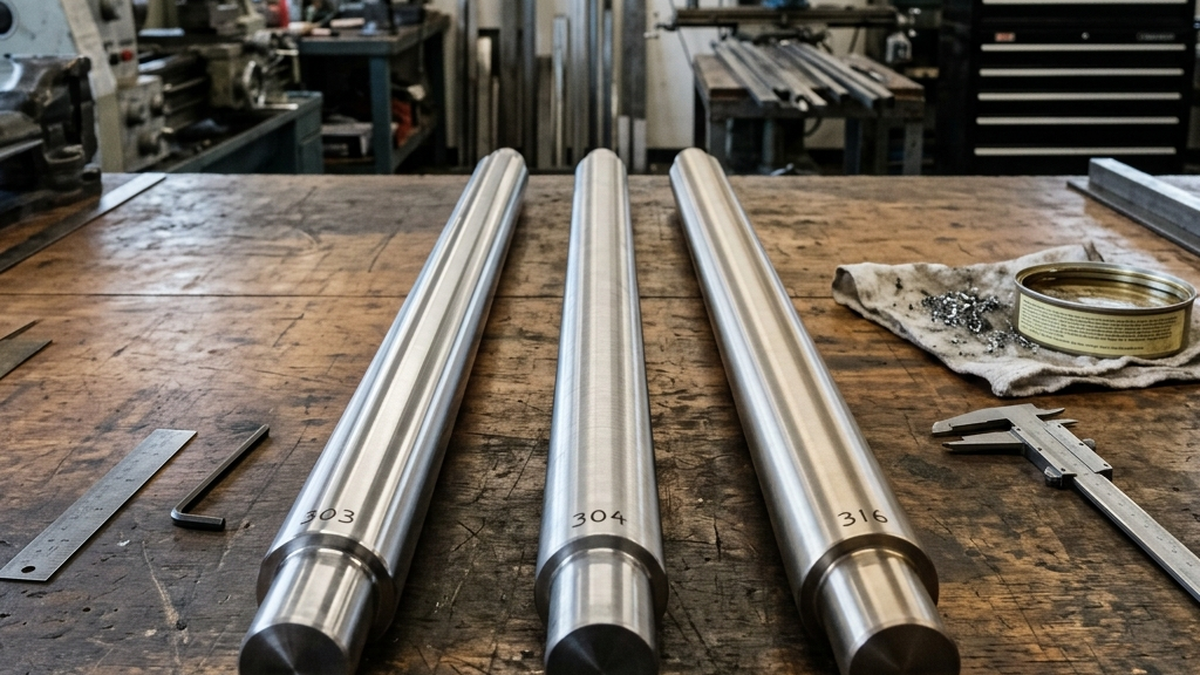
These three grades cover about 80% of stainless steel CNC work. Each one trades off machinability, corrosion resistance and cost differently.
| Property | 303 | 304 | 316 |
|---|---|---|---|
| Machinability | Best (78%) | Fair (45%) | Fair (36%) |
| Corrosion Resistance | Good | Very Good | Excellent |
| Weldability | Poor | Excellent | Good |
| Tensile Strength | 90,000 PSI | 73,200 PSI | 79,800 PSI |
| Magnetic? | Slightly | No | No |
| Salt Water Safe? | No | Limited | Yes |
| FDA Food Contact? | No | Yes | Yes |
| Raw Material Cost | $$ | $$ | $$$ |
303 Stainless: Best for Machining
303 has added sulfur which makes chips break cleanly. It machines almost twice as fast as 304. Pick 303 for fittings, shafts, valve components and any non-welded part that needs decent corrosion resistance.
304 Stainless: The All-Rounder
304 is the world's most used stainless steel. It welds easily, resists corrosion well and meets food-contact rules. Use it for enclosures, brackets, food equipment and medical device housings.
316 Stainless: Maximum Corrosion Resistance
316 adds 2-3% molybdenum for saltwater and chemical resistance. It costs more and machines slower. Choose 316 for marine parts, chemical equipment and surgical instruments.
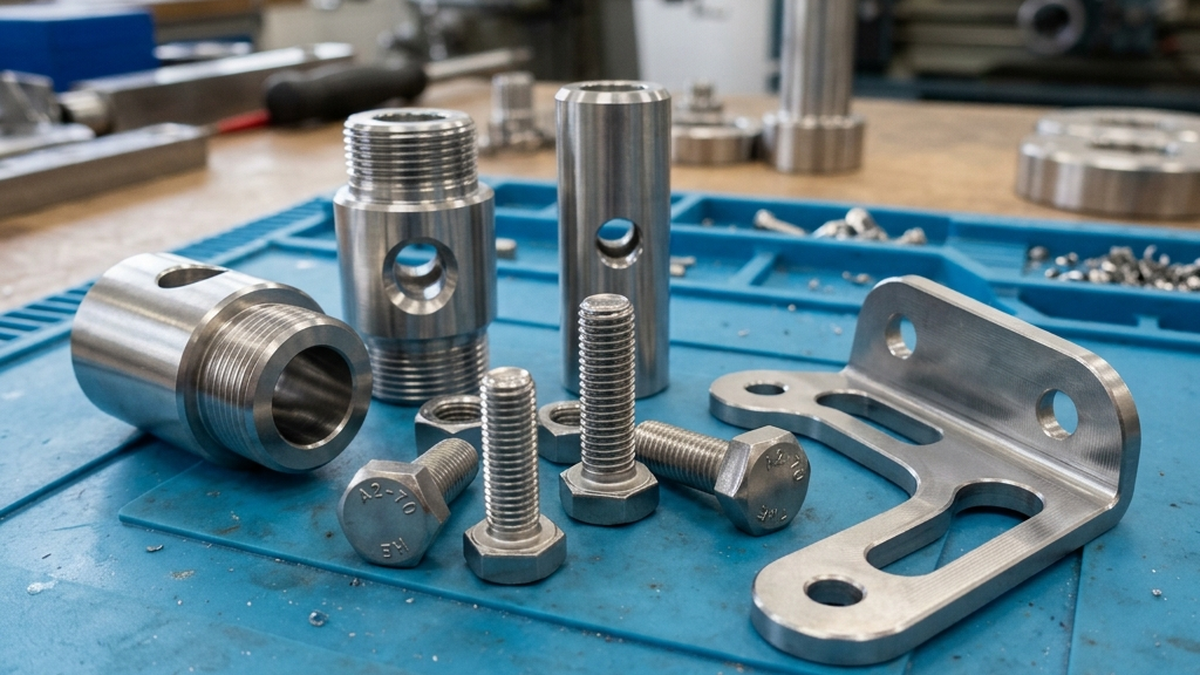
If you do not need to weld it, use 303. If you need to weld it, use 304. If it touches saltwater or harsh chemicals, use 316.
Machinability Ratings
Machinability ratings compare how easy a metal is to cut versus free-machining steel (B1112 = 100%). Lower numbers mean harder to machine, longer cycle times and more tool wear.
- 303: 78% -- close to carbon steel, chips break clean
- 304: 45% -- gummy chips, work hardens fast
- 316: 36% -- slowest of the three, toughest on tools
- 17-4 PH: 50% -- precipitation hardened, good balance
For comparison, 6061 aluminum sits around 90%. This is why aluminum parts cost less to machine.
Work Hardening: The Biggest Challenge
Work hardening is the number one problem with stainless steel machining. When you cut too slowly, let the tool rub, or use a dull cutter, the surface gets harder than the base metal. Then your next pass is cutting hardened material.
Here is how to prevent it:
- Keep tools sharp. Change inserts before they get dull.
- Stay in the cut. Do not let the tool dwell or rub.
- Use positive feed rates. Never slow down mid-cut.
- Climb mill only. Conventional milling causes rubbing on entry.
- Avoid light cuts. Take real chip loads, not dust passes.
Once a surface is work hardened, you cannot fix it by running the same tool path again. You need a deeper cut with a sharp tool to get below the hardened layer. Prevention is always easier than the fix.
Tool Selection for Stainless Steel
The right tool makes stainless steel manageable. The wrong tool turns a simple job into a nightmare. Here is what works:
- Carbide end mills -- always. HSS wears out too fast.
- AlTiN or TiAlN coatings -- block heat, reduce built-up edge.
- 4-5 flutes -- more flutes means better chip evacuation in stainless.
- Variable helix -- reduces chatter in long-reach cuts.
- Sharp positive rake -- shears the material instead of pushing it.
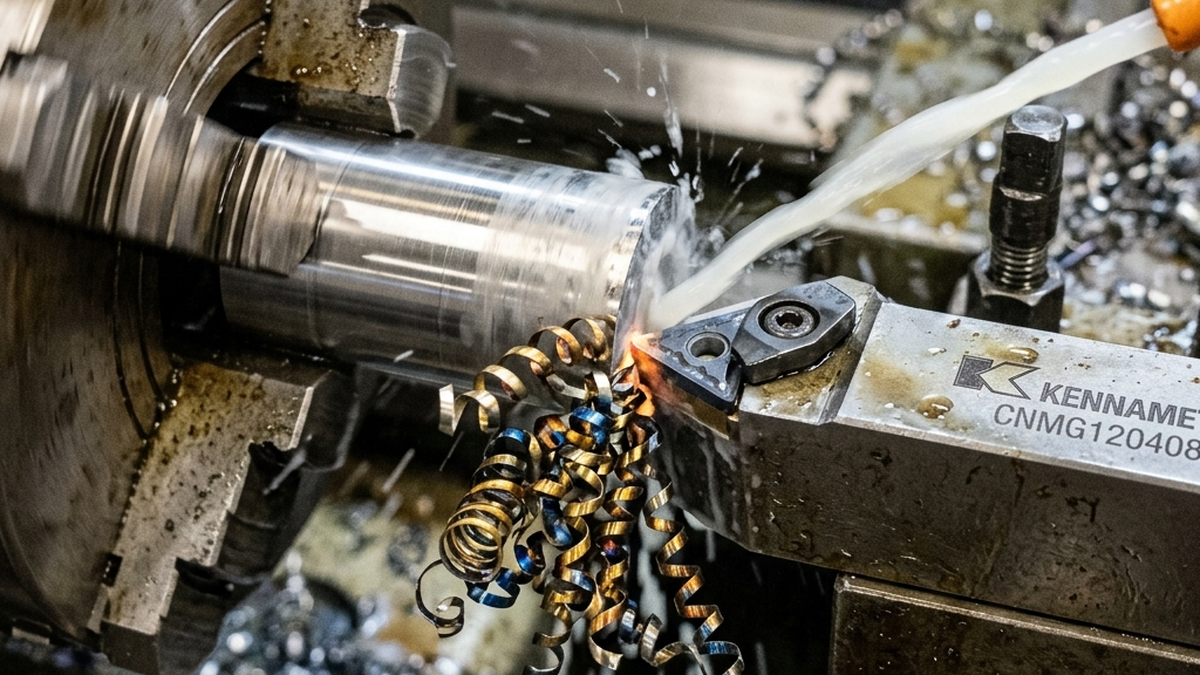
For turning operations, use coated carbide inserts with a sharp chipbreaker geometry. Avoid inserts with heavy edge preps -- they cause rubbing.
Speeds & Feeds
Start with these and adjust based on your setup rigidity:
| Parameter | 303 | 304 | 316 |
|---|---|---|---|
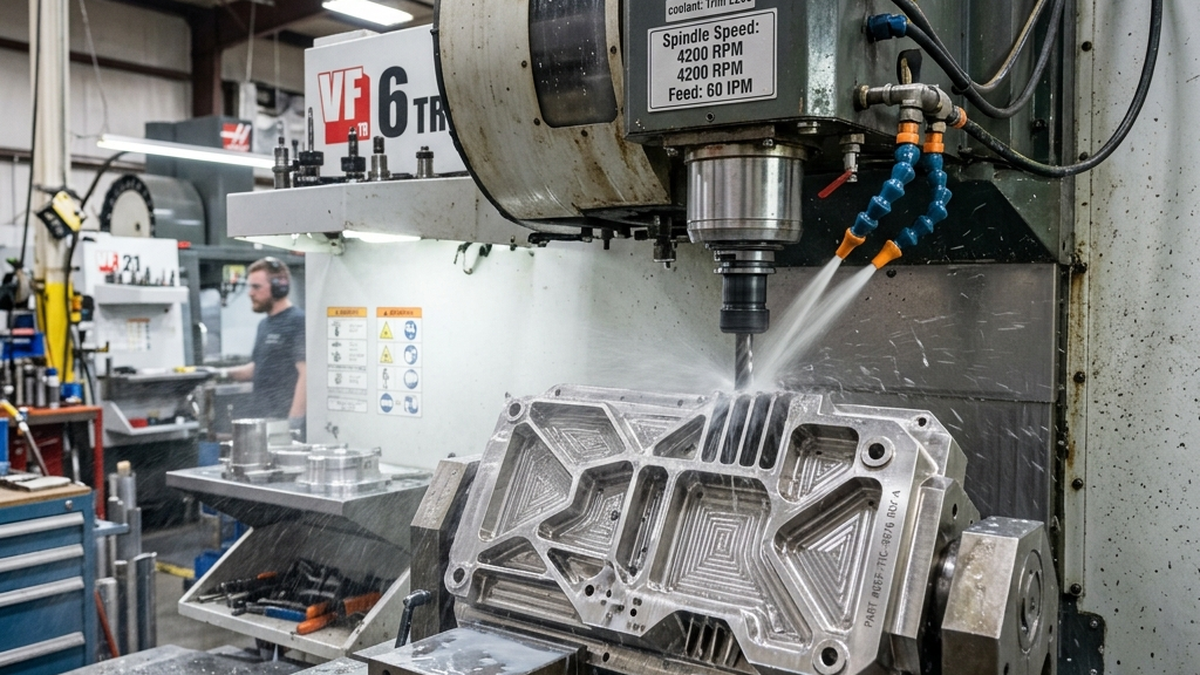
| Surface Speed (SFM) | 200-350 | 150-250 | 100-200 |
| Feed per Tooth | 0.003-0.005" | 0.002-0.004" | 0.002-0.004" |
| Depth of Cut | 0.5-1.0x dia | 0.5-0.75x dia | 0.5-0.75x dia |
| Coolant | Recommended | Required | Required |
Finishing Options
Unlike aluminum, you cannot anodize stainless steel. But you have other good options:
- Passivation -- removes surface iron, boosts corrosion resistance. Most common finish.
- Electropolishing -- mirror-like surface, removes micro-burrs. Great for medical and food parts.
- Bead blasting -- uniform matte texture. Hides machining marks.
- Brushed finish -- directional satin look. Popular for consumer products.
- PVD coating -- adds color (gold, black, titanium) plus wear resistance.
What Does Stainless Steel Machining Cost?
Stainless steel costs more to machine than aluminum or carbon steel. Expect to pay 30-60% more than aluminum for the same part geometry. Here is why:
- Slower spindle speeds = longer cycle times
- Faster tool wear = more frequent tool changes
- Higher material cost, especially for 316
- Tighter process control to avoid work hardening
That said, 303 is the cheapest stainless to machine. If your design allows it, switching from 304 to 303 can save 15-25% on machining costs.
Want to know exactly what your stainless steel parts will cost? Upload your CAD file and get instant pricing. We machine all common stainless grades.
Frequently Asked Questions
What is the easiest stainless steel to CNC machine?
303 stainless steel is the easiest to machine. It contains sulfur which helps break chips and reduces tool wear. Its machinability rating is about 78% compared to free-machining steel. Choose 303 when corrosion resistance matters but you do not need welding.
Why does stainless steel work harden during machining?
Stainless steel work hardens because its crystal structure changes under pressure. When you machine it with dull tools, too-slow feed rates, or dwell time, the surface gets harder than the base metal. This makes the next pass much harder to cut and destroys tools quickly.
What is the difference between 304 and 316 stainless steel?
316 stainless adds molybdenum for better corrosion resistance, especially against saltwater and chemicals. 304 is the most common general-purpose stainless. Use 316 for marine, chemical, or medical applications. 304 works well for food equipment, enclosures and general industrial parts.
How much does stainless steel CNC machining cost?
Stainless steel parts cost 30-60% more to machine than aluminum parts. The slower speeds, faster tool wear and harder material all add cost. 303 is the cheapest stainless to machine. 316 costs the most due to both higher material price and slower cutting speeds.
Can you anodize stainless steel?
No, you cannot anodize stainless steel. Anodizing only works on aluminum and titanium. For stainless steel finishes, you can use passivation, electropolishing, bead blasting, brushing, or PVD coating. Passivation is the most common finish -- it removes surface contaminants and boosts corrosion resistance.