What Bay Area CNC Shops Charge
Bay Area shop rates run higher than the national average. Here is what you can expect to pay.
| Machine Type | Bay Area Rate | National Average | Premium |
|---|---|---|---|
| 3-Axis Mill | $100 - $175/hr | $75 - $125/hr | +30% |
| 5-Axis Mill | $150 - $325/hr | $125 - $250/hr | +25% |
| CNC Lathe | $80 - $150/hr | $60 - $110/hr | +35% |
| Wire EDM | $90 - $175/hr | $75 - $140/hr | +25% |
These are shop rates, not part prices. Your part cost depends on machine time, setup, material and finishing. See our cost calculator guide for a full breakdown.
Why Bay Area Rates Are Higher
The premium is real, but it is not profit padding. Here is where the money goes:
- Labor costs. A skilled CNC machinist in the Bay Area earns $75,000 to $110,000 per year. The national average is $55,000 to $75,000.
- Rent. Industrial space in the South Bay runs $1.50 to $3.00 per square foot per month. In the Midwest, the same space costs $0.50 to $1.00.
- Utilities. California electricity rates are 50-80% above the national average. CNC machines draw a lot of power.
- Insurance and compliance. California has stricter environmental and worker safety rules. Compliance costs more.
Higher rates do not always mean higher part prices. Bay Area shops often have newer machines that cut faster. A shop charging $150/hr with a fast machine may beat a $90/hr shop with old equipment.
Price Ranges by Part Type
Here is what you can expect for common part types from a Bay Area shop. Prices are for aluminum 6061.
| Part Type | Prototype (1 pc) | Small Batch (25 pcs) | Production (100+ pcs) |
|---|---|---|---|
| Simple bracket | $60 - $120 | $30 - $55 | $18 - $35 |
| Mounting plate | $80 - $180 | $40 - $80 | $25 - $50 |
| Electronics enclosure | $200 - $500 | $100 - $250 | $60 - $150 |
| Shaft or pin | $40 - $90 | $20 - $45 | $12 - $30 |
| Complex housing (SS) | $400 - $1,200 | $200 - $600 | $120 - $350 |
When Local Beats Offshore
Offshore CNC shops charge $20 to $60 per hour. Sounds great. But the real cost includes more than the shop rate.
Hidden Costs of Offshore Machining
- Shipping: $500 to $2,000 per shipment for air freight. 4-6 weeks for sea freight.
- Customs and duties: 5-25% depending on material and country of origin.
- Quality issues: 10-30% rejection rates are common. Rework costs time and money.
- Communication: Time zone gaps and language barriers cause wrong parts.
- IP risk: Your CAD files are on someone else's server in another country.
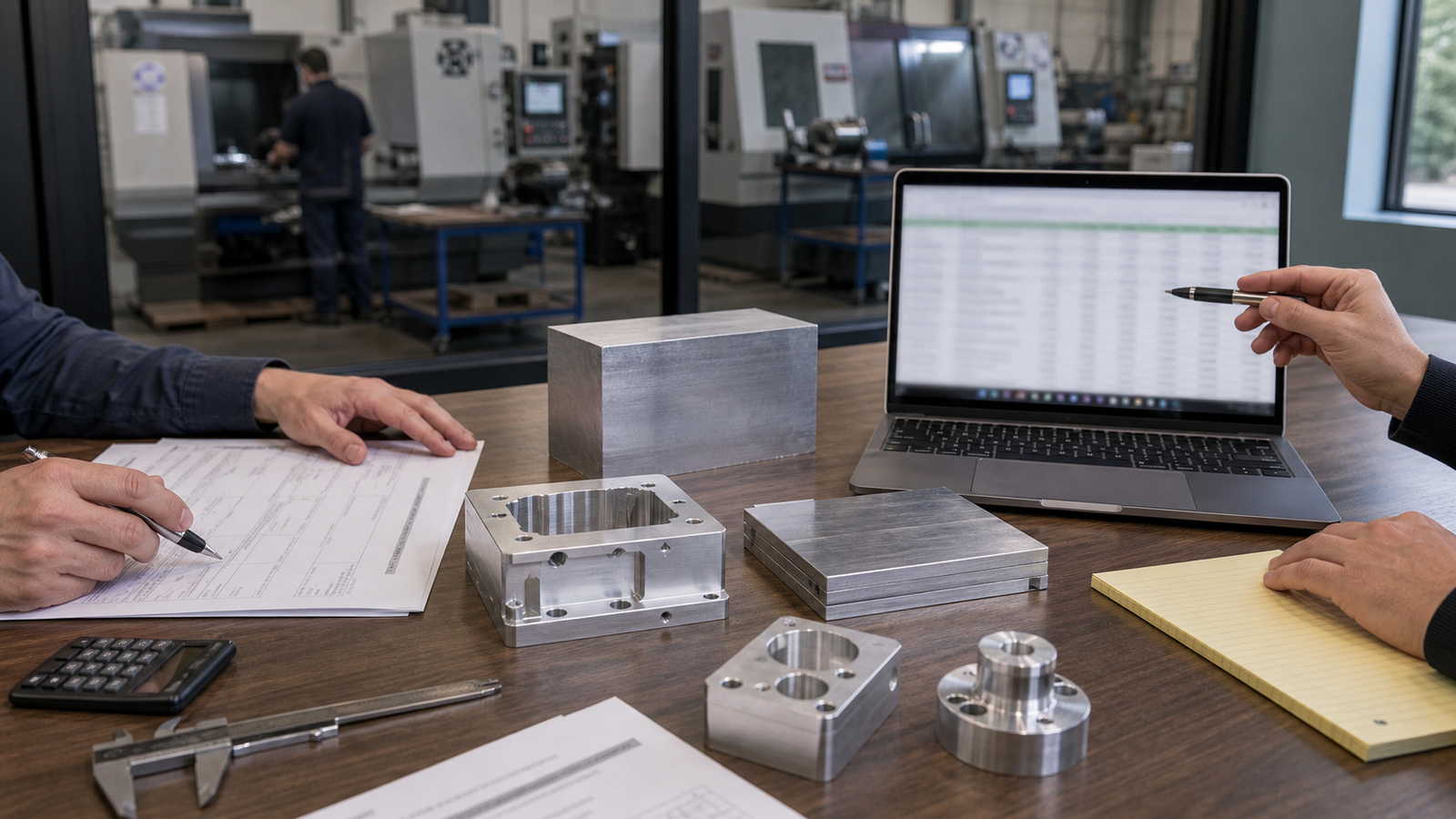
Offshore only saves money on orders over 500 parts with simple geometries and loose tolerances. For prototypes and small batches, local is almost always cheaper total.
When to Go Local
- Prototypes and batches under 500 pieces
- Parts with tight tolerances (+/- 0.001" or tighter)
- Rush orders or time-sensitive projects
- Sensitive IP or defense-related work
- When you need to visit the shop and inspect parts in person
How to Find a Good Price Locally
- Get 3-5 quotes. Prices vary 30-50% between shops for the same part.
- Look at East Bay and South Bay shops. Lower rent means lower rates.
- Choose shops with newer equipment. Faster machines offset higher hourly rates.
- Ask about volume pricing. Most shops offer better rates for repeat orders.
- Use online quoting. RivCut's instant quotes let you compare without phone calls.
RivCut is a Bay Area CNC shop with competitive pricing. Upload your CAD file and get instant AI pricing. No phone tag needed.
Frequently Asked Questions
How much does CNC machining cost in the Bay Area?
Bay Area shops charge $100 to $175 per hour for 3-axis work. This is 20 to 40 percent above the national average.
Why are Bay Area machine shops more expensive?
Higher rent, wages and utility costs drive up rates. Machinists here earn 25 to 40 percent more than average.
Is it cheaper to use an offshore CNC shop?
Not usually. Shipping, customs, quality issues and communication barriers erase savings for orders under 500 parts.
What should I pay for a simple CNC part in the Bay Area?
A simple aluminum bracket costs $50 to $120 as a prototype. In batches of 50+, expect $25 to $60 per part.
Are there affordable CNC shops in the Bay Area?
Yes. Smaller and newer shops like RivCut keep overhead low. Look in the East Bay and South Bay for better rates.
What Actually Drives Bay Area CNC Pricing
Bay Area CNC pricing is high because the region has high labor costs, high facility costs and customers who often need complex technical work. But the hourly rate is only part of the quote. A simple part on an expensive machine can still be affordable if setup is clean and cycle time is short. A difficult part on a cheaper machine can become expensive if it needs custom workholding, slow finishing passes and heavy inspection.
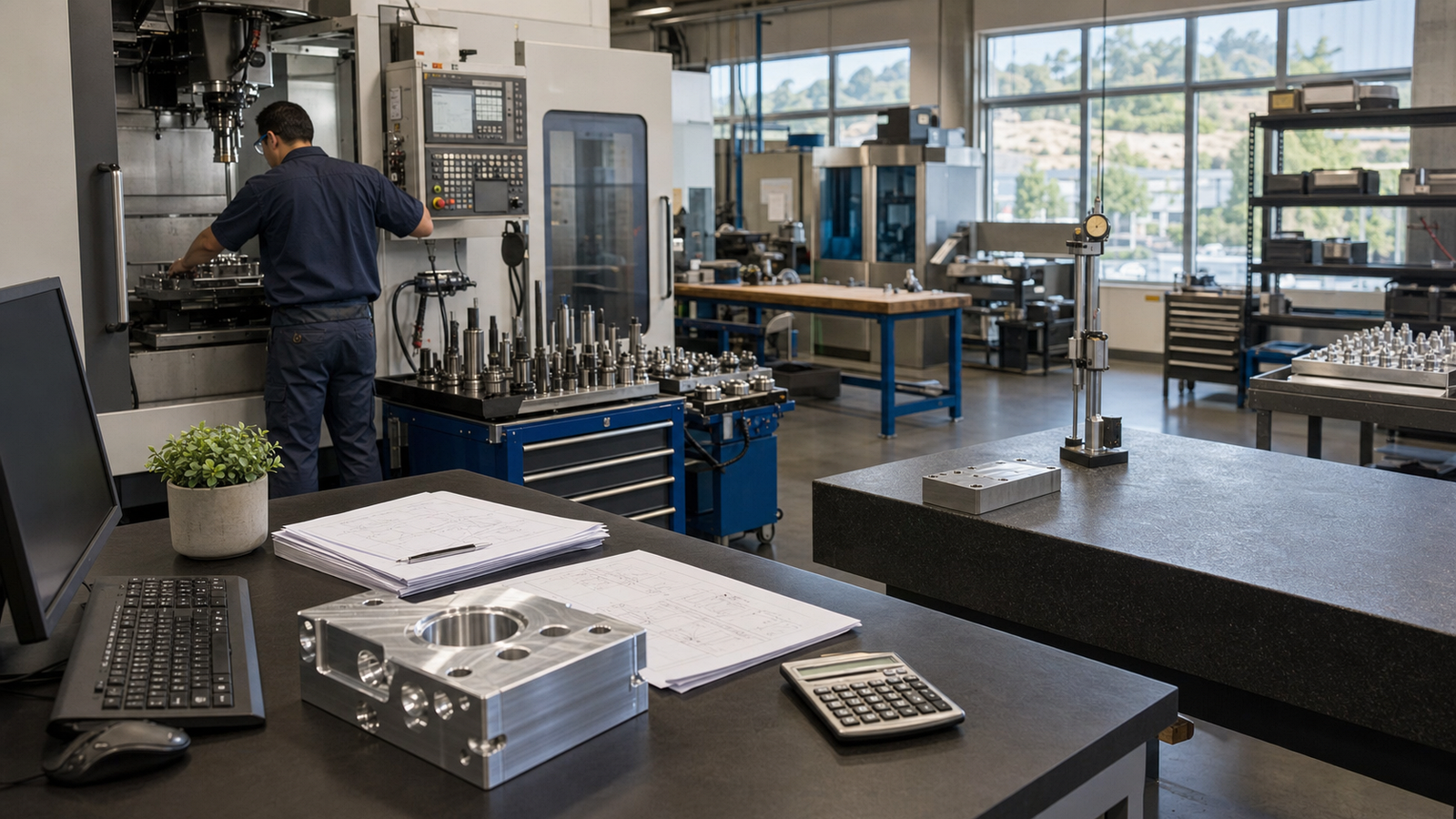
The biggest drivers are setup time, programming time, material, machine time, tolerance, finish, inspection and risk. A part with broad +/-0.010 inch tolerances may run quickly. The same part with several +/-0.0005 inch bores, cosmetic surfaces and anodizing requirements needs more planning and inspection. This is why buyers searching for Bay Area CNC machining price per part should not expect one universal number.
Local pricing also reflects responsiveness. A shop that can turn prototypes quickly, review CAD with engineers and support urgent production will not price like a commodity supplier. For hardware startups and regulated industries, that responsiveness can be worth more than a low unit price.
How to Get a Better Local CNC Price
The fastest way to lower price is to reduce uncertainty. Send a STEP file, drawing, quantity, material, finish and delivery target. Identify which tolerances are truly critical and which can be standard. Avoid calling out tight tolerances on every feature. A shop has to inspect what the drawing requires, and inspection time is real cost.
Quantity also changes the quote. One prototype carries all setup cost by itself. Ten parts share that setup cost. One hundred parts may justify soft jaws, a fixture or a different process plan. If you know you may reorder, ask for price breaks so the shop can propose the right setup for the long term.
For Bay Area buyers, local can beat offshore when the part is urgent, changing, high value or hard to inspect remotely. If the design is mature and volume is high, offshore may be cheaper. If the design still needs engineering feedback, local machining often wins on total project cost.
Long-Tail Questions This Article Answers
This guide covers Bay Area CNC machining cost per part, what local CNC shops charge in California, why Bay Area CNC machining is expensive, how to reduce CNC machining quote price, prototype CNC machining cost Bay Area, low volume CNC pricing California, local vs offshore CNC machining cost and how quantity affects CNC part price.
The best quote is not always the lowest quote. It is the quote that matches the part risk, delivery need and stage of product development.
Quote Checklist for Better Bay Area Pricing
To get a cleaner price, send complete data the first time. A STEP file lets the shop program accurately. A drawing tells the shop which dimensions matter. Quantity tells the shop whether to use a quick prototype setup or invest in production workholding.
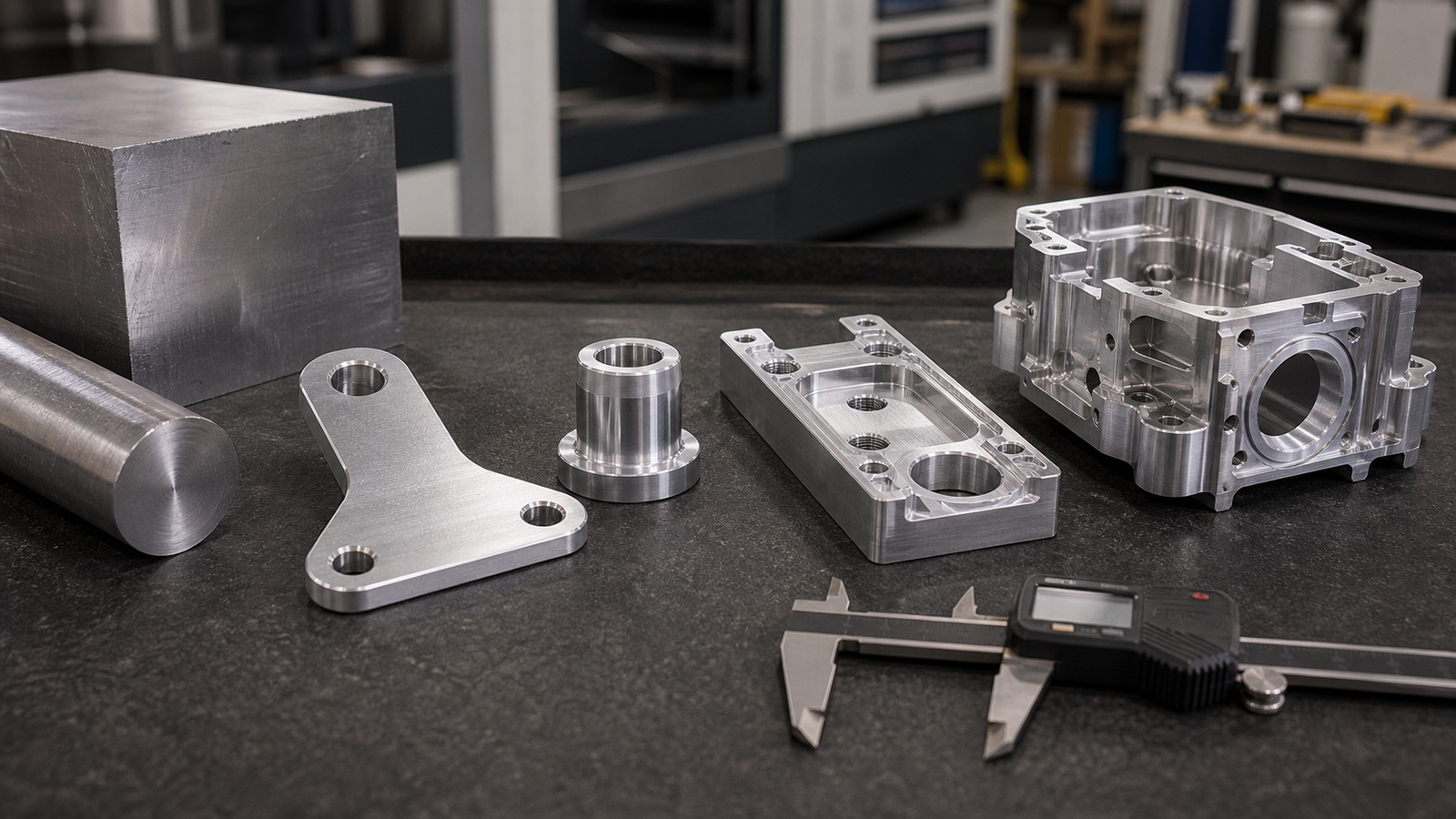
Separate must-have requirements from preferences. If only two holes need tight tolerance, do not apply tight tolerance to every dimension. If the part can accept a standard tool radius, avoid sharp internal corners. If finish is cosmetic, define the visible faces.
Ask for price breaks and lead-time options. Sometimes paying for a slightly longer lead time or a larger batch size lowers cost significantly. Good Bay Area shops will help you see those tradeoffs before you commit.
Common Pricing Mistakes to Avoid
The biggest mistake is sending only a screenshot or STL file and expecting a firm CNC quote. The shop needs a STEP file and drawing to understand true cost. Another mistake is quoting one piece when you know you need more. Quantity changes setup strategy. A third mistake is hiding schedule urgency. If the part is needed immediately, the shop may need overtime, material expediting or a different process plan, and that affects price.
For best results, send the shop the model, drawing, quantity, revision status, target lead time and any inspection or documentation requirements at the start. Clear inputs help the supplier quote the real job, choose the right setup and avoid surprises after machining begins.
Final Buyer Takeaway
The best machining outcome usually comes from matching the quote package to the real manufacturing risk. A simple bracket may only need a clean model, standard material and normal inspection. A thin, cosmetic, regulated or schedule-critical part needs more context. Share the part function, mating features, quantity forecast, finish expectations and the reason any tight tolerance exists. That information lets the shop recommend a practical process instead of guessing from geometry alone.
For SEO and answer-engine clarity, this article intentionally addresses specific buyer searches rather than broad definitions only. Those long-tail questions are often the same questions a manufacturing engineer asks before releasing a purchase order: how will the part be held, what records are required, how will cost change at quantity and which risks should be solved before the first chip is cut?