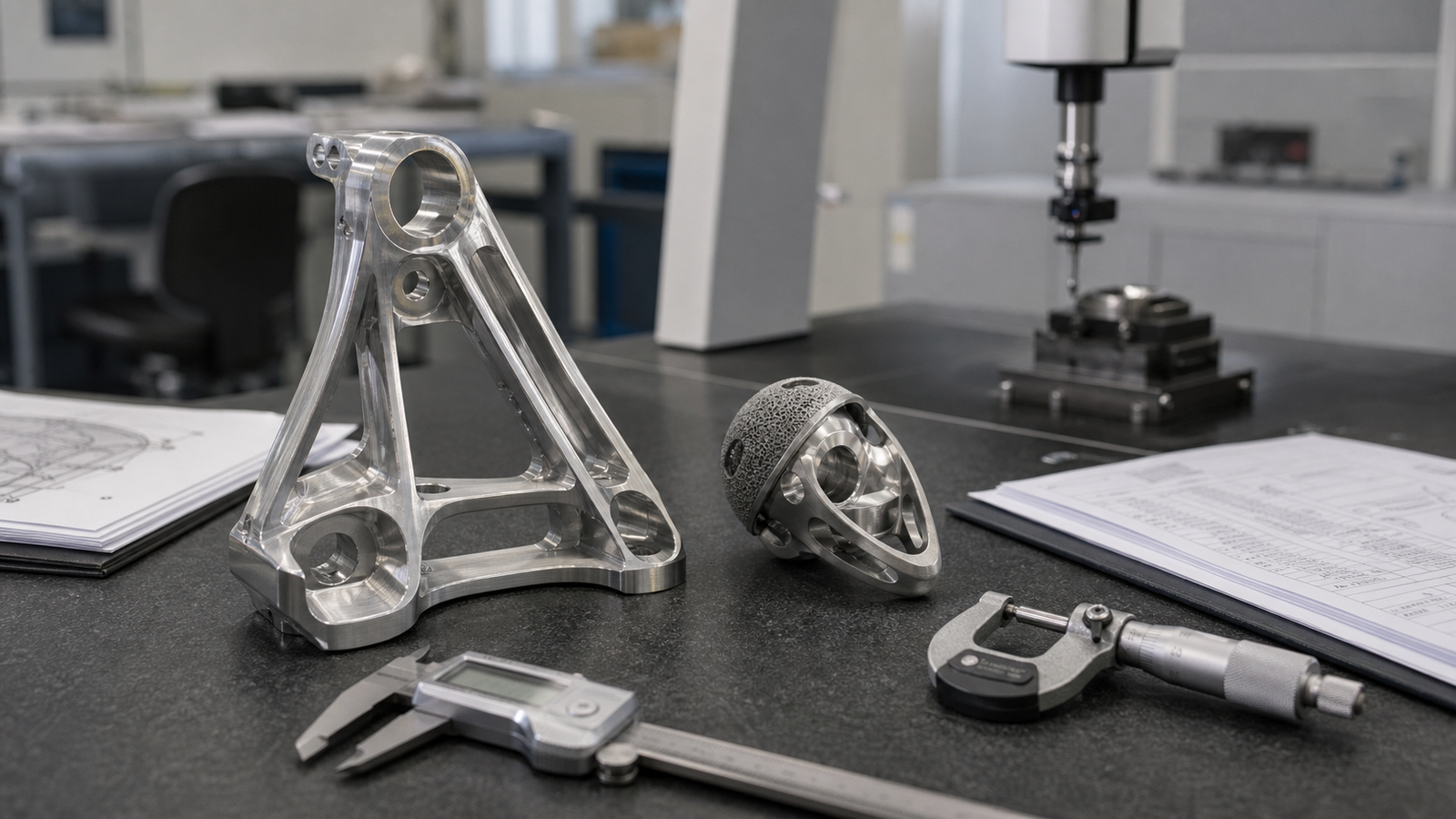
Why Medical Machining Is Different
Medical parts go into or onto human bodies. A surgical instrument touches living tissue. An implant stays in a patient for decades. The stakes are as high as it gets.
This means tighter controls on everything. The material must be body-safe. The surface must be ultra-smooth. The documentation must trace every part back to its raw material lot.
FDA Requirements
The FDA does not regulate machine shops directly. It regulates the medical device company. But the device company needs suppliers who can support their FDA obligations.
This means your shop must provide documentation that fits into the device company's quality system. Traceability, process validation and inspection records are all part of the package.
Key FDA Expectations
- Design controls documented per 21 CFR 820
- Device History Records (DHR) for each production lot
- Complaint handling and corrective action systems
- Supplier controls, the device company must audit you
ISO 13485: The Medical Quality Standard
ISO 13485 is the quality management standard for medical devices. It is the medical equivalent of AS9100D in aerospace.
A shop with ISO 13485 has documented processes for everything. From incoming material checks to final inspection. From employee training to equipment calibration.
Not every medical part needs an ISO 13485 shop. Simple fixture components or lab equipment may not require it. But if your part touches a patient or goes into a regulated device, ISO 13485 is the standard to look for.
Biocompatible Materials
Biocompatibility means the material will not harm the body. It will not cause inflammation, toxicity, or allergic reactions. Testing per ISO 10993 proves this.
| Material | Common Uses | Key Properties |
|---|---|---|
| 316L Stainless | Surgical instruments, bone plates | Corrosion resistant, easy to sterilize |
| Ti Grade 23 (ELI) | Implants, bone screws, spinal cages | Biocompatible, high fatigue strength |
| PEEK | Spinal cages, dental components | Radiolucent, bone-like stiffness |
| Cobalt Chrome | Joint replacements, dental implants | Wear resistant, biocompatible |
| Ti Grade 2 (CP) | Dental abutments, pacemaker cases | Excellent corrosion resistance |
Standard 316 stainless is not the same as 316L. The "L" means low carbon. This matters for corrosion resistance in the body. Always specify 316L for medical applications.
Surface Finish for Medical Parts
Surface finish in medical is about more than looks. Rough surfaces trap bacteria. Smooth surfaces reduce infection risk and improve tissue integration.

- Surgical instruments, 16-32 Ra, passivated
- Implant surfaces, 8-16 Ra, electropolished
- Bearing surfaces, 4-8 Ra, lapped or polished
- Non-contact components, 32-63 Ra, standard
Documentation Requirements
Medical documentation serves one purpose. It proves your parts are safe and made correctly. Every record supports this claim.
- Certificate of Conformance referencing drawing and revision
- Dimensional inspection report with measured values
- Material certification with lot number and chemical analysis
- Biocompatibility data for implant-grade materials
- Process validation records (IQ/OQ/PQ) for critical processes
- Lot traceability linking finished parts to raw material
For more on inspection documentation, see our Quality Inspection Guide.
Common Medical Parts We Machine
- Bone screws and plates, Ti Grade 23, tight tolerances
- Surgical instrument handles, 316L, knurled grips
- Spinal cages, PEEK or Ti, complex geometry
- Guide blocks and drill guides, 17-4 PH or 316L
- Housings for electronic implants, Ti Grade 2, hermetic seal surfaces
- Prototype components, any material, fast turnaround
Need medical-grade CNC parts? Upload your CAD file to RivCut and tell us your material and documentation requirements. We provide full traceability on every medical order.
Frequently Asked Questions
What is ISO 13485?
ISO 13485 is the quality standard for medical device manufacturers. It requires documented processes, risk management and full traceability.
What materials are biocompatible?
316L stainless, Ti Grade 23, PEEK and cobalt chrome are the most common. They must pass ISO 10993 testing for implant use.
What surface finish do implants need?
Most implants need 16 Ra or better. Some surfaces need electropolishing to reach 8 Ra. Smooth surfaces reduce infection risk.
Does the FDA regulate CNC machined parts?
The FDA regulates the device, not individual parts. But the device company needs suppliers who provide proper documentation and traceability.
What documentation is needed?
CoC, dimensional reports, material certs with lot traceability and biocompatibility data for implant materials. Process validation records may also be needed.
Quality and Regulation Shape the Entire Job
Medical device machining is different because the part may become part of a regulated device, a surgical tool or an implant-adjacent assembly. That changes how the shop controls material, process, inspection, cleaning and records. The FDA’s Quality Management System Regulation has been updated to align more closely with ISO 13485, which means medical-device suppliers need quality systems that support regulatory expectations, not just good machining.

For buyers, the practical question is whether the shop can support your device classification and risk level. A prototype handle for a test fixture does not need the same controls as an implantable titanium component. But even prototypes may need material certs, controlled revisions and documented inspection if they support design verification.
Medical quotes should identify whether the part is implantable, patient-contacting, surgical, diagnostic or non-patient-contacting equipment. The answer affects material choice, surface finish, passivation, cleaning, packaging and documentation.
Process Control, Cleaning and Documentation
Medical machining often requires more process control than a normal industrial job. Burrs, sharp edges, embedded chips and surface contamination can create real risk. Stainless parts may need passivation. Titanium parts may need controlled handling. PEEK components may require careful heat management so the material does not smear or distort.
Documentation matters because medical-device companies must maintain records that connect design requirements to production output. Depending on the part, buyers may ask for inspection reports, material certificates, certificates of conformance, lot traceability, cleaning records or process validation support. If the part is going into formal verification, define those documents before quoting.
Medical buyers should also be precise about surface finish. A finish that is acceptable for an industrial bracket may be unacceptable for a surgical instrument or implant trial component. If electropolishing, passivation or bead blasting is required, specify the process and acceptance criteria in the RFQ.
Long-Tail Questions This Article Answers
This article covers medical device CNC machining requirements, ISO 13485 CNC machine shop for medical parts, FDA 21 CFR 820 machining supplier documentation, biocompatible CNC materials for medical devices, titanium medical device machining, PEEK medical component machining, medical CNC surface finish requirements and medical device prototype to production machining.
If you are sourcing medical parts, tell the shop the regulatory context before the quote. The paperwork and process controls may be just as important as the toolpath.
Medical RFQ Checklist
A medical RFQ should identify the device context, material grade, revision, inspection requirements, cleaning expectations and documentation package. If the part is only for benchtop testing, say so. If it will support verification, validation or clinical work, the process needs more control.
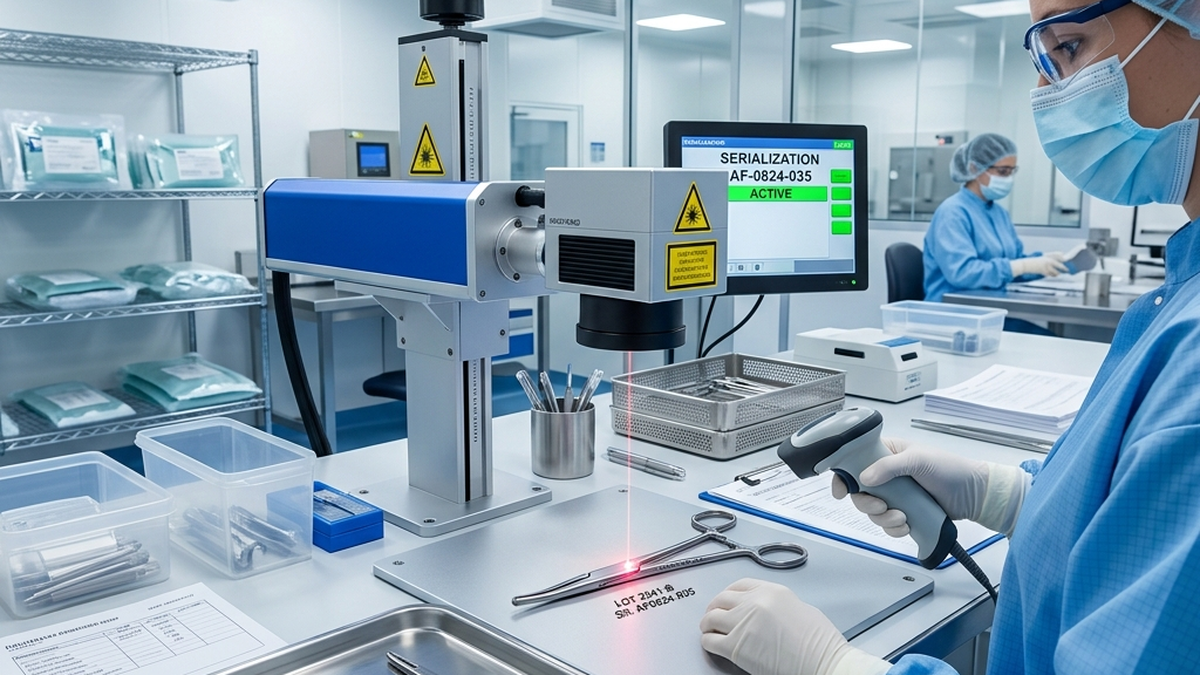
Define edge breaks and burr limits carefully. Burrs that are harmless on an industrial bracket can be unacceptable for a medical instrument. If the part will be handled with gloves, cleaned, sterilized or assembled into a device, surface condition matters.
Ask the shop what records it can provide with shipment. Material certs, inspection reports, certificates of conformance and finishing records should be planned before machining, not requested after parts are complete.
Common Medical Machining Mistakes
A common mistake is treating medical parts like ordinary precision parts. The geometry may be similar, but the documentation, cleaning and risk controls are different. Another mistake is specifying a medical-grade material without defining the exact standard, cert and finish. A third mistake is requesting records after parts are complete. If inspection, lot control or cleaning records are required, the shop needs to plan them before production starts.
For best results, send the shop the model, drawing, quantity, revision status, target lead time and any inspection or documentation requirements at the start. Clear inputs help the supplier quote the real job, choose the right setup and avoid surprises after machining begins.
Final Buyer Takeaway
The best machining outcome usually comes from matching the quote package to the real manufacturing risk. A simple bracket may only need a clean model, standard material and normal inspection. A thin, cosmetic, regulated or schedule-critical part needs more context. Share the part function, mating features, quantity forecast, finish expectations and the reason any tight tolerance exists. That information lets the shop recommend a practical process instead of guessing from geometry alone.
For SEO and answer-engine clarity, this article intentionally addresses specific buyer searches rather than broad definitions only. Those long-tail questions are often the same questions a manufacturing engineer asks before releasing a purchase order: how will the part be held, what records are required, how will cost change at quantity and which risks should be solved before the first chip is cut?
As a final check, review the article against the actual purchase order before sending files. The safest quote packages connect engineering intent, required documents, acceptable finishes and delivery expectations in one place, which helps both the buyer and the shop avoid rework.