Brass Grades for CNC Machining
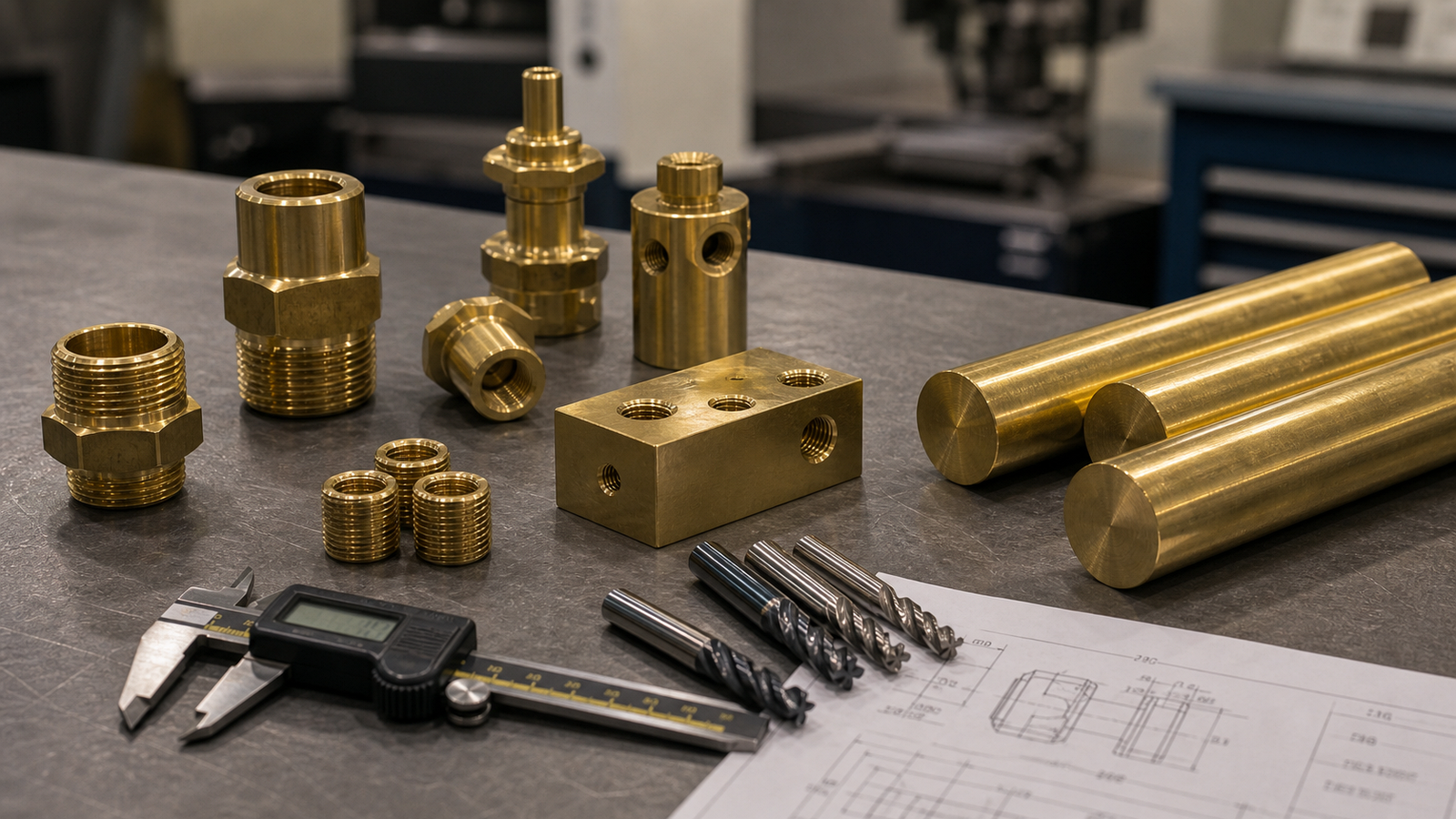
Brass is a copper-zinc alloy. The zinc content changes its color, strength and machinability. Here are the most common grades you will see in CNC work.
C360 Free-Machining Brass
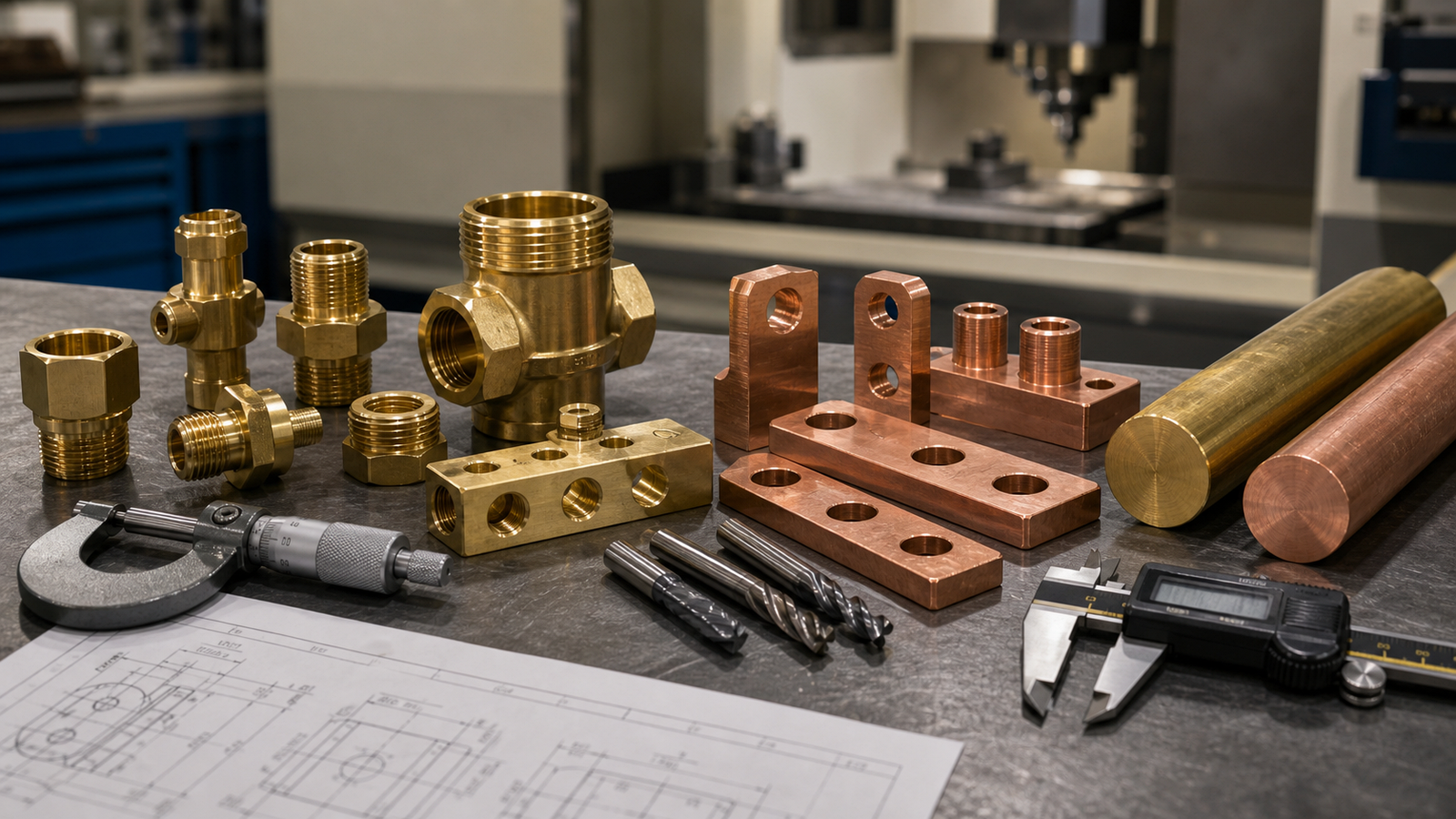
C360 is the king of machinability. It has a 100% rating -- the benchmark for all metals. Chips break cleanly. Tools last a long time. Surface finish comes out great with little effort. Use it for fittings, valves, connectors and any part where easy machining matters most.
C260 Cartridge Brass
C260 has more zinc than C360. It is harder and stronger. It does not machine as easily, but it forms and bends well. You find it in hardware, decorative parts and ammunition casings.
C464 Naval Brass
C464 adds tin for saltwater resistance. It handles marine environments without corroding. Use it for boat hardware, propeller shafts and underwater fittings.
Copper Grades for CNC Machining
C110 ETP Copper
C110 is 99.9% pure copper. It has the highest electrical conductivity of any CNC-able metal (101% IACS). Use it for bus bars, electrical connectors and RF components. It is soft and gummy to machine, so expect slower speeds.
C145 Tellurium Copper
C145 adds a tiny bit of tellurium to pure copper. This makes it much easier to machine while keeping 93% of C110's conductivity. It is the best choice when you need both machinability and conductivity.
C172 Beryllium Copper
C172 is copper with 2% beryllium. It can be heat treated to very high hardness (40+ HRC). Use it for springs, contacts and non-sparking tools. It costs more and needs careful handling during machining.
Beryllium copper dust is toxic. Only machine it with proper ventilation and dust collection. Make sure your CNC shop has the right safety setup before ordering BeCu parts.
Brass vs Copper: Quick Comparison
| Property | C360 Brass | C110 Copper | C145 Tellurium Copper |
|---|---|---|---|
| Machinability | 100% (best) | 20% | 80% |
| Electrical Conductivity | 26% IACS | 101% IACS | 93% IACS |
| Thermal Conductivity | 115 W/mK | 391 W/mK | 355 W/mK |
| Tensile Strength | 58,000 PSI | 32,000 PSI | 38,000 PSI |
| Corrosion Resistance | Good | Good | Good |
| Color | Gold | Reddish-orange | Reddish-orange |
| Cost per lb | $3-5 | $5-8 | $6-10 |
Machinability Tips
Brass is a dream to machine. Copper is more challenging. Here is what you need to know for each.
Machining Brass
- Run high spindle speeds (5,000-10,000+ RPM)
- Use aggressive feed rates -- brass can take it
- Uncoated carbide or even HSS tools work well
- Chips break into small pieces naturally
- Coolant is optional but helps with surface finish
Machining Copper
- Use sharp, polished-flute end mills
- High feed rates prevent the material from sticking to tools
- Flood coolant is important -- copper gets gummy when hot
- Avoid dwell time -- keep the tool moving
- Consider C145 if you do not need 100% conductivity
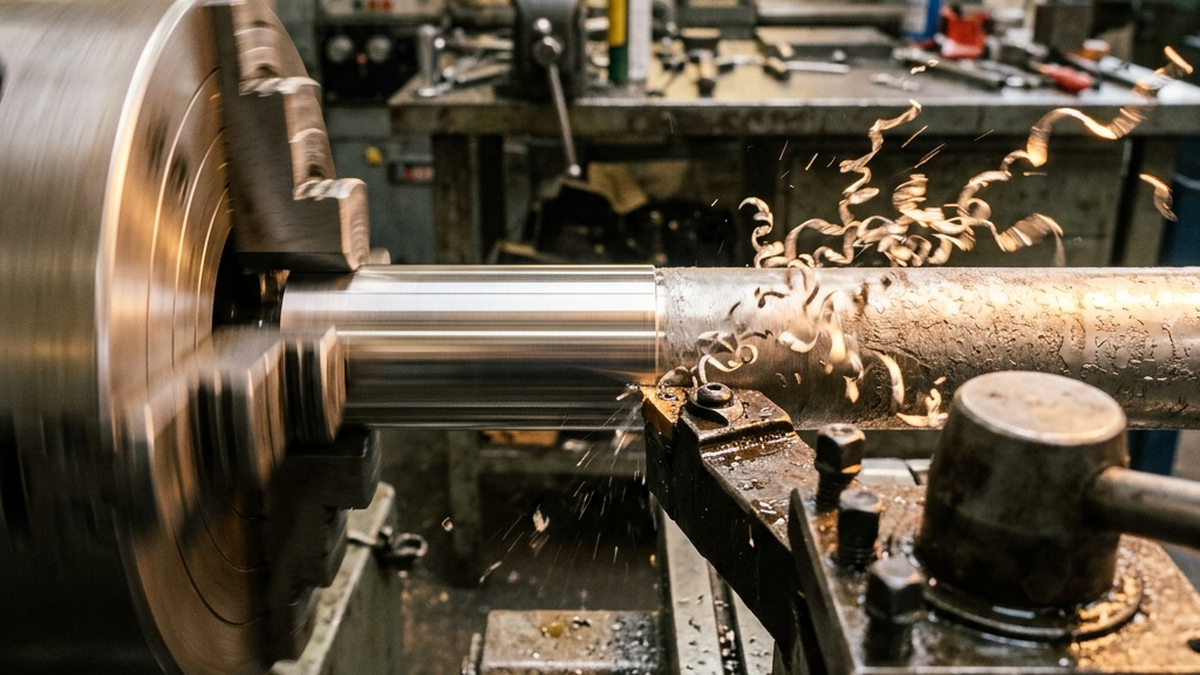
For high-volume brass parts, CNC turning is often faster and cheaper than milling. Brass turns beautifully on a lathe with excellent surface finish right off the tool.
Common Applications
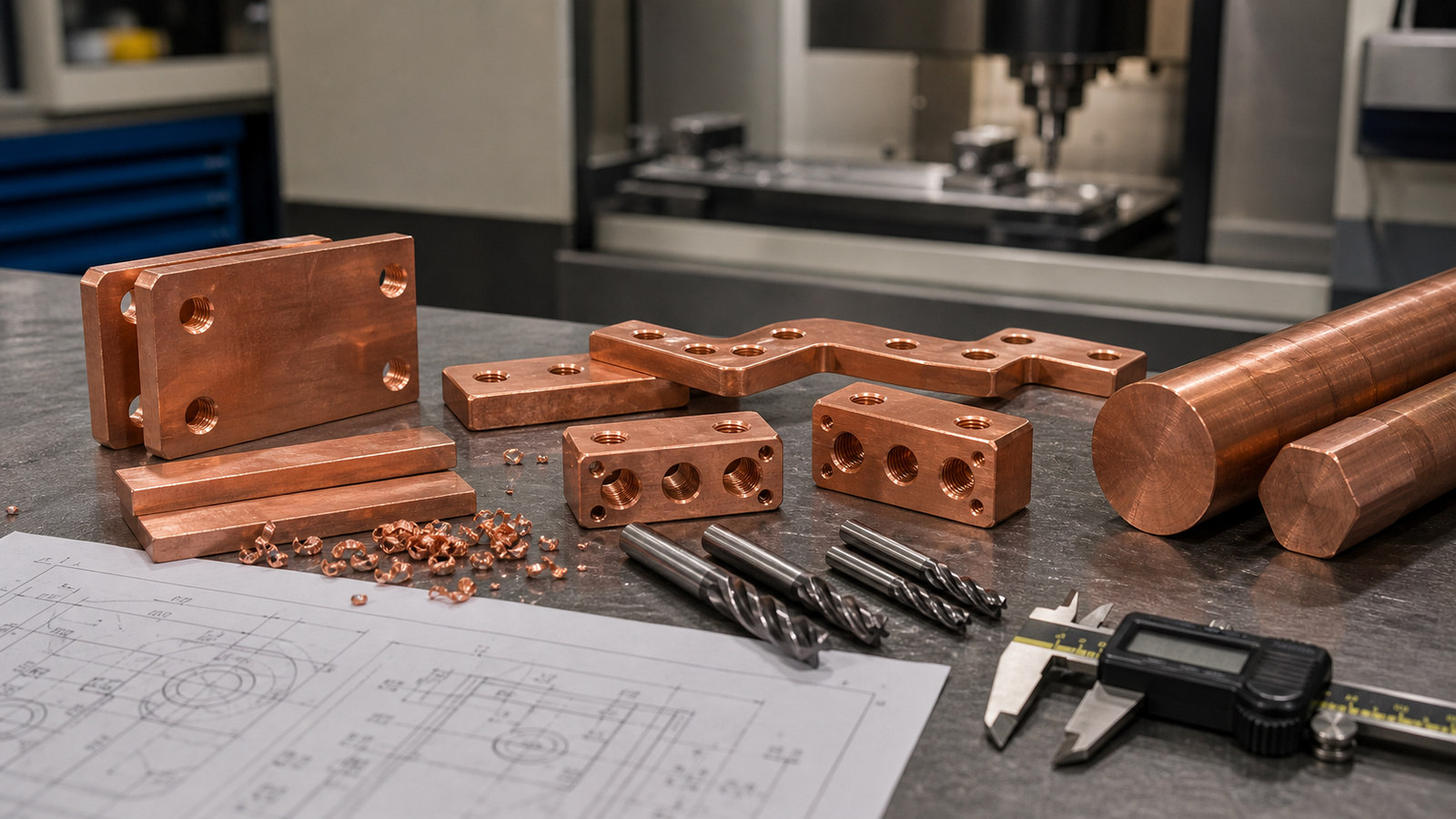
- Electrical connectors: Copper for conductivity, brass for easy machining
- RF and microwave: Pure copper waveguides and cavity filters
- Plumbing fittings: Lead-free brass (C360 or C370)
- Heat sinks: Copper for maximum thermal transfer
- Decorative hardware: Brass for its gold appearance
- Valve bodies: Brass for corrosion resistance and easy machining
- Bus bars: Pure copper for high-current electrical distribution
- Medical instruments: Brass for antimicrobial properties
Finishing and Plating Options
Brass and copper tarnish over time. A finish or plating protects them and can change how they look.
| Finish | Best For | Cost |
|---|---|---|
| Nickel Plating | Corrosion protection, bright silver look | $$ |
| Tin Plating | Solderability, food-safe | $ |
| Gold Plating | Electrical contacts, low contact resistance | $$$ |
| Silver Plating | Best conductivity, RF components | $$$ |
| Clear Lacquer | Keep natural brass/copper look, prevent tarnish | $ |
| Passivation | Light corrosion protection | $ |
Cost Expectations
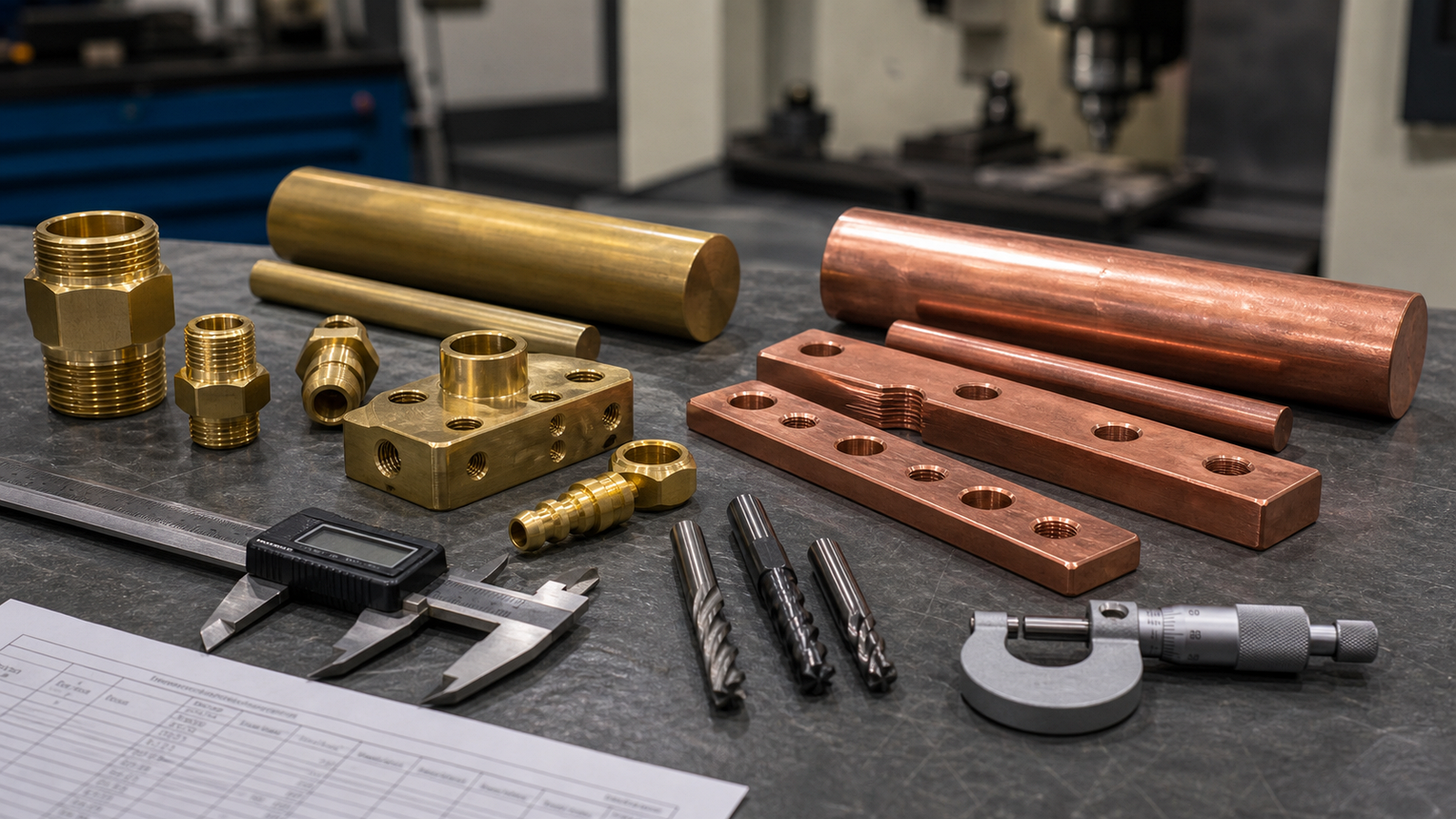
Brass parts cost about the same as aluminum parts to machine. The raw material is more expensive, but the faster cycle times balance it out. Copper parts cost more because the material is pricier and harder to machine.
- C360 brass: Similar total cost to 6061 aluminum
- C110 copper: 30-50% more than aluminum
- C145 tellurium copper: 20-40% more than aluminum
- C172 beryllium copper: 2-3x aluminum cost
Frequently Asked Questions
Is brass easier to CNC machine than aluminum?
Yes. C360 free-machining brass is one of the easiest metals to CNC machine. It has a machinability rating of 100% -- the benchmark all other metals are compared against. Chips break cleanly, tool life is long and surface finish comes out smooth with minimal effort.
Can you CNC machine pure copper?
Yes, but pure copper (C110) is gummy and soft. It tends to stick to tools and produce long stringy chips. Use sharp tools, high feed rates and flood coolant. Tellurium copper (C145) machines much easier while keeping 90% of the electrical conductivity.
What finish options work on brass and copper?
Brass and copper accept many finishes. Common options include nickel plating, tin plating, gold plating, chrome plating, clear lacquer coating and passivation. Nickel plating is the most popular because it adds corrosion resistance and a bright silver appearance.
Why use brass instead of aluminum for CNC parts?
Choose brass over aluminum when you need better machinability, natural antimicrobial properties, electrical conductivity, or a gold-like appearance. Brass is also better for threaded components because it resists galling. Aluminum is lighter and cheaper for most structural parts.
What is the best copper alloy for electrical CNC parts?
C110 (ETP copper) has the best electrical conductivity at 101% IACS. If machinability matters too, use C145 tellurium copper at 93% IACS conductivity. For RF connectors and waveguides, C110 is preferred because even small conductivity losses matter at high frequencies.
Need brass or copper parts machined? Upload your CAD file for instant pricing. We stock C360, C110 and C145 and can source specialty alloys on request.