Why Your Shop Choice Matters
Aerospace parts are not like commercial parts. They go into aircraft, rockets and satellites. A single bad part can ground a fleet or delay a launch.
The right shop understands this. They have systems to prevent errors. They have paper trails that prove every step. And they know the standards your program requires.
In aerospace, the cost of a bad part is never just the part. It is the grounded aircraft, the delayed launch, or the failed audit that follows.
AS9100D: The Baseline
AS9100D is the quality management standard for aerospace. It builds on ISO 9001 and adds requirements specific to flight hardware.
Every serious aerospace machine shop holds this cert. If a shop does not have AS9100D, they are not set up for aerospace work. Full stop.
What AS9100D Covers
- Risk management throughout the production process
- Configuration control for drawings and specs
- Product safety awareness at every level
- Counterfeit parts prevention
- Human factors training for operators
- On-time delivery tracking and improvement
Check the IAQG OASIS database to confirm a shop's AS9100D certification. This is the official registry. Ask for the certificate number if it is not listed on their website.
ITAR Compliance
ITAR (International Traffic in Arms Regulations) controls the export of defense articles and technical data. If your parts have any military application, your shop must be ITAR-registered.
ITAR registration means the shop is listed with the U.S. State Department. It means they control access to technical data. Only U.S. persons handle your drawings and parts.
ITAR Requirements for Shops
- State Department registration, renewed annually
- Access controls, restricted areas for defense work
- Employee screening, citizenship verification
- Data security, encrypted storage and transmission
- Visitor logs, tracked access to shop floor
NADCAP Accreditation
NADCAP covers special processes. These are operations where the quality of the result cannot be fully verified by inspection alone. Think heat treating, welding and chemical processing.
| Process | Why NADCAP Matters |
|---|---|
| Heat Treating | Wrong temps can weaken metal without visible signs |
| Chemical Processing | Anodizing, passivation, plating quality depends on process control |
| Non-Destructive Testing | X-ray, dye penetrant and mag particle inspection reliability |
| Welding | Joint integrity cannot be fully verified by visual inspection |
Not every shop needs NADCAP for every process. But if your drawing calls out a NADCAP-accredited process, your shop must either hold the accreditation or use an accredited subcontractor.
Material Traceability
In aerospace, every part must trace back to its raw material. The shop must know which heat lot of aluminum went into which part number. This is not optional.
Good traceability means the shop can pull records and show you the complete chain. From the mill cert to the finished part. If a material issue surfaces later, they can identify every affected part.
What to Look For
- Mill certs on file for all raw material
- Heat lot tracking through the production process
- Lot separation on the shop floor
- Serialization for flight-critical parts
- Digital records that are searchable and backed up
Questions to Ask Before You Order
Here are the questions that separate serious aerospace shops from shops that say they can do aerospace work.
- Do you hold current AS9100D certification? Can I verify it on OASIS?
- Are you ITAR-registered? When does your registration expire?
- What is your on-time delivery rate for the past 12 months?
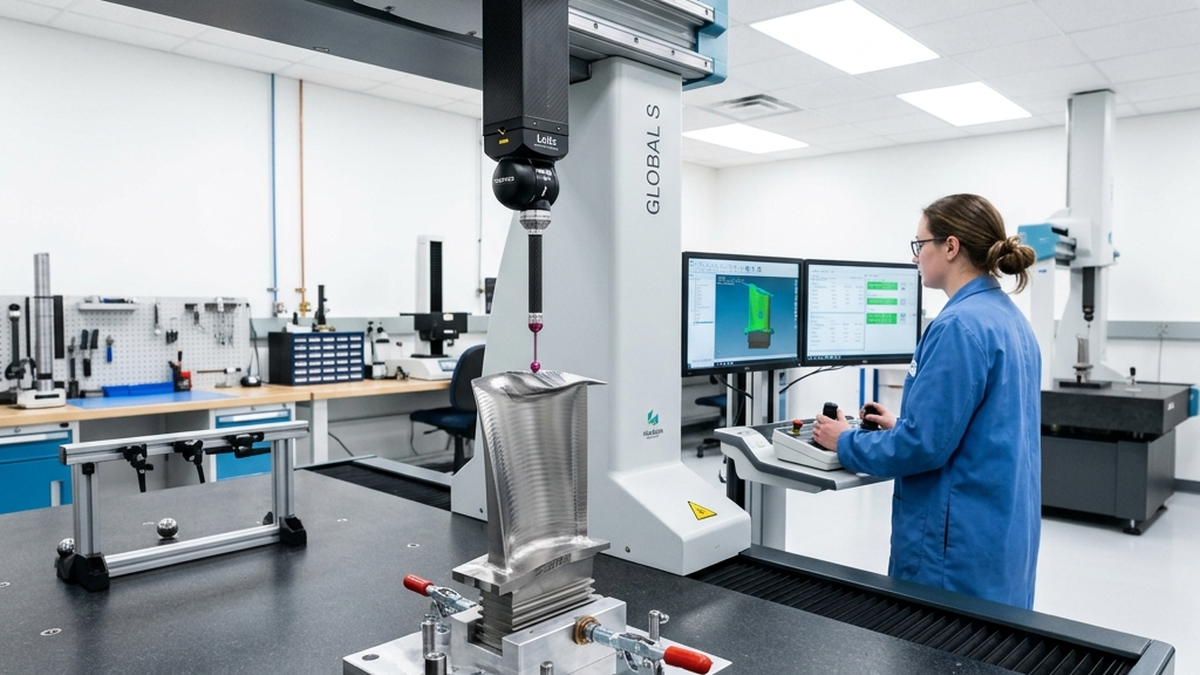
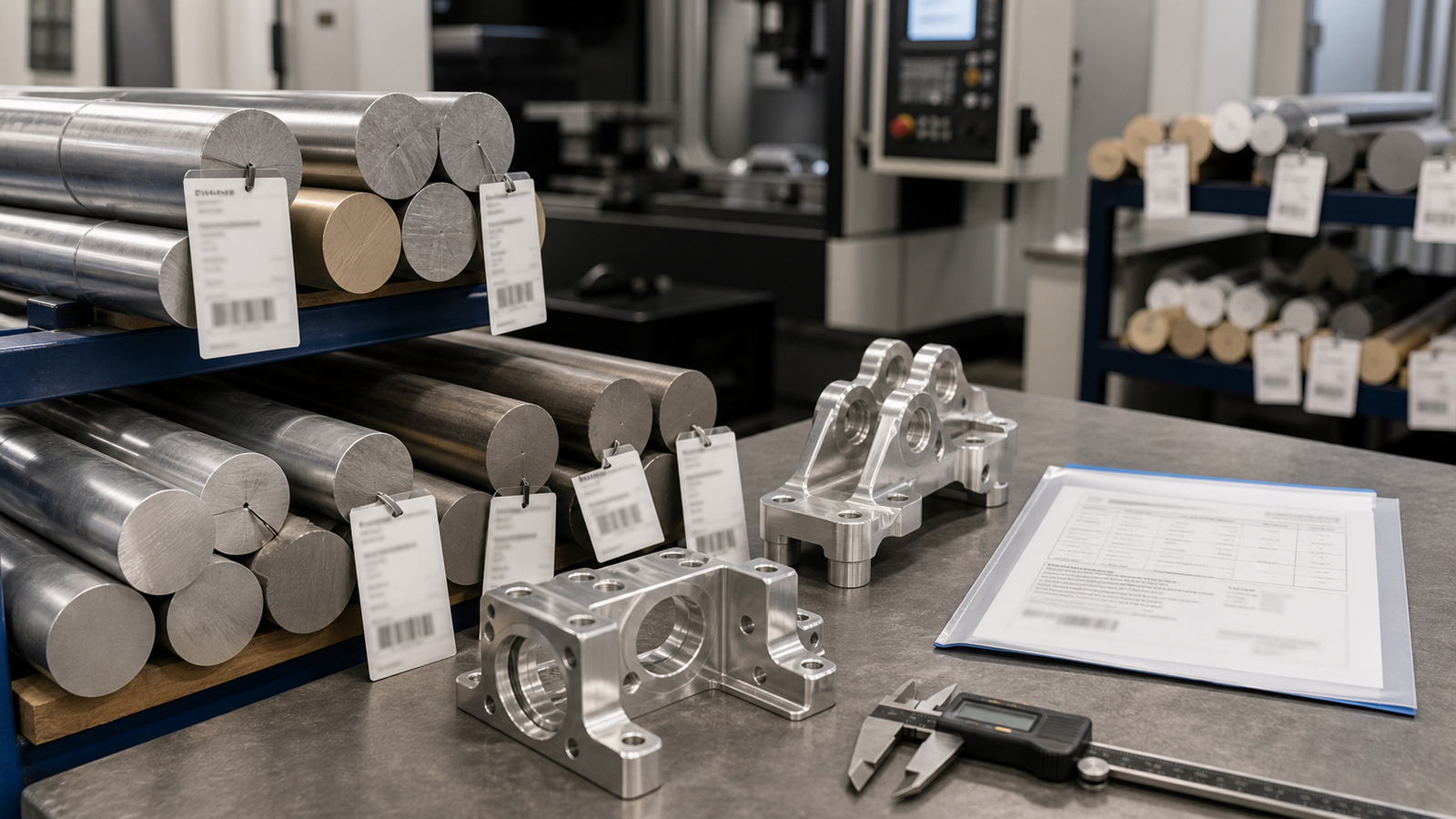
- Do you have CMM inspection? Is it programmable?
- Can you provide full AS9102 FAI packages?
- How do you track material traceability?
- What is your process for handling nonconformances?
- Do you use NADCAP-accredited subcontractors for special processes?
- What aerospace alloys do you machine regularly?
- Can you share a sample inspection report?
Red Flags to Watch For
- No AS9100D but claims to do aerospace work
- Cannot explain their traceability system
- No CMM, relies only on hand tools for inspection
- Unwilling to provide sample documentation
- No nonconformance process, problems get hidden
- Prices that seem too low, quality costs money
The cheapest quote in aerospace is often the most expensive. Rework, scrap and failed audits cost far more than paying a qualified shop the right price upfront.
Frequently Asked Questions
What is AS9100D certification?
AS9100D is the quality management standard for aerospace. It builds on ISO 9001 with added requirements for risk, configuration control and product safety. Most primes require it from suppliers.
Do all aerospace machine shops need ITAR?
Not all. But any shop handling defense-related technical data or making defense articles must be ITAR-registered with the U.S. State Department.
What is NADCAP and when is it required?
NADCAP accredits special processes like heat treating and NDT. It is required when your drawing or PO specifies NADCAP-accredited processes.
How do I verify certifications?
Check AS9100D on the IAQG OASIS database. Verify NADCAP through PRI eAuditNet. Confirm ITAR registration through the DDTC.
What questions should I ask a shop?
Ask about certifications, traceability, CMM capability, FAI process, alloy experience, on-time delivery rate and nonconformance handling.