Why Quality Inspection Matters
A bad part can shut down your production line. Worse, it can fail in the field. Quality inspection catches problems before they become expensive.
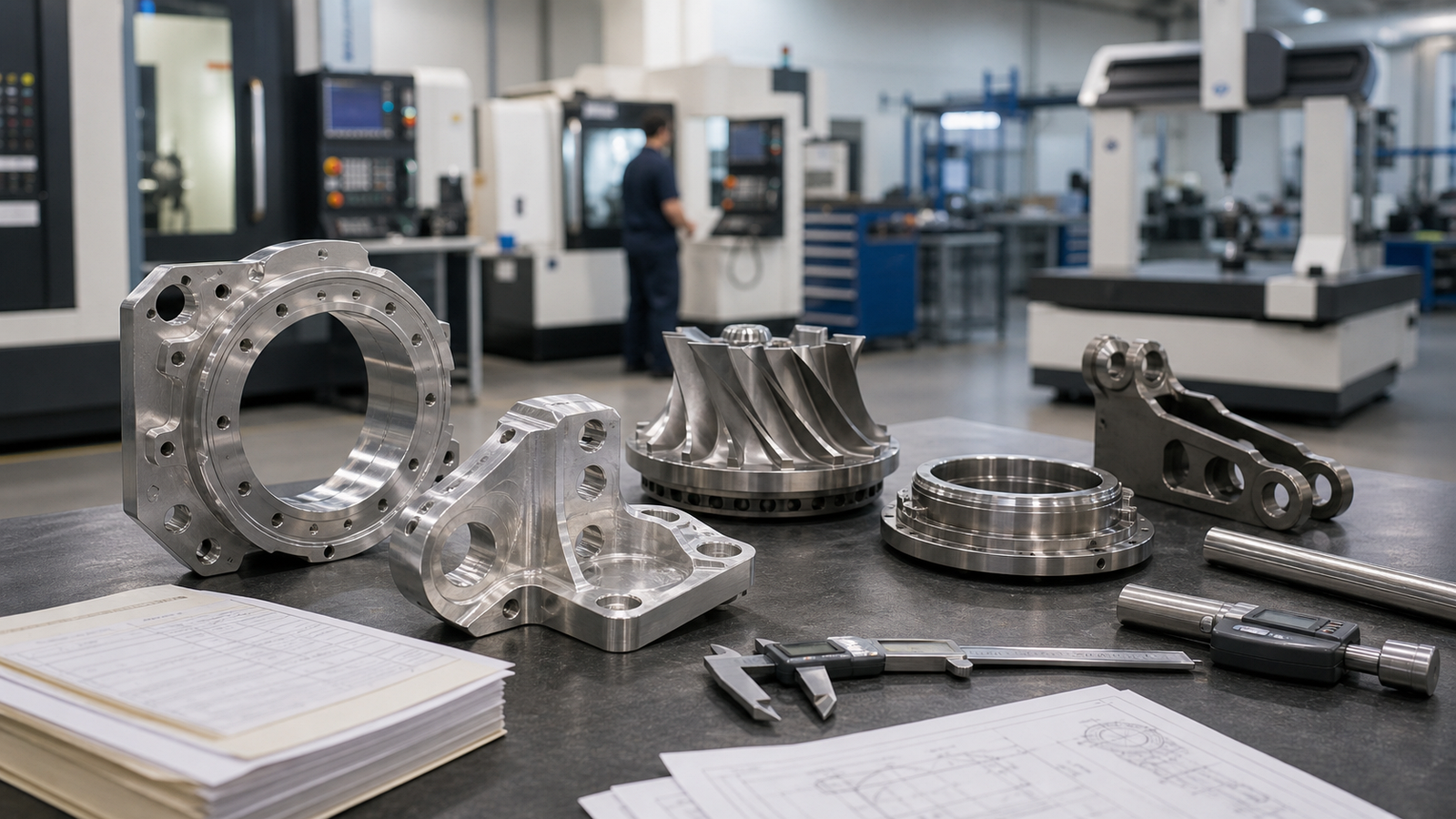
Good inspection is not just about measuring. It is about proof. You need documents that show your parts meet spec. Your customers and auditors need that proof too.
The cost of catching a bad part at the machine is 10x less than catching it in assembly. And 100x less than catching it in the field.
CMM Inspection: The Gold Standard
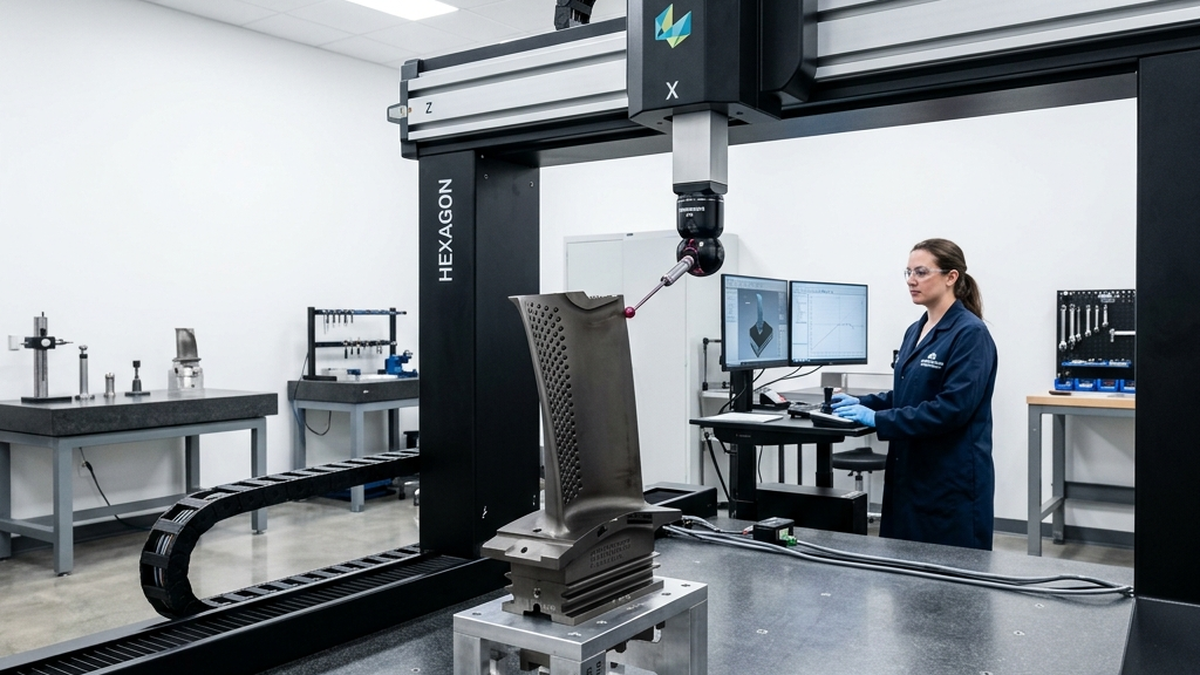
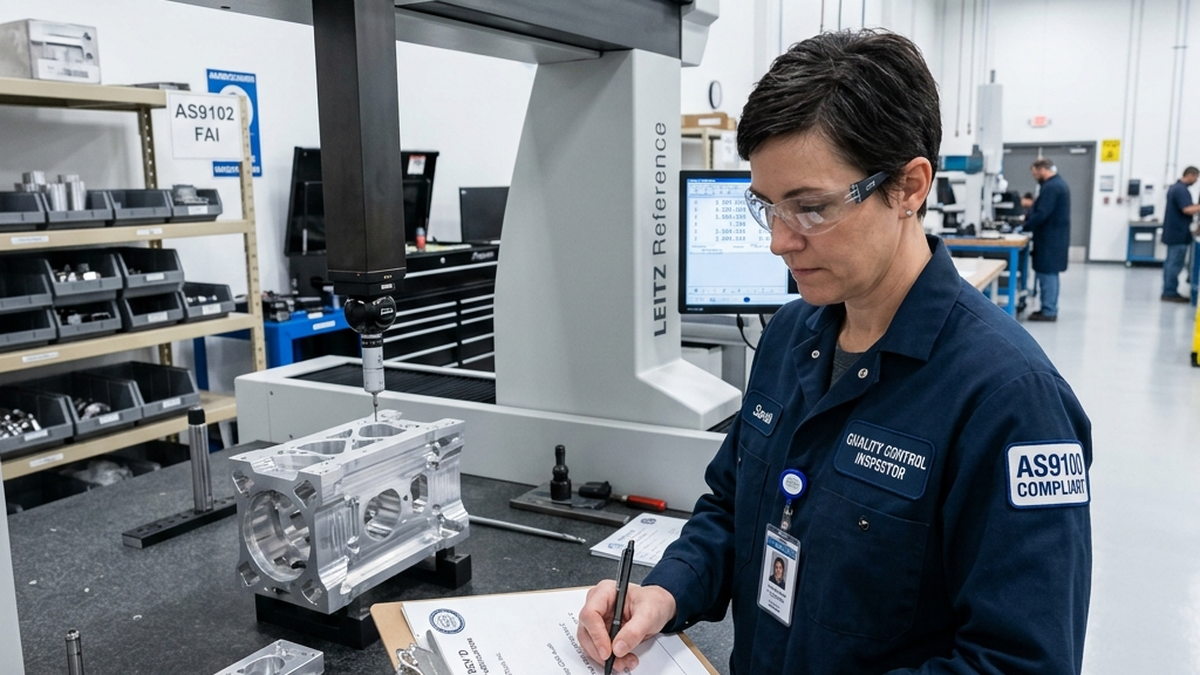
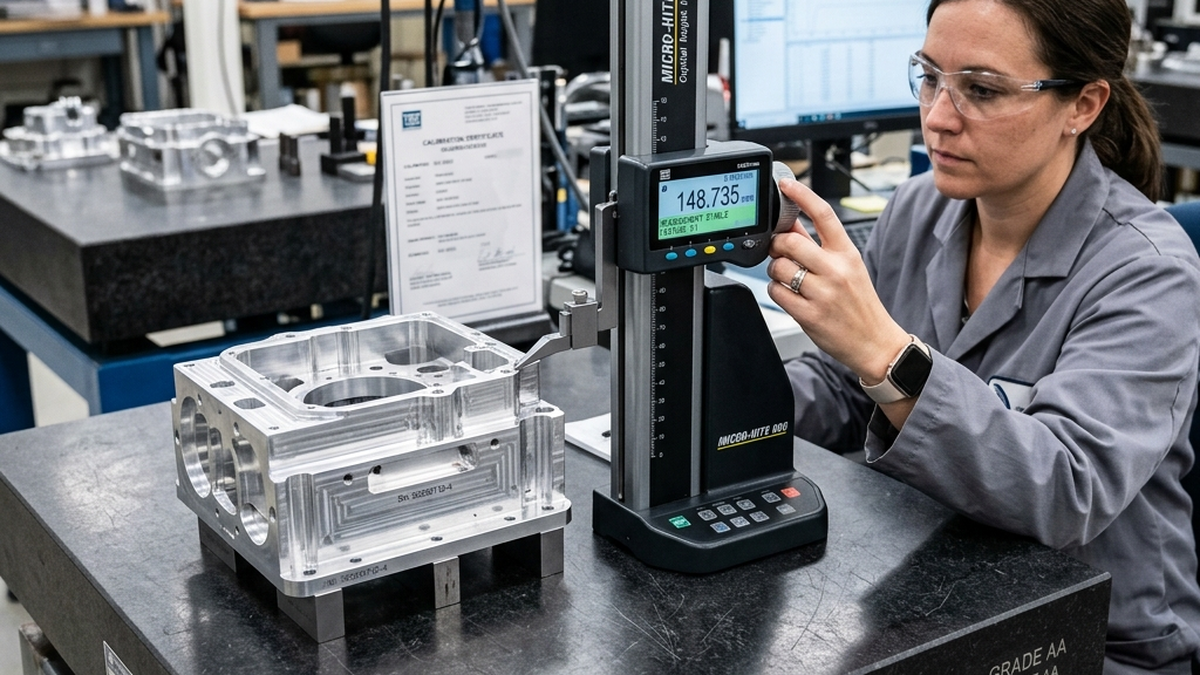
A CMM (Coordinate Measuring Machine) is the most accurate way to check CNC parts. It uses a touch probe to measure exact points on your part.
The machine compares each point to your CAD model. It builds a map of how your part differs from the design. You get a report showing every dimension.
How CMM Works
- Touch probes contact the part at programmed points
- X, Y, Z coordinates are recorded for each touch
- Software compares measured values to CAD or drawing values
- Reports show pass/fail for every dimension
Ask your shop if they use a programmable CMM. Programmed routines give you consistent results across every part. Manual probing is fine for one-offs, but it leaves room for human error on repeat jobs.
When You Need CMM
CMM is the right call for tight-tolerance parts. If your drawing has features at +/-0.001" or tighter, or GD&T callouts like position and flatness, CMM gives you the proof you need. It is also the standard for aerospace and medical parts.
First Article Inspection (FAI)
A first article inspection checks the very first part from a new setup. Every dimension on the drawing gets measured. Every spec gets verified.
The goal is simple. Before you run 500 parts, make sure the first one is right. FAI catches setup errors, programming mistakes and material issues early.
What Gets Checked in an FAI
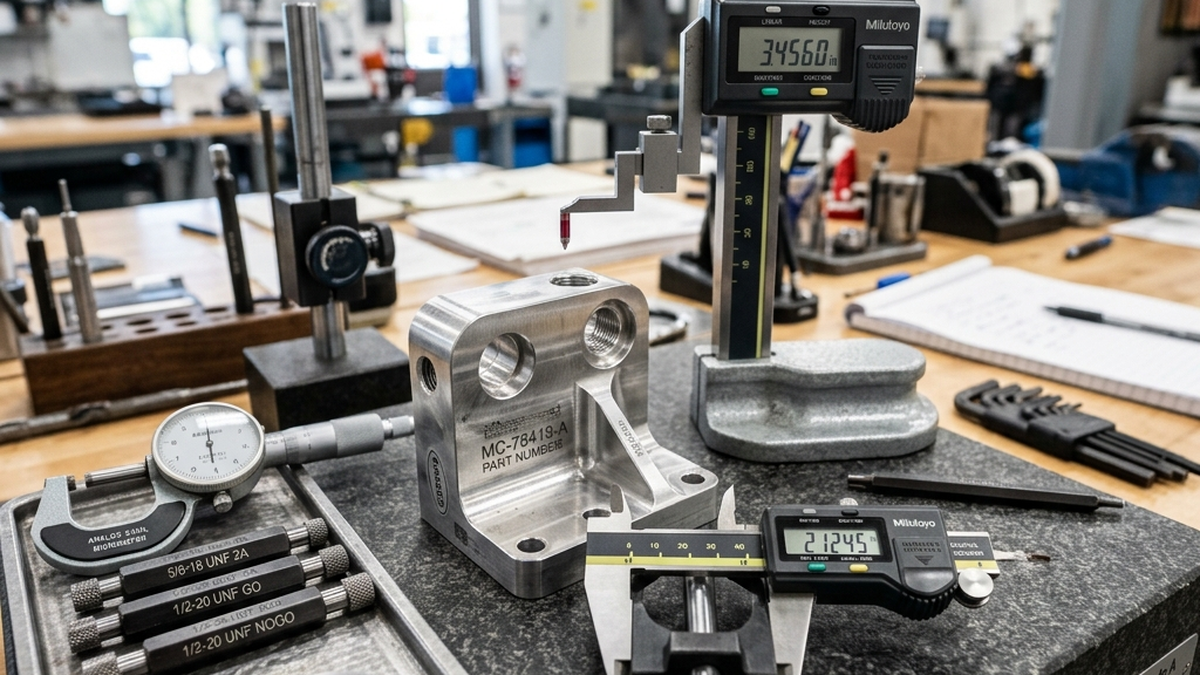
- Every dimension on the drawing
- Material type and heat lot
- Surface finish requirements
- Thread sizes and depths
- Hardness if called out
- Special processes like anodizing or plating
Some buyers skip FAI to save time. This almost always costs more in the long run. A $200 FAI can prevent a $20,000 scrap run.
AS9102: The Aerospace FAI Standard
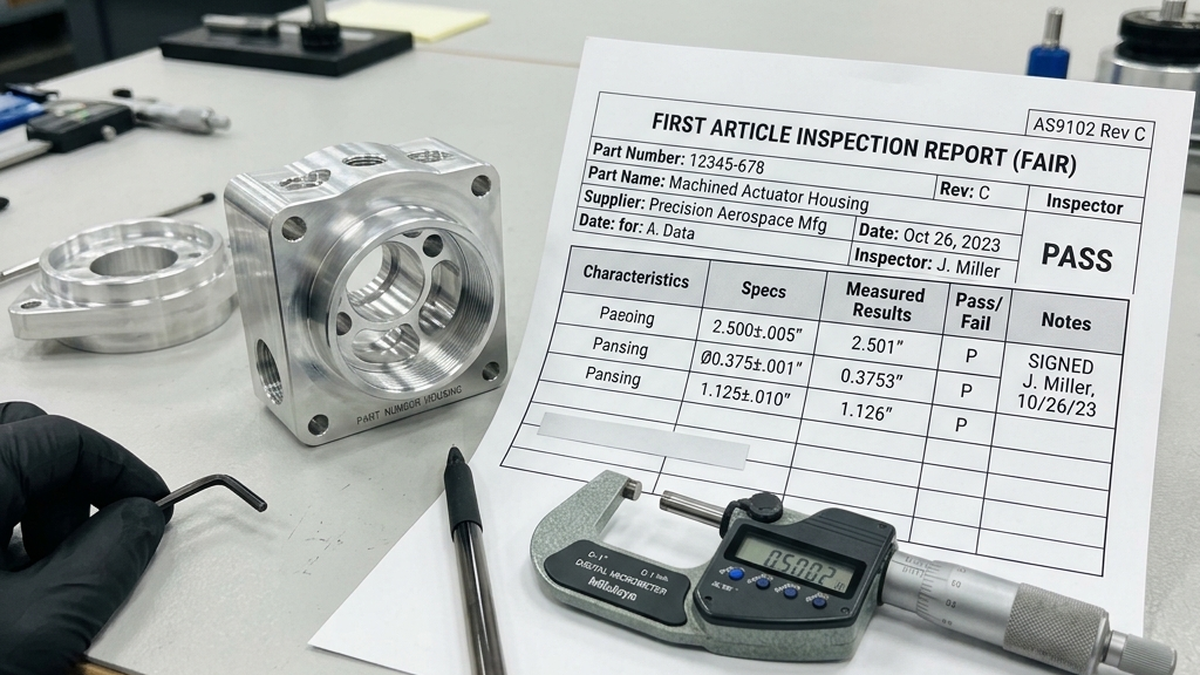
AS9102 is the industry standard for first article inspection in aerospace. It uses three forms to document everything about the first part.
| Form | Name | What It Covers |
|---|---|---|
| Form 1 | Part Number Accountability | Part info, drawing rev, material and process details |
| Form 2 | Product Accountability | Raw material, sub-components and special processes |
| Form 3 | Characteristic Accountability | Every dimension with measured values and pass/fail |
If your parts go into an aircraft, AS9102 is not optional. Most aerospace primes and tier-1 suppliers require it. Even if your parts are not for aerospace, AS9102 is a great format for thorough documentation.
Material Certifications
A material certification (mill cert) proves the metal is what the supplier says it is. It comes from the mill or distributor that made the raw stock.
The cert lists the chemical makeup and physical properties. It traces back to the specific heat lot. This is critical for aerospace and medical parts where material traceability is required.
What Is on a Material Cert
- Alloy and specification (e.g., 6061-T6 per AMS-QQ-A-250/11)
- Chemical composition with element percentages
- Mechanical properties like tensile and yield strength
- Heat lot number for traceability
- Mill name and test date
Certificate of Conformance (CoC)
A CoC is the machine shop's statement that your parts meet all requirements. It is their signature saying "we checked and everything passes."
A CoC is not a measurement report. It is a declaration. It usually references the drawing number, revision, quantity and any applicable specs.
What a Good CoC Includes
- Part number and revision
- Purchase order number
- Quantity shipped
- Statement of conformance to drawing requirements
- Signature and date
- Reference to inspection data (if applicable)
What to Request on Your Next Order
Not every part needs the same level of inspection. Here is a quick guide based on part criticality.
| Part Type | Minimum Docs | Recommended Docs |
|---|---|---|
| Commercial / Non-Critical | CoC | CoC + dimensional report on key features |
| Industrial / Tight Tolerance | CoC + dimensional report | CoC + CMM report + material cert |
| Aerospace | CoC + AS9102 FAI + material cert | Full package + NADCAP certs for special processes |
| Medical | CoC + FAI + material cert | Full package + biocompatibility data + lot traceability |
Not sure what docs you need? Upload your drawing to RivCut and we will recommend the right inspection package. Every quote includes a free DFM review.
Frequently Asked Questions
What is a first article inspection (FAI)?
A first article inspection checks the first part from a new setup. It measures every dimension on the drawing. This verifies the process before full production begins.
What is a CMM and how does it work?
A CMM uses a probe to touch points on a part. It records X, Y, Z coordinates. Software compares those points to your CAD model or drawing dimensions.
What is AS9102 and who needs it?
AS9102 is the aerospace standard for FAI reports. It uses three forms to document part details, materials and measured dimensions. Any part for an aerospace assembly typically needs it.
What is a certificate of conformance (CoC)?
A CoC is a document from the shop saying parts meet all requirements. It lists part numbers, quantities and revision levels. It is the shop's formal quality statement.
Should I request inspection reports for every order?
For critical parts, yes. At minimum, request a CoC and dimensional report for key features. For simple commercial parts, a CoC alone may be enough.