What Is New Product Introduction?
New Product Introduction (NPI) is the structured process of taking a product from initial concept through design, prototyping, pilot production and full-scale manufacturing. It is the roadmap that hardware teams follow to make sure a product works, can be built at scale and meets cost and quality targets.
Without NPI, teams skip steps. They jump from a CAD model straight to a 500-piece order, only to discover the part warps during machining, the tolerance stack-up fails at assembly, or the material costs twice what they budgeted. NPI prevents these expensive surprises by catching problems early when fixes are cheap.
The NPI process has 5 phases. Each phase has a clear goal, a set of deliverables and a gate review before moving to the next phase.
Phase 1: Concept (2-4 Weeks)
The concept phase answers one question: what are we building and why?
- Define requirements: What does the product need to do? What loads, temperatures and environments will it see? Write these down in a product requirements document (PRD).
- Set a target cost: What can you sell the product for? Work backwards to find the maximum part cost. A common rule is that manufactured parts should be 20-30% of the retail price.
- Set a timeline: When do you need production parts? Work backwards from the launch date to set phase deadlines.
- Research materials: Will you need Aluminum 6061-T6 for weight savings? Stainless Steel 316 for corrosion resistance? PEEK for high temperature? Make a short list now.
Gate 1 deliverable: Approved PRD with requirements, target cost and timeline.
Phase 2: Design (4-8 Weeks)
The design phase turns requirements into a buildable part.
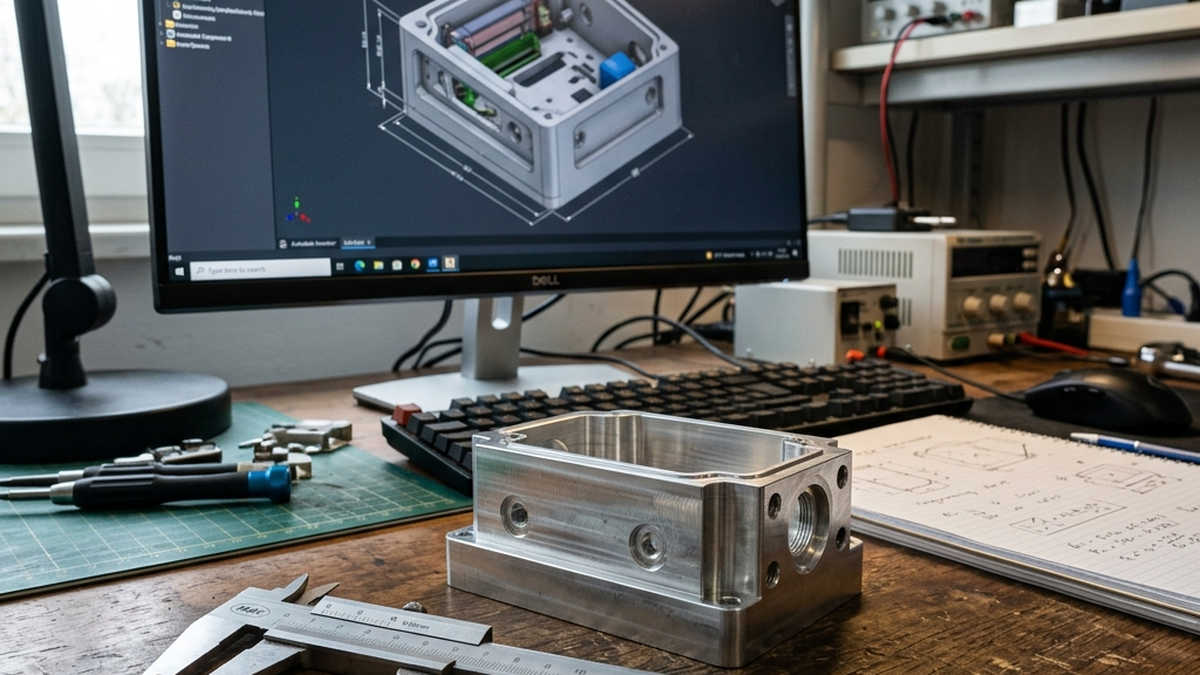
- 3D CAD modeling: Build your part in SolidWorks, Fusion 360, or similar software. Export STEP files for quoting.
- DFM review: Send your design to a CNC shop for a free Design for Manufacturability review. This catches sharp corners, impossible tolerances and material waste before you cut metal.
- Material selection: Finalize the material grade. Use our material cost comparison tool to compare options.
- Tolerance analysis: Run a tolerance stack-up to make sure parts fit together at assembly. Tighten tolerances only where the stack-up demands it.
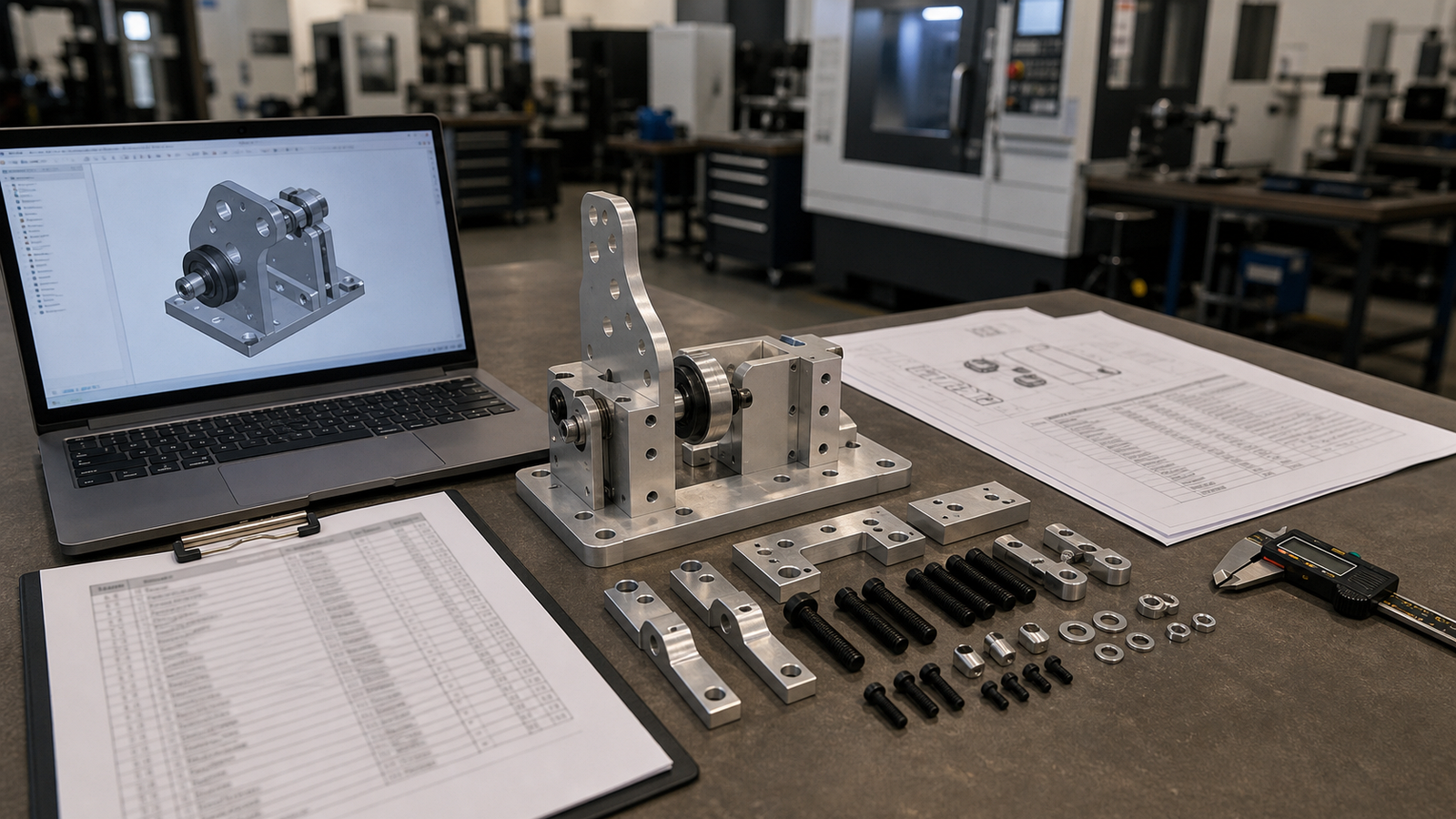
- Create a BOM: List every custom part, off-the-shelf component and fastener. See our BOM guide for the right format.
Gate 2 deliverable: Finalized CAD, 2D drawings, BOM and DFM-reviewed design.
Phase 3: Prototype (2-6 Weeks)
The prototype phase proves the design works in the real world.
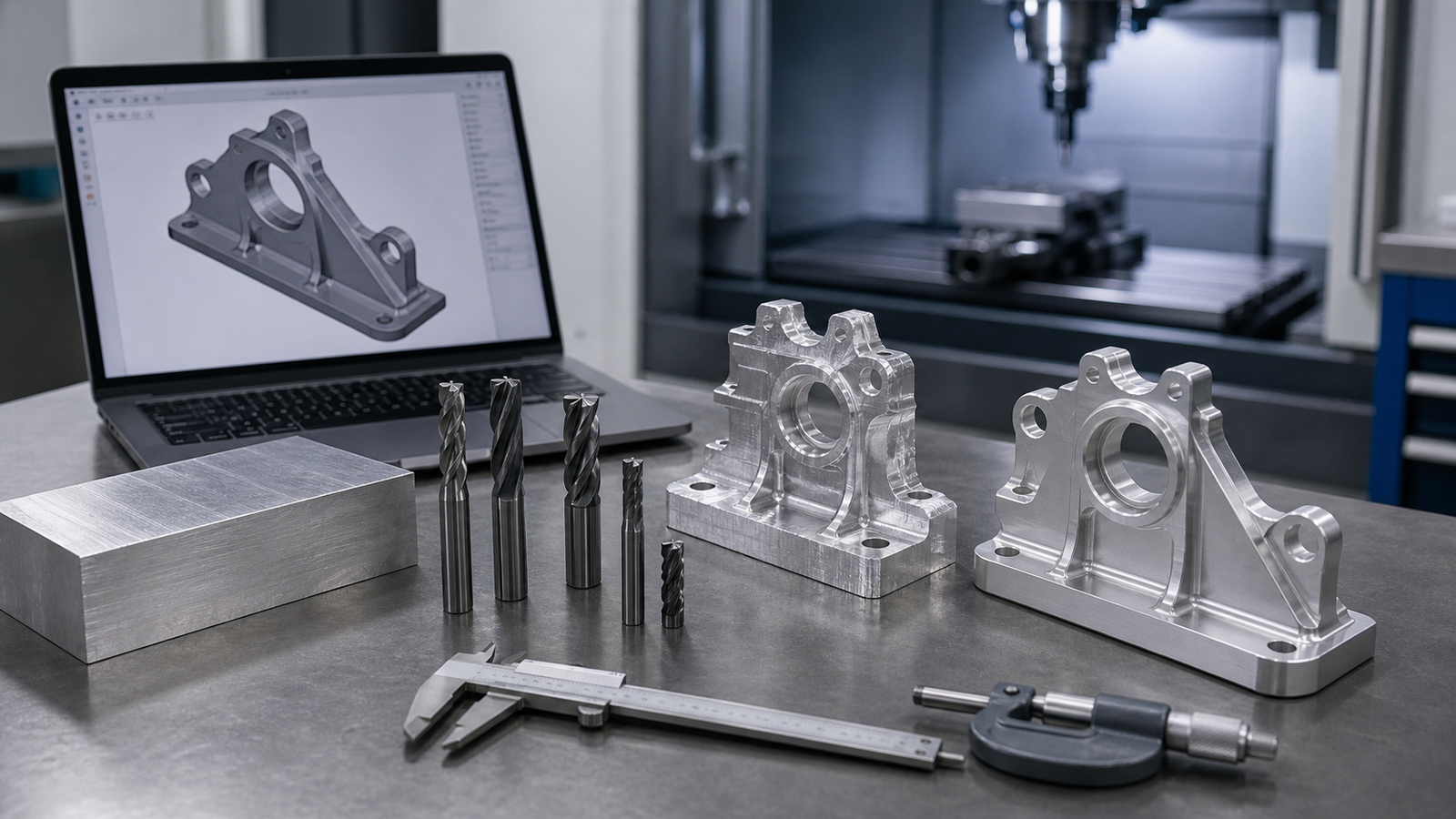
- Order 3-5 CNC prototypes in the actual production material. Do not use a different material for prototypes, test results will not transfer. Use our prototype cost estimator to budget.
- Fit testing: Assemble all parts. Check that holes line up, interfaces mate and fasteners reach. Measure critical dimensions with calipers or a CMM.
- Functional testing: Put the assembly under real-world loads. Run thermal tests, vibration tests, or pressure tests depending on the application.
- Iterate: If testing reveals problems, update the CAD, order revised prototypes and test again. Most products need 2-3 prototype rounds.
Gate 3 deliverable: Tested prototypes that pass all functional requirements. Design freeze.
A design freeze means no more changes to geometry, material, or tolerances. Every change after this point costs 5-10x more than the same change during Phase 2. Freeze only when testing confirms the design works.
Phase 4: Pilot Production (3-6 Weeks)
The pilot phase proves the manufacturing process works at a small scale.
- Order 10-50 parts using the exact same process, material and shop that will make your production parts. This is not a prototype anymore, it is a mini production run.
- First Article Inspection (FAI): The shop measures every dimension on the very first part and creates a detailed FAI report. This proves the process can hold all tolerances.
- Process capability study: Measure 10+ parts on the same critical dimensions. Calculate Cpk values to confirm the process is stable and repeatable.
- Qualify suppliers: Confirm that your fastener vendor, anodizer and packaging supplier can deliver on time and at the right quality.
- Assembly test: Build 5-10 complete units on a mock assembly line. Measure assembly time and flag any steps that are confusing or slow.
Gate 4 deliverable: FAI report, Cpk data, qualified supplier list and validated assembly process.
Phase 5: Full Production (Ongoing)
Full production is the steady state. You order parts in batches of 100-5,000+ and ship finished products to customers.
- Ongoing quality: Inspect a sample from every batch using your control plan. Track defect rates and investigate any trends.
- Cost optimization: Apply value engineering to reduce per-part cost now that you have real production data. Order larger batches to lower setup cost per piece.
- Change management: If you need to change a feature, go through a formal Engineering Change Order (ECO) process. Update the BOM, drawing and CAM program. Verify with a new FAI.
- Supplier management: Track on-time delivery and quality metrics for every supplier. Have a backup supplier for critical parts.
Ongoing deliverable: Inspection reports, yield data and continuous improvement actions.
Typical NPI Timeline
| Phase | Duration | Key Deliverable | Typical Cost |
|---|---|---|---|
| 1. Concept | 2-4 weeks | Product requirements document | $0 (internal) |
| 2. Design | 4-8 weeks | CAD, drawings, BOM | $2,000-$10,000 (engineering time) |
| 3. Prototype | 2-6 weeks | Tested prototypes, design freeze | $500-$5,000 (3-5 parts) |
| 4. Pilot | 3-6 weeks | FAI report, process validation | $2,000-$15,000 (10-50 parts) |
| 5. Production | Ongoing | Shipped product | Varies by volume |
A simple product (single CNC bracket) can complete NPI in 3-4 months. A complex product (multi-part assembly with electronics, custom housings and certifications) takes 9-12 months. Plan accordingly.
How RivCut Supports NPI
RivCut is built to support every phase of NPI:
- Any order size: Order 1 prototype or 5,000 production parts. Same shop, same process, same quality.
- Same equipment prototype-to-production: Your prototypes are made on the same CNC mills that will make your production parts. No process changes means no surprises at scale.
- Free DFM review: Every quote includes a DFM review from our engineers. We flag issues before you approve the job.
- FAI reports: We provide full first article inspection with CMM data on request. Standard for pilot and production runs.
- Fast turnaround: Prototypes ship in as few as 3 business days. Pilot runs in 1-2 weeks. Production runs in 2-4 weeks.
- Material flexibility: We stock Aluminum 6061-T6, 7075-T6, Stainless Steel 303, 304, 316, Delrin, PEEK, Nylon 6/6, Polycarbonate and dozens more grades. See our materials handbook.
NPI Readiness Checklist
Use this checklist before moving from Phase 3 (Prototype) to Phase 4 (Pilot). If any item is not checked, go back and fix it before ordering your pilot run.
- Design frozen? No pending changes to geometry, material, or tolerances.
- BOM complete? Every part, fastener, gasket and adhesive is listed with quantities.
- Tolerances defined? Critical dimensions called out on 2D drawings. General tolerance noted.
- Surface finish specified? Ra values and secondary finishes (anodize, powder coat) listed.
- Prototypes tested? Fit, function and environmental testing passed.
- Suppliers identified? Machine shop, fastener vendor, finisher and packaging supplier confirmed.
- Target cost met? Quoted part cost is within budget at production volume.
- Timeline confirmed? Lead times from all suppliers fit within your launch schedule.
- Quality plan ready? Inspection criteria, sampling rates and pass/fail limits defined.
Frequently Asked Questions
What is New Product Introduction (NPI)?
NPI is the structured process of taking a product from concept through design, prototyping, pilot production and full-scale manufacturing. It makes sure the product works and can be built at scale.
How long does the NPI process take?
A typical NPI takes 3-12 months depending on product complexity. Simple CNC brackets might take 3-4 months. Complex assemblies can take 9-12 months or more.
What is the difference between a prototype and a pilot run?
A prototype is 1-5 parts built to test the design. A pilot run is 10-50 parts built using the same process as full production. The pilot validates that the manufacturing process is repeatable.
What is a first article inspection (FAI)?
A first article inspection is a detailed measurement of the very first production part. Every dimension is checked with a CMM. The FAI report proves the process can hold all required tolerances.
When should I freeze my design?
Freeze your design after prototype testing confirms the part meets all requirements. Changes during pilot or production cost 5-10x more than changes during design.
How many prototypes should I order?
Order 3-5 prototypes for your first round. One for fit testing, one for functional testing and spares. Use production-grade material so test results are meaningful.
What is a DFM review?
A DFM review checks your part design for features that are hard, slow, or expensive to machine. It catches problems like sharp corners and tight tolerances before you spend money.
Does RivCut support NPI from prototype to production?
Yes. RivCut machines prototypes and production parts on the same equipment. Your prototypes use the same material, tolerances and finishes as your production parts.
What does NPI readiness mean?
NPI readiness means your design is frozen, your BOM is complete, tolerances are defined, finishes are specified and prototypes have passed all requirements. You are ready for pilot production.