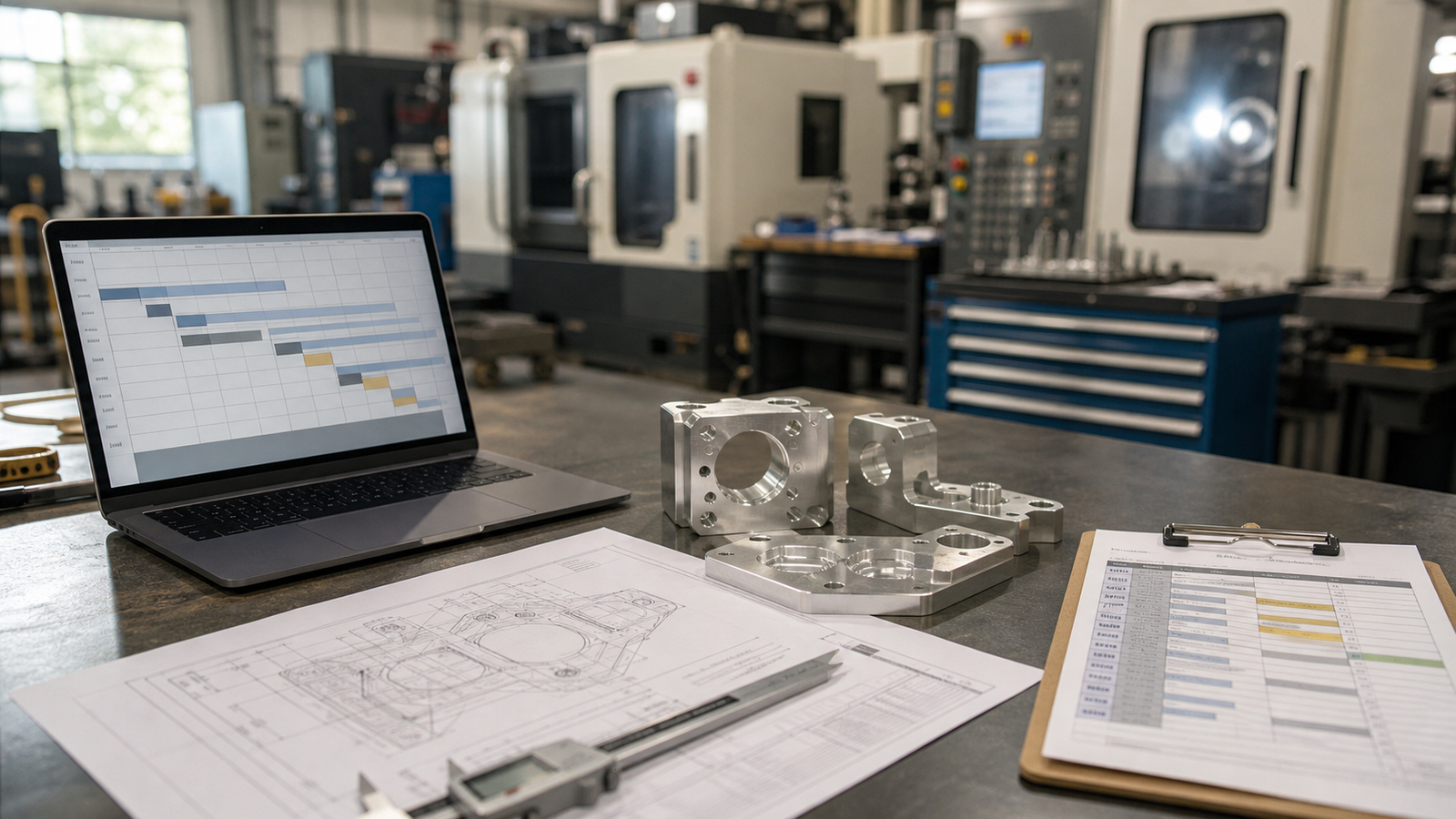
Typical CNC Machining Lead Times
Lead time depends on three things: part complexity, quantity and finishing. Here is a quick reference table for standard orders.
| Order Type | Quantity | Standard Lead Time | Rush Lead Time |
|---|---|---|---|
| Simple prototype | 1-5 pcs | 5-7 business days | 3 business days |
| Complex prototype | 1-5 pcs | 7-10 business days | 5 business days |
| Small production | 10-50 pcs | 2-3 weeks | 1-2 weeks |
| Medium production | 50-500 pcs | 3-4 weeks | 2-3 weeks |
| Large production | 500+ pcs | 4-6 weeks | 3-4 weeks |
These times start after you approve the quote and confirm the order. They do not include shipping time. Add 1-3 days for domestic ground shipping.
Prototype vs Production Timelines
Prototypes and production runs follow very different paths through a shop. Understanding each one helps you plan better.
Prototype Timeline
Prototypes get priority at most shops. The process looks like this:
- Day 1: Order confirmed. Programmer reviews CAD and writes toolpaths.
- Day 2-3: Material sourced (if in stock) and part machined.
- Day 3-4: Deburring, inspection and any basic finishing.
- Day 4-5: Packaged and shipped.
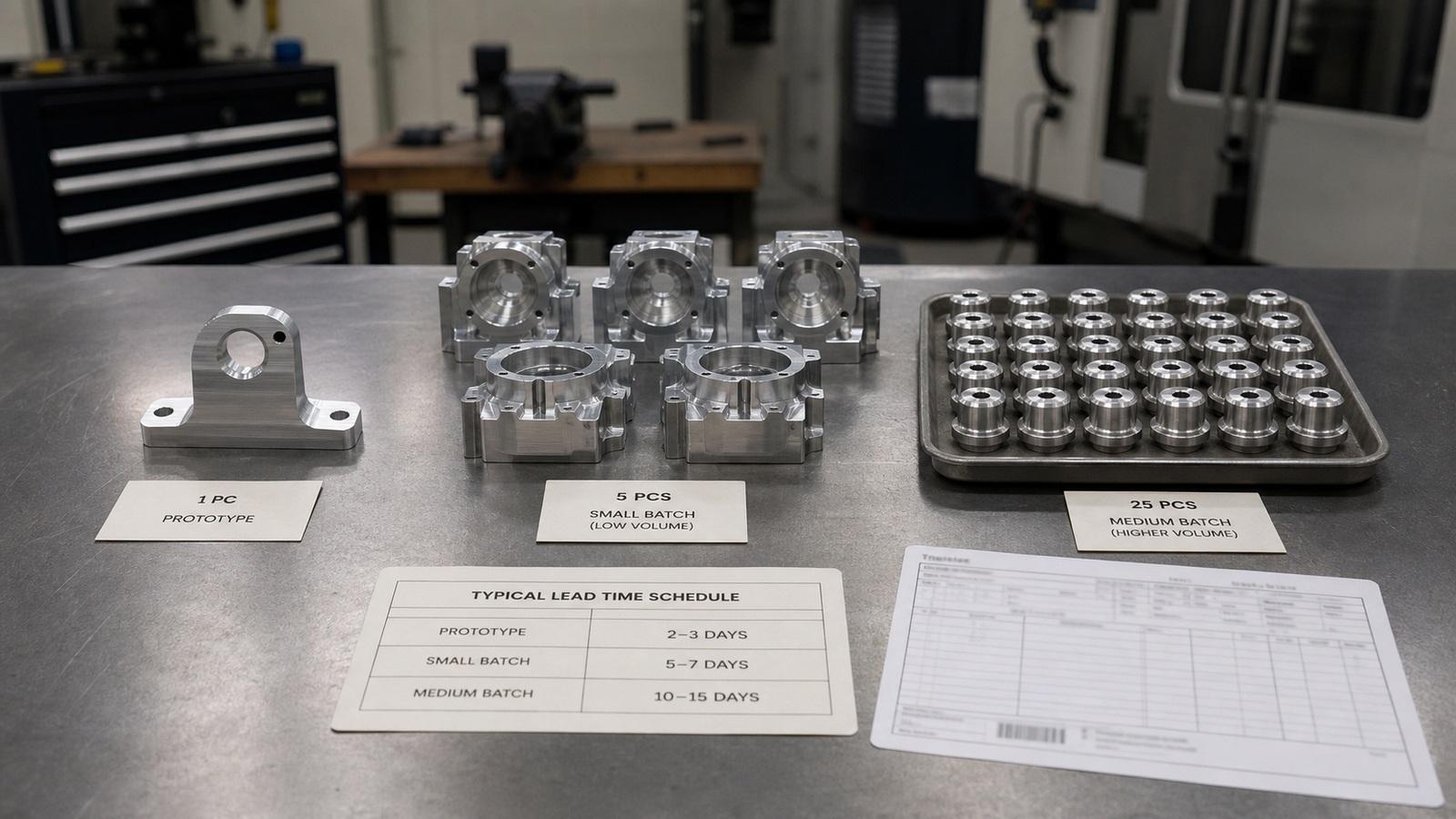
Production Timeline
Production runs take longer because of additional steps:
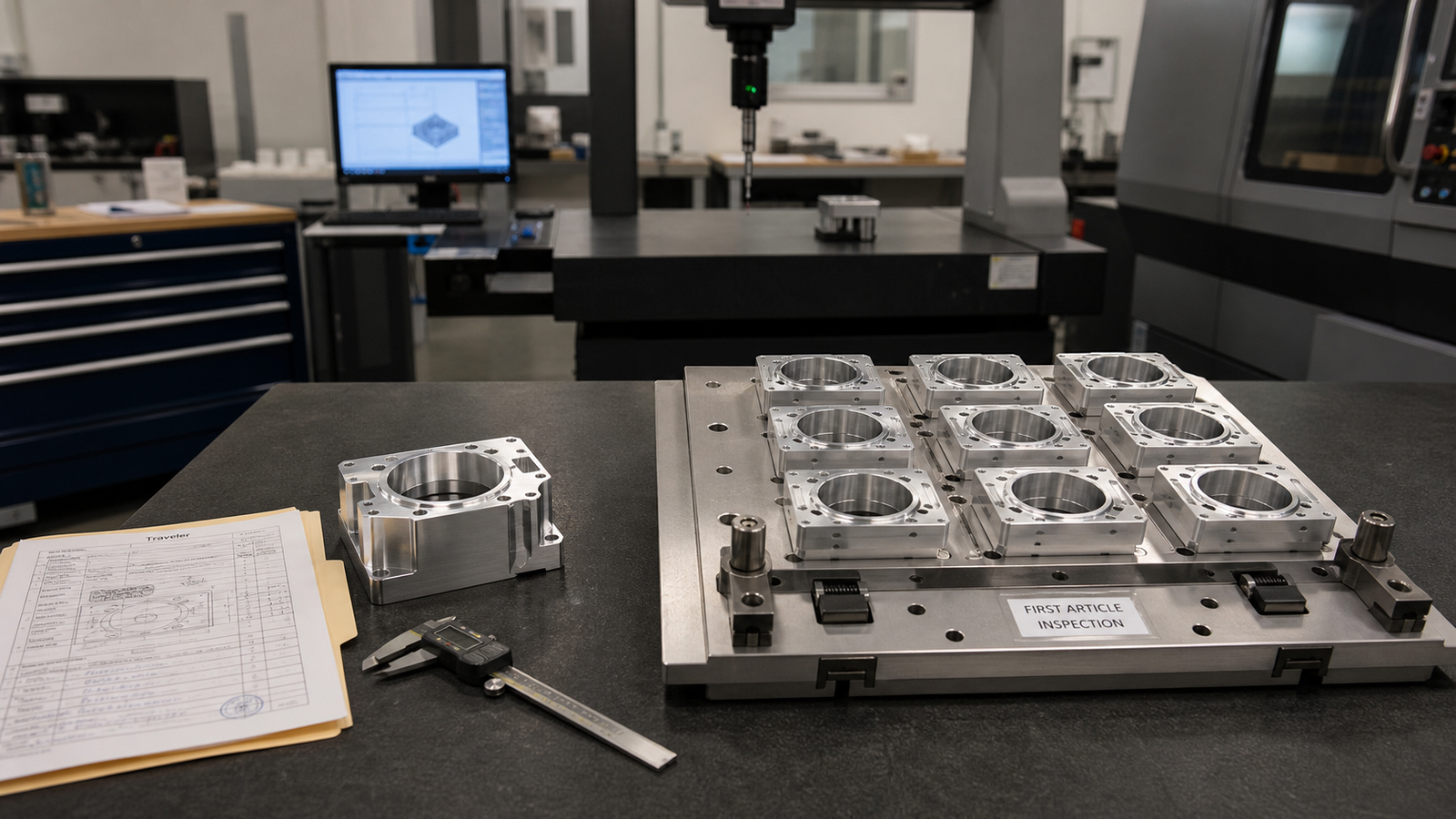
- Week 1: Programming, fixture design, first article run.
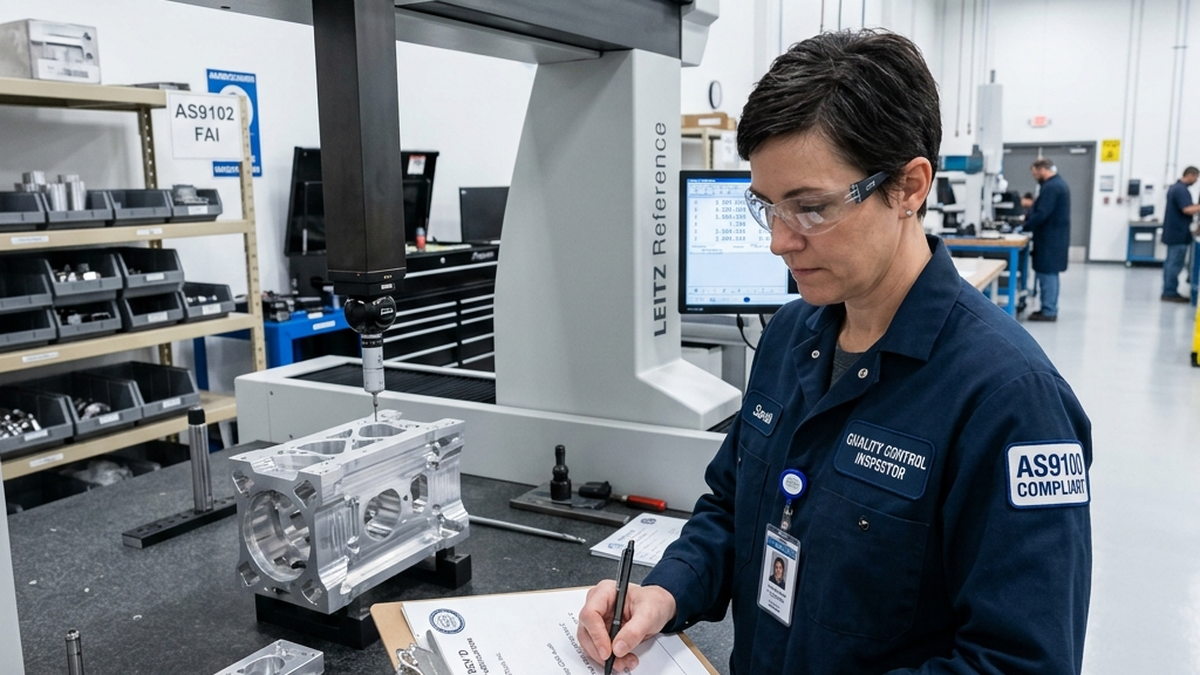
- Week 1-2: First article inspection and approval.
- Week 2-3: Production machining at full speed.
- Week 3-4: Finishing, final inspection, packaging.
If you need parts fast, order a small batch of prototypes first. Use those while the full production run is being made. This keeps your project moving.
What Causes Delays
Most delays are preventable. Here are the top reasons CNC orders take longer than expected:
- Incomplete drawings. Missing tolerances, unclear GD&T, or no material callout. The shop stops and asks questions. That costs you days.
- Material availability. Common materials like 6061 aluminum are always in stock. Exotic alloys like Inconel or specific titanium grades may need 1-2 weeks to source.
- Tight tolerances. Parts with +/- 0.001" or tighter need CMM inspection. This adds time per part.
- Secondary operations. Anodizing adds 2-3 days. Plating adds 3-5 days. Heat treating adds 3-7 days. These are done by outside vendors.
- Design changes mid-order. Any change after programming starts means the shop has to redo toolpaths. That resets the clock.
- Shop capacity. Busy seasons (Q4, early Q1) mean longer queues. Get quotes early.
Incomplete or unclear drawings cause more delays than anything else. Make sure your CAD file has all dimensions, tolerances and material specs before you submit it.
Rush Options and Expedited Service
Most CNC shops offer rush service. It costs more, but it gets your parts faster. Here is what to expect.
| Service Level | Timeline | Price Premium |
|---|---|---|
| Standard | 5-10 business days | None |
| Priority | 3-5 business days | +25% |
| Rush | 1-3 business days | +50-75% |
| Emergency (same day) | 24 hours | +100-200% |
Rush fees pay for overtime, bumping other jobs and dedicating a machine to your order. They are worth it when your project timeline depends on getting parts fast.
7 Ways to Get Parts Faster
You do not always have to pay rush fees. These tips help you shorten lead times at no extra cost.
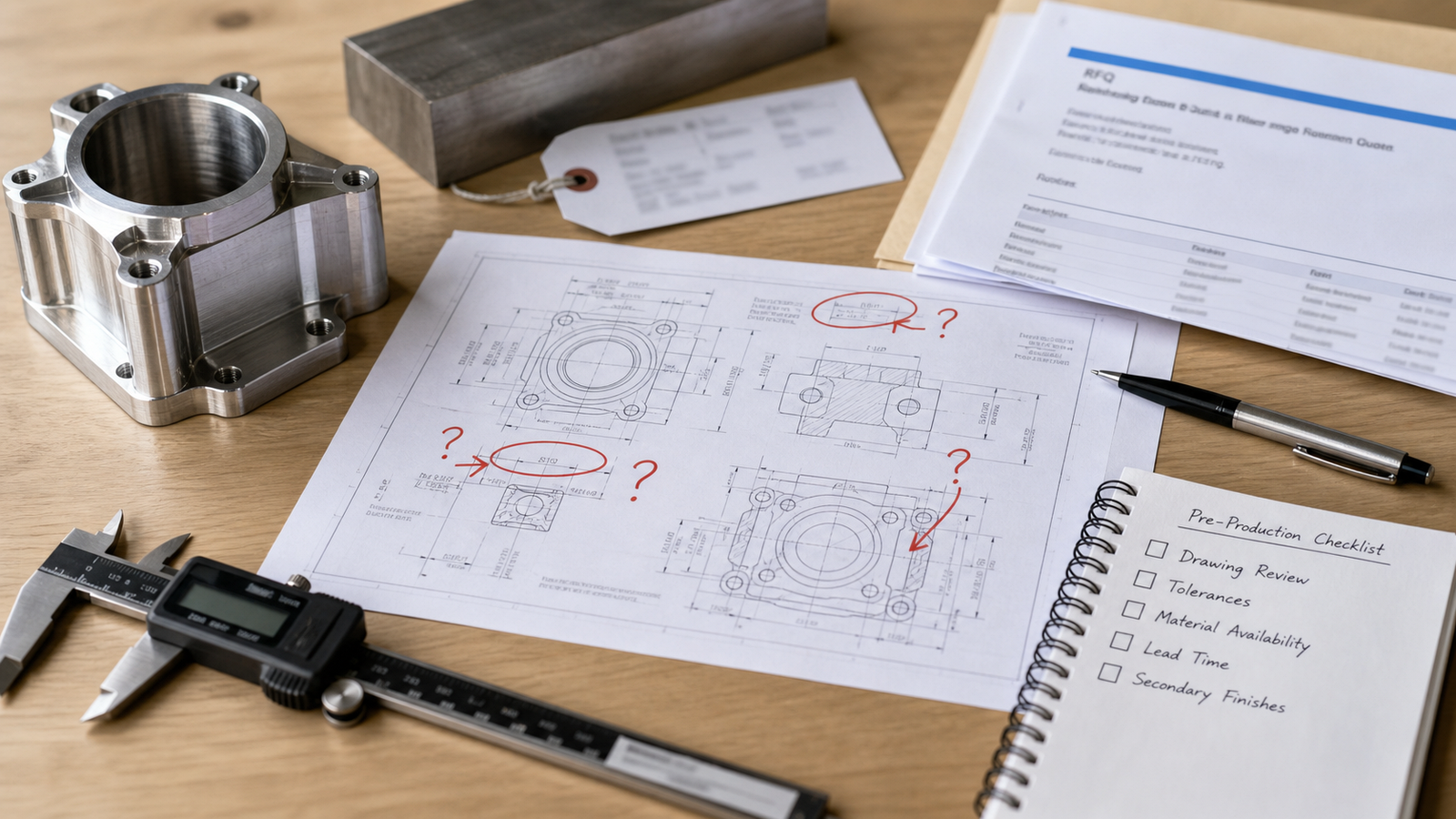
- Submit clean, complete CAD files. Include STEP files, material callout, tolerances and finish specs. No questions means no delays.
- Choose common materials. 6061 and 7075 aluminum are always in stock. Exotic alloys take time to source.
- Loosen non-critical tolerances. Standard tolerances (+/- 0.005") machine faster than tight ones (+/- 0.001").
- Skip unnecessary finishing. As-machined parts ship faster. Add anodizing later if timing is tight.
- Order finishing separately. Get raw parts first, then send them for anodizing yourself. This overlaps the timelines.
- Approve quotes quickly. Your lead time clock does not start until you approve the order. Waiting 3 days to approve costs you 3 days.
- Build relationships. Shops prioritize loyal customers. If you order regularly, you get faster turnaround.
Need parts fast? RivCut offers 3-day rush prototyping on most aluminum and steel parts. Upload your files and select rush service at checkout.
Frequently Asked Questions
How long does CNC machining take?
Simple prototypes take 3 to 5 business days. Standard production runs take 2 to 4 weeks. Complex parts with tight tolerances or special materials can take 4 to 6 weeks.
Can you rush CNC machined parts?
Yes. Most shops offer rush service for 25 to 50 percent extra. RivCut can ship prototype parts in as few as 3 business days with rush processing.
What causes CNC machining delays?
Incomplete drawings, material availability issues, tight tolerances requiring extra inspection and secondary operations like anodizing or plating.
How can I get my CNC parts faster?
Submit complete CAD files with clear tolerances. Choose common materials. Avoid unnecessary tight tolerances. Order finishing separately if timing is critical.
What is the fastest CNC machining turnaround?
Some shops offer same-day or next-day service for simple parts. Typical rush service is 3 to 5 business days. RivCut offers 3-day rush for prototypes.