Milling Tolerance Table
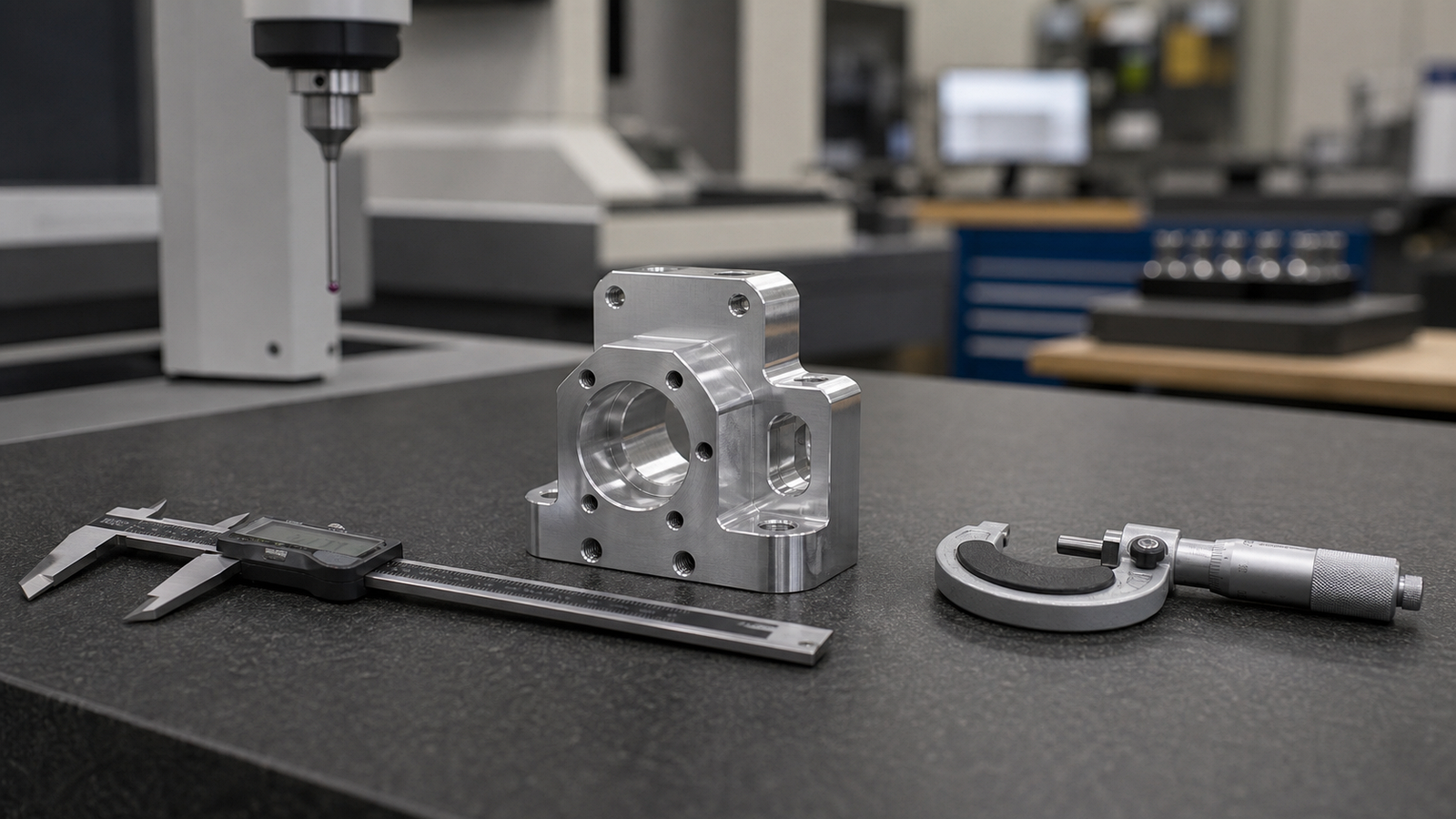
These are typical tolerances for 3-axis CNC milling. Tighter tolerances are possible but add cost. Use this as a starting point when designing parts.
| Feature | Standard | Precision | High Precision |
|---|---|---|---|
| Linear dimensions | +/-0.005" | +/-0.001" | +/-0.0005" |
| Hole diameters | +/-0.003" | +/-0.001" | +/-0.0003" |
| Hole position | +/-0.005" | +/-0.002" | +/-0.001" |
| Flatness | 0.003"/in | 0.001"/in | 0.0005"/in |
| Parallelism | 0.005" | 0.002" | 0.001" |
| Perpendicularity | 0.005" | 0.002" | 0.001" |
| Surface finish (Ra) | 125 Ra | 63 Ra | 16 Ra |
Turning Tolerance Table
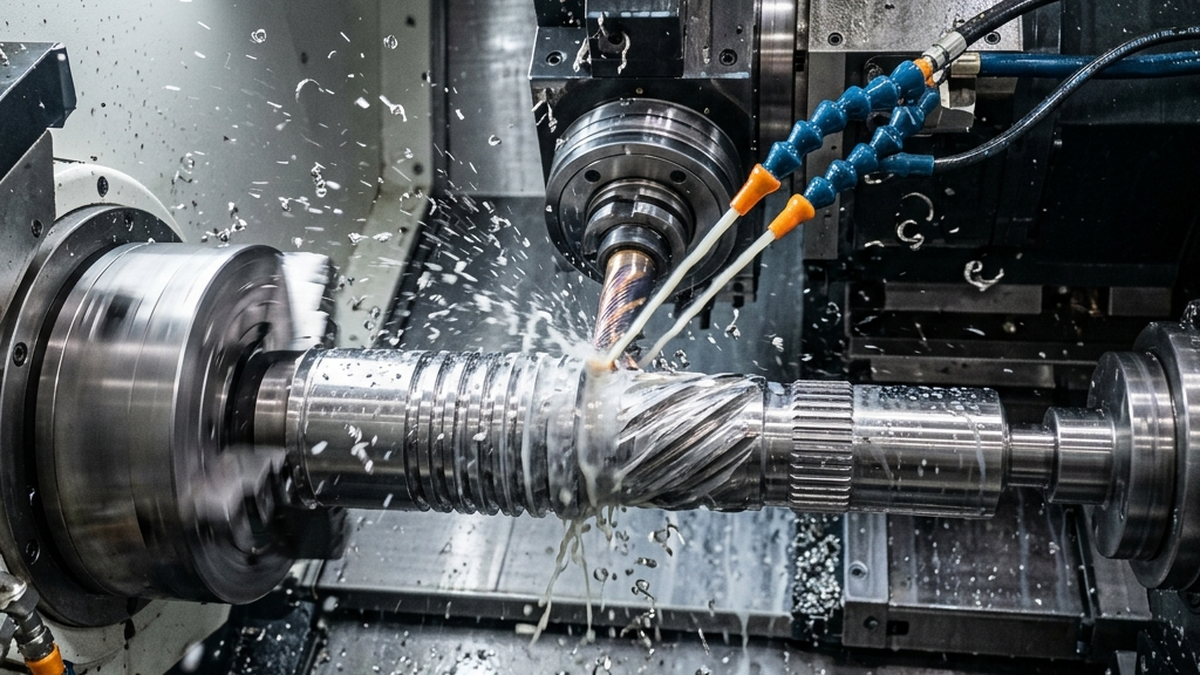
CNC lathes are great at holding tight diameters. They struggle more with length dimensions because the part sticks out from the chuck.
| Feature | Standard | Precision | High Precision |
|---|---|---|---|
| Outer diameter | +/-0.002" | +/-0.0005" | +/-0.0002" |
| Inner diameter (bore) | +/-0.003" | +/-0.001" | +/-0.0005" |
| Length | +/-0.005" | +/-0.002" | +/-0.001" |
| Concentricity (TIR) | 0.003" | 0.001" | 0.0005" |
| Surface finish (Ra) | 125 Ra | 32 Ra | 16 Ra |
Grinding Tolerance Table
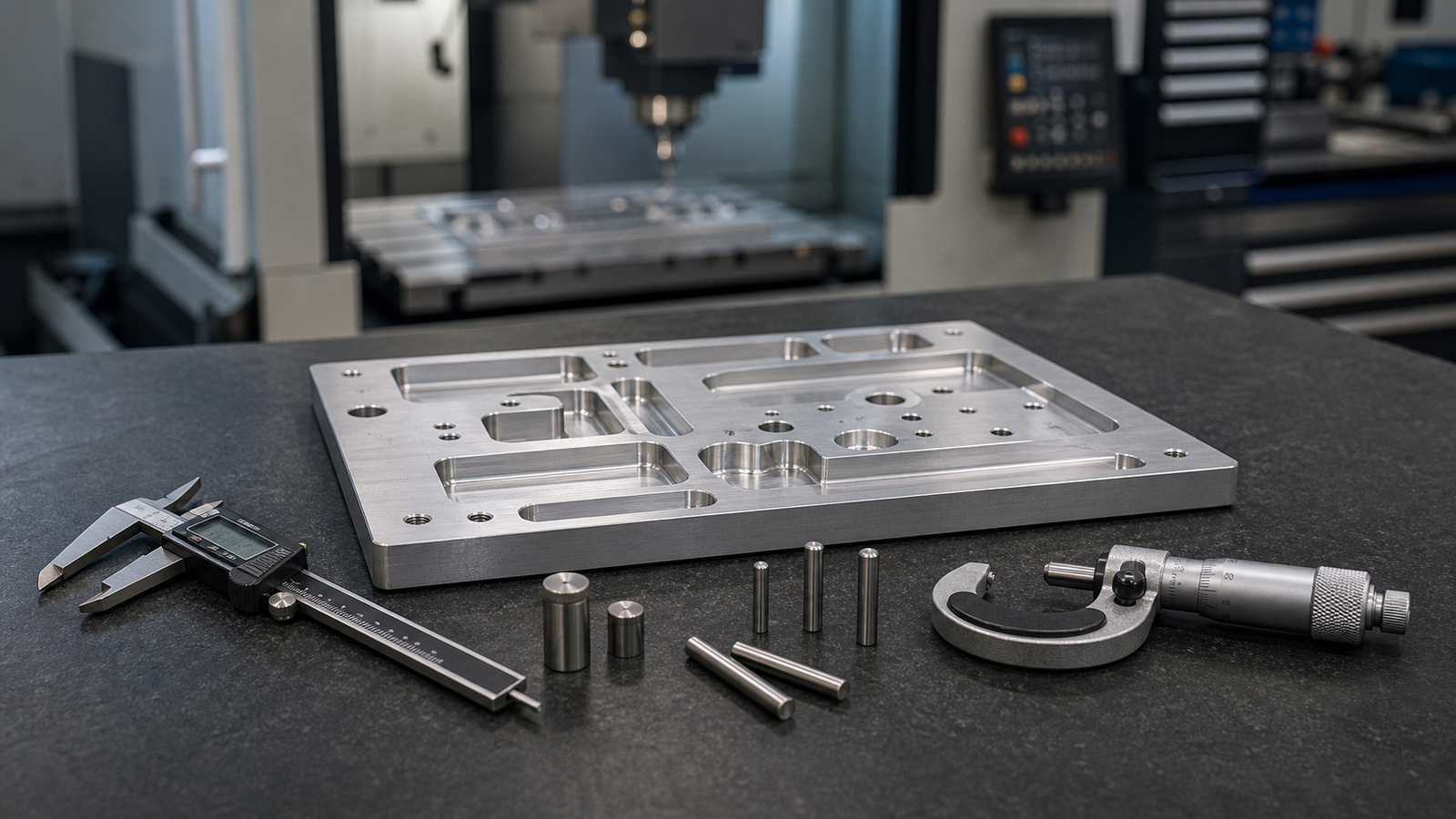
When milling and turning are not accurate enough, grinding takes over. Surface grinding, cylindrical grinding and centerless grinding each serve different needs.
| Process | Typical Tolerance | Best Achievable | Surface Finish (Ra) |
|---|---|---|---|
| Surface grinding | +/-0.0005" | +/-0.0001" | 8-16 Ra |
| Cylindrical grinding | +/-0.0003" | +/-0.0001" | 8-16 Ra |
| Centerless grinding | +/-0.0005" | +/-0.0002" | 16-32 Ra |
| Lapping | +/-0.0001" | +/-0.00005" | 2-4 Ra |
Only add grinding if your tolerance is tighter than +/-0.001" or you need a surface finish below 32 Ra. Grinding adds a separate setup and operation, which increases cost and lead time.
How Material Affects Tolerances
Not all materials behave the same under cutting forces and heat. Here is how common materials compare:
| Material | Stability | Practical Tight Tolerance | Notes |
|---|---|---|---|
| 6061 Aluminum | Excellent | +/-0.0005" | Low thermal expansion, easy to cut |
| 7075 Aluminum | Excellent | +/-0.0005" | Slightly harder than 6061, still stable |
| 303 Stainless | Good | +/-0.001" | Free-machining grade, good stability |
| 304 Stainless | Fair | +/-0.001" | Work hardens, use sharp tools |
| 4140 Steel | Good | +/-0.001" | Stable in annealed state |
| Titanium Ti-6Al-4V | Fair | +/-0.001" | Spring-back on thin walls |
| Delrin (POM) | Good | +/-0.002" | Best plastic for tight tolerances |
| Nylon | Poor | +/-0.005" | Absorbs moisture, swells |
Inspection Methods
The right inspection tool depends on the tolerance level. Here is what shops use at each tier:
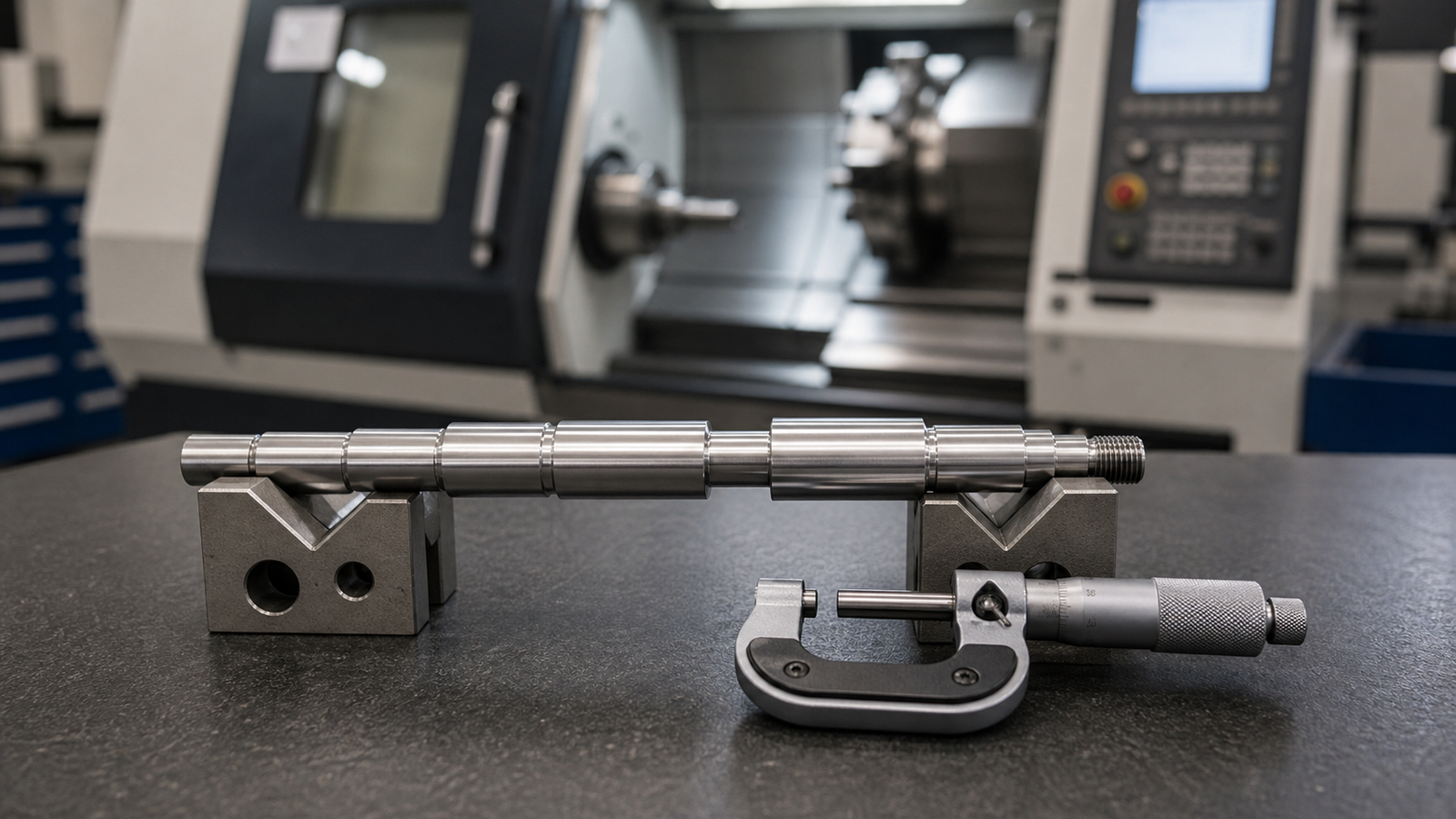
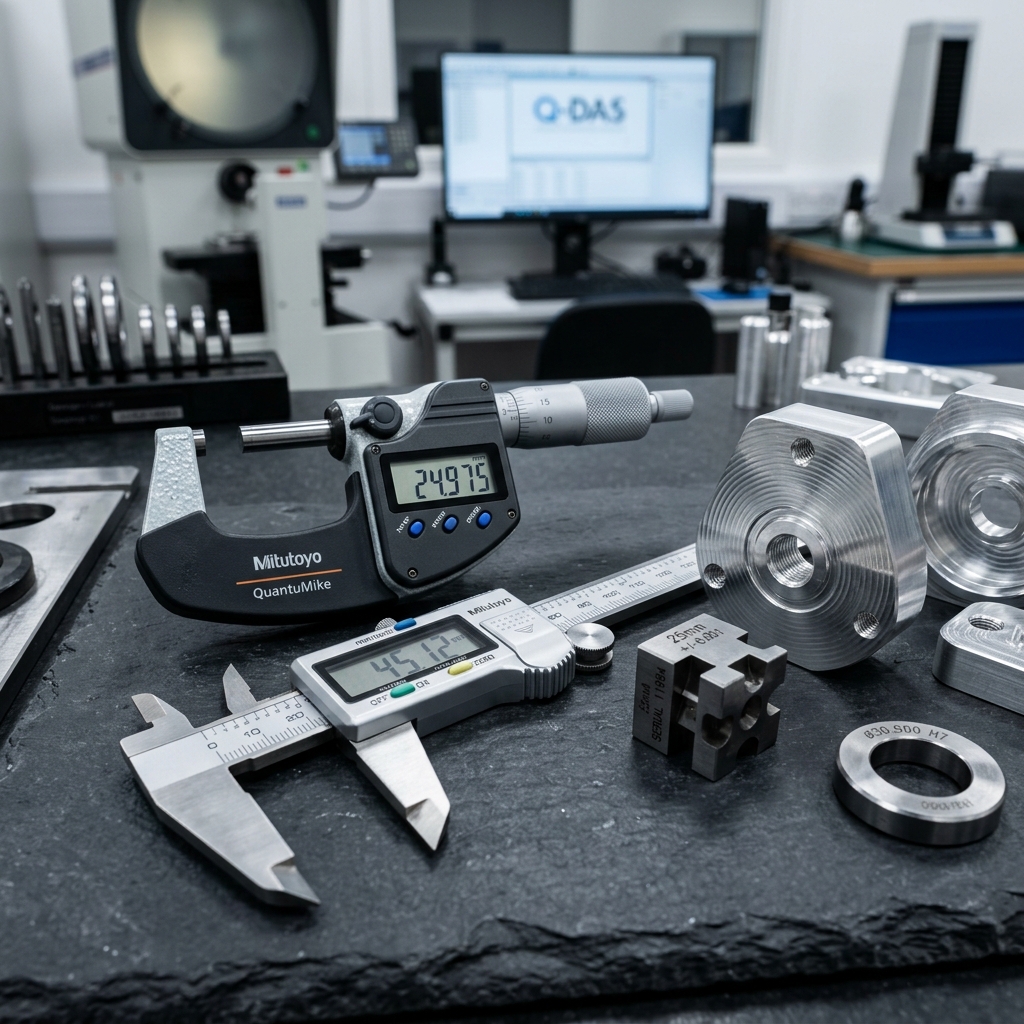
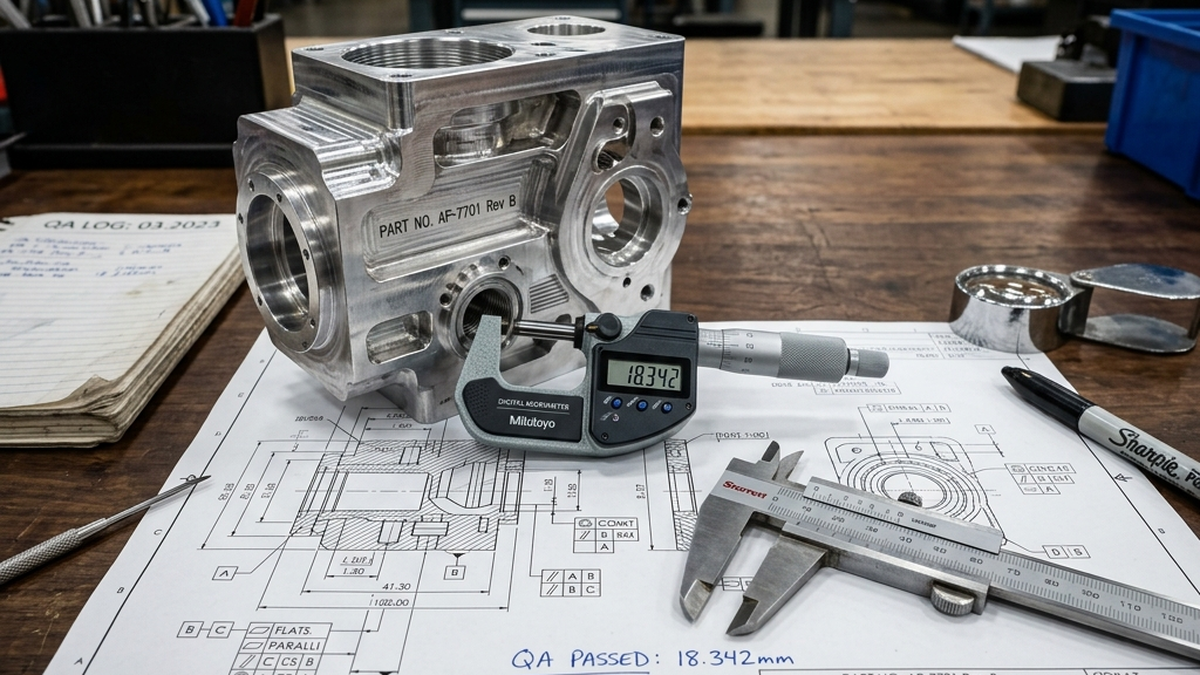
- Calipers (+/-0.005") -- Fast and good for standard tolerances. Digital calipers read to 0.0005" but are only accurate to about +/-0.001".
- Micrometers (+/-0.001") -- More accurate than calipers. Best for outside dimensions. Reads to 0.0001".
- CMM (+/-0.0005" and tighter) -- Coordinate measuring machines use a touch probe to map 3D positions. Best for GD&T callouts and complex geometries.
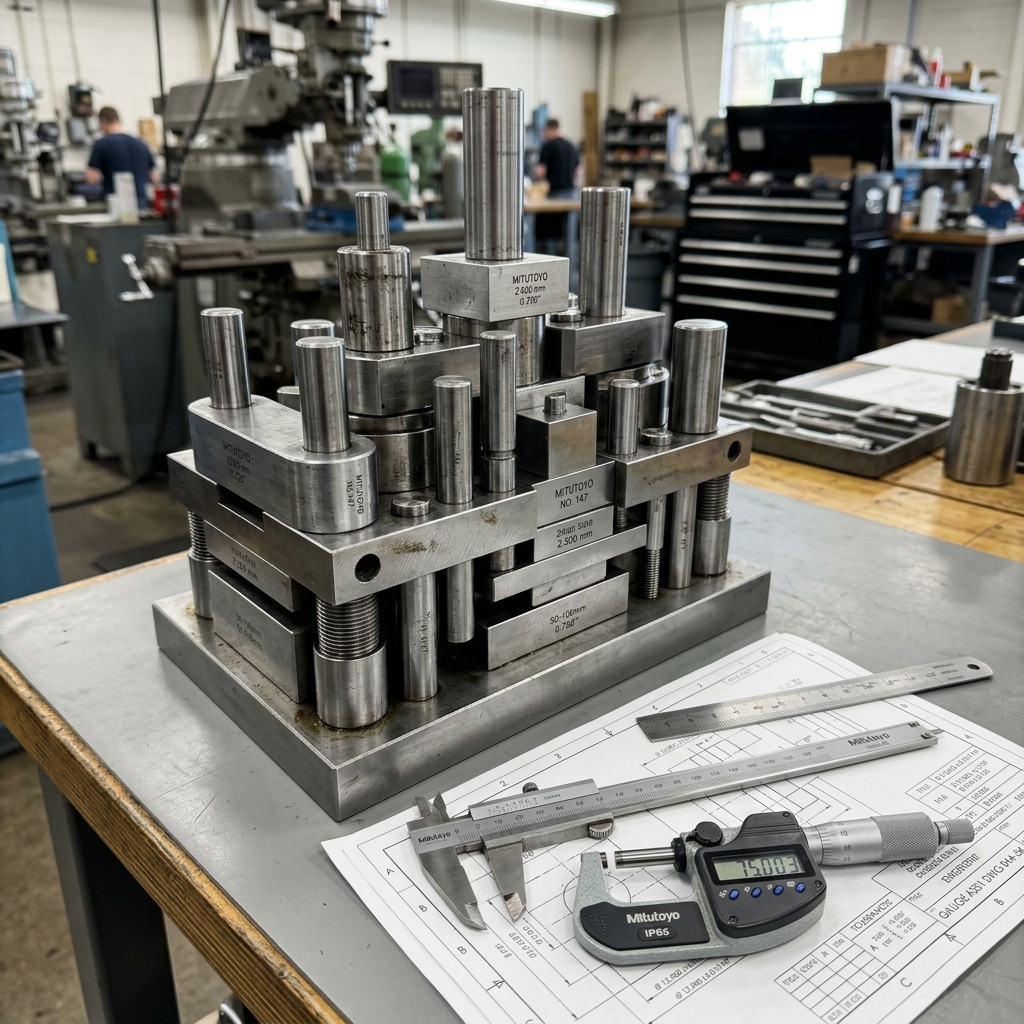
- Gauge pins and blocks -- Go/no-go gauges are fast for checking bores and slots in production.
- Profilometer -- Measures surface roughness (Ra). Needed when surface finish is called out on the drawing.
Precision inspection must happen at 68 degrees F (20 degrees C). A 10 degree temperature change can cause a 12-inch aluminum part to grow or shrink by 0.001". Always let parts cool to room temperature before final inspection.
GD&T Basics for CNC Parts
GD&T (Geometric Dimensioning and Tolerancing) controls how features relate to each other. Regular +/- tolerances only control size. GD&T controls shape, orientation and location. Bookmark our GD&T reference guide for a complete symbol chart.
Most Common GD&T Callouts
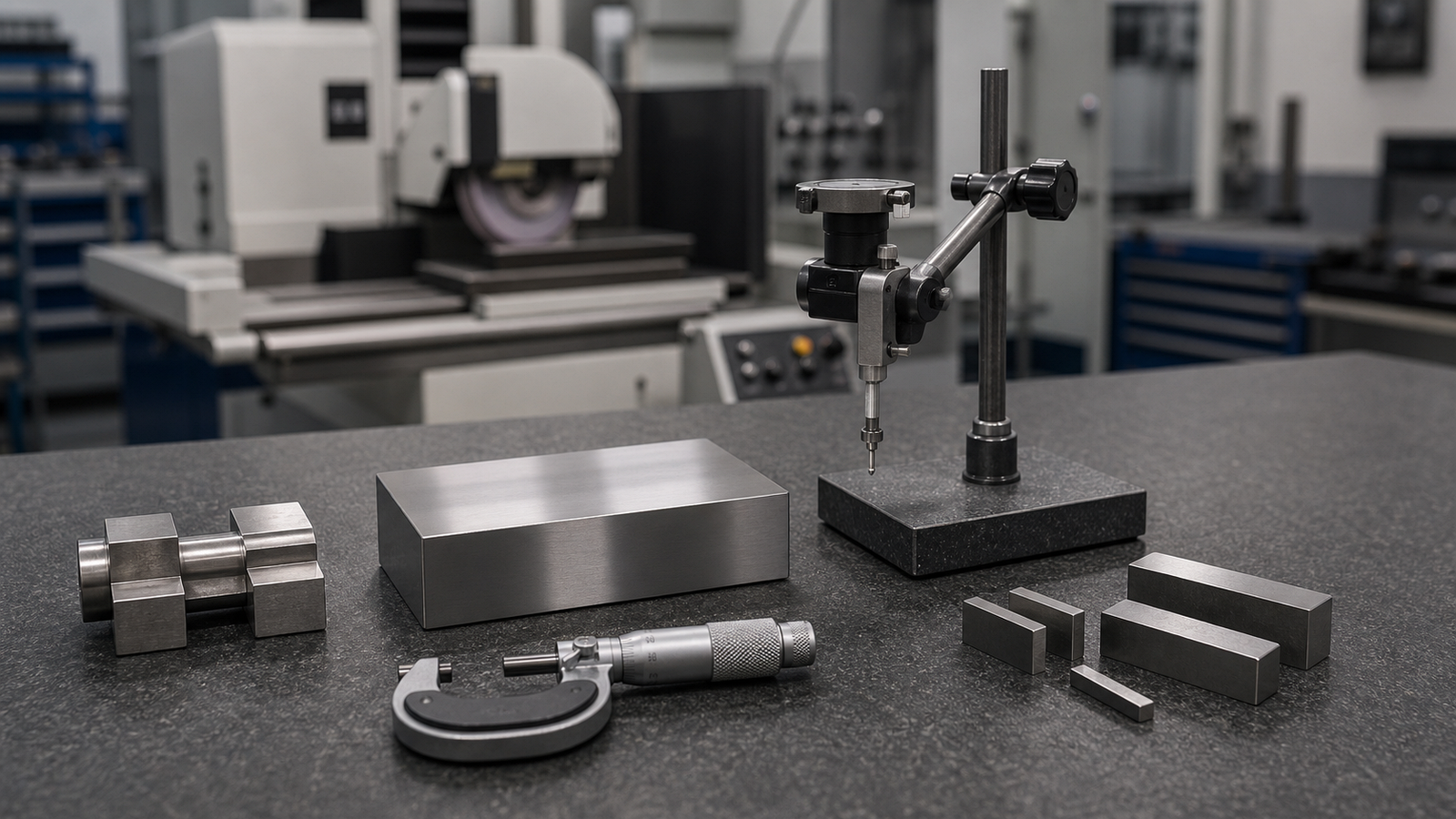
- Position -- Controls where a hole or feature is relative to datums. The most common GD&T callout on CNC parts.
- Flatness -- Controls how flat a surface is, independent of any other feature.
- Perpendicularity -- Controls how square a feature is to a datum surface.
- Parallelism -- Controls how parallel a surface is to a datum.
- Concentricity / Runout -- Controls how well a diameter is centered on an axis. Common on turned parts.
- Profile -- Controls the shape of a curved or complex surface.
If you are new to GD&T, start with position and flatness. These two callouts solve 80% of the fit problems engineers run into with multi-part assemblies.
Best Practices
- Start with standard tolerances. Add tight callouts only where function demands it.
- Use GD&T for relationships. Plus/minus tolerances control size. GD&T controls how parts fit together.
- Match tolerance to inspection. Do not call out +/-0.0002" if your shop does not have a CMM.
- Consider the whole assembly. Tolerance stack-up can turn five loose tolerances into one tight assembly problem.
- Talk to your shop. RivCut offers free DFM reviews that catch tolerance problems before machining starts.
Frequently Asked Questions
What tolerances can CNC milling hold?
Standard CNC milling holds +/-0.005". With careful setup, most mills hold +/-0.001". High-precision mills with temperature control can reach +/-0.0002" on small features in aluminum.
What tolerances can CNC turning hold?
CNC lathes hold +/-0.002" as standard. With live tooling they can hold +/-0.0005" on diameters. Concentricity is usually within 0.001" TIR.
What is GD&T and when should I use it?
GD&T controls shape, orientation and location of features relative to datums. Use it when you need to control how features relate to each other, not just their sizes.
How does material choice affect tolerances?
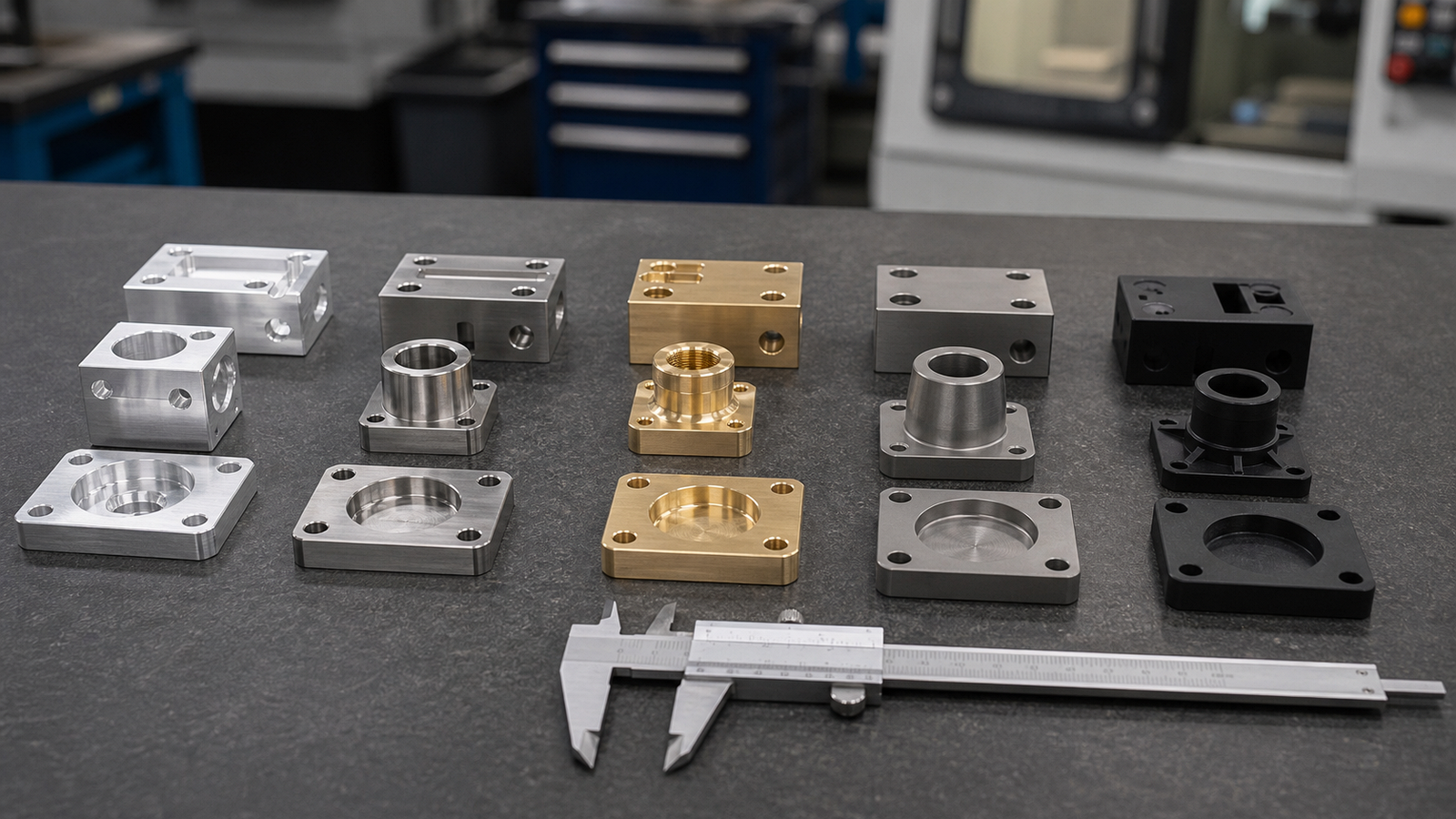
Aluminum and brass hold tight tolerances easily. Stainless steel work hardens. Plastics expand with heat. Talk to your shop about material choice when tolerances are critical.
What inspection methods verify CNC tolerances?
Calipers for standard, micrometers for +/-0.001", CMM for tight or geometric tolerances. Optical comparators and profilometers handle profile and surface finish checks.