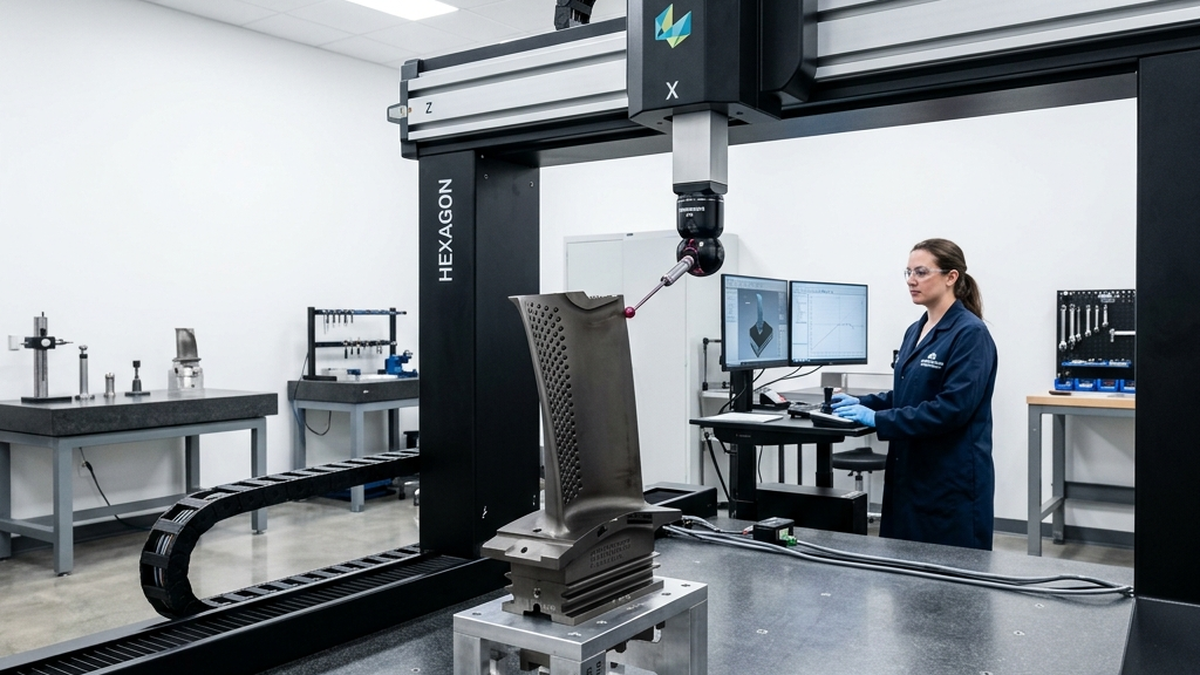
Quality Control: The Big Picture
Quality control in CNC machining is a system. It is not just one check at the end. Good QC happens at every stage of the process.
There are three main stages: incoming inspection, in-process inspection and final inspection. Each one catches different types of problems. Skip any stage and you create risk.
Quality is not an act. It is a habit. The best shops build inspection into every step, not just the last one.
Incoming Inspection
Incoming inspection checks raw material before it reaches the machine. This is your first line of defense against bad parts.
What Gets Checked
- Material certification matches the purchase order
- Alloy and temper match the drawing callout
- Physical dimensions of the raw stock are correct
- Surface condition is free from defects
- Heat lot number matches the mill cert
Wrong material is the most expensive mistake in CNC machining. A 6061 bar that should be 7075 will pass every dimension check. But it will fail in service. Always verify material before cutting.
In-Process Inspection
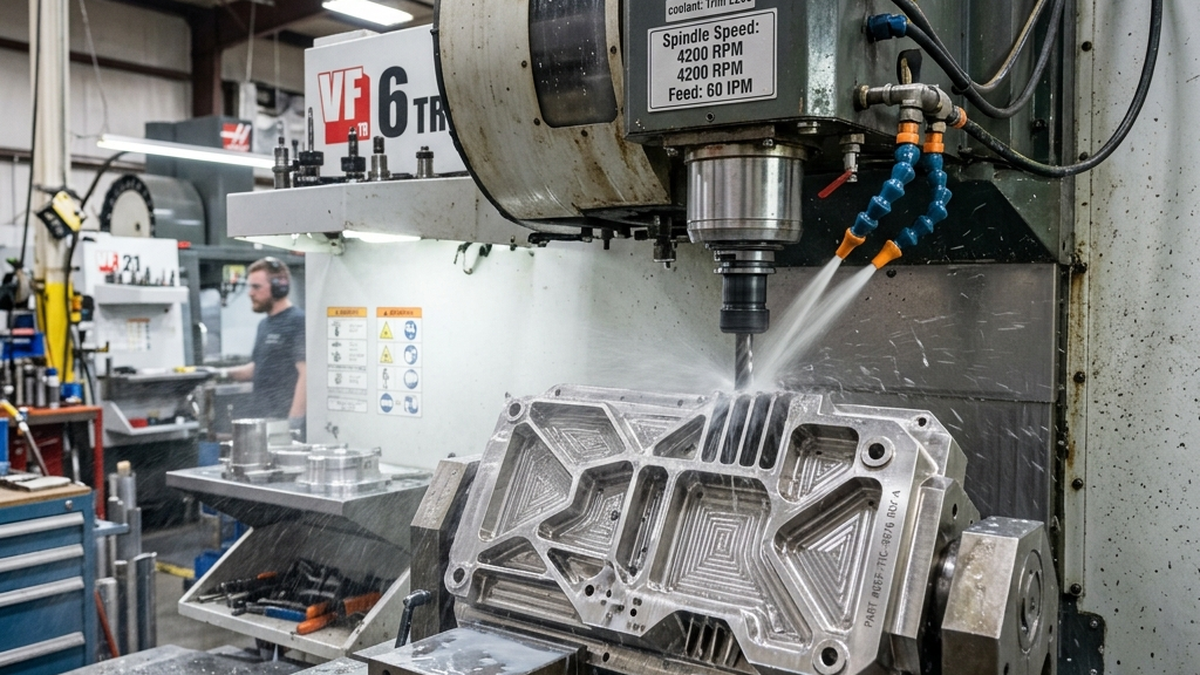
In-process inspection happens while the part is still on the machine. This catches drift, tool wear and setup errors before they affect the whole batch.
First Piece Inspection
The machinist checks the first part from every new setup. Every critical dimension gets measured. If it passes, the run continues. If not, the setup gets adjusted.
Ongoing Checks
During production, the machinist checks parts at regular intervals. The frequency depends on tolerance and batch size. Tight-tolerance parts get checked more often.
On-Machine Probing
Modern CNC machines have touch probes built in. These can check dimensions without removing the part. They catch tool wear in real time and adjust offsets automatically.
Final Inspection
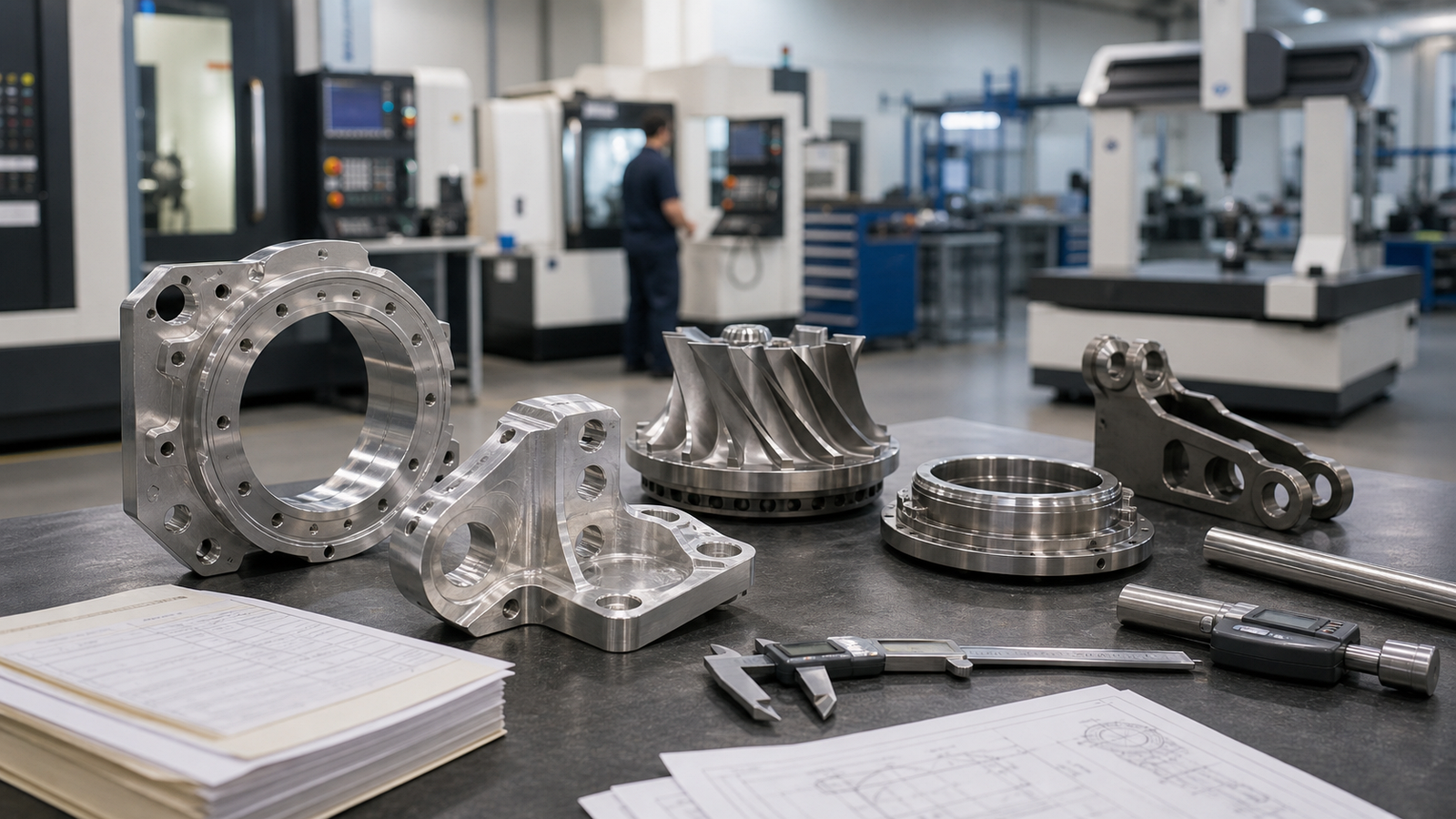
Final inspection is the last check before parts ship. This is where the quality team verifies every requirement on the drawing.
What Happens at Final
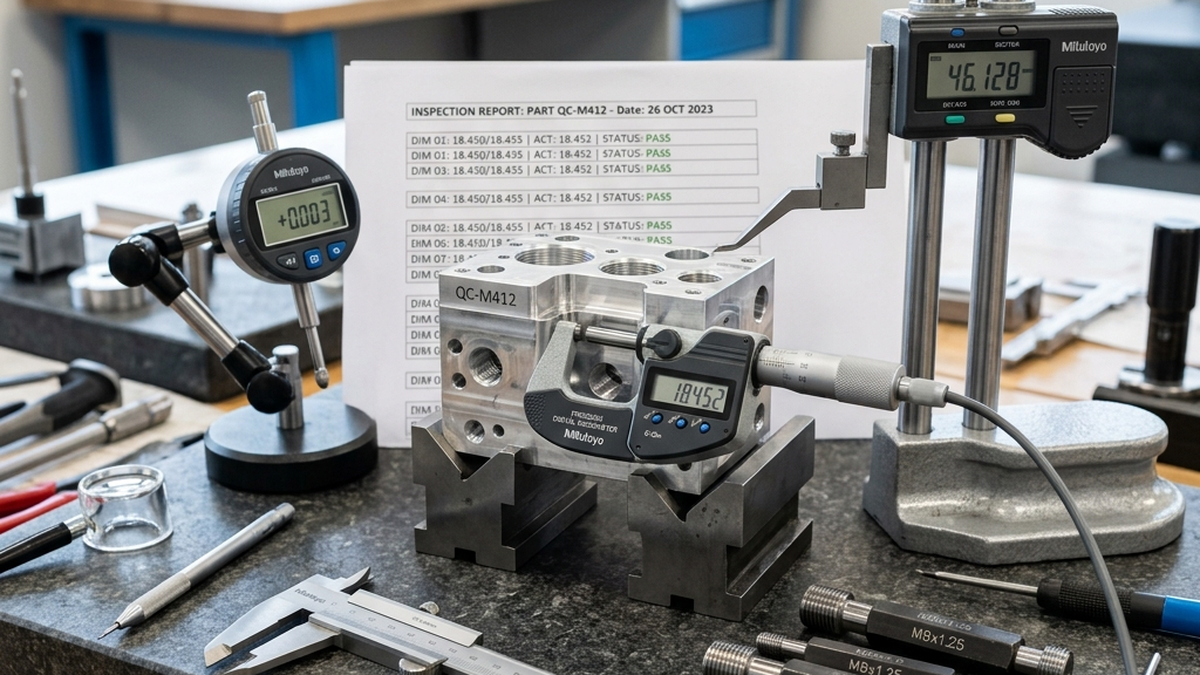
- Dimensional check of all critical features
- Surface finish measurement if called out
- Visual inspection for burrs, scratches and defects
- Thread verification with go/no-go gauges
- Hardness check if required
- Coating or plating verification
Common Inspection Tools
| Tool | Accuracy | Best For |
|---|---|---|
| Digital Caliper | +/-0.001" | Quick OD/ID checks, lengths |
| Micrometer | +/-0.0001" | Precise OD measurements |
| Height Gauge | +/-0.0005" | Step heights, datum references |
| Pin Gauges | +/-0.0001" | Hole diameters, bore checks |
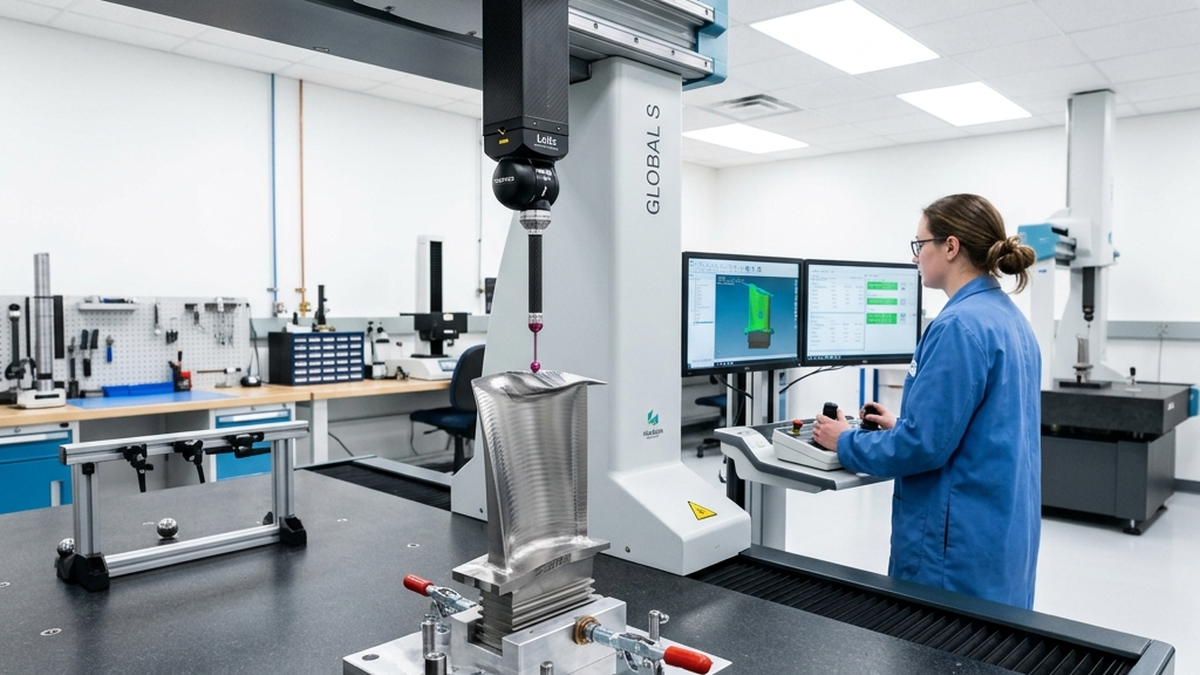
| CMM | +/-0.0001" | Complex 3D geometry, GD&T |
| Surface Profilometer | varies | Surface roughness (Ra) measurement |
Quality Documentation
Documentation is the proof that inspection happened. Without it, you have nothing to show auditors, customers, or engineers.
Key Documents
- Certificate of Conformance (CoC), shop's statement that parts meet spec
- Dimensional Inspection Report, measured values for each feature
- Material Certification, mill cert proving alloy and properties
- First Article Inspection (FAI), detailed check of the first part
- AS9102 Package, aerospace-standard FAI with three forms
- PPAP, Production Part Approval Process for automotive
For more detail on each document type, see our Quality Inspection Guide.
Traceability: Why It Matters
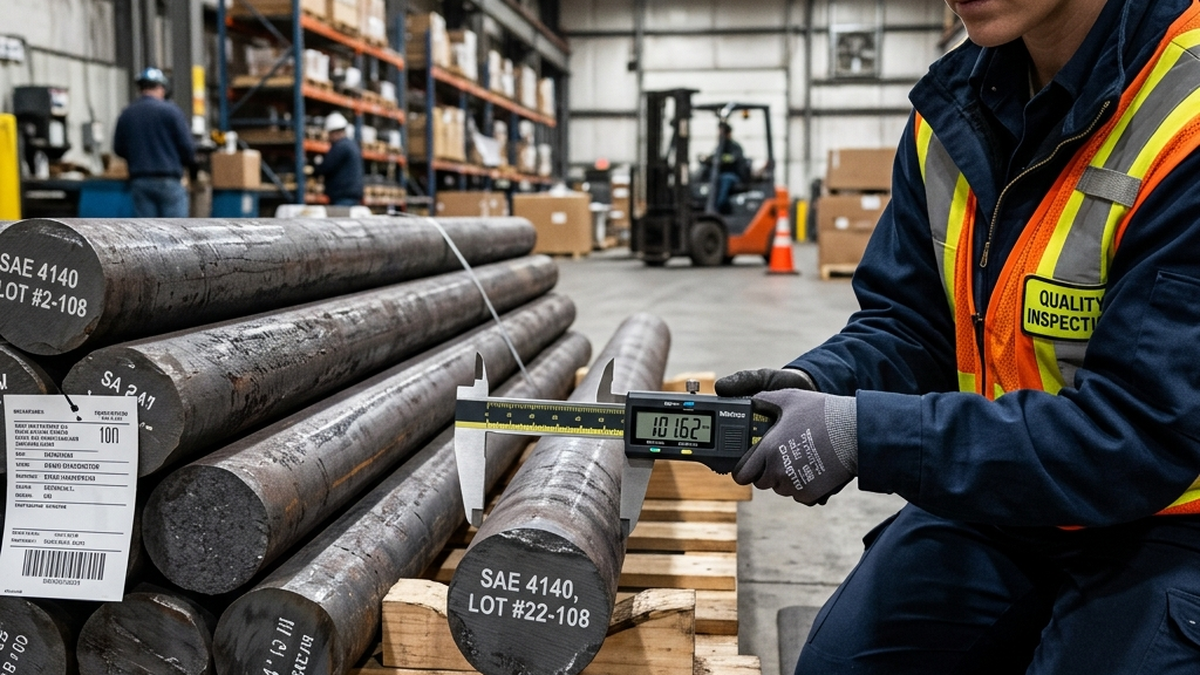
Traceability means you can track a part back to its source. You know the raw material lot, the machine, the operator and the inspection records.
This is not just paperwork. If a problem shows up in the field, traceability tells you which other parts might be affected. Without it, you might recall your entire inventory.
What Good Traceability Looks Like
- Lot numbers link parts to raw material
- Work orders link parts to specific machines and operators
- Inspection records link to specific measurement results
- Serialization gives each part a unique ID (for critical applications)
SPC and Sampling Plans
SPC (Statistical Process Control) tracks measurements over time. It shows trends before parts go out of tolerance. This is proactive quality control.
When to Use SPC
- High-volume production runs (100+ pieces)
- Automotive parts requiring PPAP
- Any job where you need to prove process capability (Cpk)
Sampling Plans
You do not need to measure every single part. Sampling plans like AQL (Acceptable Quality Level) define how many parts to check based on batch size and risk level.
| Batch Size | General Sampling | Tight-Tolerance Sampling |
|---|---|---|
| 1-10 | 100% (check all) | 100% (check all) |
| 11-50 | First + every 10th | First + every 5th |
| 51-200 | First + every 25th | First + every 10th |
| 200+ | AQL Level II | AQL Level I or tighter |
Red Flags: Signs of Poor QC
Here is how to spot a shop that cuts corners on quality.
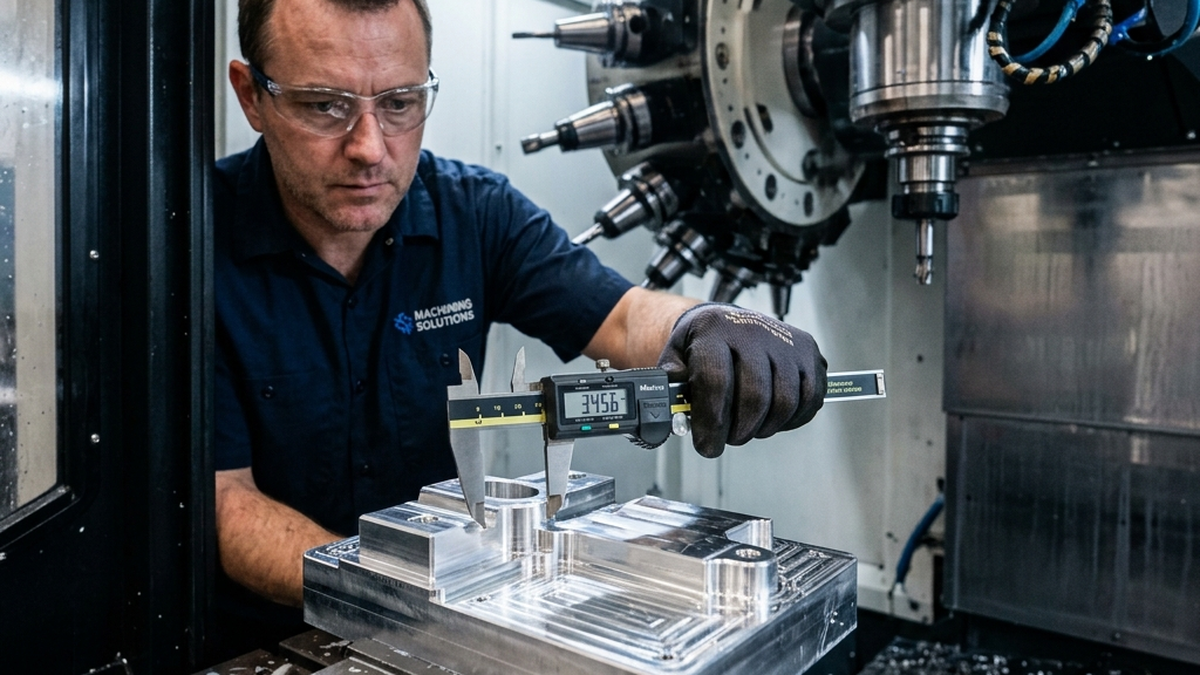
- No incoming material check, they trust whatever arrives
- No first piece inspection, they run the whole batch and check at the end
- No calibration records, their tools might be off
- Generic CoC with no specific data
- No traceability system, they cannot link parts to material lots
- Resistance to providing documentation, a big warning sign
Ask to see a sample inspection report before placing your first order. A good shop will be happy to show you. If they hesitate, keep looking.
Frequently Asked Questions
What are the three stages of CNC quality inspection?
Incoming inspection checks raw material. In-process inspection checks parts during machining. Final inspection verifies finished parts before shipping.
What is traceability in CNC machining?
Traceability links every part to its raw material lot, machine, operator and inspection records. It is required for aerospace and medical work.
What tools are used for in-process inspection?
Calipers, micrometers, height gauges, pin gauges, thread gauges and on-machine probing systems. CMMs handle complex geometry.
How often should in-process checks happen?
Check the first piece, then sample at regular intervals. Every 10th to 50th piece is typical. Adjust if you see measurement drift.
What is SPC and when is it needed?
SPC tracks measurements over time to detect trends. It is common in high-volume production and automotive work where process capability must be proven.
What documentation should come with my CNC parts?
At minimum, a CoC. For critical parts, add dimensional reports, material certs and process certs. Aerospace parts need full AS9102 packages.