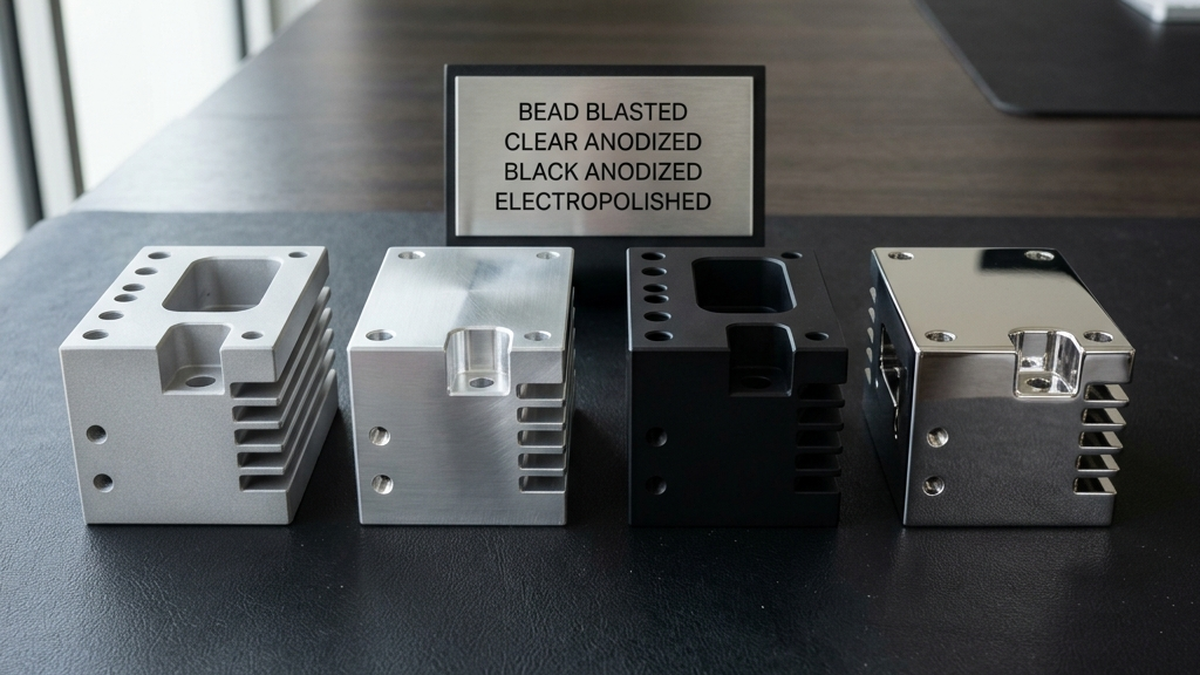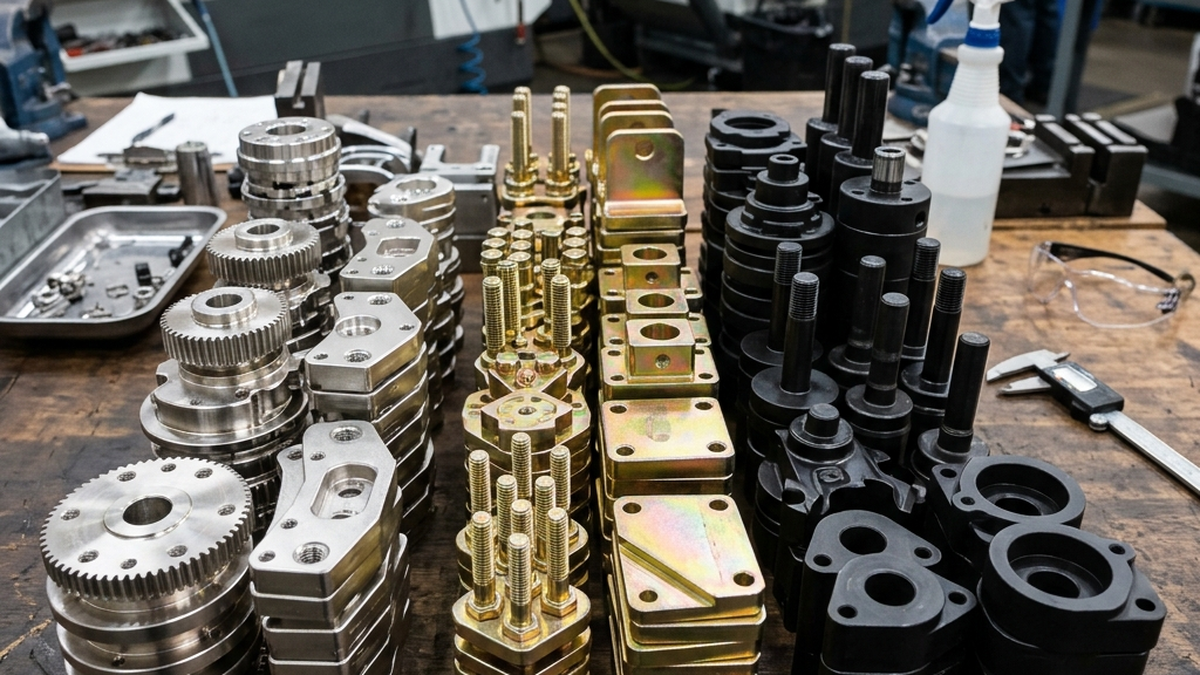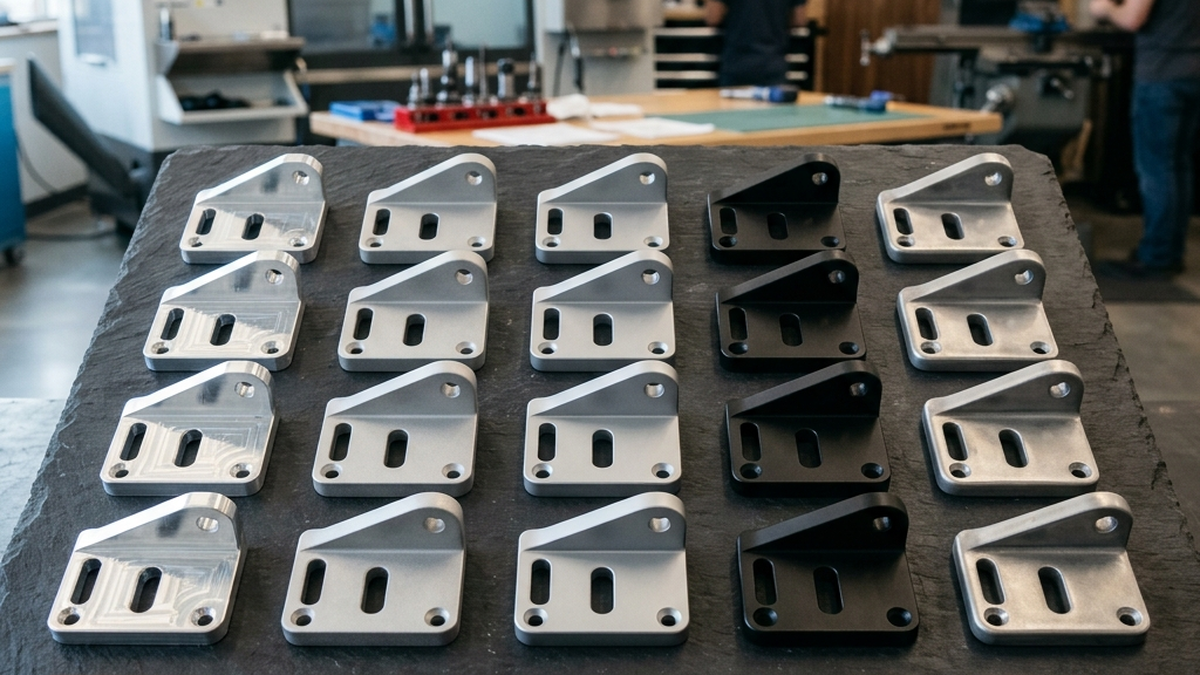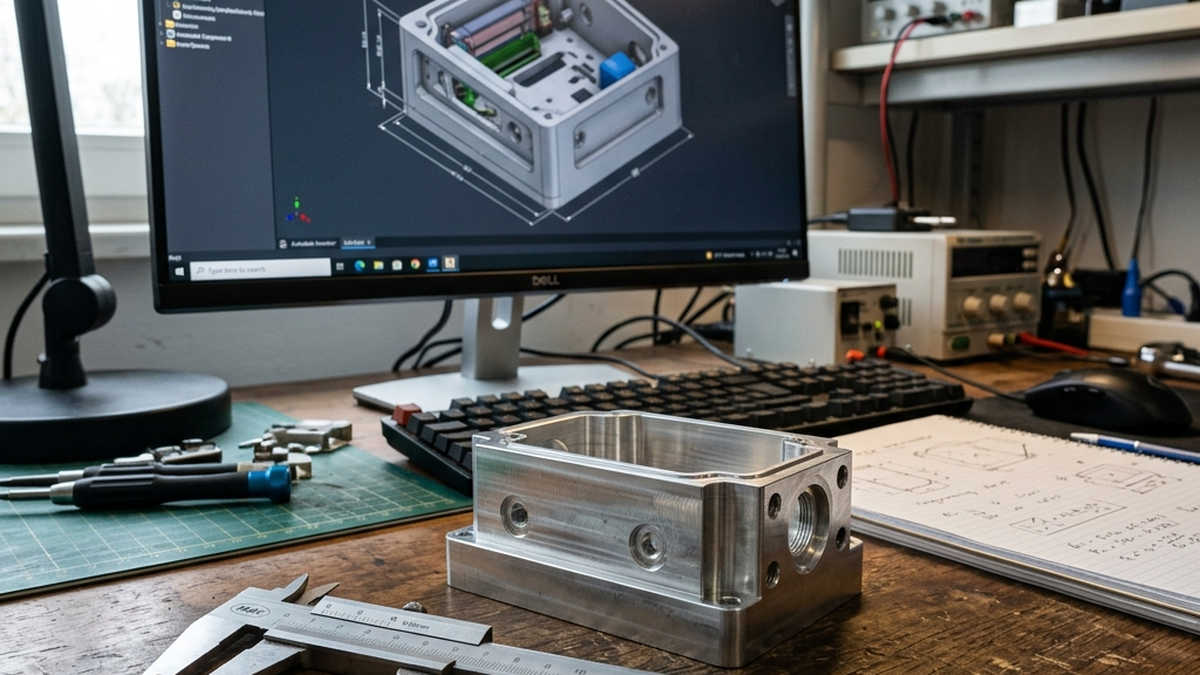
Type I: Chromic Acid Anodize
Type I is the thinnest anodize. Chromic acid anodizing builds an oxide coating just 0.00002-0.0001 inches thick on the aluminum surface. Every aluminum alloy has a natural oxide layer, but this process increases the thickness well beyond what forms on its own. The resulting coating is soft and provides minimal wear resistance.
So why use it? Type I is the best choice when you can't afford any dimensional change. It's also the safest for fatigue-critical parts because the thin layer doesn't reduce fatigue strength.
- Thickness: 0.00002-0.0001 inches
- Hardness: Low
- Colors: Clear or gray only
- Cost: $$$ (chromic acid is expensive and regulated)
- Best for: Aerospace fatigue-critical parts, bonding prep
Chromic acid contains hexavalent chromium, a known carcinogen. Many shops are phasing out Type I in favor of thin-film sulfuric alternatives. Check with your anodizer for availability.
Type II: Sulfuric Acid Anodize
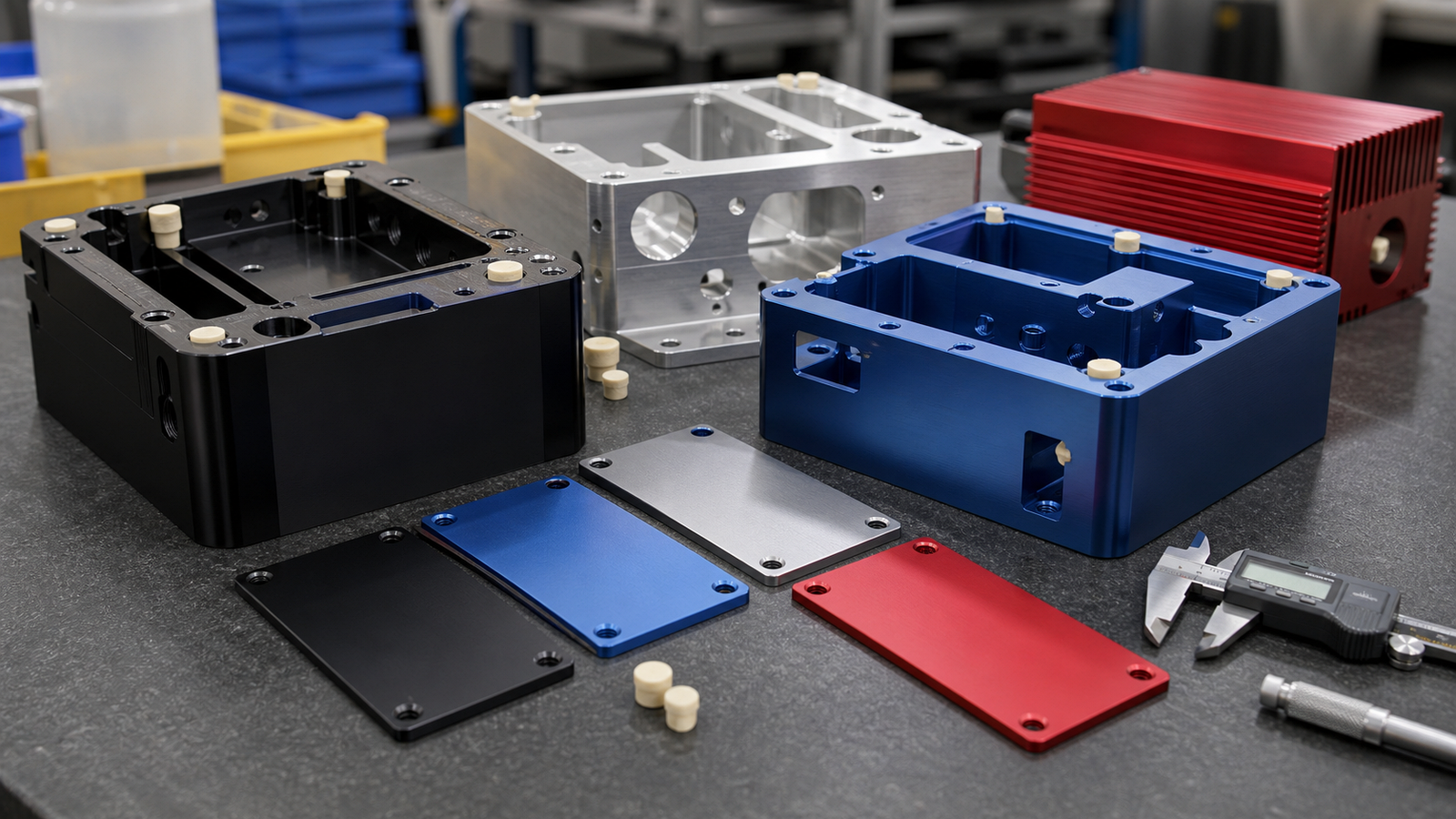
Type II is the most common anodizing type. This sulfuric acid anodize uses a dilute sulfuric acid bath and the anodizing produces an aluminum oxide coating 0.0002-0.001 inches thick. Type II anodizing is the finish you see on consumer electronics, enclosures and most commercial aluminum parts.
The oxide layer is porous before sealing. This is what allows dyeing -- the dye fills the pores, then sealing locks it in. That's why Type II comes in so many colors.
- Thickness: 0.0002-0.001 inches
- Hardness: 40-60 Rockwell C (on the oxide layer)
- Colors: Black, blue, red, gold, green, purple, clear and more
- Cost: $ (most affordable anodize)
- Corrosion resistance: Good (336-500 hrs salt spray)
- Best for: Consumer products, enclosures, cosmetic parts
Bead blast your parts before Type II anodizing. The matte texture hides minor surface defects and gives a more even color. This is the standard combo for aluminum consumer products.
Type III: Hard Coat Anodize
Type III is the thick, hard version. It uses the same sulfuric acid bath but at lower temperatures and higher voltage. The result is an oxide coating 0.001-0.003 inches thick with serious wear resistance and abrasion resistance.
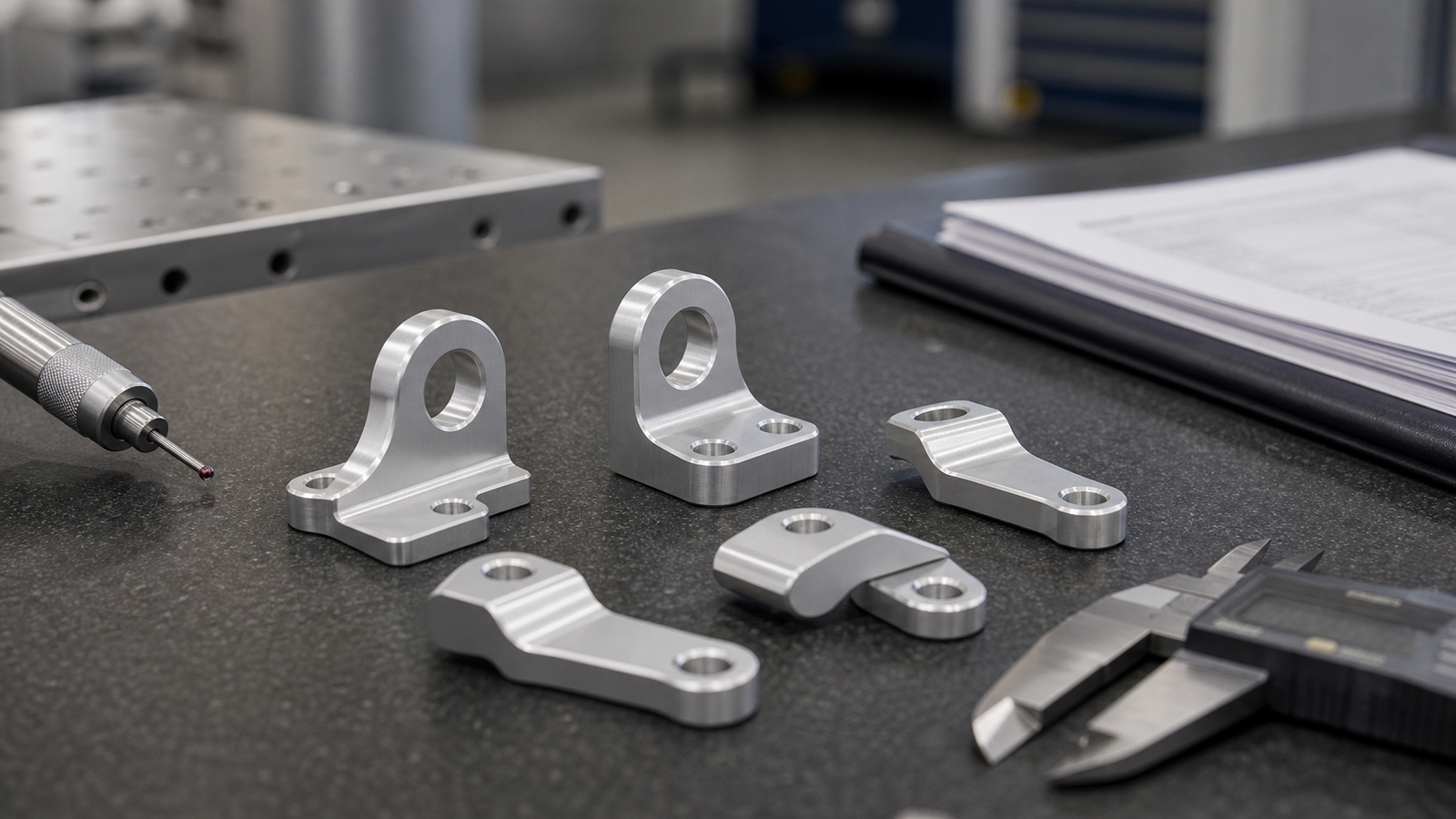
Hard anodized aluminum is used where parts slide against each other, get hit, or live in harsh environments. Aerospace, defense and industrial parts often call for Type III when they need maximum corrosion resistance and durability.
- Thickness: 0.001-0.003 inches
- Hardness: 60-70 Rockwell C
- Colors: Black, dark gray, dark bronze, natural
- Cost: $$ (more expensive than Type II)
- Best for: Wear surfaces, military parts, high-use mechanisms
Side-by-Side Comparison
| Property | Type I | Type II | Type III |
|---|---|---|---|
| Acid | Chromic | Sulfuric | Sulfuric |
| Thickness | 0.00002-0.0001" | 0.0002-0.001" | 0.001-0.003" |
| Hardness | Low | 40-60 HRC | 60-70 HRC |
| Wear Resistance | Minimal | Moderate | Excellent |
| Corrosion (Salt Spray) | 168-336 hrs | 336-500 hrs | 1,000+ hrs |
| Color Options | Clear, gray | Many colors | Black, dark gray |
| Dimensional Growth | ~0.00005"/side | ~0.0002"/side | ~0.001"/side |
| Fatigue Impact | Minimal | Moderate | Significant |
| Cost | $$$ | $ | $$ |
MIL-A-8625 Quick Reference
MIL-A-8625 is the military standard for anodizing. If your drawing calls it out, here's what the callout means.
- Type I: Chromic acid anodize
- Type IB: Low-voltage chromic acid (alternative to Type I)
- Type IC: Non-chromic substitute for Type I (environmentally friendly)
- Type II: Conventional sulfuric acid anodize (MIL-A-8625 Type II)
- Type IIB: Thin-film sulfuric (alternative to Type I)
- Type III: Hard coat anodize
Classes define dye status:
- Class 1: Non-dyed (clear or natural)
- Class 2: Dyed (colored)
A typical callout looks like: "Anodize per MIL-A-8625, Type II, Class 2, Black." This means sulfuric acid anodize, dyed black.
Color Options by Type
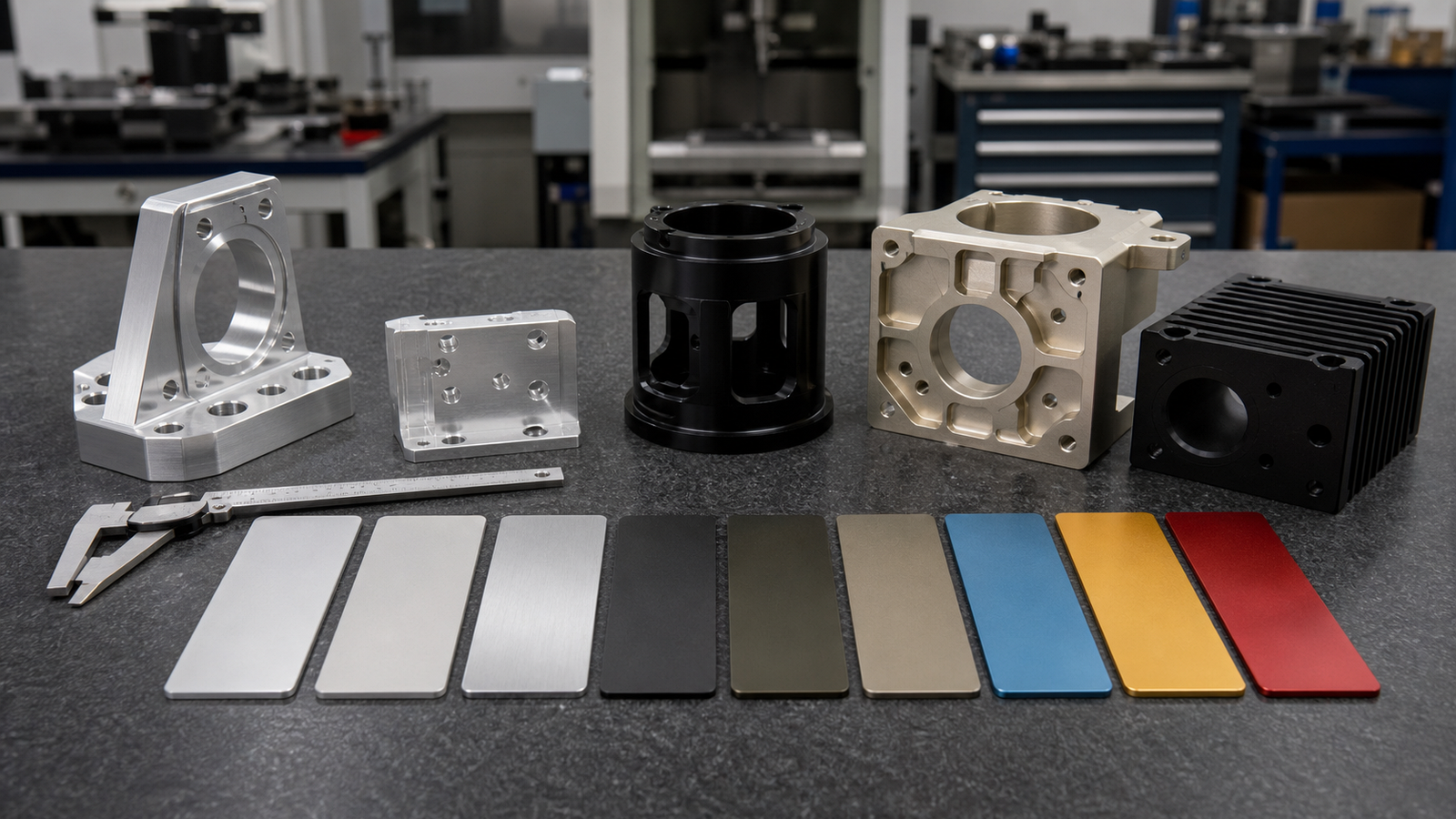
Type II anodizing gives you the most color choices. The porous oxide coating absorbs dye well, which is why anodized aluminum parts come in so many options. Standard colors include:
- Black (most popular)
- Blue
- Red
- Gold / champagne
- Green
- Purple
- Orange
- Clear (undyed)
Type III colors are limited. The thicker, denser oxide doesn't absorb dye as well. You'll typically see:
- Black (most common)
- Dark gray / charcoal
- Dark bronze
- Natural (olive / dark tan)
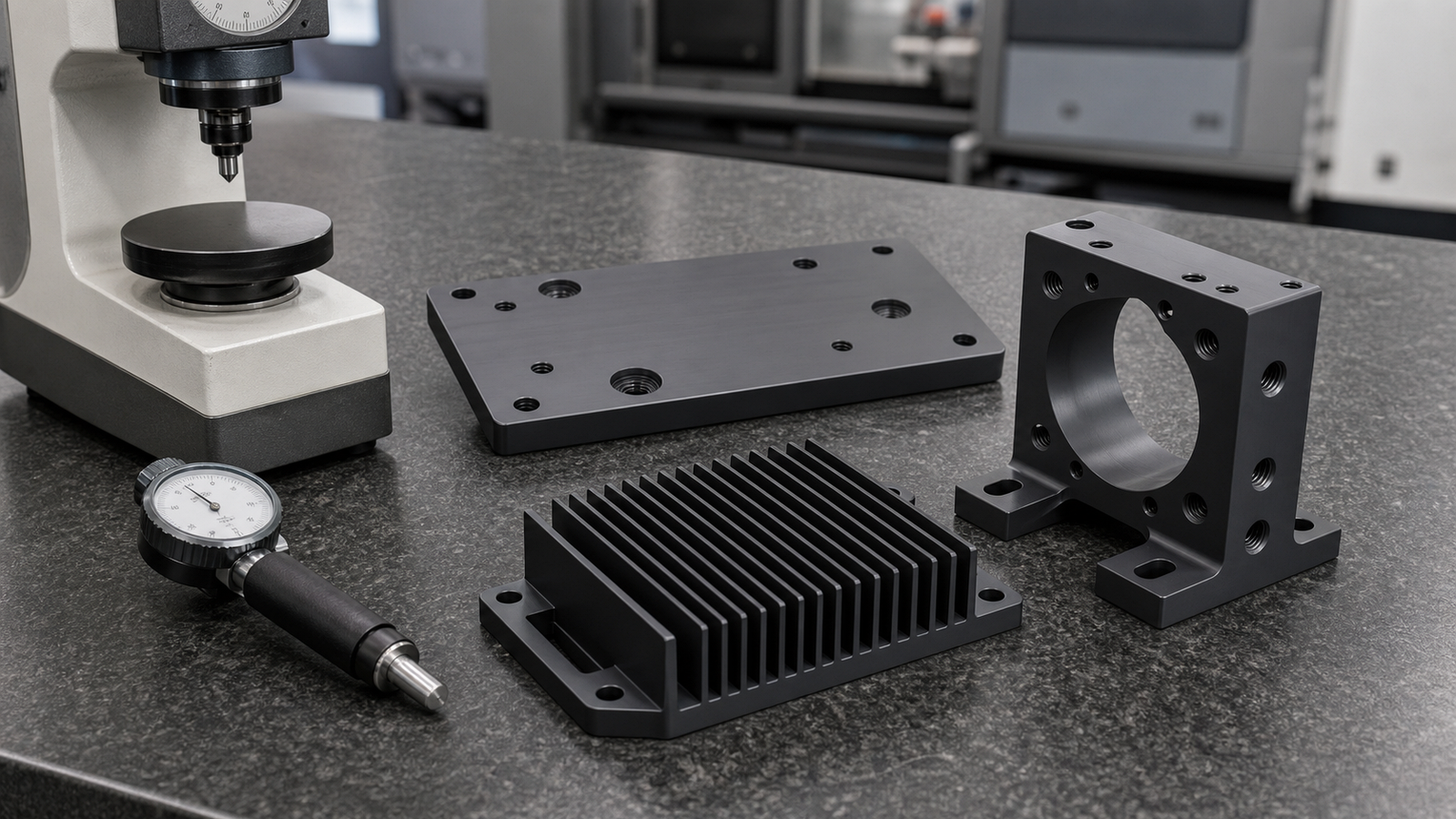
Color consistency depends on the alloy. 6061 and 5052 give the most even colors. 7075 can shift slightly darker. 2024 often turns yellowish. If color match matters, use the same alloy across all parts.
Need help choosing? See our Surface Finish Buyer's Guide for a broader comparison of all finish types, or read about plating and coating options for non-aluminum metals.
Frequently Asked Questions
What is the difference between Type II and Type III anodizing?
Type II anodize is thinner (0.0002-0.001 inches) and comes in many colors. Type III is thicker (0.001-0.003 inches), much harder and limited to dark colors. Type II anodizing is best for cosmetic aluminum parts with moderate corrosion resistance needs. Type III is for applications demanding maximum wear resistance and abrasion resistance.
Can you anodize any aluminum alloy?
Most alloys can be anodized, but results vary. 6061 and 7075 work great. 2024 may show yellowish tints. Cast alloys like A380 give uneven finishes. High-silicon alloys give poor results.
What is MIL-A-8625?
It's the US military specification for anodizing aluminum. It defines Types I, II and III, plus Class 1 (undyed) and Class 2 (dyed). Aerospace and defense drawings commonly reference this spec.
Does anodizing change part dimensions?
Yes. The anodizing process grows the aluminum oxide layer about 50% inward and 50% outward from the original surface. Type II adds roughly 0.0002 inches per side. Type III adds roughly 0.001 inches per side. Account for this dimensional growth on tight-tolerance features.
What colors are available for anodizing?
Type II offers many colors: black, blue, red, gold, green, purple, orange and clear. Type III is limited to black, dark gray, dark bronze, or natural. Read our full finishing options guide for more details.