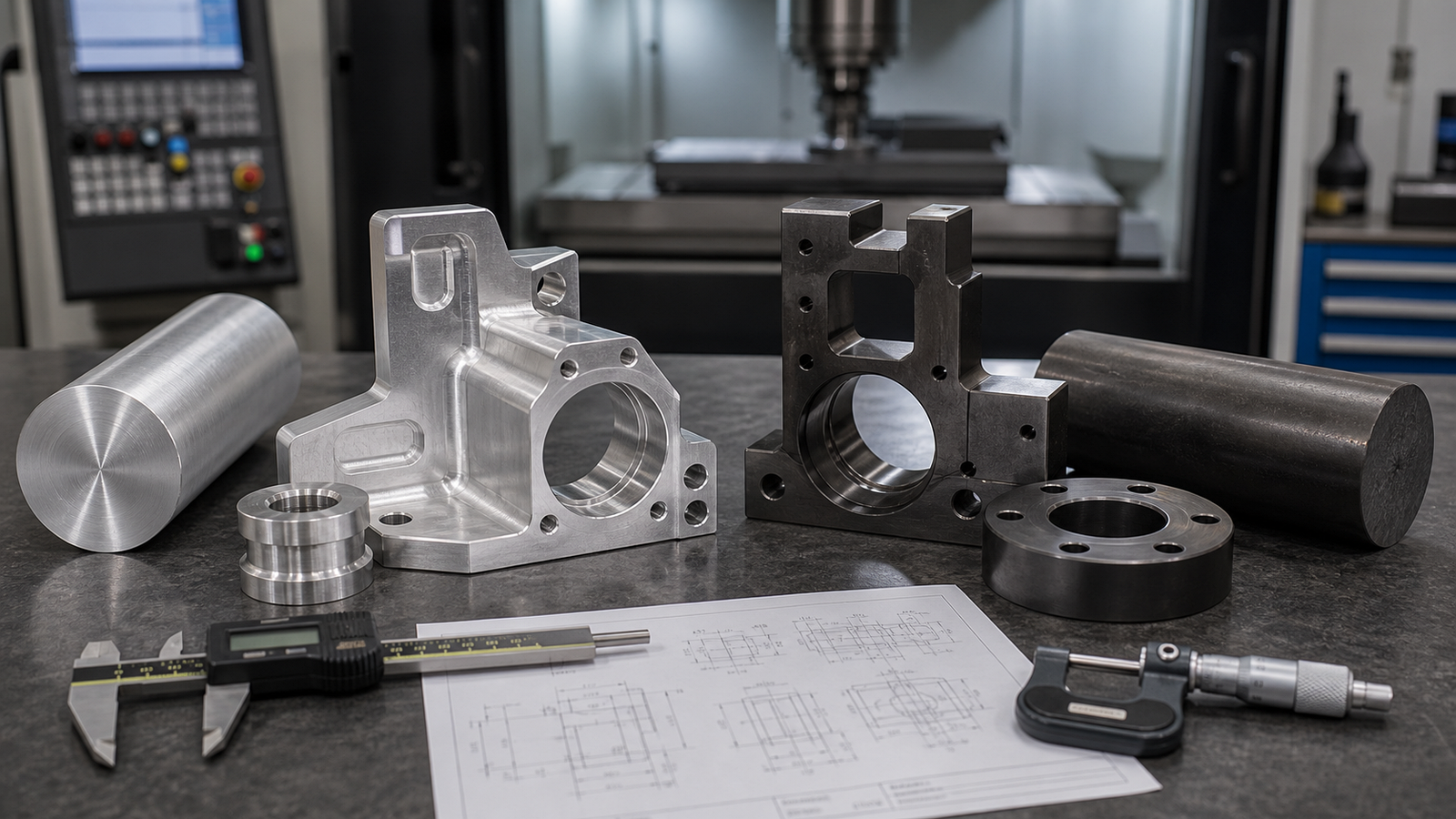
Quick Comparison: Aluminum vs Steel
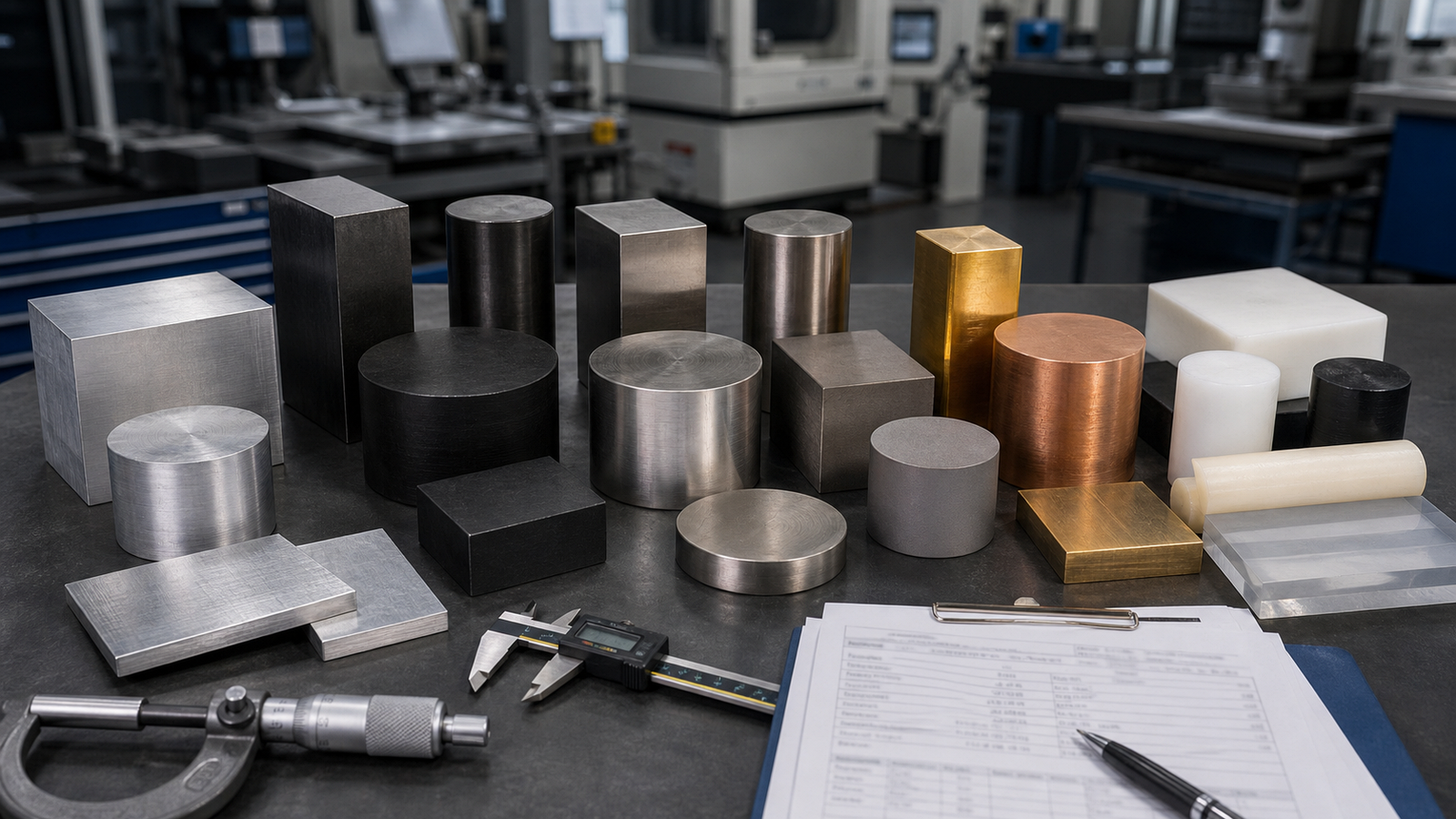
Aluminum and steel are the two most common metals in CNC machining. Both work well, but they shine in different situations. Here is a side-by-side look at the key differences.
| Property | Aluminum (6061-T6) | Carbon Steel (1018) | Stainless Steel (304) |
|---|---|---|---|
| Density | 0.098 lb/in³ | 0.284 lb/in³ | 0.289 lb/in³ |
| Tensile Strength | 45,000 PSI | 63,800 PSI | 73,200 PSI |
| Machinability Rating | Excellent (90%) | Good (70%) | Fair (45%) |
| Corrosion Resistance | Good (natural oxide) | Poor (rusts easily) | Excellent |
| Thermal Conductivity | 167 W/mK | 51 W/mK | 16 W/mK |
| Raw Material Cost | $$ | $ | $$$ |
| Machining Cost | Low | Medium | High |
Weight: Aluminum Is 3x Lighter
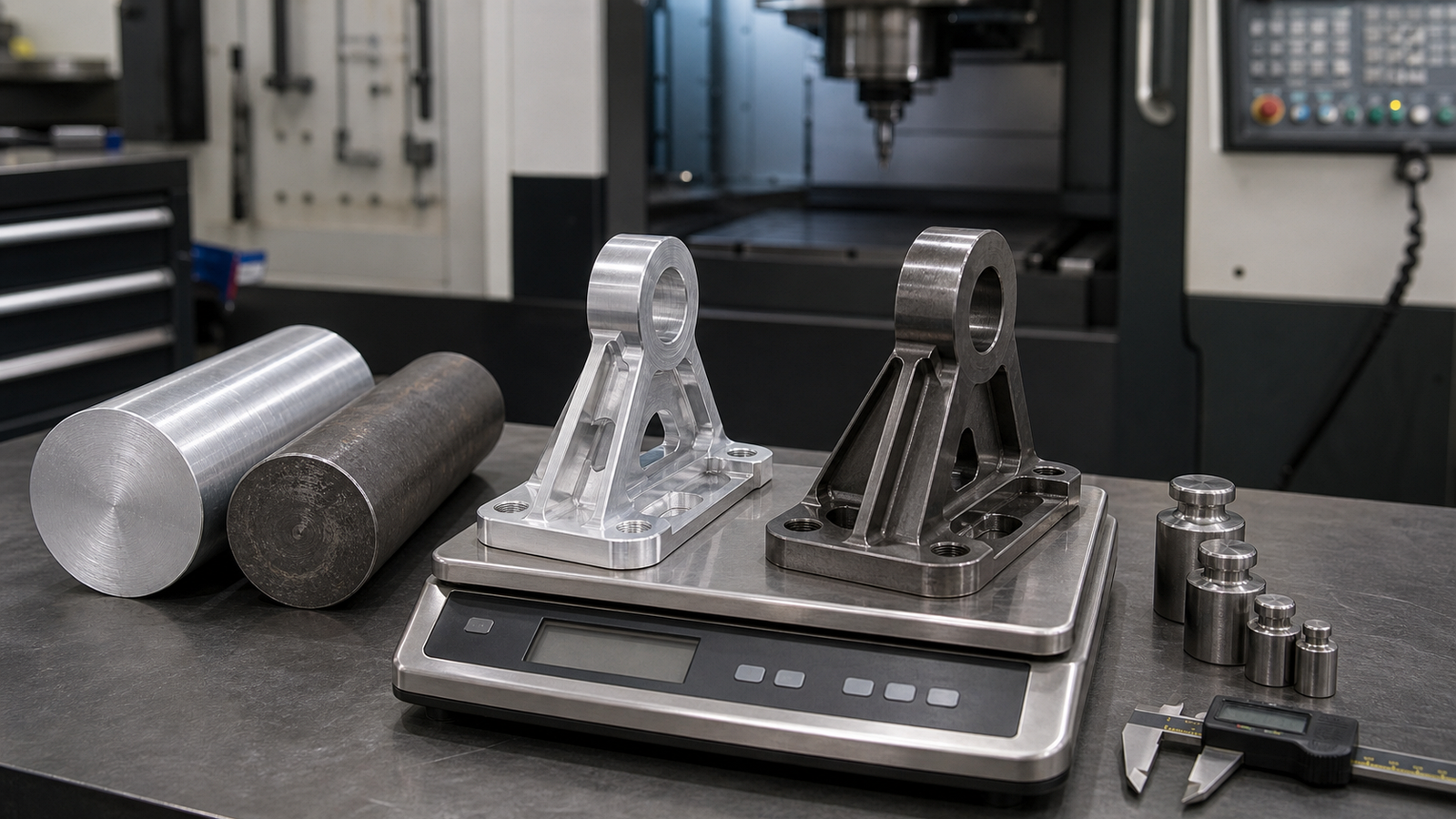
Aluminum weighs about one-third as much as steel. A part that weighs 3 pounds in steel weighs roughly 1 pound in aluminum. This matters a lot for aerospace, drones, robotics and handheld devices.
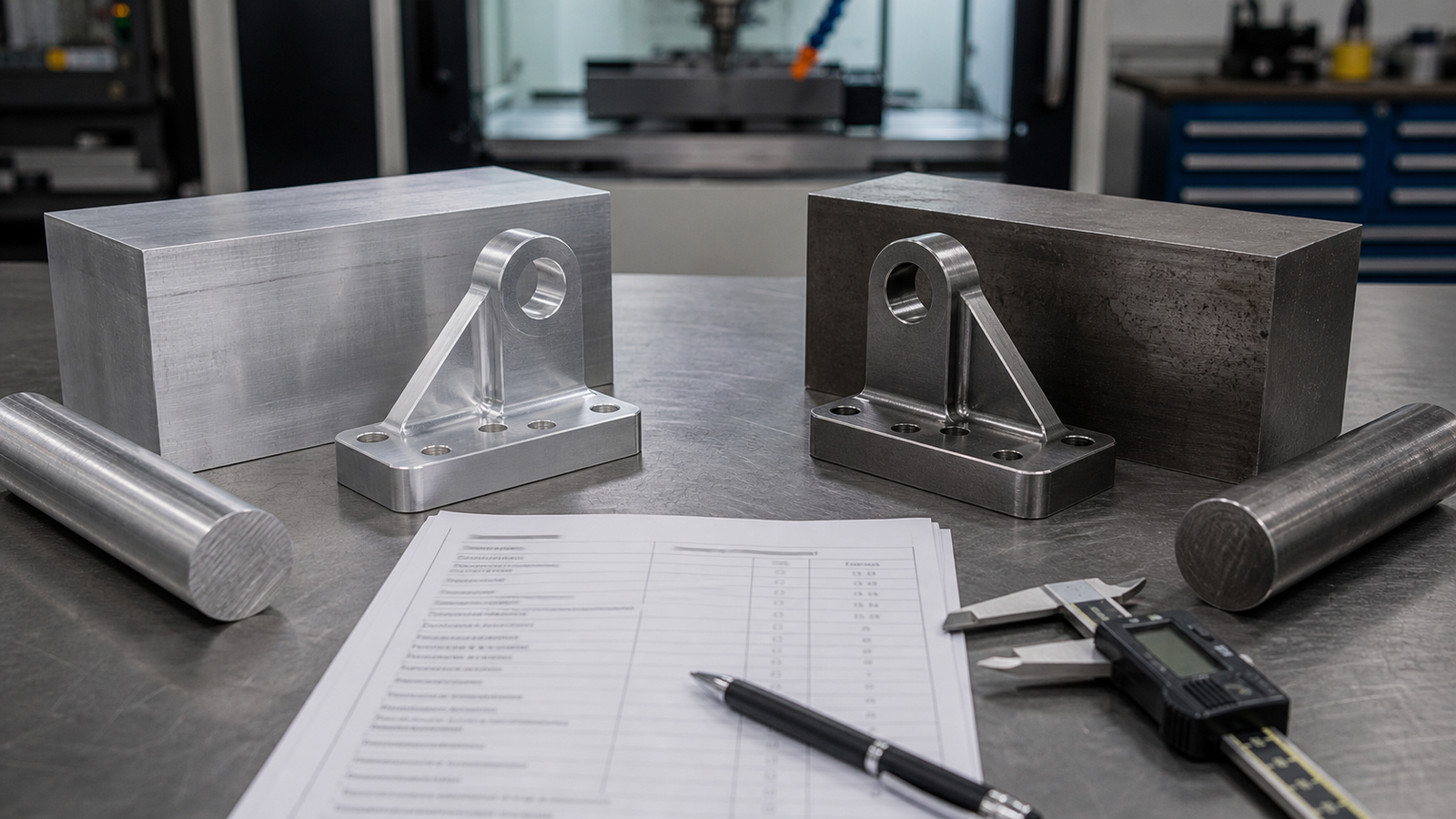
If your design needs to be light, aluminum wins every time. You can also make thicker walls and ribs without adding much weight. That gives you more design freedom.
Strength: Steel Is Stronger Overall
Steel beats aluminum in raw tensile and yield strength. Even mild steel (1018) is about 40% stronger than 6061-T6 aluminum. Alloy steels like 4140 and 4340 go much higher.
But strength is not the whole picture. When you compare strength-to-weight ratio, aluminum often wins. A 6061-T6 part can be just as strong as a steel part if you design it with thicker walls. And it still weighs less.
Need high strength with low weight? Try 7075-T6 aluminum. It has a tensile strength of 83,000 PSI, close to many steels, at a fraction of the weight.
Machinability: Aluminum Is Faster and Easier
Aluminum machines 3 to 5 times faster than steel. You can run higher spindle speeds and feed rates. Tools last longer. Cycle times drop. That means lower per-part costs.
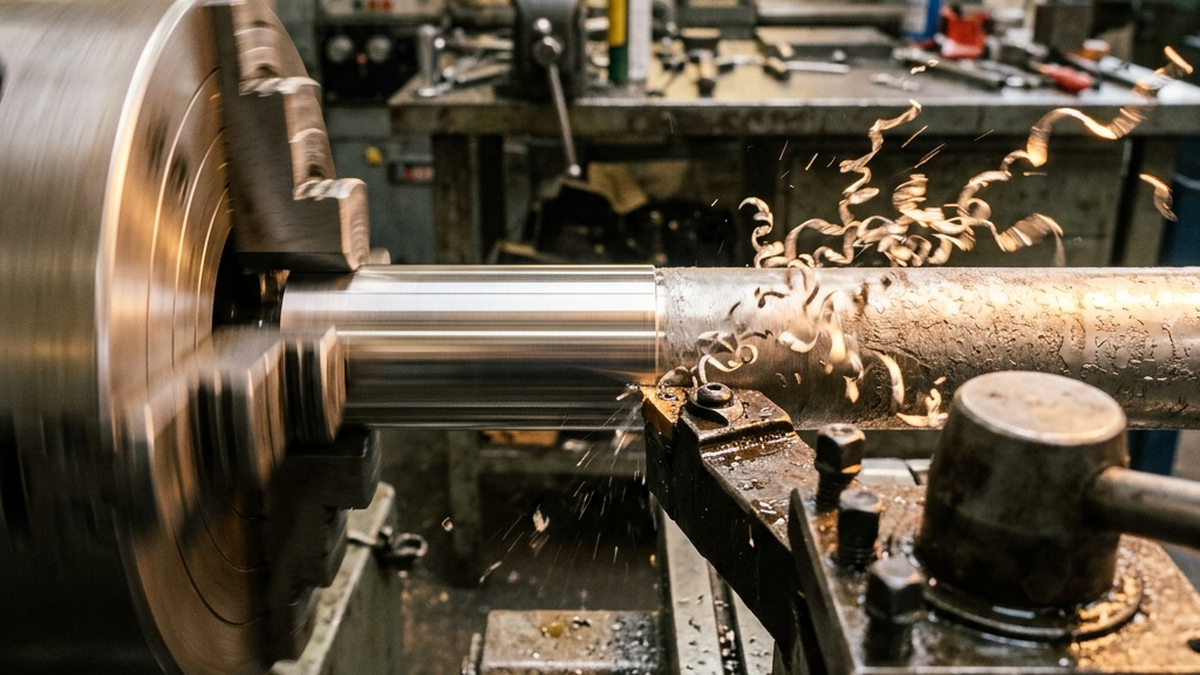
Steel is harder on tools. It generates more heat and needs slower speeds. Stainless steel is even tougher. It work-hardens quickly and eats through end mills if you are not careful.
- Aluminum: 10,000+ RPM spindle speeds, aggressive feed rates
- Carbon steel: 3,000-5,000 RPM, moderate feed rates
- Stainless steel: 1,500-3,000 RPM, conservative feed rates
Cost: Aluminum Wins on Total Part Cost
Steel raw material is cheaper per pound. But machining cost is where the math changes. Aluminum's faster cycle times and longer tool life usually make it cheaper overall.
| Cost Factor | Aluminum | Steel |
|---|---|---|
| Raw material per lb | $2.50 - $4.00 | $0.50 - $1.50 |
| Cycle time (per part) | Shorter (3-5x faster) | Longer |
| Tool wear | Low | Medium to high |
| Finishing costs | Anodize ($) | Plate or paint ($$) |
| Total part cost | Usually lower | Usually higher |
Do not choose steel just because the raw material is cheaper. Always compare total part cost, including machining time, tool wear and finishing. Get a quote for both and see the real difference.
Corrosion Resistance: Aluminum Has the Edge
Aluminum forms a thin oxide layer that protects it from rust. It handles outdoor use, moisture and mild chemicals without coating. Anodizing makes it even tougher.
Carbon steel rusts fast without protection. You need plating, painting, or powder coating. Stainless steel resists corrosion well, but costs more than both carbon steel and aluminum.
Thermal Conductivity: Aluminum Moves Heat Better
Aluminum conducts heat about 3 times better than carbon steel and 10 times better than stainless steel. This makes it the go-to choice for heat sinks, LED housings and electronics enclosures.
If your part needs to move heat away from a component, aluminum is your best option. It is also easier to machine thin fins and complex cooling channels.
When to Choose Aluminum
Go with aluminum when your project needs any of these things:
- Light weight -- drones, aerospace, robotics, handheld devices
- Fast turnaround -- quicker machining means faster delivery
- Heat management -- heat sinks, enclosures, thermal plates
- Corrosion resistance -- outdoor parts, marine, food equipment
- Low cost per part -- especially at medium to high volumes
- Cosmetic finish -- anodizing gives clean, durable colors
Popular aluminum alloys for CNC: 6061-T6, 7075-T6, 2024-T3 and 5052.
When to Choose Steel
Steel is the right call when you need:
- High strength -- structural parts, load-bearing brackets
- Wear resistance -- gears, shafts, bushings, pins
- Hardness -- parts that need heat treating above 50 HRC
- High temperature use -- exhaust, engine, furnace parts
- Impact resistance -- parts that take repeated hits
- Stiffness -- steel is 3x stiffer than aluminum
Popular steels for CNC: 1018, 1045, 4140, 4340 and 303/304/316 stainless.
Frequently Asked Questions
Is aluminum cheaper than steel for CNC machining?
Aluminum raw material costs more per pound than mild steel. But aluminum machines 3-5 times faster, which cuts labor and tool costs. For most parts, aluminum ends up cheaper overall because of faster cycle times and less tool wear.
Which is stronger for CNC parts, aluminum or steel?
Steel is stronger than aluminum in tensile and yield strength. 4140 steel has a tensile strength of about 95,000 PSI versus 45,000 PSI for 6061-T6 aluminum. However, aluminum has a better strength-to-weight ratio, making it ideal where weight savings matter.
Does aluminum rust like steel?
Aluminum does not rust. It forms a natural oxide layer that protects it from corrosion. Carbon steel rusts without a coating or plating. Stainless steel resists corrosion but costs more than carbon steel.
When should I choose steel over aluminum?
Choose steel when you need high strength, wear resistance, or hardness. Steel works best for gears, shafts, heavy-duty brackets and parts that see repeated impact or abrasion. It is also better for high-temperature applications above 300 degrees Fahrenheit.
Can you CNC machine both aluminum and steel on the same machine?
Yes. Most CNC mills and lathes can machine both aluminum and steel. The main difference is tooling, speeds and feeds. Aluminum uses higher spindle speeds and feed rates. Steel needs slower speeds, more rigid setups and different tool coatings.
Not sure which material fits your project? Upload your CAD file and our team will recommend the best option. We offer free DFM reviews on every quote.