Why the Right Shop Matters
Choosing a CNC machine shop is a decision that shows up on every drawing you release, every PO you cut and every late-night call when a delivery slips. Most buyers compare two or three quotes side by side and pick the lowest price. That works for a one-off prototype. It rarely works for a product that has to ship to customers, pass an audit, or scale from ten units to a thousand.
The right shop is the one whose daily work looks like your part, same materials, same tolerance class, same volume tier, same industry. The wrong shop can hit your specs on the first try and quietly drift on the second order, leaving you holding rejects on a tight delivery schedule. This guide gives you a six-step framework for choosing a CNC machine shop and avoiding that drift. It pulls together what we tell new aerospace, medical and hardware startup customers when they ask how to pick the right partner the first time.
The framework moves in order: define needs, build a shortlist, send a representative RFQ, evaluate, trial, then commit. Most buyers skip directly from quote to PO. That is where bad supplier matches happen. If you want the deeper supporting reads, see our companion posts on how to evaluate CNC machine shops and what to look for in a CNC machine shop.
Step 1: Define Your Requirements Before You Search
Before you send a single RFQ, write down what your part actually needs. This is the single biggest lever on supplier fit and the one buyers skip most often. Engineers tend to start with a CAD file and a list of shops; a better starting point is a one-page requirements brief.
Capture the following before you contact anyone:
- Volume tier. One-off prototype, 5–25 small batch, 100–500 pilot, 1,000+ production. Shops are tuned for specific tiers.
- Tolerance class. General CNC tolerance (±0.005″), precision (±0.001″), or ultra-precision (±0.0002″ or tighter). Each step up shrinks the supplier pool.
- Materials. Common 6061-T6 aluminum and 304 stainless are universal. Inconel, Ti-6Al-4V, Invar and PEEK narrow the pool fast.
- Certifications and compliance. ISO 9001, AS9100D, ISO 13485, NADCAP, ITAR registration, DFARS-compliant material sourcing. Decide which are mandatory and which are nice-to-have.
- Inspection deliverables. Basic in-process check, First Article Inspection Report (FAIR), CMM report on every part, or full PPAP-style documentation.
- Lead time. Standard (2–3 weeks), expedited (3–5 days), or rush (under 72 hours).
- Budget per part and total program. A rough target so you can spot quotes that are too high or suspiciously low.
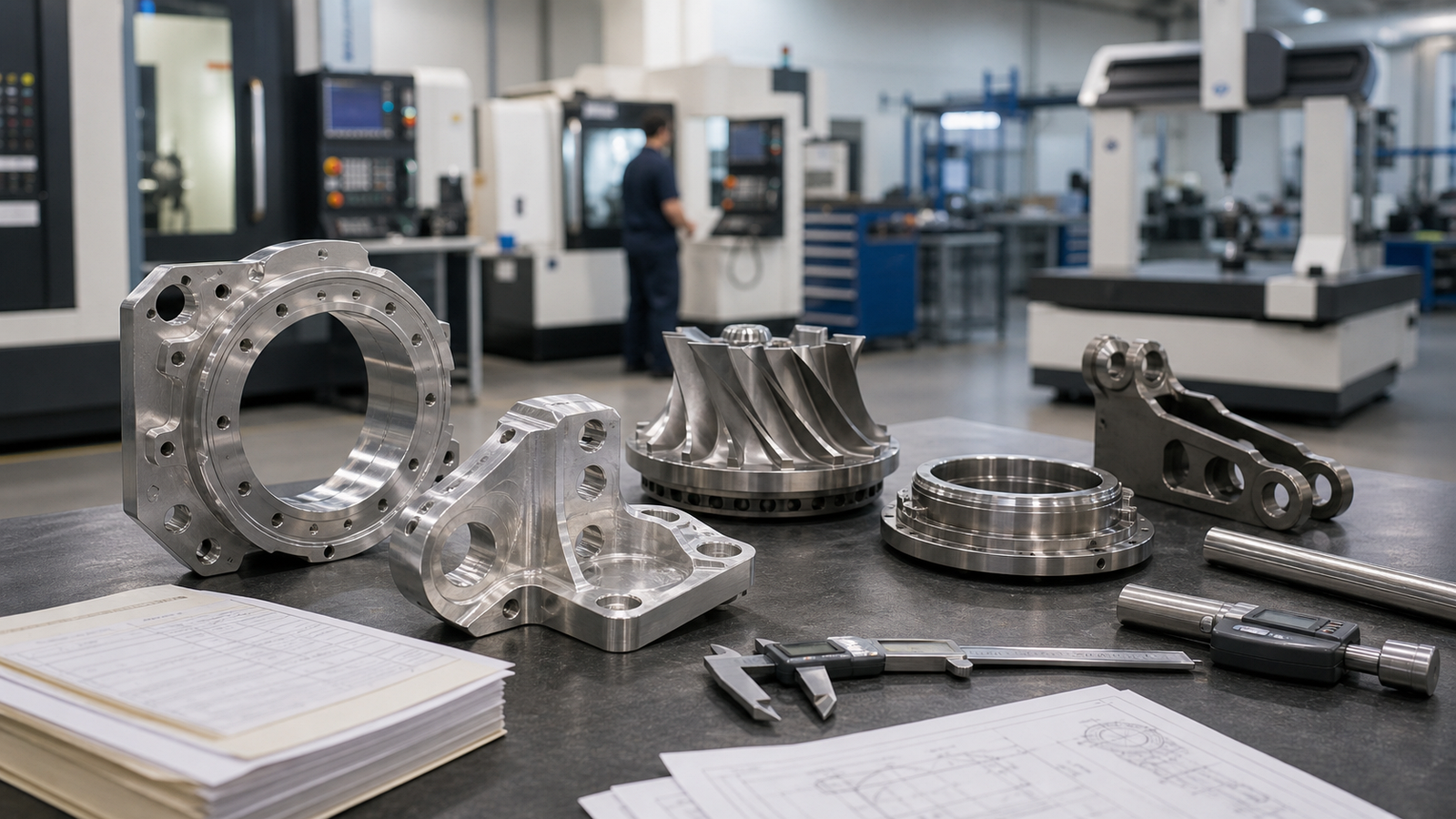
This brief becomes your filter. A shop that machines mostly 6061 brackets at ±0.005″ tolerances is not your shop if your part is titanium with ±0.0005″ bores, even if their quote comes in cheapest. Knowing this in advance saves weeks of false starts.
Step 2: Build a Shortlist of Three to Five Shops
With your brief in hand, build a shortlist. Three to five shops is the right number, fewer and you cannot compare; more and the RFQ process bogs down. Sources worth checking include direct shop websites (look for case studies in your industry), industry directories like ThomasNet, referrals from peers and your existing supplier base. Marketplaces like Xometry and Protolabs are useful for fast prototype quotes but behave differently than direct shops; they broker work to a network of vendors, so part-to-part consistency between reorders is harder to control.
When you scan a shop's website, ask: do they show machines, parts, certifications and named people? A shop that publishes its capabilities, its inspection equipment and the founders' names is signaling accountability. A shop with only stock photos and an order form is signaling that they are likely brokering. For prototype-heavy buyers, a direct shop with instant CAD-to-quote, like RivCut's CNC milling line, gives you the speed of a marketplace with the accountability of a single supplier. For background on the distinction, see our breakdown of machine shop vs job shop.
Step 3: Send a Representative RFQ
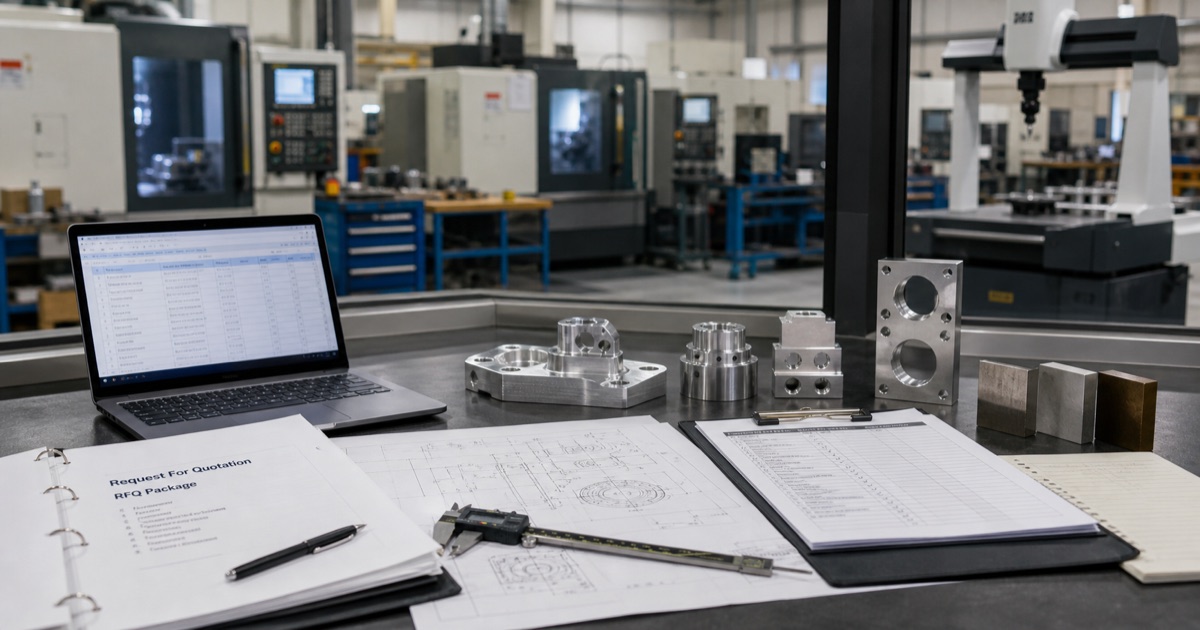
This is where most comparisons go wrong. Buyers send a partial CAD file, no tolerances and ask "what would this cost?" Then they wonder why three quotes vary by 4×. A representative RFQ packet means sending the same complete package to every shop on your shortlist.
Include the following in every RFQ:
- STEP file plus a 2D PDF drawing with critical dimensions, tolerance callouts and GD&T where it matters. See our drawing callouts guide for what good drawings look like.
- Material specification including grade, temper and any mill cert requirements.
- Quantity tiers (e.g., 1, 10, 50, 250). Asking for price breaks tells you how the shop scales.
- Required surface finish and any secondary processes (anodize, passivate, black oxide, plating).
- Lead time expectation and target delivery date.
- Inspection and documentation requirements (FAIR? CMM? Cert of Conformance?).
- Any compliance flags (ITAR, DFARS, REACH, RoHS).
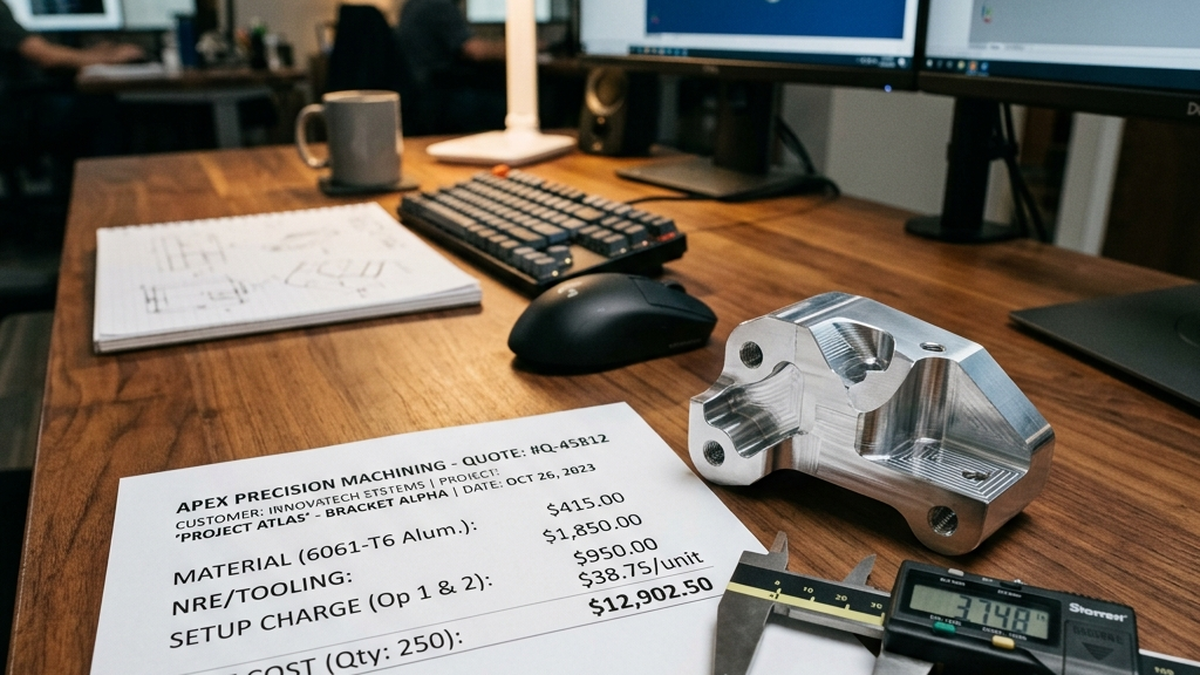
Once quotes come back, normalize them. Pull each one into a spreadsheet with the same columns: setup/NRE, material, machining, finish, inspection, lead time, tooling. The shop with the lowest top-line number is not always the cheapest once you add what they left out. Our companion guide on how to read CNC shop quotes walks through the line items in detail.
Step 4: Evaluate Capability, Quality & Communication
Price is a filter, not the answer. The shops that survive Step 3 should be evaluated on four dimensions. This is the precision-CNC-vendor evaluation most engineers actually need to do and it goes deeper than a quote comparison.
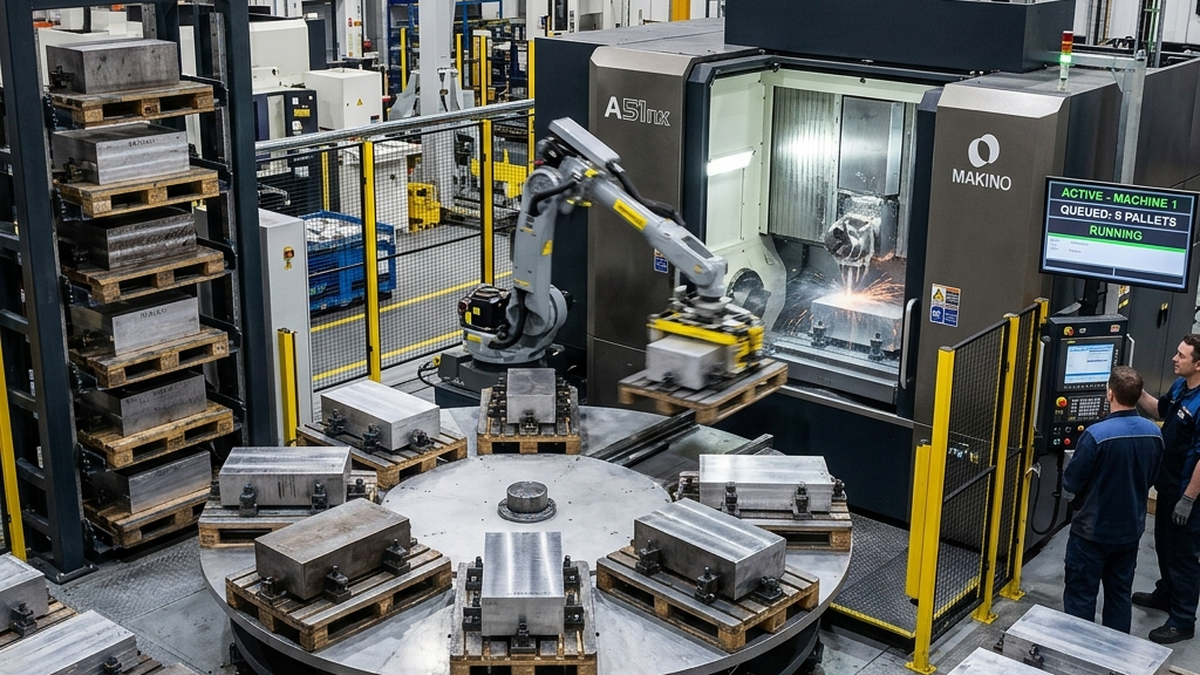
- Equipment match. Do they own the right machines for your part, 3-axis, 4-axis, 5-axis, Swiss, large-envelope, or live-tooling lathes? Ask for their machine list. A shop running mostly 3-axis VMCs will struggle with a complex 5-axis aerospace bracket.
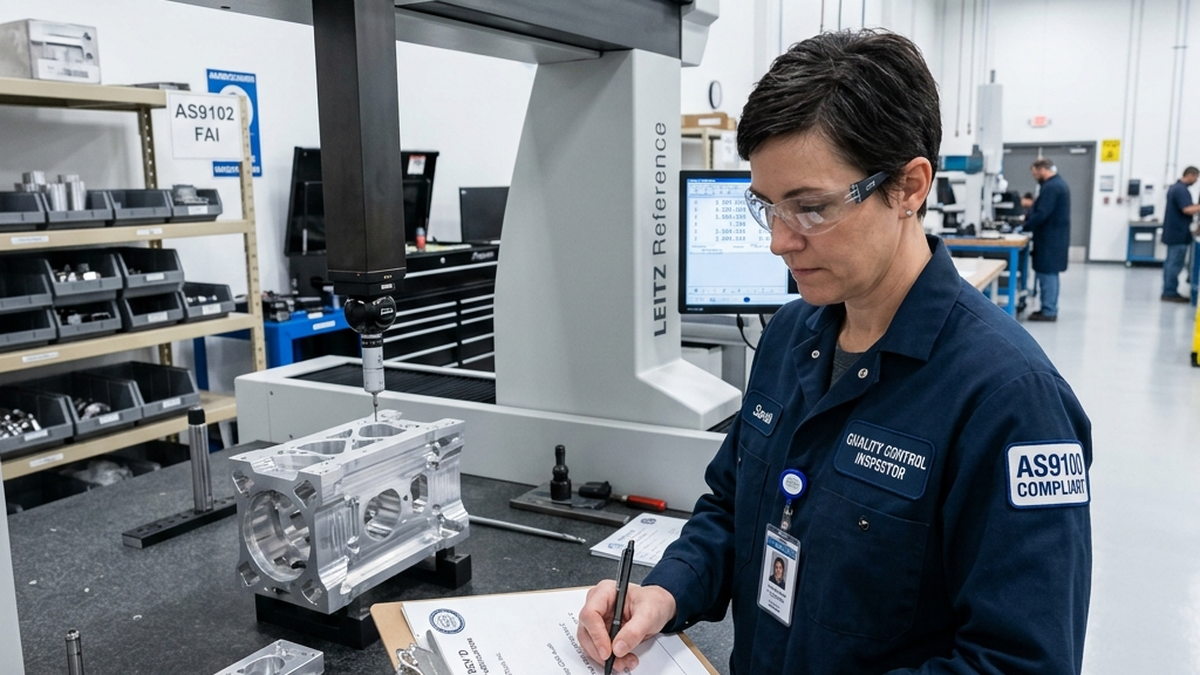
- Quality system. Look for the actual certificate, not just a logo. ISO 9001:2015 covers most industrial work. AS9100D is required for flight hardware. ISO 13485 is required for medical devices. NADCAP covers special processes like heat treat or NDT. Verify the certificate number with the registrar if it matters.
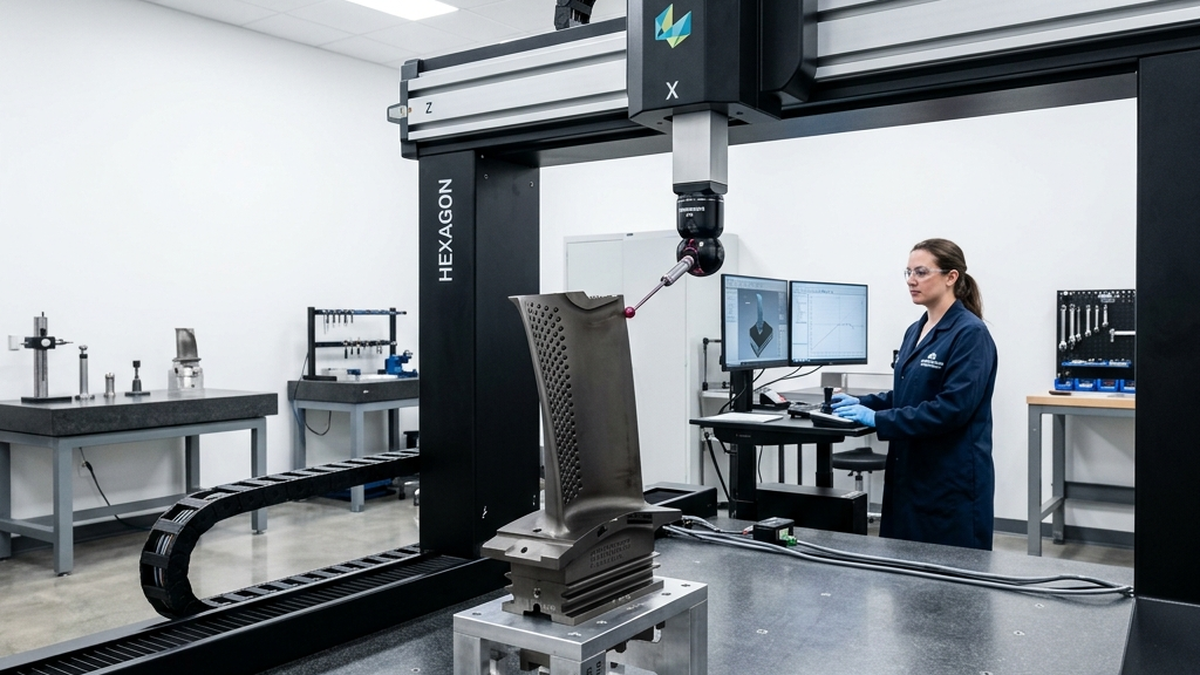
- Inspection capability. Ask what they own: CMM make and resolution, optical comparators, surface roughness gauges, hardness testers. Ask for a sample FAIR, a real one, with measured values next to print values. The format and clarity of that report tells you more than any sales call.
- Communication quality. How fast did they respond to your RFQ? Did they catch DFM issues on your drawing? Did they ask smart clarifying questions? Did a named engineer answer the phone? Communication during the RFQ is the best predictor of communication when something goes wrong on the floor.
If you are evaluating a CNC machine shop for aerospace parts specifically, weight quality system and inspection capability heavily. A shop with the perfect equipment but no AS9100D certificate is disqualified for flight hardware regardless of price. The same logic applies to medical (ISO 13485) and defense (ITAR registration, DFARS-compliant sourcing).
Request a sample First Article Inspection Report from one of their previous jobs (with the customer name redacted). A good shop has these ready. A weak shop will hesitate, send something hand-written, or send only a Certificate of Conformance with no measured values. The FAIR you receive is the FAIR you will get on your part.
Step 5: Run a Trial Order Before Committing
Once you have a top choice, run a trial. A trial is a small order, one to ten parts, that lets you verify the shop in production, not just in pre-sales conversation. Pick a part that is representative of your real work; do not give them an easy sample. The goal is to see how they handle a realistic challenge before the program is at scale.
What to watch for during the trial:
- Did parts arrive on the promised date? Lead-time slippage on a first order almost always grows on the second.
- Does the inspection documentation match what you specified? Is the FAIR readable, complete and signed?
- Did they flag any DFM issues before machining started, or did they cut what you drew without question? Both can be problematic.
- How did packaging arrive? Sloppy packaging suggests a sloppy floor.
- If anything went wrong, how did they handle it? Responsive recovery from a defect is a better signal than a flawless first order.
A clean trial order is permission to commit. A messy trial order is permission to go back to Step 4 and pick your second choice.
Step 6: Choose by Use Case
The framework above applies to every CNC shop selection, but the weights change by use case. Use the section below as a quick reference for the question you are most likely searching for.
Best CNC shop for small batch prototype runs. Prioritize instant quoting, lead time and DFM feedback. A direct shop with online CAD-to-quote and a 3–7 day lead window beats a traditional shop running on email and PDFs. Cert requirements are usually lighter at the prototype stage. RivCut's rapid prototyping line is built around this profile.
Aerospace and defense parts. Prioritize AS9100D certification, 5-axis capability, full material traceability, ITAR registration and CMM inspection on every part. Price is secondary to documentation and process control. Walk away from any shop that cannot produce a current AS9100D certificate. See our aerospace machine shop guide for the deeper evaluation.
Medical device parts. ISO 13485 is the baseline. Biocompatible material handling, lot traceability and clean assembly environments matter. Ask about their experience with passivation, electropolishing and ASTM F136 / F1295 titanium for implants.
Production runs and recurring orders. Capacity, repeatability and inventory programs matter more than instant quoting. Ask about Kanban, blanket POs and how they handle revision changes mid-program. See our prototype vs production machining guide for the transition criteria.
Questions to Ask a CNC Machining Supplier Before Ordering
These are the questions that separate strong shops from weak ones. Send them in writing, not on a call, the written response shows you how they document things.
- Have you machined this material in this tolerance class before? Can you share examples?
- What machines and inspection equipment do you own? Is anything on this job outsourced?
- What is your typical lead time for a part like this, in this quantity?
- What certifications do you currently hold and can you send the actual certificates?
- How do you handle DFM feedback? Will you flag issues before you start cutting?
- What inspection deliverables come standard with my order and what is extra?
- What is your nonconformance process? If a part fails inspection, what happens?
- Are parts made in-house, or do you broker any portion of the work?
- Can you provide two or three reference customers in my industry?
- What happens to lead time and price if my quantity doubles? What about if I cut it in half?
Red Flags to Walk Away From
Some answers should end the conversation. If you encounter any of these, move on to the next shop on your list.
- "We're ISO compliant" without an actual certificate number you can verify.
- Quotes that come back significantly cheaper than every other quote with no explanation of how.
- No named engineer or owner you can speak to, only an order form or chat widget.
- Pushback when you ask for a sample FAIR or a list of inspection equipment.
- Lead time promises that are dramatically shorter than competitors for the same part.
- Vague answers about whether work is done in-house or brokered.
- No revision control discussion when you ask how they handle drawing updates.
CNC Machine Shop Selection Checklist for Engineers
Use this as a one-page checklist before you commit a PO.
- Requirements brief written and shared internally
- Shortlist of 3–5 shops built from direct websites, referrals and verified capabilities
- Same RFQ packet sent to every shortlisted shop (CAD + 2D drawing + tolerances + cert needs + qty tiers)
- Quotes normalized into a single comparison spreadsheet
- Equipment list verified against part requirements
- Certifications verified (certificate PDF, not just a claim)
- Sample FAIR reviewed
- Communication quality rated during RFQ phase
- Trial order placed before any production commitment
- Trial order evaluated on lead time, documentation, packaging and recovery
- Reference customers in your industry contacted
Walking this list before every program saves more money than any quote negotiation. The cost of switching suppliers mid-run, qualifying a backup, or scrapping a batch dwarfs the price difference between any two quotes you are likely to receive.
Frequently Asked Questions
What is the most important factor when choosing a CNC machine shop?
The match between your part requirements and the shop's day-to-day capability. A shop that machines your material, your tolerance class and your volume tier regularly will outperform a shop with better marketing but less experience in your specific use case. Price matters, but consistency and communication usually matter more over a full project.
How do I evaluate a CNC machine shop for aerospace parts?
Verify AS9100D certification (not just compliance), CMM inspection in-house, full material traceability with mill certs and ITAR registration if your parts are export-controlled. Ask for a sample First Article Inspection Report to see how they document measured values. Aerospace work also requires written process control, ask how they handle nonconforming parts and revision changes.
What questions should I ask a CNC machining supplier before ordering?
Ask whether they have machined your specific material before, what inspection equipment they own, what their typical lead time is for your part type, how they handle DFM feedback, what their first article inspection process looks like and whether parts are made in-house or brokered to a third party. Also ask for two or three reference customers in your industry.
Should I choose a CNC marketplace or a direct machine shop for prototype runs?
For small batch prototype runs, a direct machine shop usually beats a marketplace on quality, communication and DFM input. Marketplaces broker work to whichever shop accepts the job, so part-to-part consistency is lower across reorders. A direct shop with instant quoting gives you the speed of a marketplace and the accountability of a single supplier.
How do I know if a CNC shop is actually certified, not just claiming it?
Ask for the actual certificate as a PDF. Real ISO 9001 and AS9100D certificates list the registrar, certificate number, issue date and expiration date. You can also verify the certificate number directly with the registrar (TÜV, BSI, NQA, etc.). Many shops claim to be "ISO-compliant" without being certified, those terms are not the same.