Why Material Choice Matters
The material you pick affects everything. It changes the cost, lead time, strength, weight and finish of your part. Choose the wrong one and you waste time and money.
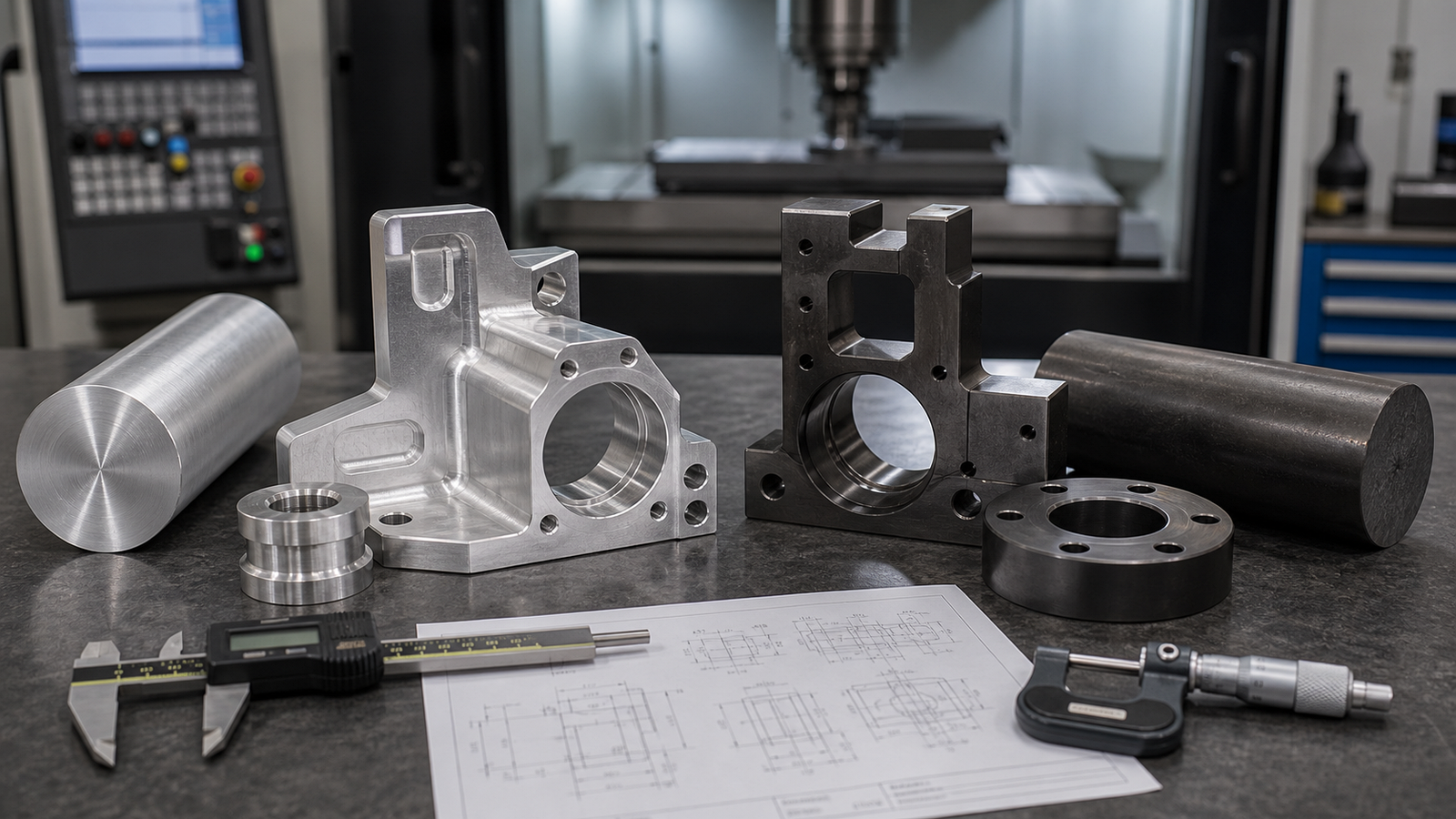
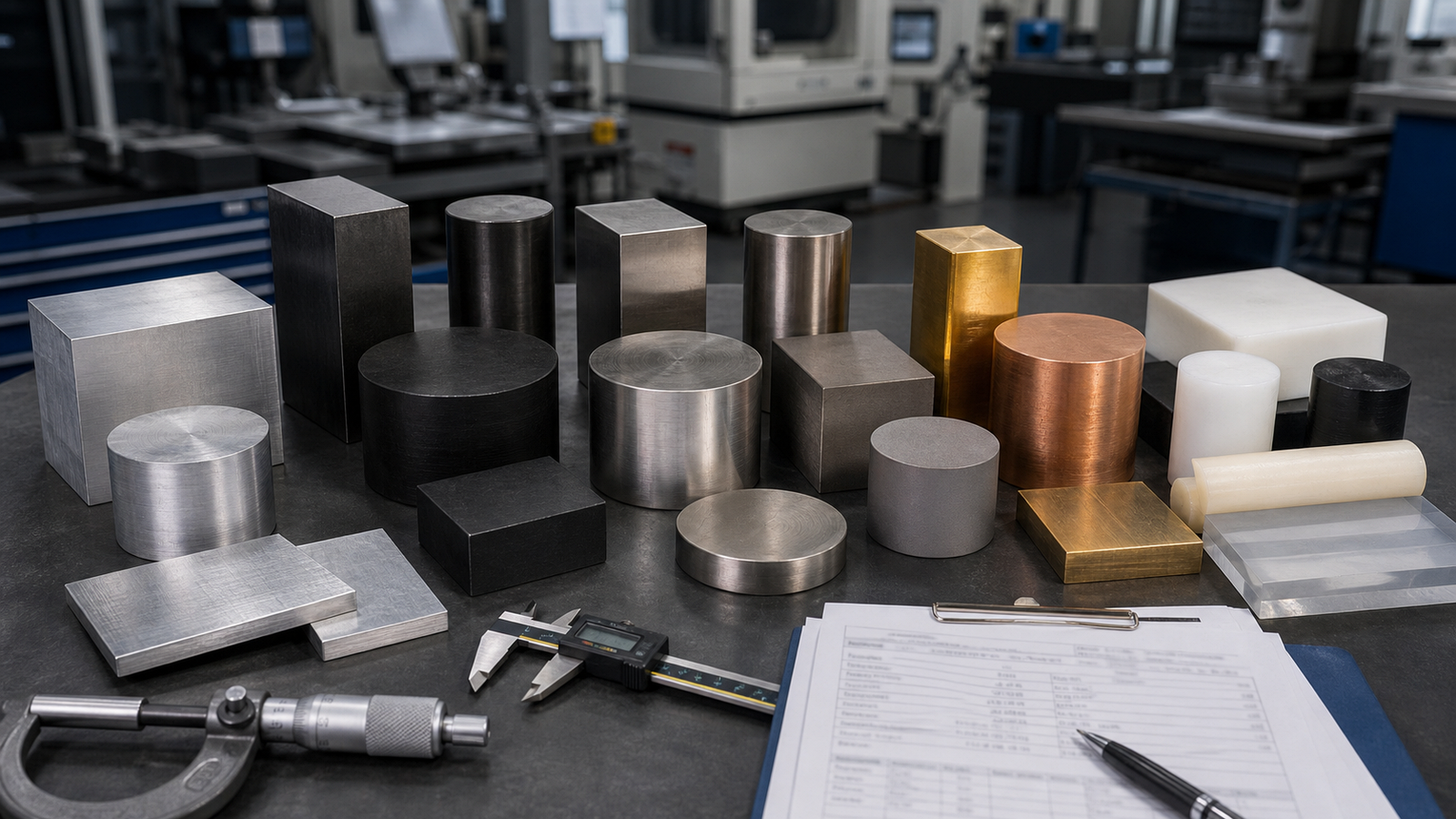
This handbook covers every common CNC material. Use it to compare options and find the right fit for your project. We grouped materials into six families: aluminum, steel, stainless steel, titanium, brass and copper and plastics.
Not sure where to start? Jump to the master comparison table for a side-by-side view of all materials.
Aluminum Alloys
Aluminum is the most popular CNC material. It machines fast, costs less to cut and works for most applications. It is lightweight and resists corrosion without any coating.
6061-T6 -- The All-Rounder
6061 is the default choice for CNC machining. It has good strength, welds well and takes anodizing beautifully. Use it for brackets, housings, enclosures and prototypes.
- Tensile strength: 45,000 PSI
- Machinability: Excellent
- Cost tier: Low
- Best for: General parts, prototypes, enclosures
7075-T6 -- High Strength
7075 aluminum is almost as strong as steel at a fraction of the weight. It is the go-to for aerospace and defense parts. It costs more than 6061 and does not anodize as cleanly.
- Tensile strength: 83,000 PSI
- Machinability: Very good
- Cost tier: Medium
- Best for: Aerospace, structural, high-stress parts
2024-T3 -- Fatigue Resistant
2024 handles repeated stress better than most aluminum alloys. Aerospace uses it heavily for wing skins and fuselage panels. It does not resist corrosion as well as 6061, so it often gets clad or painted.
- Tensile strength: 70,000 PSI
- Machinability: Good
- Cost tier: Medium
- Best for: Aerospace, fatigue-critical parts
5052 -- Corrosion Champion
5052 has the best corrosion resistance of the common aluminum alloys. It bends well too. Use it for marine parts, fuel tanks and sheet metal brackets.
- Tensile strength: 33,000 PSI
- Machinability: Good
- Cost tier: Low
- Best for: Marine, chemical environments, sheet parts
Want a deeper dive? Read our aluminum vs steel comparison or our guide to machining 6061 without warping.
Carbon and Alloy Steels
Steel gives you strength, hardness and wear resistance that aluminum cannot match. It costs less as raw material but takes longer to machine. Choose steel when your part needs to handle heavy loads, high heat, or abrasion.
1018 -- Mild Steel
1018 is cheap and easy to machine. It bends and welds well. Use it for non-critical brackets, pins, fixtures and jigs. It rusts without coating.
- Tensile strength: 63,800 PSI
- Machinability: Good
- Cost tier: Very low
- Best for: Fixtures, jigs, non-critical parts
1045 -- Medium Carbon
1045 is stronger than 1018 and can be heat treated. Use it for shafts, gears, studs and axles. It is a solid mid-range option when mild steel is too soft.
- Tensile strength: 82,000 PSI
- Machinability: Good
- Cost tier: Low
- Best for: Shafts, gears, moderate-strength parts
4140 -- Alloy Steel Workhorse
4140 is tough, strong and heat-treatable up to about 54 HRC. It is the standard for high-strength CNC parts. Gears, shafts, tool holders and structural components all use 4140.
- Tensile strength: 95,000 PSI
- Machinability: Fair
- Cost tier: Medium
- Best for: Gears, shafts, high-load structural parts
4340 -- Ultra-High Strength
4340 is stronger than 4140 and keeps its toughness even at high hardness. Use it for landing gear, crankshafts and parts that see extreme stress.
- Tensile strength: 108,000 PSI
- Machinability: Fair
- Cost tier: Medium-high
- Best for: Aerospace, heavy machinery, extreme loads
Stainless Steel
Stainless steel resists corrosion, looks great and handles high temperatures. It costs more to machine than carbon steel because it work-hardens and wears tools faster.
303 -- Free-Machining Stainless
303 is the easiest stainless to machine. It has added sulfur for better chip breaking. Use it when you need corrosion resistance and tight tolerances but do not need welding.
- Tensile strength: 90,000 PSI
- Machinability: Good (for stainless)
- Cost tier: Medium-high
- Best for: Fittings, valves, shafts, screw machine parts
304 -- The Standard
304 is the most common stainless steel. It welds well and resists corrosion in most environments. It work-hardens fast, so keep your feeds up and use sharp tools.
- Tensile strength: 73,200 PSI
- Machinability: Fair
- Cost tier: Medium-high
- Best for: Food, medical, chemical, general corrosion resistance
316 -- Marine Grade
316 adds molybdenum for extra corrosion resistance. It handles saltwater, acids and harsh chemicals. Use it for marine, medical implants and chemical processing.
- Tensile strength: 79,000 PSI
- Machinability: Fair
- Cost tier: High
- Best for: Marine, medical, chemical processing
Stainless steel work-hardens if you rub instead of cut. Always use sharp tools, keep feeds aggressive and avoid dwelling in the cut. Light passes make the problem worse.
Titanium
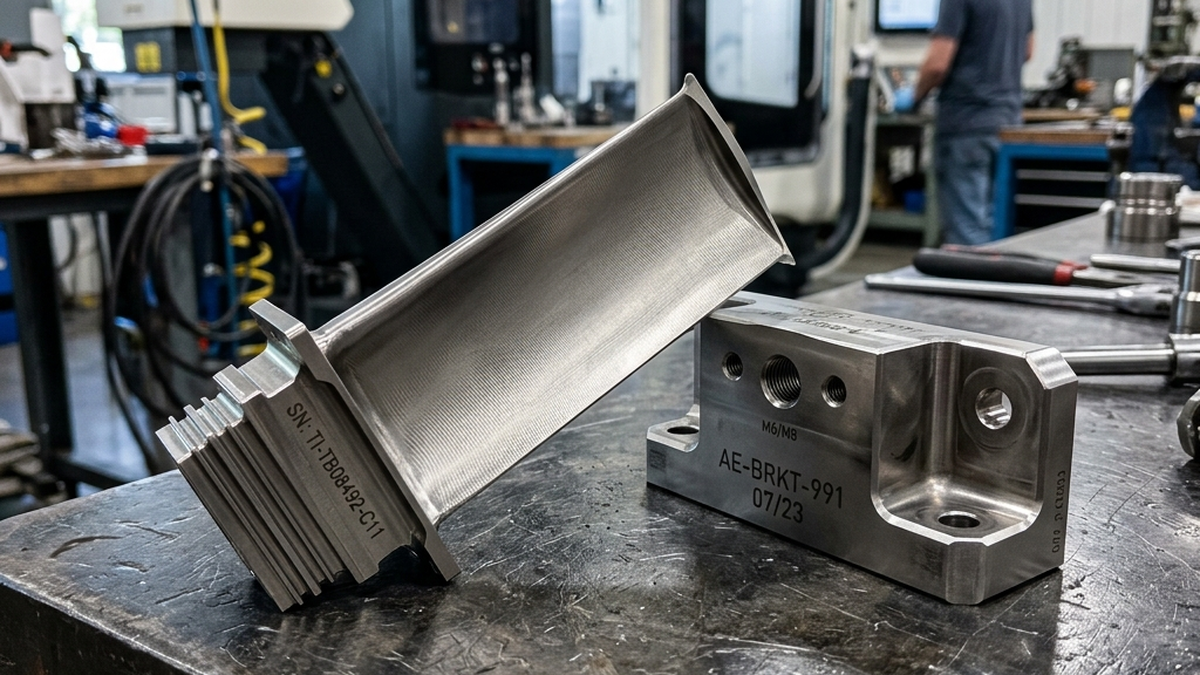
Titanium gives you the best strength-to-weight ratio of any metal. It resists corrosion, handles high temperatures and is biocompatible. It also costs the most to machine.
Grade 2 -- Commercially Pure
Grade 2 is the workhorse of pure titanium. It has excellent corrosion resistance and machines easier than Grade 5. Use it for chemical processing, marine hardware and medical devices.
- Tensile strength: 50,000 PSI
- Machinability: Fair
- Cost tier: High
- Best for: Chemical, marine, medical, heat exchangers
Grade 5 (Ti-6Al-4V) -- Aerospace Standard
Grade 5 is the most used titanium alloy. It makes up about 50% of all titanium sold worldwide. Aerospace, defense and medical implants all rely on it.
- Tensile strength: 130,000 PSI
- Machinability: Difficult
- Cost tier: Very high
- Best for: Aerospace, defense, medical implants
Brass and Copper
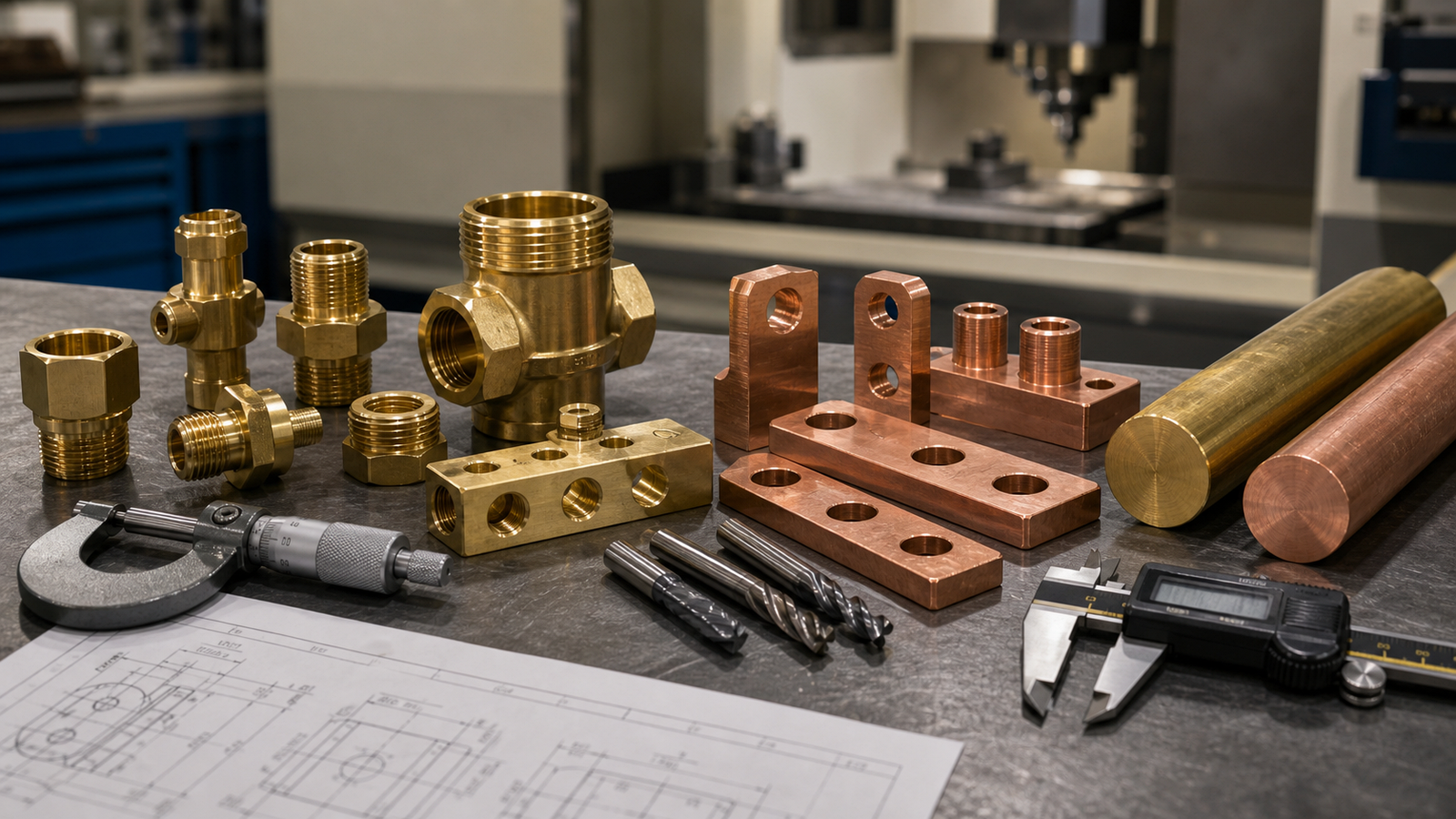
Brass and copper are great for electrical parts, plumbing and decorative components. Brass is one of the easiest metals to machine. Copper conducts electricity and heat better than any other common metal.
C360 Brass -- Free-Machining
C360 is the gold standard for machinability. It cuts like butter and produces clean chips. Use it for fittings, valves, connectors and decorative hardware.
- Tensile strength: 58,000 PSI
- Machinability: Excellent (100% rating)
- Cost tier: Medium
- Best for: Fittings, valves, connectors, decorative parts
C110 Copper -- Pure Electrical Grade
C110 is 99.9% pure copper. It has the best electrical and thermal conductivity. Use it for bus bars, heat sinks and electrical connectors. It is soft and gummy to machine.
- Tensile strength: 32,000 PSI
- Machinability: Fair (gummy chips)
- Cost tier: Medium-high
- Best for: Electrical contacts, bus bars, heat sinks
C145 Tellurium Copper
C145 adds tellurium to copper for better machinability. It keeps about 90% of the conductivity. Use it when you need copper's properties but faster machining.
- Tensile strength: 40,000 PSI
- Machinability: Good
- Cost tier: Medium-high
- Best for: Electrical components needing tight tolerances
Engineering Plastics
Plastics are lighter than any metal. They do not conduct electricity, resist many chemicals and cost less for raw material. CNC machining works well for plastic prototypes and low-volume parts.
Delrin (Acetal / POM)
Delrin is the easiest plastic to CNC machine. It holds tight tolerances, has low friction and resists moisture. Use it for gears, bushings, bearings and sliding parts.
- Tensile strength: 10,000 PSI
- Machinability: Excellent
- Cost tier: Low
- Best for: Gears, bushings, bearings, food handling
Nylon 6/6
Nylon is tough and flexible. It absorbs impact well and resists wear. It absorbs moisture, which can cause swelling. Use it for hinges, rollers and wear pads.
- Tensile strength: 12,400 PSI
- Machinability: Good
- Cost tier: Low
- Best for: Wear parts, rollers, hinges, insulators
PEEK
PEEK is the premium engineering plastic. It handles temperatures up to 480 degrees Fahrenheit. It resists nearly all chemicals and is biocompatible. It costs 10-20 times more than Delrin.
- Tensile strength: 16,000 PSI
- Machinability: Good
- Cost tier: Very high
- Best for: Medical implants, aerospace, semiconductor, high-temp
Polycarbonate (PC)
Polycarbonate is clear, tough and impact-resistant. It is 250 times stronger than glass. Use it for sight glasses, guards and clear enclosures.
- Tensile strength: 9,500 PSI
- Machinability: Good (watch for cracking)
- Cost tier: Low
- Best for: Clear parts, guards, sight glasses, lenses
HDPE
HDPE is cheap, chemical-resistant and FDA approved for food contact. It machines easily but is soft and flexible. Use it for cutting boards, liners and tanks.
- Tensile strength: 4,000 PSI
- Machinability: Excellent
- Cost tier: Very low
- Best for: Food contact, chemical tanks, liners
UHMW
UHMW has the best abrasion resistance of any plastic. It self-lubricates and handles repeated impact. Use it for conveyor guides, wear strips and chute liners.
- Tensile strength: 5,800 PSI
- Machinability: Good
- Cost tier: Low
- Best for: Conveyor parts, wear strips, low-friction guides
Use sharp, uncoated tools for plastics. Keep spindle speeds moderate to avoid melting. Use air blast instead of flood coolant. Support thin sections to prevent flexing.
Master Comparison Table
Here is every material in one table. Compare tensile strength, machinability, corrosion resistance and cost at a glance.
| Material | Tensile (PSI) | Machinability | Corrosion | Cost Tier |
|---|---|---|---|---|
| 6061-T6 Aluminum | 45,000 | Excellent | Good | $ |
| 7075-T6 Aluminum | 83,000 | Very Good | Fair | $$ |
| 2024-T3 Aluminum | 70,000 | Good | Fair | $$ |
| 5052 Aluminum | 33,000 | Good | Excellent | $ |
| 1018 Steel | 63,800 | Good | Poor | $ |
| 1045 Steel | 82,000 | Good | Poor | $ |
| 4140 Steel | 95,000 | Fair | Poor | $$ |
| 4340 Steel | 108,000 | Fair | Poor | $$ |
| 303 Stainless | 90,000 | Good | Very Good | $$$ |
| 304 Stainless | 73,200 | Fair | Excellent | $$$ |
| 316 Stainless | 79,000 | Fair | Excellent | $$$$ |
| Ti Grade 2 | 50,000 | Fair | Excellent | $$$$ |
| Ti Grade 5 | 130,000 | Difficult | Excellent | $$$$$ |
| C360 Brass | 58,000 | Excellent | Good | $$ |
| C110 Copper | 32,000 | Fair | Good | $$ |
| Delrin (POM) | 10,000 | Excellent | Excellent | $ |
| Nylon 6/6 | 12,400 | Good | Excellent | $ |
| PEEK | 16,000 | Good | Excellent | $$$$$ |
| Polycarbonate | 9,500 | Good | Good | $ |
| HDPE | 4,000 | Excellent | Excellent | $ |
| UHMW | 5,800 | Good | Excellent | $ |
How to Choose the Right Material
Start with your requirements. Ask yourself these five questions:
- How strong does it need to be? Steel and titanium for high loads. Aluminum for moderate loads. Plastics for light-duty.
- Does weight matter? Aluminum is 3x lighter than steel. Titanium is 1.7x lighter. Plastics are even lighter.
- Will it see corrosion? Stainless steel, titanium, aluminum and plastics all resist corrosion. Carbon steel does not.
- What temperature range? PEEK handles 480 F. Titanium handles 600+ F. Most plastics fail above 200 F.
- What is your budget? Aluminum and Delrin are cheapest to machine. Titanium and PEEK are the most expensive.
Upload your CAD file and tell us what the part does. Our team will recommend the best material and give you a quote. We also offer free DFM reviews.
Frequently Asked Questions
What is the easiest metal to CNC machine?
Aluminum 6061-T6 is the easiest metal to CNC machine. It cuts fast, produces clean chips and causes very little tool wear. Brass C360 is also very easy to machine and is often used as the baseline for machinability ratings.
Can you CNC machine plastic?
Yes. Many plastics machine well on CNC mills and lathes. Delrin, nylon, HDPE, polycarbonate, PEEK and UHMW are all commonly CNC machined. Plastics need sharp tools and careful feeds to avoid melting or chipping.
What is the strongest CNC machinable material?
Titanium Ti-6Al-4V (Grade 5) and tool steels like A2 and D2 are among the strongest. Ti-6Al-4V has a tensile strength of about 130,000 PSI. For the best strength-to-weight ratio, titanium wins. For pure hardness, tool steel wins.
Which CNC material is best for prototypes?
Aluminum 6061-T6 is the most popular prototyping material. It machines fast, costs less and ships quicker. For plastic prototypes, Delrin and ABS are common choices because they are affordable and easy to machine.
How do I choose the right material for my CNC part?
Start with your part requirements: strength, weight, temperature range, corrosion resistance and budget. Aluminum works for most general uses. Steel adds strength and hardness. Titanium saves weight in high-stress parts. Plastics work for lightweight, non-conductive, or chemical-resistant needs. Upload your CAD file for a free material recommendation.
Need help picking a material? Upload your design and our engineers will recommend the best option for your application. Every quote includes a free DFM review.