The Six Cost Drivers
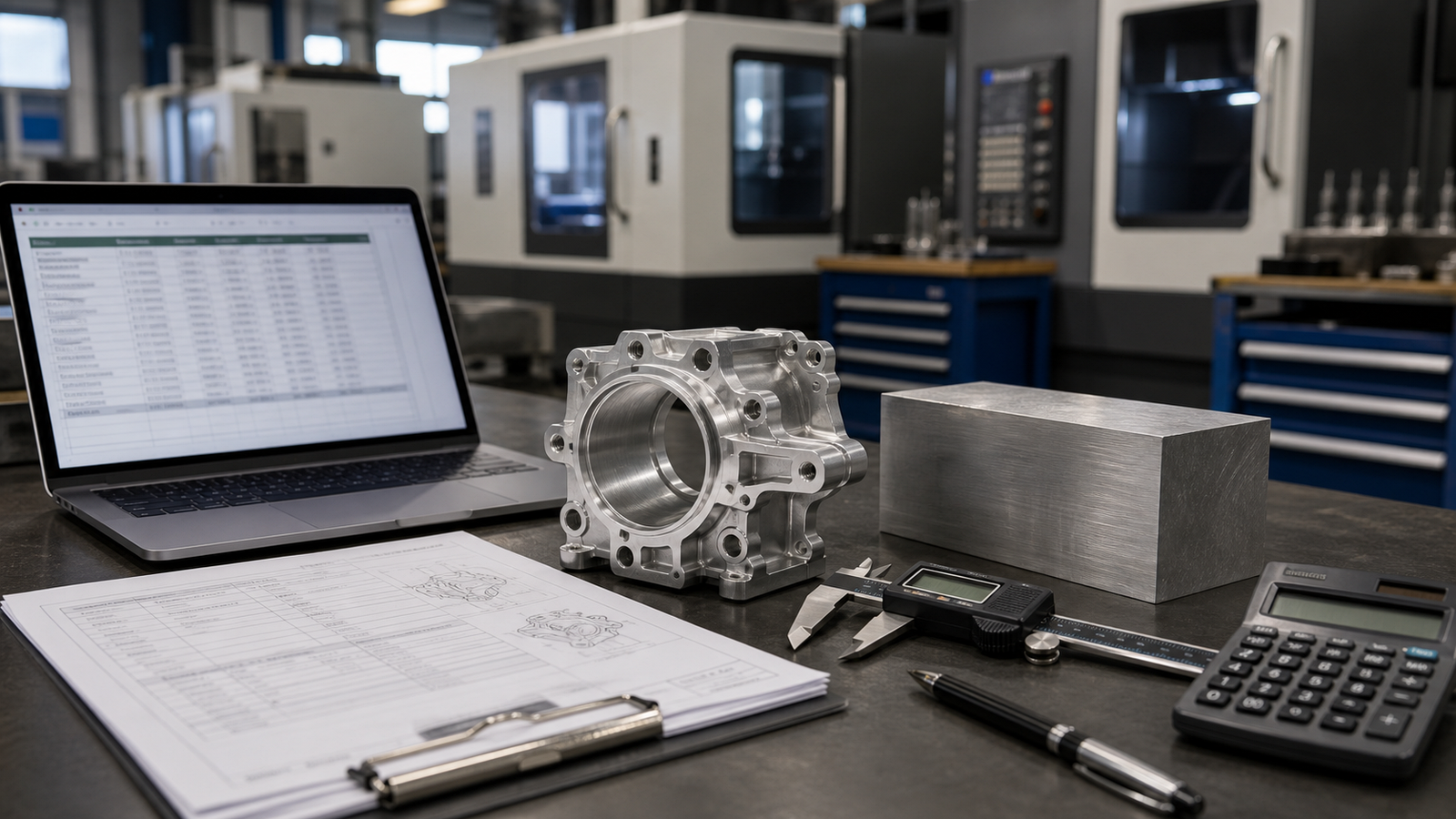
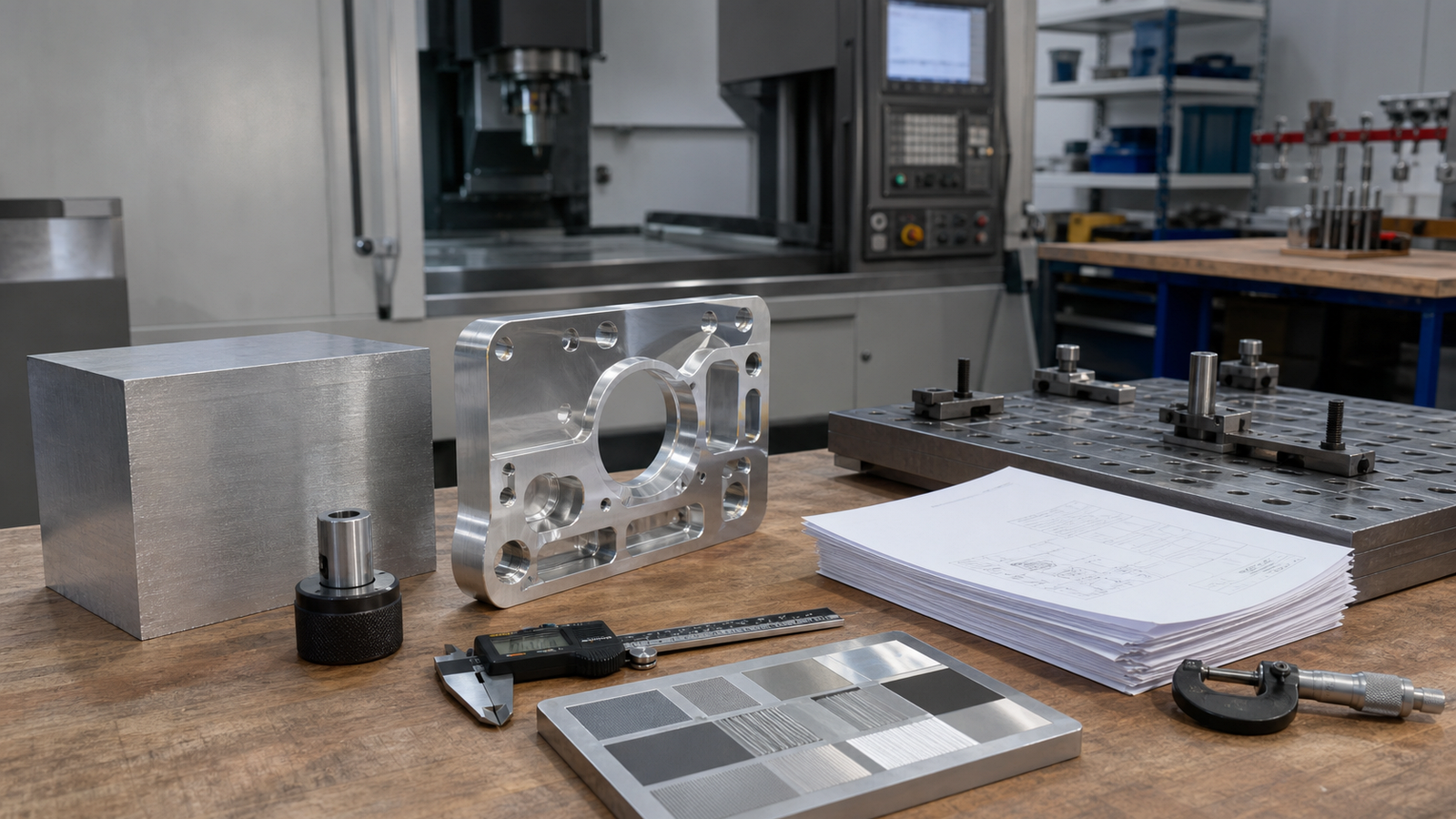
Every CNC quote boils down to these six factors. Some you can control. Others are fixed by your design. Understanding each one helps you get better prices without sacrificing quality.
| Cost Driver | Impact Level | Can You Control It? |
|---|---|---|
| Material | High | Yes -- choose a cheaper alloy |
| Part Complexity | Very High | Yes -- simplify your design |
| Tolerances | High | Yes -- loosen non-critical dims |
| Order Quantity | High | Yes -- order more to lower unit cost |
| Setup Time | Moderate | Somewhat -- reduce setups with DFM |
| Surface Finish | Moderate | Yes -- only specify where needed |
1. Material Choice
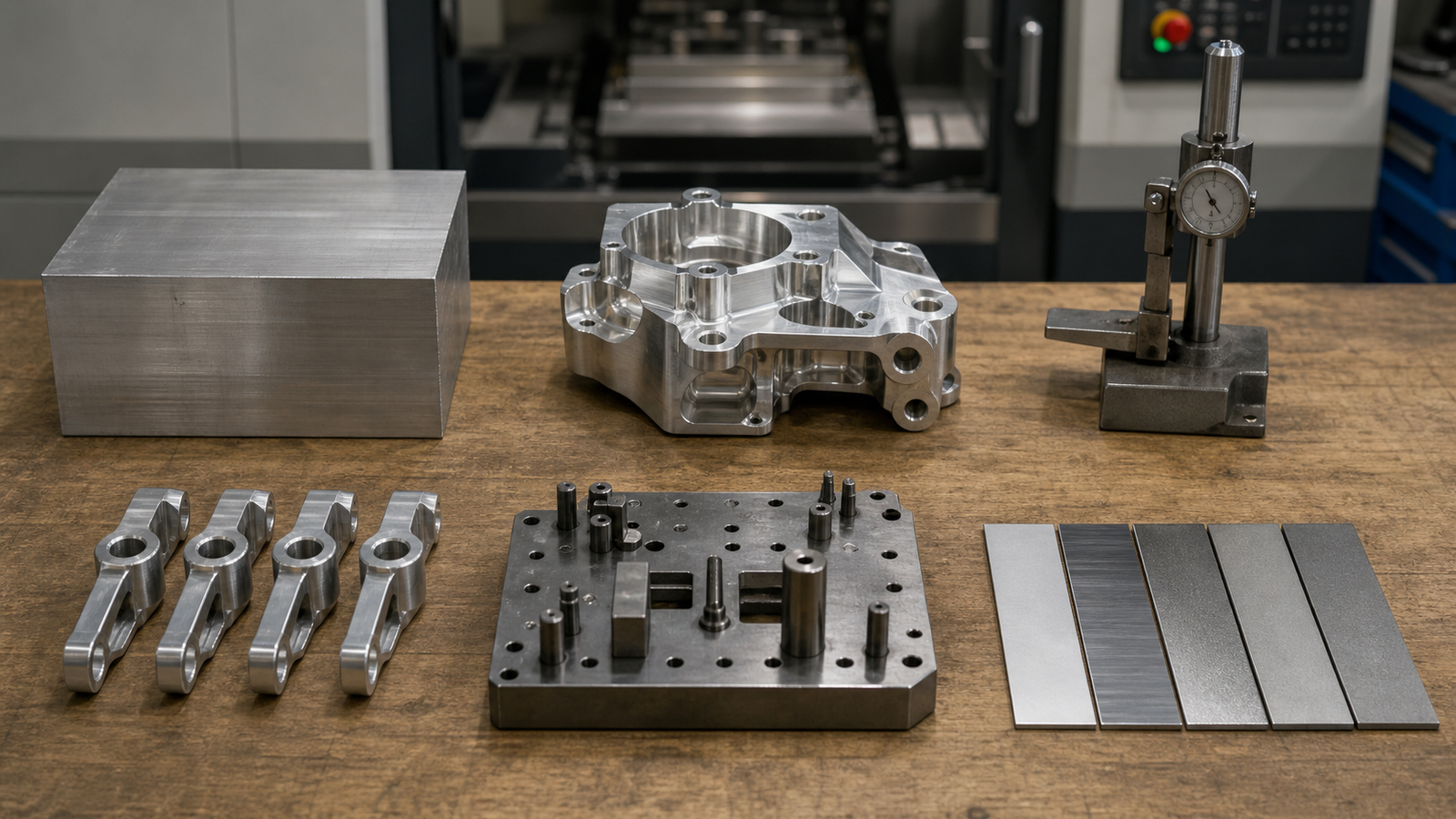
Material affects cost in two ways. First, the raw stock price. Second, how hard it is to machine. A block of titanium costs more than aluminum. It also takes three times longer to cut.
| Material | Stock Cost (per lb) | Machinability | Relative Part Cost |
|---|---|---|---|
| Aluminum 6061 | $3 - $5 | Excellent | 1x (baseline) |
| Aluminum 7075 | $5 - $8 | Very Good | 1.2x |
| Stainless 304 | $4 - $7 | Fair | 2x |
| Stainless 316 | $5 - $9 | Poor | 2.5x |
| Titanium Grade 5 | $15 - $30 | Difficult | 4-5x |
Ask yourself: does this part really need titanium? Many parts work fine in 7075 aluminum at a fraction of the cost.
2. Part Complexity
Complex parts take longer to machine. More features mean more tool changes. Deep pockets need special tooling. Thin walls require slower feeds. Undercuts may need 5-axis work.
Here is what drives complexity cost:
- Number of features -- Each pocket, hole and slot adds cycle time
- Deep pockets -- Anything deeper than 4x the width needs special tools and slower speeds
- Thin walls -- Walls under 1mm deflect during cutting, so the machine must run slower
- Undercuts -- Features that standard tools cannot reach require special setups or 5-axis machines
- Number of setups -- Each time the part is flipped, you pay for setup and alignment
3. Tolerances
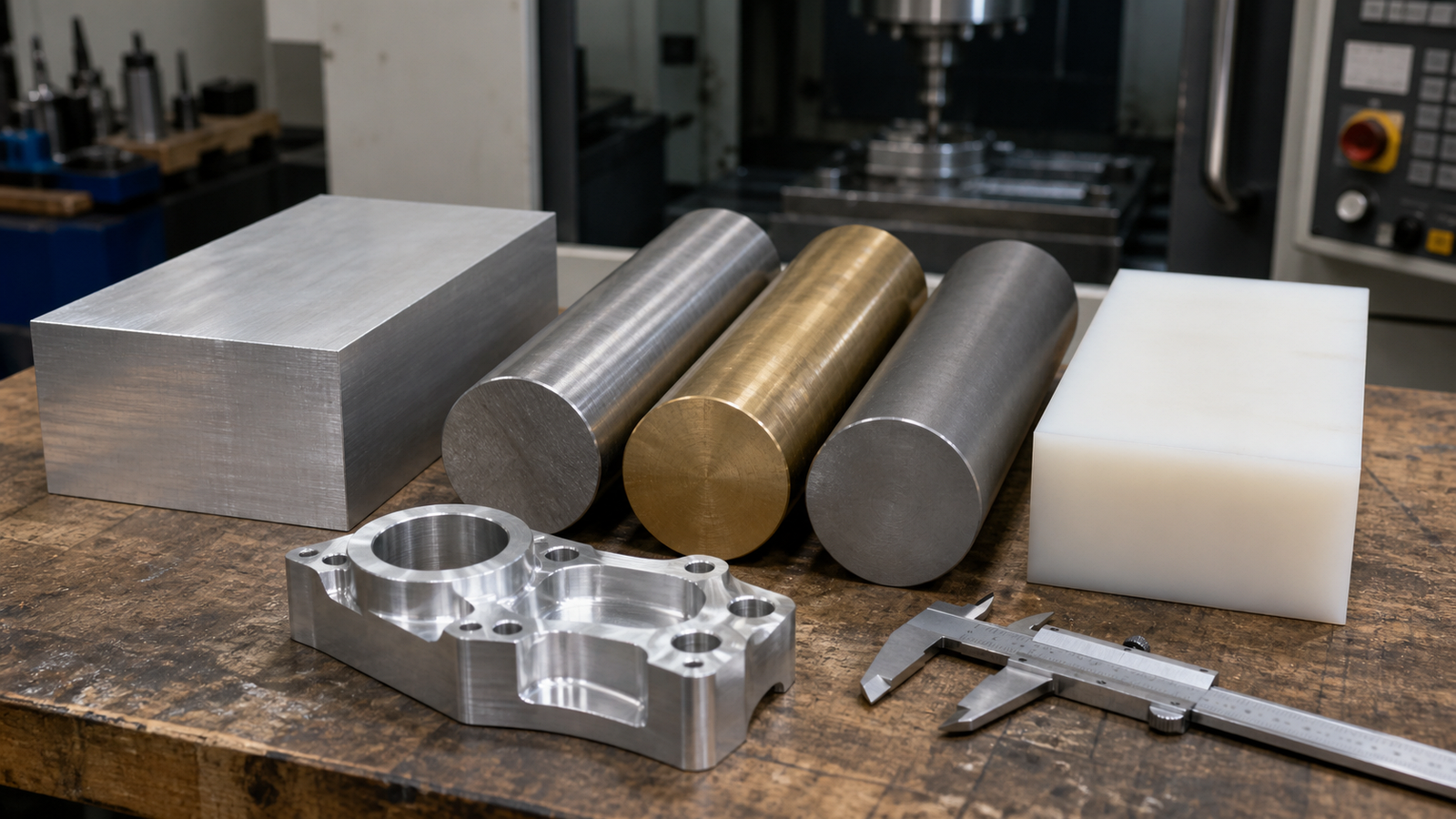
Standard CNC tolerances are plus or minus 0.005 inches. Most shops include this at no extra charge. Tighter tolerances cost more because they require:
- Slower cutting speeds for better accuracy
- Extra finishing passes to hit exact dimensions
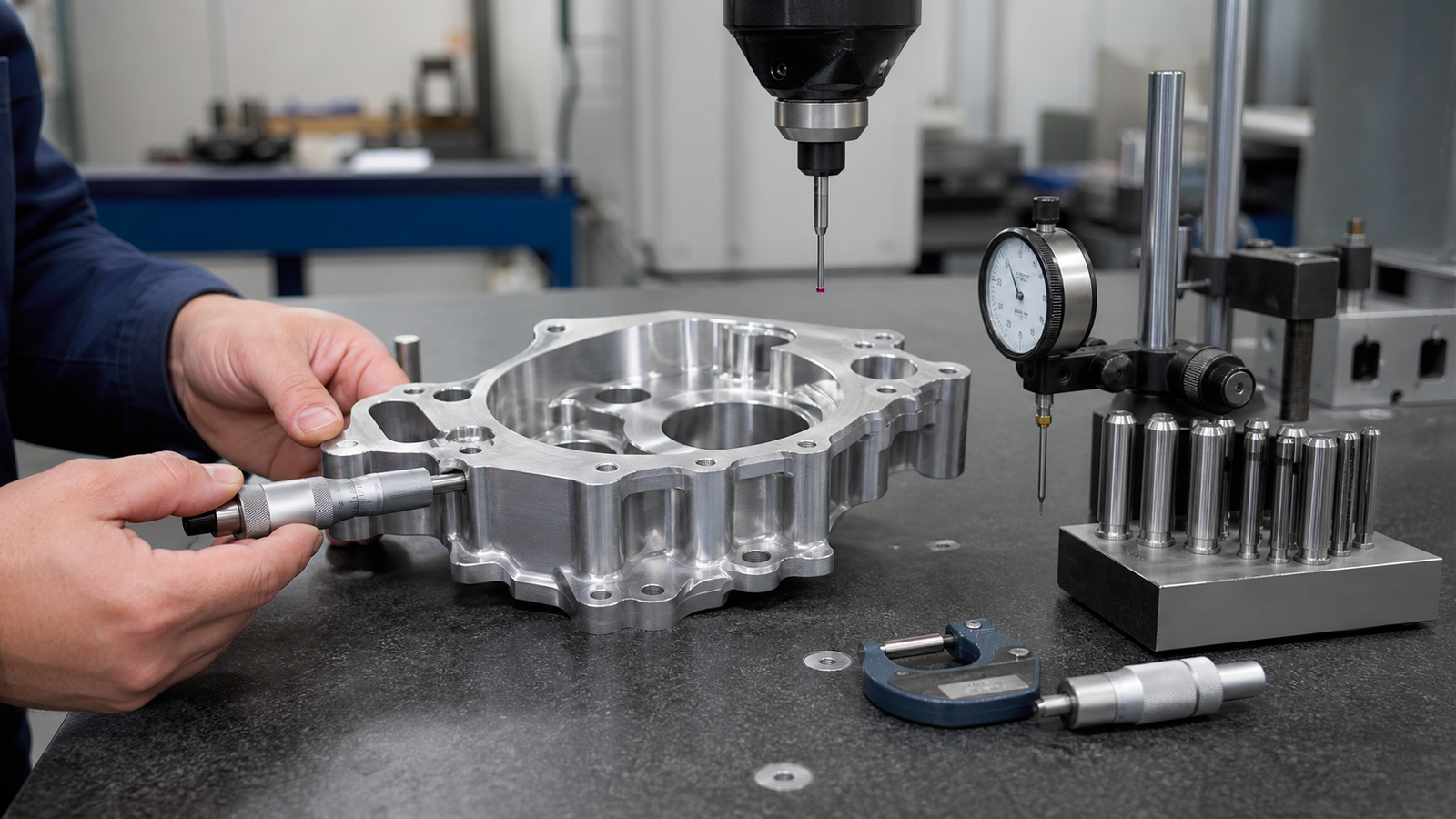
- CMM inspection to verify each feature
- Climate-controlled environments for ultra-tight work
| Tolerance Range | Cost Impact | Inspection Required |
|---|---|---|
| +/- 0.005" | Standard (included) | Caliper / micrometer |
| +/- 0.002" | +10-20% | Indicator / bore gauge |
| +/- 0.001" | +25-50% | CMM required |
| +/- 0.0005" | +50-100% | CMM + climate control |
Do not put tight tolerances on every dimension. Only apply them to features that actually need them, like mating surfaces and bearing fits. This one change can cut costs by 20-30%.
4. Order Quantity
Setup costs are fixed. Whether you make 1 part or 100, the programmer still writes the same code. The operator still loads the same tools. Ordering more parts spreads that cost across more pieces.
| Quantity | Setup Cost per Part | Typical Unit Price |
|---|---|---|
| 1 (prototype) | $150 - $300 | $200 - $500 |
| 10 | $15 - $30 | $60 - $150 |
| 100 | $1.50 - $3 | $25 - $80 |
| 1,000+ | < $0.50 | $10 - $40 |
The sweet spot for CNC is usually 10-500 parts. Below 10, setup costs dominate. Above 500, you might save money with casting or stamping instead.
5. Setup Time
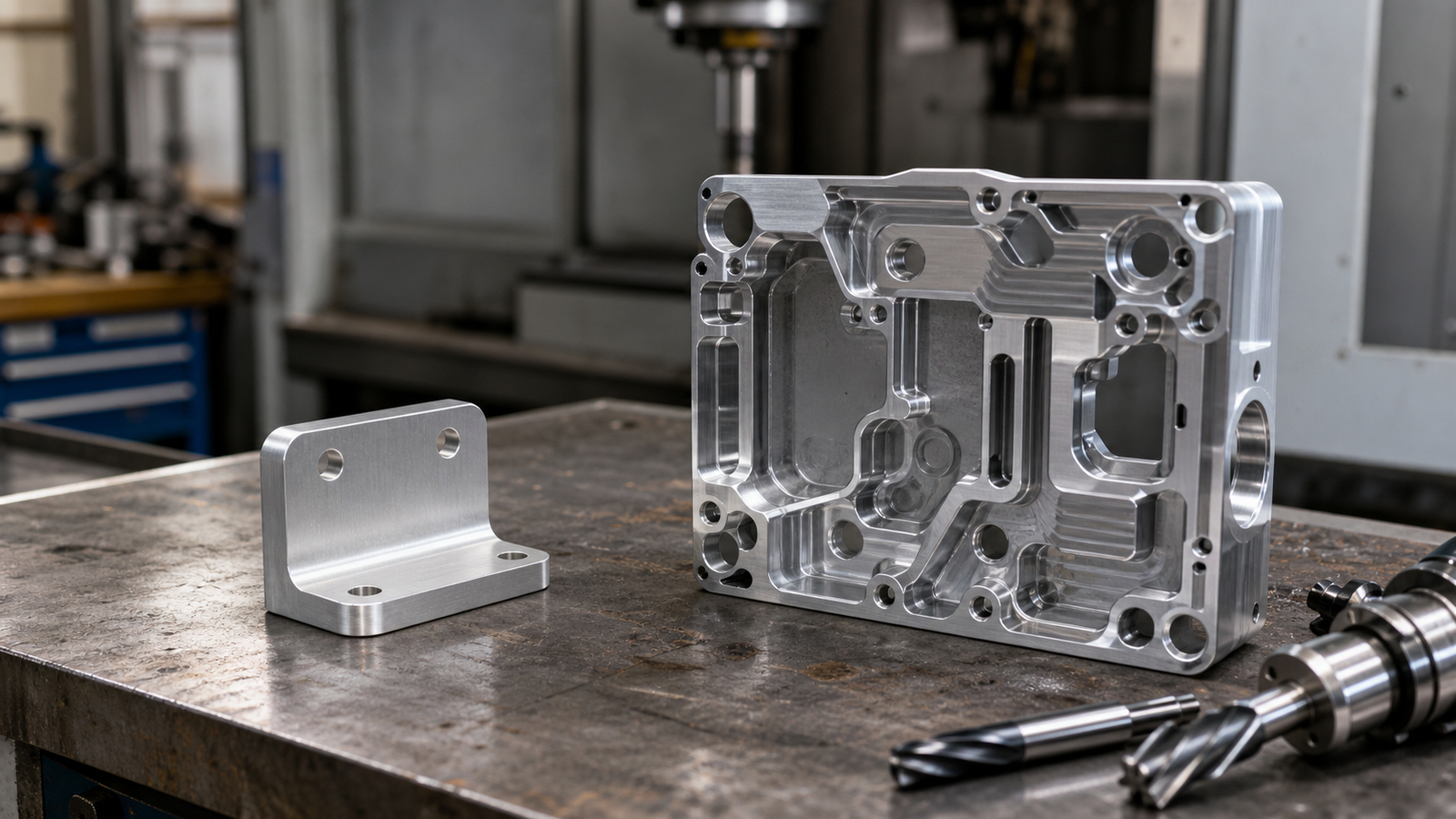
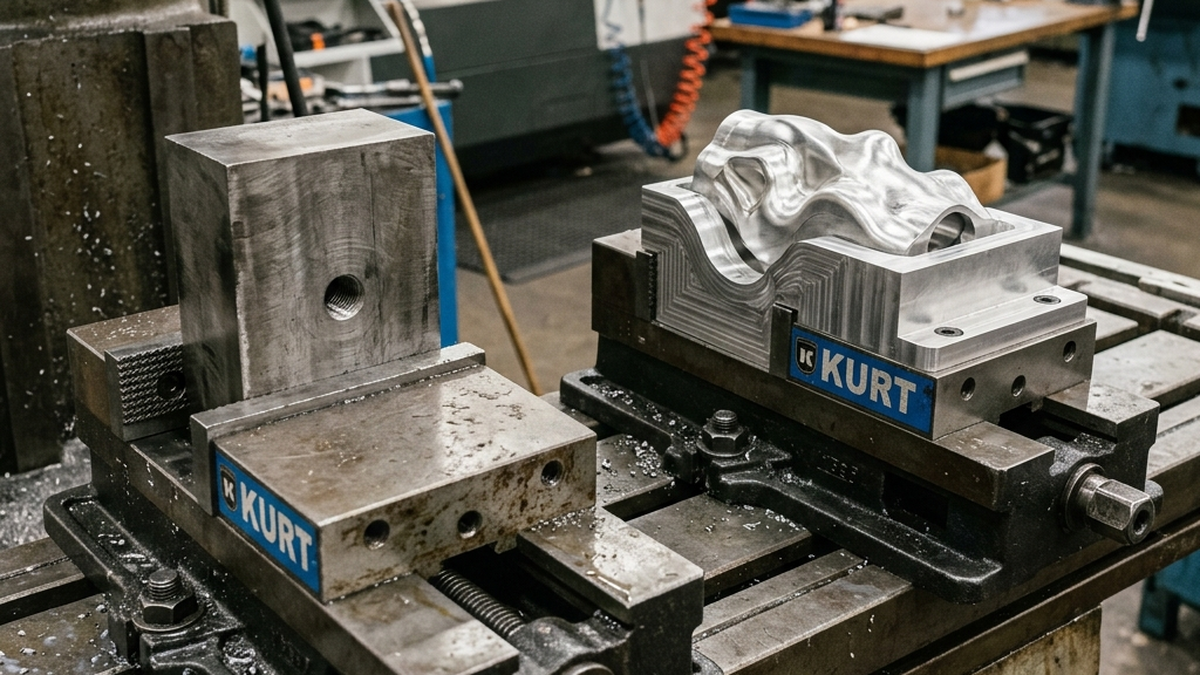
Every time the machinist loads a new part, tool, or fixture, the clock is running. A typical setup takes 30-60 minutes. Multi-setup parts can take 2-3 hours before a single chip flies.
Ways to reduce setup time:
- Design for fewer setups. Keep all critical features on one side when possible.
- Use standard stock sizes. Custom blanks add an extra cutting step.
- Provide clear drawings. Ambiguous specs cause the shop to stop and ask questions. That is lost time.
6. Surface Finish
As-machined parts have a surface finish around 125 Ra. This is fine for most functional parts. Smoother finishes cost more because they need extra passes or post-processing.
| Finish | Ra Value | Cost Impact | Method |
|---|---|---|---|
| As-machined | 125 Ra | Included | Standard milling |
| Fine machined | 63 Ra | +10-15% | Finishing passes |
| Smooth | 32 Ra | +15-25% | Light finishing + polishing |
| Mirror | 16 Ra or better | +30-50% | Hand polishing / lapping |
Secondary finishes like anodizing, powder coating, or plating also add cost. Budget an extra $5-$50 per part depending on the finish type and part size.
How to Save Money on CNC Parts
You do not need to sacrifice quality to save money. Here are the most effective ways to lower your CNC costs:
- Choose aluminum when possible. It machines 3-5x faster than steel or titanium.
- Loosen tolerances on non-critical features. Only call out tight specs where they matter.
- Reduce the number of setups. Design parts so most features are accessible from one side.
- Order in batches. Even bumping from 1 to 10 parts cuts unit cost dramatically.
- Get a free DFM review. We catch cost-saving opportunities before we start cutting.
- Use standard hole sizes. Standard drills cut faster than interpolated holes.
Want to see how these factors affect your specific part? Upload your CAD file and get instant pricing from RivCut. Our quotes break down every cost line.
Frequently Asked Questions
What is the biggest cost driver in CNC machining?
Machine time is usually the biggest cost driver. Complex parts with tight tolerances take longer to cut. Material cost is the second largest factor for most jobs.
How much does CNC machining cost per hour?
CNC shop rates typically range from $75 to $200 per hour for 3-axis work. 5-axis machines run $100 to $300 per hour. Rates vary by region, machine type and shop capabilities.
Do tighter tolerances cost more?
Yes. Standard tolerances of plus or minus 0.005 inches are included in most quotes. Tighter tolerances require slower feeds, extra passes and CMM inspection. This adds cost.
How does quantity affect CNC machining cost?
Higher quantities lower the per-part cost. Setup time gets spread across more pieces. A single prototype might cost $200. The same part in a batch of 100 might cost $40 each.
What is the cheapest material for CNC machining?
Aluminum 6061 is the cheapest and most common. It machines fast, costs less per pound and tools last longer. Plastics like Delrin and ABS are also affordable options.