Thread Types Overview
There are four main thread families used on CNC parts, each governed by different threading standards. Picking the right one saves time, money and headaches during assembly.
| Thread Family | System | Best For | Common In |
|---|---|---|---|
| UNC | Imperial (coarse) | General purpose, fast assembly | US manufacturing |
| UNF | Imperial (fine) | Vibration resistance, precision | Aerospace, automotive |
| Metric (M) | Metric | Global compatibility | International products |
| NPT/NPS | Pipe | Fluid connections | Hydraulics, pneumatics |
UNC vs UNF: Which Should You Use?
UNC stands for Unified National Coarse. It has fewer threads per inch. UNF stands for Unified National Fine. It has more threads per inch.
| Feature | UNC (Coarse) | UNF (Fine) |
|---|---|---|
| Assembly speed | Faster | Slower |
| Cross-threading risk | Lower | Higher |
| Vibration resistance | Lower | Higher |
| Tensile strength | Lower | Higher (more thread area) |
| Stripping resistance in soft metals | Better | Worse |
| Availability | Most common | Common in aerospace |
Use UNC for general applications. It is easier to assemble, less likely to cross-thread and hardware is cheaper. Switch to UNF only when you need vibration resistance or higher clamping force.
Metric Threads
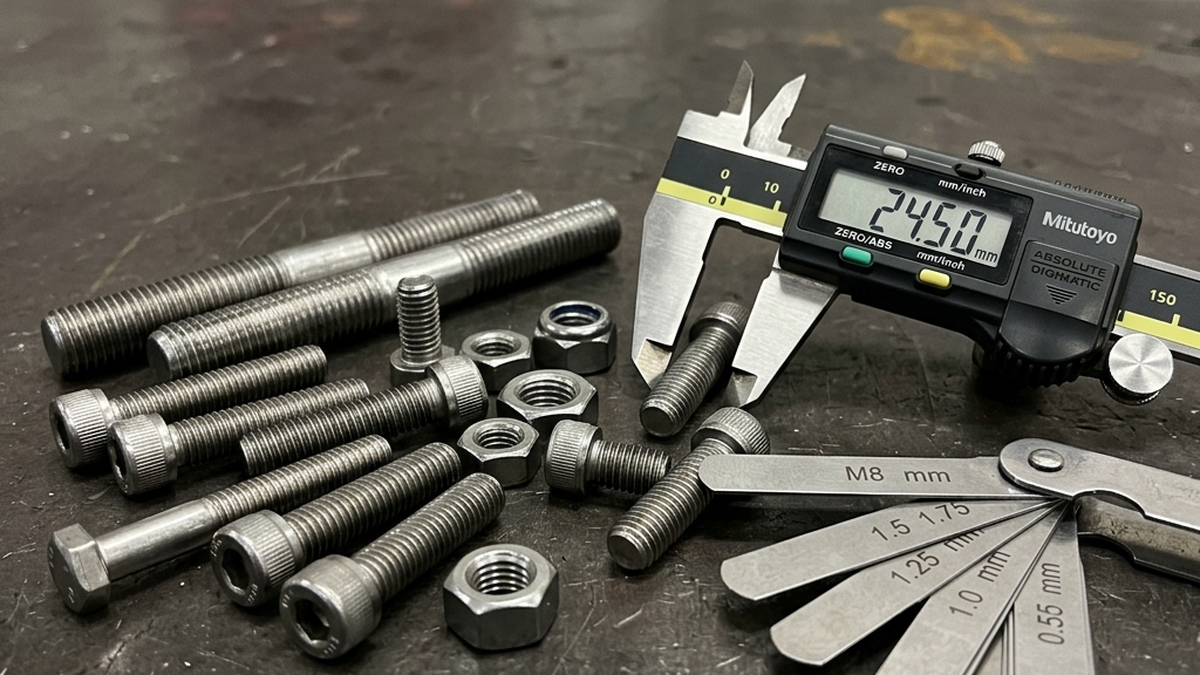
Metric threads use the "M" prefix followed by the diameter in millimeters. An M8 thread has an 8mm major diameter. The pitch is stated in millimeters too.
Metric threads come in coarse and fine versions. The coarse pitch is the default. If you see "M8" with no pitch listed, it means M8x1.25 (coarse). If you see "M8x1.0", that is fine pitch.
Common Metric Sizes
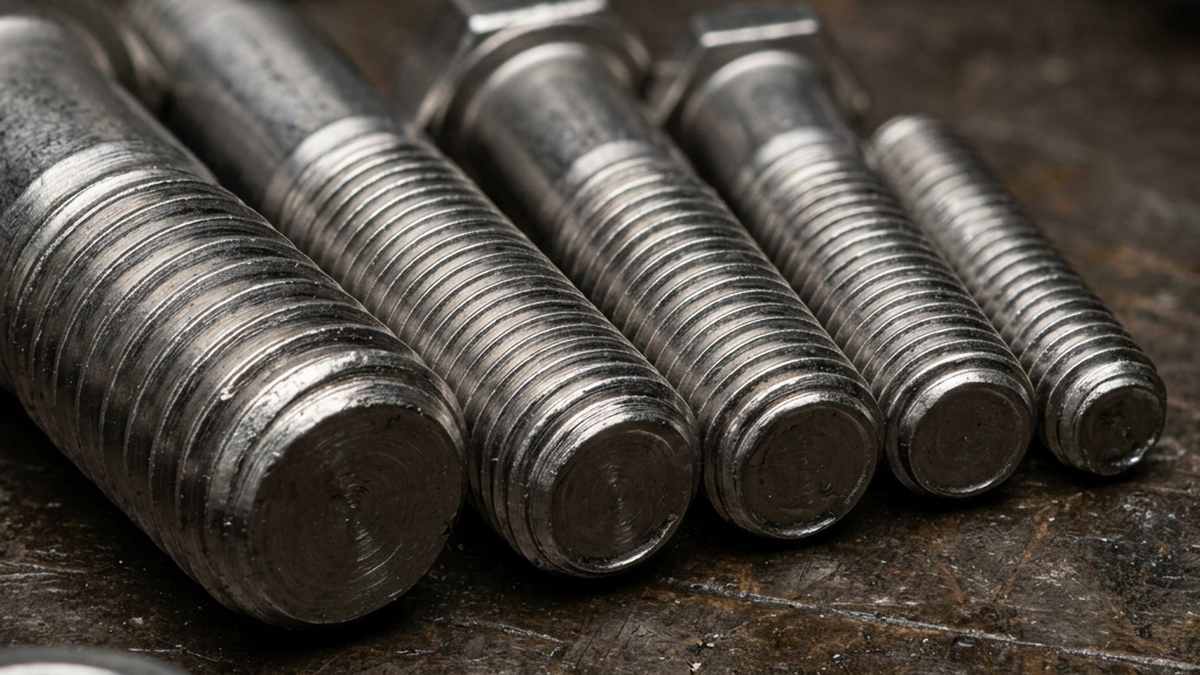
| Size | Coarse Pitch | Fine Pitch | Tap Drill (Coarse) |
|---|---|---|---|
| M3 | 0.5mm | 0.35mm | 2.5mm |
| M4 | 0.7mm | 0.5mm | 3.3mm |
| M5 | 0.8mm | 0.5mm | 4.2mm |
| M6 | 1.0mm | 0.75mm | 5.0mm |
| M8 | 1.25mm | 1.0mm | 6.8mm |
| M10 | 1.5mm | 1.25mm | 8.5mm |
| M12 | 1.75mm | 1.25mm | 10.2mm |
Pipe Threads: NPT vs NPS
Pipe threads are for fluid connections. There are two main types. NPT is tapered. NPS is straight (parallel).
- NPT (National Pipe Taper), Threads taper at 1 degree 47 minutes. Creates a seal as you tighten. Add thread sealant tape for leak-proof connections.
- NPS (National Pipe Straight), Parallel threads. Does not seal by itself. Needs an O-ring or gasket.
- BSPT/BSPP, British versions. BSPT is tapered. BSPP is parallel. Different thread angle than NPT. Do not mix them.
NPT uses a 60-degree thread angle. BSPT uses a 55-degree angle. They look similar but they will leak. Always specify which standard you need on your drawing.
How to Read Thread Callouts
Thread callouts follow a standard format. Here is how to read them. For more detail on writing callouts, see our thread callouts buyer's guide.
Imperial Callout Format
1/4-20 UNC-2B means: 1/4 inch diameter, 20 threads per inch, Unified National Coarse, Class 2 fit, internal (B) thread.
Metric Callout Format
M8x1.25-6H means: 8mm diameter, 1.25mm pitch, tolerance class 6H (internal thread).
Pipe Callout Format
1/4-18 NPT means: 1/4 inch nominal pipe size, 18 threads per inch, National Pipe Taper.
Tap vs Thread Mill
Two ways to cut threads on a CNC machine. Each has trade-offs.
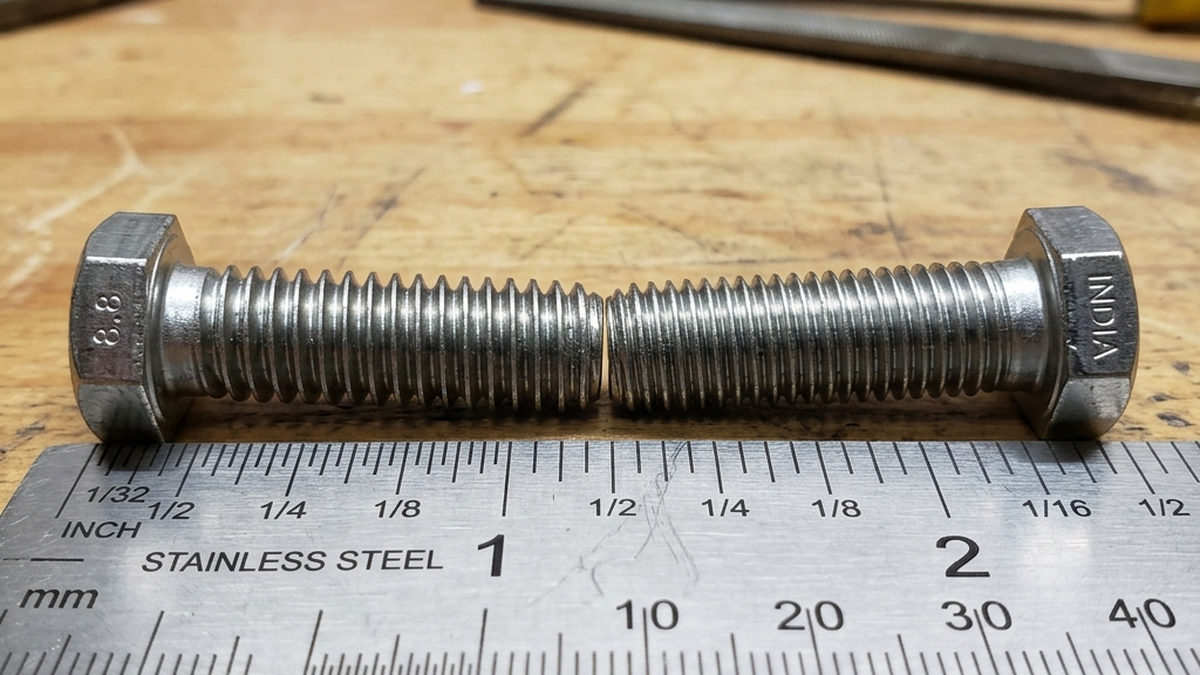
| Factor | Tapping | Thread Milling |
|---|---|---|
| Speed | Faster | Slower |
| Cost per hole | Lower | Higher |
| Broken tool risk | Higher (tap can snap) | Lower |
| Blind hole performance | Chip issues | Clean |
| Hard materials | Risky | Preferred |
| Thread size flexibility | One tap per size | One tool, many sizes |
| Depth control | Moderate | Precise |
For prototype and low-volume work, tapping is usually fine. For production runs in hard materials or blind holes, thread milling reduces the risk of a broken tap stuck in your part.
Thread Depth Rules
How deep should your threads be? It depends on the material. Here are the guidelines.
| Material | Recommended Depth | Maximum Useful Depth |
|---|---|---|
| Steel | 1.5x diameter | 2x diameter |
| Stainless Steel | 1.5x diameter | 2x diameter |
| Aluminum | 2x diameter | 2.5x diameter |
| Titanium | 1.5x diameter | 2x diameter |
| Plastics | 2.5x diameter | 3x diameter |
Going deeper than the maximum does not add strength. The extra threads do not carry load. They just add machining time and tool wear.
Common Imperial Thread Sizes
| Size | TPI (UNC) | TPI (UNF) | Tap Drill (UNC) | Tap Drill (UNF) |
|---|---|---|---|---|
| #4 | 40 | 48 | #43 (0.089") | #42 (0.094") |
| #6 | 32 | 40 | #36 (0.107") | #33 (0.113") |
| #8 | 32 | 36 | #29 (0.136") | #29 (0.136") |
| #10 | 24 | 32 | #25 (0.150") | #21 (0.159") |
| 1/4" | 20 | 28 | #7 (0.201") | #3 (0.213") |
| 5/16" | 18 | 24 | F (0.257") | I (0.272") |
| 3/8" | 16 | 24 | 5/16" (0.313") | Q (0.332") |
| 1/2" | 13 | 20 | 27/64" (0.422") | 29/64" (0.453") |
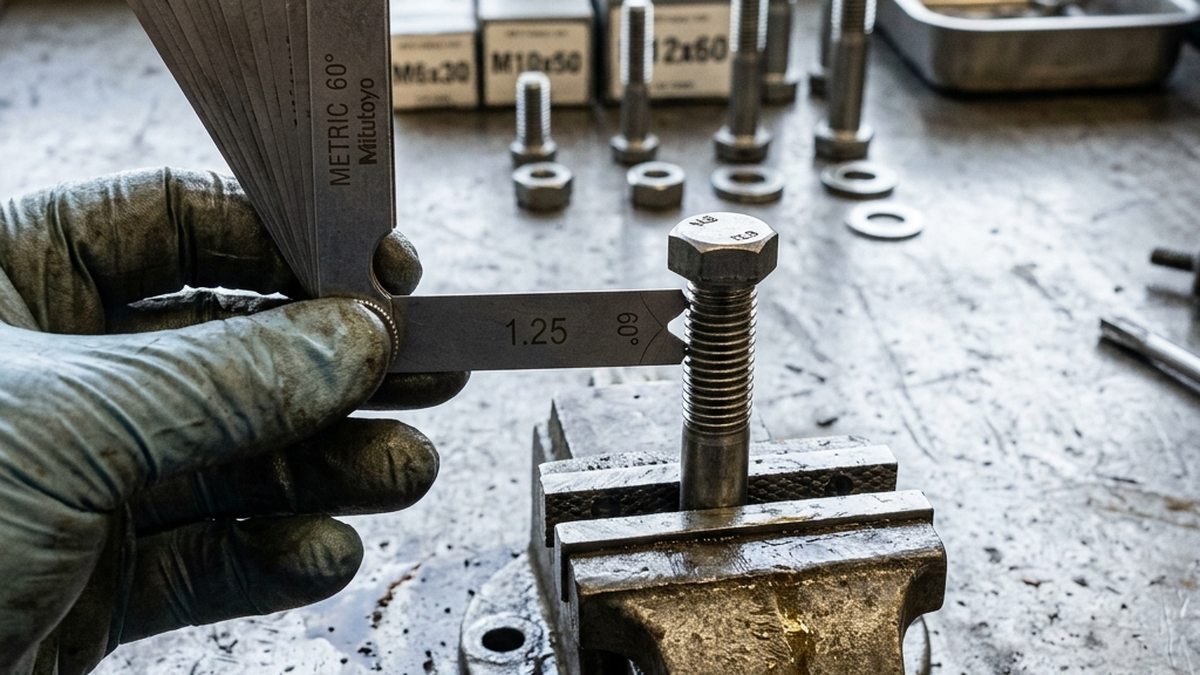
Need a thread size that is not listed here? Contact our engineering team. We can thread almost any size your design requires.
Frequently Asked Questions
What is the difference between UNC and UNF threads?
UNC has fewer threads per inch and is easier to assemble. UNF has more threads per inch and resists vibration better. Use UNC for general work. Use UNF for aerospace and vibration-prone applications.
Should I use metric or imperial threads?
Match your assembly. If mating parts use metric fasteners, use metric threads. For US-based assemblies with existing imperial hardware, use UNC or UNF. Never mix both on the same part.
How deep should tapped holes be?
For steel, 1.5x the thread diameter. For aluminum, 2x. Going deeper than 3x adds cost but rarely adds strength.
When should I use thread milling instead of tapping?
Use thread milling for large holes, hard materials, blind holes, or when you need precise depth control. Thread mills also let you cut different sizes with one tool.
What are pipe threads used for?
Pipe threads connect fluid fittings. NPT is tapered and seals when tightened. NPS is straight and needs a separate seal like an O-ring.