Why Semiconductor Equipment Is Unique
Semiconductor fabrication happens in ultra-clean environments. A single particle can ruin a chip worth thousands of dollars. That cleanliness requirement flows down to every part in the equipment.
The parts must be free of contamination. They must hold vacuum. They must resist corrosive process gases. And they must stay flat and stable at high temperatures. CNC machining meets all of these needs.
Vacuum Chamber Parts
Process chambers are where wafers get etched, deposited, or treated. The chamber body holds vacuum, routes process gases and supports internal components.
Chamber Bodies
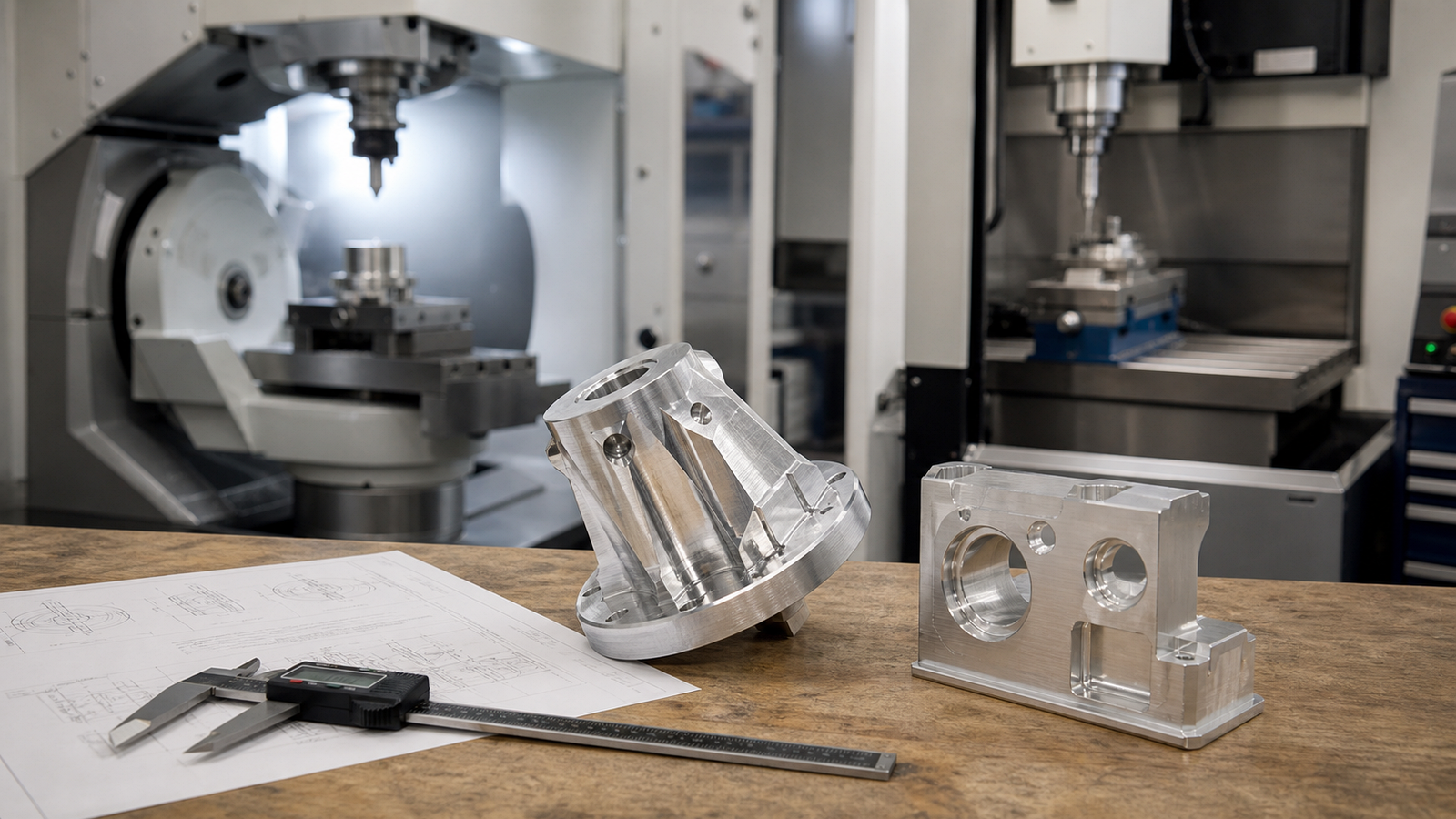
Most chamber bodies are machined from solid aluminum billet. The material is 6061-T6 for general use or 5083 for better corrosion resistance. Chambers need multiple ports, O-ring grooves and flat sealing surfaces.
Chamber Lids
Lids seal the top of the chamber. They often include gas distribution features, viewport ports and RF feedthrough holes. Flatness is critical. A warped lid means a vacuum leak.
Showerheads
Showerheads distribute process gas evenly across the wafer. They have hundreds of small holes drilled in precise patterns. Hole size, spacing and depth affect gas flow uniformity.
Design chamber O-ring grooves to Parker or AS568 standards. Use dovetail grooves for face seals where the O-ring could fall out during assembly. This saves time in the cleanroom.
Gas Delivery Components
Gas delivery systems route process gases from the supply to the chamber. These parts must be leak-tight and free of contamination. Even tiny amounts of moisture or particles can affect the process.
Common Gas Delivery Parts
- Gas manifold blocks, multi-port distribution with VCR or face seal fittings
- Flow channel plates, internal channels for gas routing
- Adapter plates, interface between different fitting standards
- Purge panels, mount points for valves and regulators
316L stainless steel is the standard for gas delivery. It resists corrosion from most process gases. Electropolished internal surfaces reduce gas adsorption and particle generation.
Wafer Handling Fixtures
Wafer handling parts move silicon wafers between process steps. These parts touch or nearly touch the wafer. Any contamination transfers directly to the product.
Key Wafer Handling Parts
- End effectors (blades), thin, flat parts that pick up wafers by vacuum or edge grip
- Chucks and pedestals, hold the wafer during processing, must be very flat
- Lift pins, raise the wafer off the chuck for robot pickup
- Alignment stages, position the wafer with micron-level accuracy
| Component | Material | Key Tolerance | Surface Finish |
|---|---|---|---|
| Chamber Body | 6061-T6 Al | Flatness 0.002" | 16-32 Ra |
| Showerhead | 6061 Al / Anodized | Hole position ±0.003" | 16 Ra |
| Gas Manifold | 316L SS | Port ±0.005" | 8-16 Ra (EP) |
| Wafer Chuck | 6061 Al / Ceramic | Flatness 0.0005" | 8-16 Ra |
| End Effector | Al / Ceramic / PEEK | Flatness 0.001" | 16 Ra |
| Lift Pin | 316L SS / Ceramic | Diameter ±0.0005" | 8 Ra |
Materials for Semiconductor Parts
Material choice in semiconductor is driven by purity, corrosion resistance and outgassing behavior. The wrong material contaminates the process.
6061-T6 Aluminum
The most common chamber material. Light, easy to machine and takes anodizing well. Type III hard anodize protects against plasma erosion and chemical attack.
316L Stainless Steel
Used for gas delivery and wet process equipment. The low carbon content reduces corrosion. Electropolishing creates an ultra-smooth, passive surface that resists gas adsorption.
Hastelloy C-276
Used where aggressive chemicals like HF, HCl, or hot acids are present. More expensive and harder to machine than stainless. But nothing else survives these environments.
PEEK and Vespel
Used for insulators, seals and parts that need electrical isolation. PEEK machines well and handles temperatures up to 250C. Vespel handles higher temperatures but costs more.
Never use standard shop coolant on semiconductor parts without checking with your customer. Some processes require dry machining or specific approved coolants. Residual cutting fluid contamination can cause wafer defects.
Surface Finish Requirements
Surface finish in semiconductor is about more than smoothness. It affects outgassing, particle generation and chemical resistance.
Vacuum-Facing Surfaces
Smooth surfaces outgas less. Rough surfaces trap gas molecules that release slowly under vacuum. This raises the base pressure and contaminates the process. Target 16 Ra or better.
Gas-Wetted Surfaces
Surfaces that touch process gas need to be inert and smooth. Electropolished 316L at 8 Ra or better is the standard. The passive oxide layer resists gas adsorption.
Anodized Aluminum
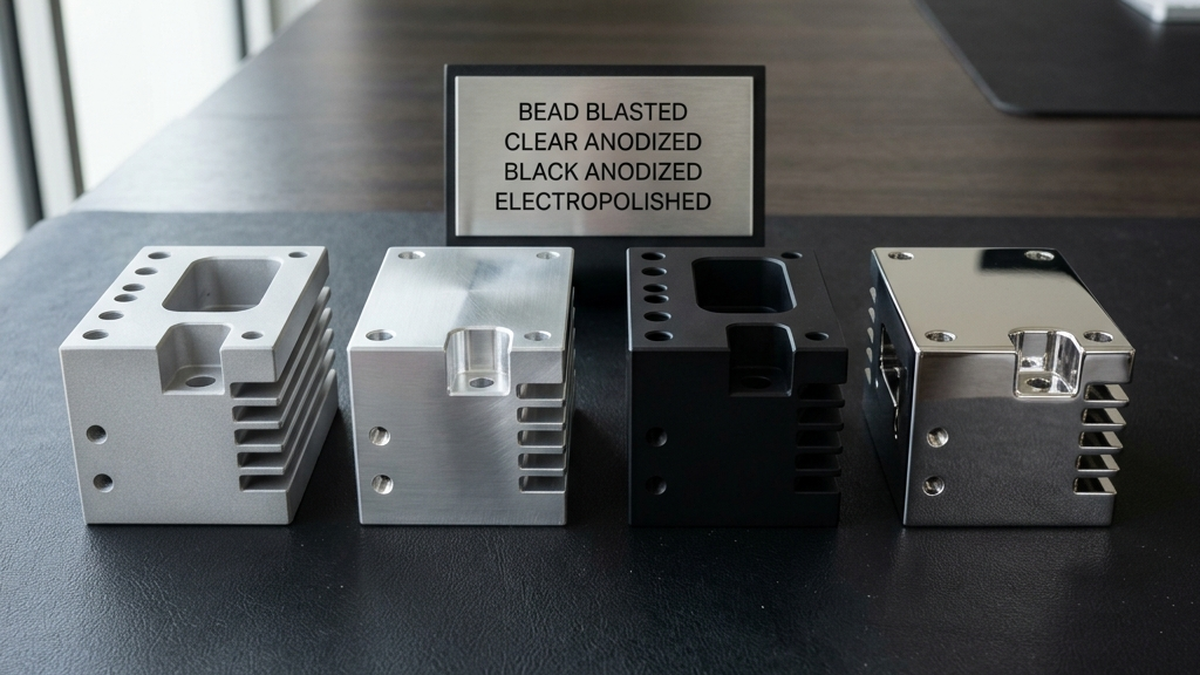
Type III hard anodize (50+ microns) protects aluminum from plasma erosion. The anodize layer must be uniform and crack-free. Surface prep before anodizing matters. A clean, smooth surface produces a better anodize.
Precision Cleaning and Packaging
Machined parts for semiconductor equipment need precision cleaning before delivery. Standard degreasing is not enough. The goal is to remove all machining residues down to molecular levels.
Typical Cleaning Steps
- Ultrasonic degrease in alkaline solution to remove cutting oils
- Acid etch or passivation (for stainless) to remove surface contaminants
- DI water rinse, multiple stages, measured by resistivity
- Dry in filtered nitrogen or clean oven
- Inspect under UV light for residual contamination
- Double-bag in cleanroom-compatible packaging
Some customers require RGA (Residual Gas Analysis) testing to verify outgassing levels. This proves the part will not contaminate the vacuum system.
Need precision parts for semiconductor equipment? Upload your CAD file to RivCut. We machine chamber parts, gas delivery components and wafer handling fixtures with the cleanliness your process demands.
Frequently Asked Questions
What materials are used for chamber parts?
6061-T6 aluminum is most common. 316L stainless handles corrosive gases. Hastelloy handles the most aggressive chemicals. Ceramics and PEEK serve as insulators.
What surface finish do semiconductor parts need?
Vacuum surfaces need 16 Ra or better. Gas-wetted surfaces need electropolished 8 Ra. O-ring grooves need 16-32 Ra. External surfaces are typically 63-125 Ra.
What tolerances are typical?
Wafer chucks need flatness within 0.0005 inch. O-ring grooves need ±0.002 inch depth. Seal bores need ±0.001 inch. Port locations need ±0.005 inch.
Do parts need special cleaning?
Yes. Parts need ultrasonic cleaning, DI water rinse and cleanroom packaging. Some need RGA testing to verify outgassing levels.
Can CNC achieve vacuum seal quality?
Yes. CNC routinely produces surfaces that seal to 1E-9 atm-cc/sec. Proper surface finish, correct O-ring grooves and flat seal faces are the keys.